


Luxury Curved Sofa: How to Choose the Right Shape for Your Home in 2026
A luxury curved sofa can soften a room and draw people together, but its sweeping silhouette needs enough space to work well. The best choice leaves comfortable routes through the room and feels inviting in everyday life, not just impressive in a product image. Choosing one is as much about how it fits your home as how it looks.
If you’re weighing up whether a rounded shape suits your layout, or how to judge upholstery and comfort from product images, start with the details you can compare: the sofa’s full footprint, its seat dimensions and the fabric information. A sculptural piece should feel considered, not like a compromise between style and practicality.
This guide will help you assess scale, circulation and comfort, compare silhouettes and upholstery, and choose a placement that supports the way you live. You’ll also find practical checks to use when comparing sofas, so your finished room feels refined and welcoming rather than crowded or overly formal.
Key Takeaways
- Map the sofa’s full footprint, delivery route and surrounding furniture to check that its curve preserves comfortable circulation.
- Compare gentle arcs with deeper crescent silhouettes to find a shape that suits your room and encourages conversation.
- Choose upholstery by weighing its listed material and care guidance against your household’s everyday needs.
- Compare each luxury curved sofa for scale, comfort, fabric and fit, then explore the sofa and decor options in the Calibre collection.
Why choose a luxury curved sofa for your living room?
A curved sofa has a rounded outline rather than the straight back and squared corners of a conventional sofa. That change affects the whole room: the shape feels sculptural, and its seats can angle people towards one another. The sofa’s history is long, but this distinctive silhouette brings a softer note to modern interiors. For context on the furniture itself, explore the history of the sofa.
What makes a curved sofa different from a straight sofa?
A gentle arc introduces a subtle sweep, while a deeper crescent makes a more dramatic curve and turns the sofa into a focal point. Neither shape is automatically better. A straight sofa can sit neatly against a wall and orient seats towards a television. A curved silhouette often works well pulled into the room, where its continuous outline can soften hard architectural lines and encourage conversation.
Consider how the seats will work as well as how the sofa looks. Depending on the curve, people may sit at an angle to one another, and the end seats may be less suited to facing a screen directly. The rounded footprint can also leave awkward gaps beside straight walls. Allow space around the sofa so its shape can be seen and the seats are easy to reach.
Which rooms suit a curved sofa?
Open-plan living areas can make it easier to position a curved sofa as the centre of a conversation zone, with a coffee table within easy reach. The shape can also complement rounded architectural details or balance strong, straight lines. Room size alone doesn’t determine the fit: proportions, furniture placement and clear paths through the space matter just as much.
Before choosing, picture the sofa in its intended position and consider how people will move around it. If a straight shape better suits your layout, that may be the more practical choice. For wider guidance on shape, scale and everyday needs, read choosing the perfect sofa for your home.
How to assess curved sofa dimensions, layout and comfort
A curved sofa can work in a smaller room if its full footprint leaves comfortable routes through the space. Because the ends sweep outwards, a sofa that seems narrow on paper may use more floor area than its width suggests. Measure the whole shape, not just the wall it might sit beside.
How do you measure for a curved sofa?
Use this sequence before settling on a size:
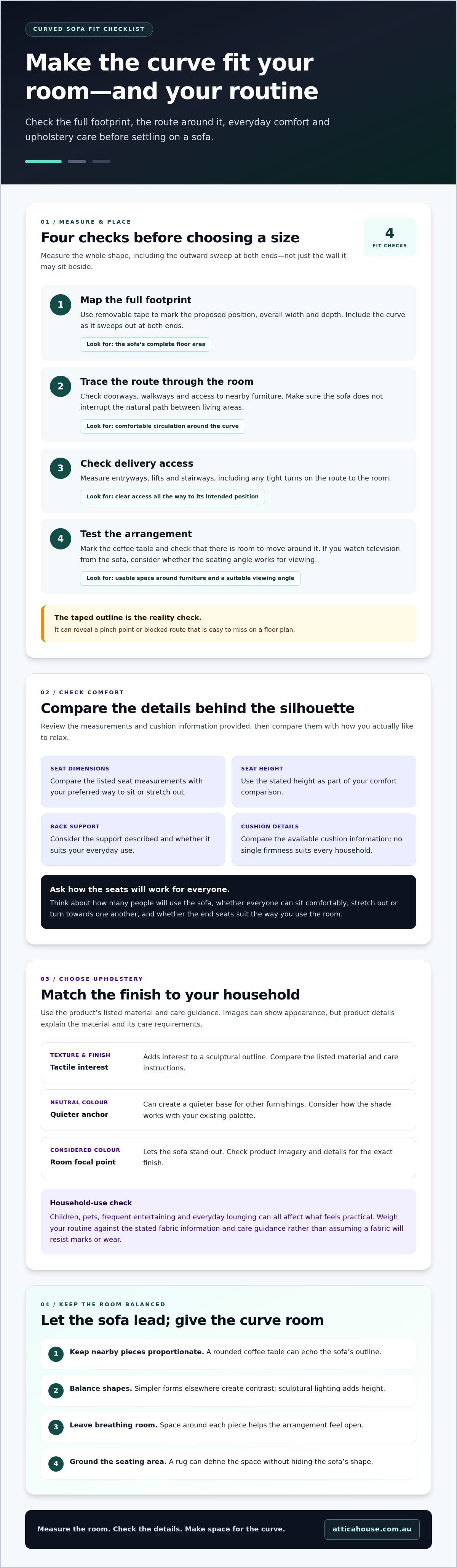
- Map the footprint. Mark the proposed position and the sofa’s full width and depth with removable tape. Include the outward curve at both ends.
- Trace the route through the room. Check doorways, walkways and access to nearby furniture. Make sure the sofa won’t interrupt the natural path between living areas.
- Check delivery access. Measure entryways, lifts and stairways, including tight turns along the route to the room.
- Test the arrangement. Mark where the coffee table will sit and check there’s room to move around it. If you watch television from the sofa, consider whether the seating angle works for viewing.
Compare the sofa’s exact overall width and depth with your floor plan. A taped outline can reveal a pinch point or blocked route that’s easy to miss on paper.
How can you judge comfort before buying?
Look beyond the silhouette. Compare seat dimensions, seat height, back support and cushion details wherever they’re provided. Think about how many people will use the sofa and whether its curved seats let everyone sit comfortably, stretch out or turn towards one another. No single seat depth or firmness suits every household, so compare the measurements with the way you like to relax.
For a sense of proportion and placement, view the Calibre furniture collection alongside your room measurements. A luxury curved sofa should feel inviting in use, with circulation and comfort considered as carefully as its sculptural outline.
Compare upholstery, colour and styling for a curved sofa
Upholstery affects how a curved sofa looks and feels, and the right option depends on the fabric and your household. Compare the listed material, texture and care guidance for each sofa rather than assuming a fabric will resist marks or wear. Children, pets, frequent entertaining and everyday lounging can all affect what feels practical.
Which sofa upholstery suits your household?
Start with how the sofa will be used. In a busy family space, consider how comfortable you’d feel using the fabric every day and what the product information says about care. If you entertain often, think about how the upholstery’s texture and finish will work with the rest of the room. Close-up images can help you assess appearance, but use the product details to understand the material and its care requirements.
| Upholstery priority | Room mood | Practical care consideration |
|---|---|---|
| Texture and finish | Adds tactile interest to a sculptural outline | Compare the listed material and care instructions |
| Neutral colour | Creates a quieter anchor for other furnishings | Consider how the shade works with your existing palette |
| Considered colour | Lets the sofa become a focal point | Check the product imagery and details for the exact finish |
How do you style a curved sofa without crowding the room?
Let the sofa lead, then keep nearby pieces proportionate. A rounded coffee table can echo its outline, while simpler forms elsewhere create contrast. Sculptural lighting adds height, and leaving space around each piece helps the arrangement breathe. A rug can ground the seating area without hiding the sofa’s shape. For help choosing its proportions, see choosing the right rug size.
Choose a luxury curved sofa finish that suits your daily routine as well as your palette. Explore the Calibre collection to consider sofa and decor options together.
Choose a luxury curved sofa from the Calibre collection
Use your room plan and comfort priorities to compare options in the Calibre collection. Focus on how each shape fits your layout, not just how it looks in a product image. The right choice should feel distinctive without interrupting the natural flow of your living space.
What should you compare across Calibre sofa options?
Review the product details side by side. Don’t assume that similar silhouettes share the same dimensions or materials. For broader inspiration on creating a considered interior, explore the ultimate guide to luxury furniture in Australia.
- Silhouette: Notice whether the curve is a gentle arc or a more pronounced crescent, and picture how it will sit in your room.
- Scale and configuration: Compare listed dimensions and seating arrangement with your taped floor plan and household needs.
- Comfort: Consider the available seat, height, back and cushion details in relation to how you like to sit or lounge.
- Upholstery: Check the stated fabric and care information, then weigh its look and feel against your everyday routine.
- Room fit: Revisit nearby furniture, walkways and the visual space around the sofa so its outline remains part of a balanced arrangement.
What are the final checks before choosing?
Before ordering, revisit the sofa’s measurements, the access route into your home and the product information, including delivery details. If an option makes the room feel crowded on your plan, compare a different silhouette or scale. The best fit brings together easy movement, everyday comfort and a design character you’ll enjoy living with.
Take time to compare the details. Explore the Calibre collection and consider which pieces feel at home in your space.
Choose a curve that feels at home
A well-chosen luxury curved sofa brings more than a sculptural outline to your living room. Its shape should complement the room’s proportions, preserve comfortable pathways and support the way you like to sit. Before deciding, compare the full footprint and access route, then weigh the silhouette, seating comfort and upholstery against your household’s everyday needs.
Styling matters, too. Let the sofa’s curve guide the surrounding furniture, while considered colour, a well-proportioned rug and breathing room help the setting feel cohesive rather than crowded. These choices can create a space that feels refined and genuinely lived in.
Attica House offers a curated range of luxury furniture and sofas, with Australia-wide delivery and a partner showroom through Café Lighting & Living. Explore the Calibre collection to compare pieces for your home.
Frequently Asked Questions
Are curved sofas comfortable for everyday use?
Yes, a curved sofa can be comfortable for everyday use if its seating suits the way you like to relax. Compare seat depth, height, back support and cushion details in the product specifications. Consider how many people will sit on it and whether the curve lets them lounge or face one another comfortably. A sculptural outline is appealing, but everyday comfort matters just as much.
Do curved sofas take up more space than straight sofas?
They can take up more usable floor space, especially if the curved ends extend into walkways or create gaps beside a wall. The actual footprint depends on the sofa’s width, depth and silhouette, so compare its full dimensions with your room rather than judging by width alone. Marking the outline on the floor can help reveal whether a curved or straight shape fits your layout better.
How do I measure a room for a curved sofa?
Measure the sofa’s full width and depth, then mark its footprint on the floor with removable tape, including the outward sweep at each end. Check that walkways remain clear and allow space for nearby furniture, such as a coffee table. Measure the delivery route too, including doorways, lifts, stairways and tight turns. Compare these measurements with the sofa’s exact product dimensions before choosing.
Which coffee table works best with a curved sofa?
A round or oval coffee table can echo a curved sofa’s softer outline and make it easier to move around the seating area. Choose a size and height that feel proportionate, with enough room to reach the table comfortably without obstructing circulation. A simple rectangular table can also create a pleasing contrast. The best pairing depends on the sofa’s curve and the available floor space.
How do I choose upholstery for a luxury curved sofa?
Choose upholstery by balancing its appearance and feel with how your household uses the sofa. Consider children, pets, entertaining and everyday lounging, then compare the material and care guidance provided for each specific option. A neutral shade can create a quiet foundation, while a considered colour can make the sofa a focal point. Avoid assuming a fabric is stain-resistant or easy to clean unless its product details say so.