


Geometric Rugs: How to Choose the Right Design for Your Home
A geometric rug doesn’t need to dominate a room to give it definition. If you’re wondering whether a bold pattern will work with your existing furniture, that instinct is worth trusting. The right design brings the room together, with a pattern that feels considered rather than competing for attention.
Choosing well comes down to more than following a trend. Pattern scale, colour, shape and material all affect how a rug relates to your furniture, flooring and the way you use the room. Attica House’s curated collection includes 80 geometric rugs, with designs spanning distinctive motifs and palettes. This guide will help you compare their character, choose a size and shape to suit your layout, and consider which materials fit the room. The result is a clearer sense of what will feel at home in your space: expressive, comfortable and balanced.
Key Takeaways
- Use motif scale and visual character to decide whether a rug should become a focal point or bring quiet rhythm to the room.
- Compare geometric rugs with your existing furniture and flooring, then consider the mood and function of the space.
- Map your furniture and measure the intended area before comparing rug dimensions, so the placement feels connected to the room’s layout.
- Explore distinctive designs such as Marimekko Seireeni Green and Warm Beige to see how fluid, water-inspired patterning can shape a room’s character.
What Makes Geometric Rugs a Confident Choice for Your Room?
Repeating shapes, lines, angles and structured motifs give geometric rugs their distinctive visual language. That structure can anchor furniture, guide the eye across a room or create contrast with softer forms and plain surfaces. Yet “geometric” describes a broad design language, not a single aesthetic: a pattern might feel orderly and restrained, or expressive and full of movement. Its artistic context reaches beyond interiors; Geometric abstraction in art and design offers a wider perspective on how shapes and lines can communicate rhythm and form.
How geometric patterns change a room’s mood
Repetition brings a sense of order, while the direction and spacing of a motif create visual movement. A low-contrast pattern in related tones can sit quietly beneath furniture, adding depth without demanding attention. Larger shapes or stronger colour contrasts feel more expressive, drawing the eye and giving a room a focal point. Neither approach is inherently better. Consider the mood you want and how much visual activity is already present, from patterned upholstery to prominent artwork.
Where geometric rugs work beautifully
In a living room, a rug can bring a sofa and armchairs into one considered seating arrangement. Choose a pattern that complements the furniture’s lines, whether that means echoing clean edges or softening them with curved motifs. In a bedroom, a subtler design can add structure beneath the bed while preserving a restful feel. In a dining room, a rug can visually distinguish the table and chairs from the surrounding floor, making the dining area feel defined within an open-plan space. In each room, let function guide the pattern’s presence: a lively motif may suit a social setting, while a quieter one can support a more tranquil retreat.
How to Compare Pattern, Colour and Material in Geometric Rugs
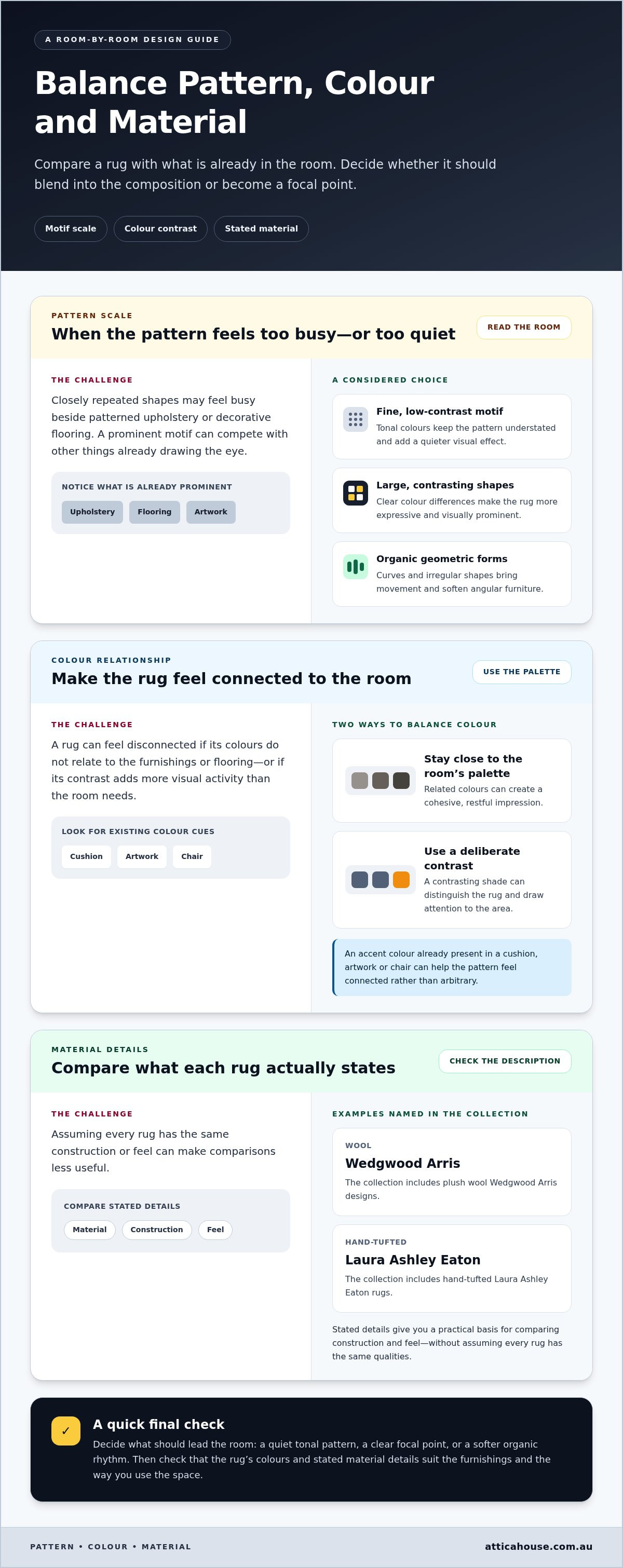
Start by looking at the room as a whole. A rug’s motif, contrast and stated material each contribute a different kind of presence, so the most striking design isn’t automatically the most suitable. Notice what already draws the eye, then decide whether the rug should blend into the composition or become a focal point.
Choose a pattern scale that suits your furnishings
Large motifs read clearly across an open living area and can complement restrained furniture by adding a confident focal point. Smaller, closely repeated shapes create finer detail. They may feel busy alongside patterned upholstery or decorative flooring, but balanced against simpler surfaces they can add depth. Repeating lines bring a measured rhythm, while organic geometric forms soften the look of angular furniture.
Fine, low-contrast motif: Tonal colours keep the pattern understated and create a quieter visual effect.
Large, contrasting shapes: Clear differences in colour make the rug more expressive and visually prominent.
Organic geometric forms: Curves and irregular shapes bring movement without the strict feel of a rigid grid.
Match colour and material to the way you live
Use the room’s palette as your guide. A rug in colours close to the flooring and furnishings can create a cohesive, restful impression; a contrasting shade can distinguish the rug and draw attention to the area. An accent colour already present in a cushion, artwork or chair can help the pattern feel connected rather than arbitrary.
Compare material descriptions as carefully as colour. Attica House’s range includes plush wool Wedgwood Arris designs and hand-tufted Laura Ashley Eaton rugs. These stated details give you a practical basis for comparing construction and feel, without assuming every rug has the same qualities. For more pattern and colour possibilities, explore the geometric rug collection and consider which design feels in tune with your furnishings.
Find the Right Geometric Rug Size, Shape and Placement
The right rug proportions depend on the furniture and pathways around it, not just the amount of empty floor. Plan the layout first, then compare the measured footprint with the dimensions listed for each design. This helps geometric rugs feel connected to the room rather than like an isolated accent.
Measure around the furniture, not just the empty floor
Begin by mapping the furniture arrangement you want the rug to relate to. In a living room, decide whether it should sit beneath the front legs of the sofa and chairs, or define a more compact zone around a coffee table. In a dining area, account for the table and chairs in their usual positions, including the space they need when chairs are pulled out.
Use removable tape to mark the intended rug outline on the floor. Check how the edges sit beside furniture legs, doorways and regular walking paths. Adjust the taped footprint until the layout feels balanced and movement through the room remains comfortable. Measure that area, then compare it with the available dimensions on the product listing.
Choose a shape that complements the room layout
A rectangular rug can echo an elongated sofa arrangement, dining table or hallway-like space, helping its edges reinforce the room’s lines. A round rug offers a softer outline. It can create a focused zone beneath a small table or introduce contrast among furniture with strong straight edges. The round Redbrook design is one option to consider when that curved shape suits your plan.
There’s no single placement rule for every room. Let the rug’s shape follow the furniture grouping and the way people move through the space. Before settling on a design, compare its listed size options with your measurements. You can compare geometric rug shapes and sizes to find a proportion that feels at ease in your layout.
Explore Standout Geometric Rugs and Choose Your Next Step
A useful shortlist starts with the character you want the rug to bring into the room. Some designs offer fluid movement; others rely on defined shapes, colour contrast or a particular outline. Comparing those details helps you move from a general preference for geometric rugs to a design that feels right for your space.
A considered shortlist of geometric rug designs
- Marimekko Seireeni Green and Warm Beige: Its water-inspired patterning has a fluid quality, making it an option for a room where you want geometric form with a softer sense of movement.
- Wedgwood Arris Grey and Teal: Plush wool and shimmering geometric detailing bring together tactile appeal and a distinctive visual finish.
- Wedgwood Renaissance Beige and Blue: These oval geometric designs use contrasting colour treatments, offering a shaped alternative to more familiar rectangular outlines.
- Marimekko Isot Kivet Blue and Green: The Kivet stone-inspired motif gives the pattern a clear, recognisable character. Consider how its repeated forms will sit alongside your existing furnishings.
- Laura Ashley Redbrook Duckegg and the round Hazelnut option: These offer different colour and shape directions to consider as you compare the rug with your layout.
Browse the collection and narrow your choice
Use each product’s listed details to make a considered comparison: look at the pattern, palette, stated material and available dimensions. A design that appeals at first glance should also suit the room’s furniture arrangement and the footprint you’ve measured. Attica House’s curated geometric rug collection brings together 80 products, giving you a range of distinct designs to explore.
Once you have a preferred motif and colour direction, compare the listed size options with your space before deciding. Explore the geometric rugs collection to find a design whose pattern, palette and proportions feel at home.
Choose a Rug That Brings Your Room Together
The right geometric rug reflects the way you want your room to feel. Let the pattern’s scale and contrast work with your furnishings, choose colours that connect with the existing palette, and measure around your furniture before settling on a size and shape. Those details can turn a striking design into a natural part of your home.
Attica House’s curated collection brings together 80 geometric rug designs, including named pieces from Marimekko, Wedgwood and Laura Ashley, with Australia-wide delivery. Explore the range to compare each design’s pattern, stated material and listed dimensions, and find an option that feels considered in your space.
Explore the geometric rugs collection and take the next step towards a room that feels balanced, welcoming and distinctly yours.
Frequently Asked Questions
What style of room suits a geometric rug?
A geometric rug can suit rooms with many different styles because its pattern language ranges from quiet and tonal to bold and high-contrast. In a contemporary room with simple furnishings, a confident motif can add character; in a more layered interior, a smaller-scale or low-contrast design may sit more gently among existing details. Choose the pattern for the room’s mood, rather than assuming geometric means one fixed look.
How do I choose the right size geometric rug?
Choose a size by mapping the furniture arrangement first, then measuring the area you want the rug to define. Mark the proposed footprint with removable tape and consider furniture legs, doorways and walking paths. In a seating area, decide whether the rug should connect the main pieces or sit closer to a coffee table. Compare your measurements with the dimensions listed for each geometric rug before choosing.
Do geometric rugs make a room look smaller?
Not necessarily. The effect depends on the rug’s scale, colour contrast and how it relates to the surrounding floor and furnishings. A large, high-contrast motif may draw attention to the floor, while a tonal design can feel more integrated with the room. Check the overall composition, including the rug’s placement and the space around it, rather than judging the pattern in isolation.
Which colours work best with a geometric rug?
The best colours are those that relate thoughtfully to your existing palette and the mood you want. Choose tones close to your flooring or upholstery for a more cohesive impression, or use contrast to give the rug greater visual presence. An accent colour already found in artwork, cushions or furniture can help tie a bolder design into the room without making every element match.
Are geometric rugs suitable for dining rooms?
Yes, a geometric rug can help distinguish a dining area and bring the table and chairs into a defined setting. Before choosing, measure the space with the chairs pulled out as they would be in use, then compare that footprint with the rug’s listed dimensions. Consider how the pattern works with the table shape and the rest of the room, so it adds interest without disrupting the layout.