


Best Armchair for Posture: A 2026 Buying Guide
What if the best armchair for posture isn’t the most upright one in the room? The right choice is less about a style label and more about how the chair fits your body, supports the way you sit and suits the moments you’ll spend in it. A deep, enveloping seat may look inviting, but if its proportions leave you reaching or slouching, the comfort can be short-lived.
It’s natural to wonder whether a recliner or a more upright armchair is better, especially when advice about posture seems to point in different directions. There isn’t one position that suits everyone. Seat height and depth, back support and armrest placement all shape how comfortably you can settle in. Your habits and the room’s aesthetic matter too.
This guide explains which dimensions and design details to compare, how to assess an armchair for your needs, and how to balance everyday comfort with lasting style. With a clearer sense of fit, you can choose a place to pause that feels as thoughtful as it looks.
Key Takeaways
- Look beyond appearance: the best armchair for posture is one whose proportions and support suit your body and how you’ll use it.
- Compare seat height, depth and width, then consider whether the backrest and armrests feel well placed for you.
- Test the chair in your usual sitting position and consider the activities and length of time you’ll spend in it.
- Choose a shape that feels comfortable for reading, conversation or relaxation and sits harmoniously within your room.
What makes an armchair a considered choice for posture and comfort?
Choosing an armchair means weighing three things: how it feels, how it suits your preferred way of sitting and how it fits into your home. A beautifully upholstered chair can still feel awkward if its proportions don’t suit you. Likewise, a supportive-looking design may not feel comfortable for reading, conversation or relaxing.
A posture-conscious armchair is one whose shape and proportions work for the person sitting in it and the chair’s intended use. Consider how the seat, backrest and arms relate to your body, and whether the chair invites an upright perch, a relaxed lean or something between the two. There’s no single position or design for every body. Judge a chair by how it feels in use, not by a label.
Supportive fit is a relationship between a chair and its sitter, not a product label or style name. Focus on features you can assess rather than assuming a particular design promises a specific health outcome. For a useful overview of adjustable seating elements, Ergonomics of office chairs offers context on features such as backrests and armrests, though a home armchair has different priorities and proportions.
Does a posture-friendly armchair need to look clinical?
Not at all. Support and proportion can sit comfortably alongside a considered silhouette, tactile upholstery and a palette that feels at home in your space. Look at the seat’s shape, the backrest’s height and angle, and where the arms meet your elbows. These details can help you decide whether a chair suits your habits, but they aren’t proof that it treats, corrects or prevents a condition. The best armchair for posture can also be a welcoming design choice, made for everyday rest as well as visual harmony.
Which armchair features matter most for a comfortable, supported fit?
Start with the dimensions you can compare: seat height, depth and width. Together, they affect how easily you can settle back, place your feet and rest your arms. The best armchair for posture isn’t defined by one ideal measurement. Each dimension needs to work with the others and with your proportions.
Chair dimensions work as a set: a comfortable fit depends on how the seat, back and arms relate to your body.
| Feature | What to assess | Who may value it |
|---|---|---|
| Seat height | Can your feet rest comfortably on the floor without you having to perch or stretch? | Anyone who wants a grounded, easy-to-enter seat |
| Seat depth | Can you sit back while keeping space behind your knees? A depth around 50-55 cm suits many adults, but isn’t universal. | Readers comparing listed dimensions with their own proportions |
| Seat width | Is there room to sit naturally without feeling adrift in the chair? | Those who like to shift position or settle in for longer |
| Backrest and arms | Do they meet your back and arms comfortably, without making you reach or hunch? | People seeking a particular level of upper-body support |
How should seat depth and height feel?
As you sit back, notice whether the seat supports your thighs without pressing into the backs of your knees. Your feet should rest comfortably rather than dangle or require you to slide forward. Compare the listed height and depth with a familiar chair that already feels good. Use it as a guide, while allowing for differences in cushion softness and shape, which can change how the dimensions feel.
What should you look for in the backrest and armrests?
Backrests vary in height, curve and firmness, and the same shape can feel different across body types. Notice where the backrest meets your shoulders and lower back in your usual position. Armrests should let your forearms rest without lifting or drawing your shoulders forward. These are fit considerations, not promises of a particular physical outcome.
As you compare dimensions with silhouette and finish, explore armchairs at Attica House for a considered addition to your living space.
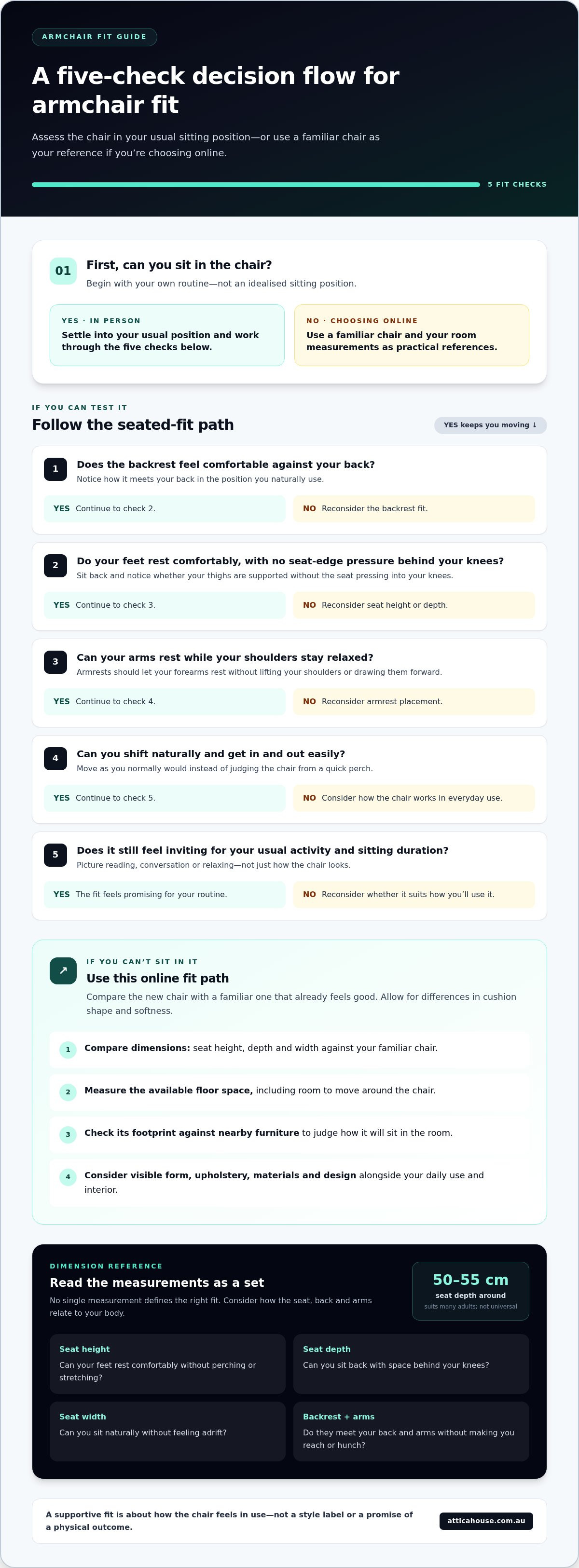
How to test an armchair for posture before you choose
A useful fit check starts with your own routine, not a picture of an ideal sitting position. Think about whether you’ll use the chair for a few pages of a book, longer reading sessions or relaxed conversation, and how you naturally like to sit. The best armchair for posture is one that feels considered for those everyday moments.
A simple seated-fit check
If you can sit in the chair, settle into your usual position and take time to notice how it feels. A quick perch may not reveal whether you can relax into it. Use this short assessment:
- 1. Sit back and notice whether the backrest feels comfortable against your back.
- 2. Check that your feet rest comfortably and the seat edge doesn’t press into the backs of your knees.
- 3. Rest your arms. Do the armrests let your shoulders stay relaxed?
- 4. Shift as you normally would, then consider whether getting in and out feels easy.
- 5. Picture your usual activity and sitting duration. Does the chair still feel inviting?
Choosing online when you cannot sit in the chair
Use a familiar chair as a practical reference: compare its listed seat height, depth and width with the new chair’s dimensions, allowing for differences in cushion shape and firmness. Measure the available floor space too, including room to move around the chair. Product descriptions and images can help you assess visible form, upholstery and overall scale. Compare the chair’s footprint with nearby furniture so you can judge how it will sit in the room. Consider whether its materials and design suit your daily use as well as your interior.
With your measurements and routine in mind, explore Attica House armchairs and consider which design feels right for your home.
Choose an armchair that balances posture, daily use and design
The right choice should feel at ease in both your routine and your room. An armchair used occasionally as accent seating has a different role from one you settle into for long reading sessions or quiet rest. Start with what you’ll do in it most often, then weigh those needs against the chair’s visual presence. The best armchair for posture is one that feels suited to everyday use without seeming out of place.
Which armchair suits your everyday routine?
For conversation, you might value a seat that makes it easy to sit upright and turn towards others. Reading may call for a backrest and arms that feel comfortable as you hold a book, while a chair for unwinding might invite a more relaxed position. Consider how long you tend to sit and whether you shift position often. Prioritise the activity the chair will serve most, rather than choosing by appearance alone.
How can an armchair feel at home in your interior?
Look at the chair’s scale in relation to nearby furnishings and the space around it. A generous silhouette can create a restful focal point, while a more visually delicate form may sit quietly beside a sofa or reading lamp. Tactile upholstery and material can also bring warmth and depth to a room. For a wider perspective on bringing pieces together, the luxury furniture guide explores considered choices for a cohesive home.
If the armchair will sit near a work area, think about how it complements that setting without treating it as a substitute for a task chair. The luxury home office guide offers ideas for creating a workspace with a composed, comfortable feel. Visual harmony matters, but it should accompany a chair that feels right for you.
When comfort, routine and room feel aligned, an armchair can become a natural place to pause. Discover Attica House armchairs and find a design to consider for your home.
Make room for a more considered pause
The chair you choose can shape a small but meaningful part of your day: a place to read, share a conversation or simply settle for a while. Let your routine guide the decision, and give equal weight to how the chair feels and how it contributes to the room. The best armchair for posture is ultimately a personal choice, one that brings everyday ease and thoughtful design together without asking you to compromise on either.
As you explore your options, picture the chair in the moments you’ll use it most, and consider how its presence will feel in your home over time. Attica House’s curated furniture offering includes armchairs, with Australia-wide delivery.
Explore Attica House armchairs and find a design to consider for your home. A well-chosen chair can make an everyday pause feel a little more inviting.
Frequently Asked Questions
Can an armchair improve posture?
An armchair can make a comfortable sitting position easier to maintain, but it can’t guarantee better posture or correct a health concern. Fit matters, and so does how you use the chair. For example, if you tend to curl sideways while reading, consider whether the seat and backrest feel comfortable when you sit in your usual position. The best armchair for posture supports your preferred way of sitting without forcing you into one fixed pose.
What seat depth is best for an armchair?
There’s no single seat depth that feels right for everyone. Your legs and the chair’s cushion both affect how much usable space you experience. If a seat feels too deep, you may find yourself sliding forward; if it feels too shallow, your thighs may feel under-supported. Consider the cushion’s firmness as well as its measurements, since a softer seat may compress when you settle into it.
Is a recliner or an upright armchair better for posture?
Neither is automatically better; choose according to how you like to sit and what you’ll do in the chair. A recliner may suit someone who enjoys changing position during quiet relaxation, while a more upright form may feel natural for conversation or sitting closer to a table. Consider whether you’ll use the chair in more than one position, and whether each feels comfortable for your routine.
How do I choose an armchair for posture when buying online?
Use the product dimensions to judge scale, and compare them with a chair you already enjoy sitting in. Check whether the description gives useful details about the seat, backrest and upholstery, then study images from different angles for visible shape and proportions. You can also map the chair’s footprint on your floor to see how it will sit beside nearby furniture and leave room for movement.
How long should you sit in an armchair at a time?
There isn’t one time limit that suits everyone or every activity. Pay attention to how you feel, and change position or stand for a short stretch if you become restless or uncomfortable. If you’re reading for a while, keep what you need within easy reach so you don’t have to twist repeatedly. Let comfort guide your pauses rather than treating the chair as a reason to remain still.