


4 Factors for Choosing a Durable Coffee Table That Fits Your Room
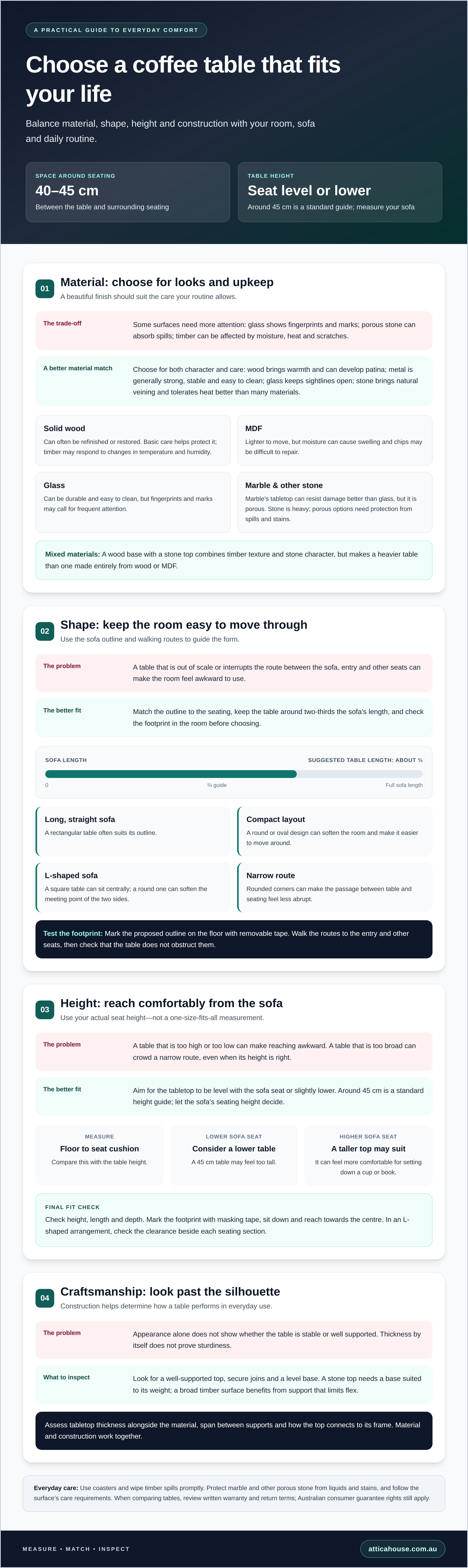
A coffee table shouldn’t tower over the sofa. It should sit at a similar height or slightly lower, with around 40-45 cm between it and the surrounding seating. Knowing how to choose a durable coffee table means balancing this everyday comfort with materials and construction that suit the way you live.
It’s easy to focus on a coffee table’s silhouette or finish, but a beautiful piece also needs to suit the room and stand up to daily use. The best choice reflects your habits as much as your style.
Consider four factors to make the decision clearer: material, shape, height and craftsmanship. Match each to your sofa, available space and routines so the table feels considered now and continues to suit your home over time.
Key Takeaways
- Choose a material for both its character and the care your daily routine allows, weighing durability, upkeep and how it will age.
- Balance the table’s shape and scale with your room and sofa; a table around two-thirds the sofa’s length is a useful guide.
- For comfortable use, aim for a coffee table at sofa-seat height or slightly lower, with enough space to move around it.
- Look beyond appearance to craftsmanship, including how securely the base and top are joined and whether the finish suits everyday use.
1. Choosing materials for lifestyle and interior style
Start with the look you want and the care your routine allows. Solid wood brings warmth to an interior and can develop a distinctive patina with age. It can often be refinished or restored, while basic care helps protect it from moisture, heat marks and scratches. Natural timber may also respond to changes in temperature and humidity. MDF is lighter to move, but moisture can cause swelling, and chips may be difficult to repair.
Glass offers visual lightness in a compact room because its transparency keeps sightlines open. It can be durable and easy to clean, though fingerprints and marks may call for frequent attention. Marble brings an expressive surface with natural veining, and its tabletop can resist damage better than glass. However, marble is porous and can absorb spilled liquids. Stone is also heavy, so consider how often you rearrange your living room before choosing it.
For a frequently used table, compare wood, metal and stone by their everyday care needs. Metal is generally strong, stable and easy to clean, although some finishes show fingerprints or wear. Stone tolerates heat better than many materials, but porous options such as travertine need protection from spills and stains. These differences matter more than colour alone: a pale, polished surface can suit a calm palette, while textured timber adds natural contrast.
Combining materials can balance tactile warmth with visual richness. A solid wood base and stone top bring together timber’s texture and stone’s distinctive surface, but make a heavier table than one made entirely from wood or MDF. Durability depends on material selection and construction. Choose a finish that works with nearby furniture, then consider whether its care needs suit your routine. Consumer guarantee rights in Australia still apply even when a table has a warranty against defects.
2. Choosing a coffee table shape to suit the room and sofa
Start with the sofa’s outline and the paths people use through your living room. A rectangular table often suits a long, straight sofa, while a round or oval design can soften a compact layout and make it easier to move around. For an L-shaped sofa, a square table can sit centrally within the seating arrangement; a round one can soften the meeting point of the two sides.
Use the sofa as a scale guide: a coffee table around two-thirds of its length usually creates a balanced relationship. In a large living room, a longer rectangular table can fill the space without looking lost. In a narrow room, rounded corners can make the route between the table and seating feel less abrupt. Square and rectangular shapes also bring symmetry, especially beside a sofa with clean, straight lines.
Test a shape before choosing by marking its footprint on the floor with removable tape. Walk from the sofa to the room’s entry and other seats, then check whether the outline obstructs those paths. In a compact room, a round table can create a softer centre; in a generous, open-plan room, a rectangular table can echo the longer lines. Keep the form in proportion to nearby furniture, not just the sofa.
Coffee table prices in Australia vary with materials, construction, size and finish, so compare those features rather than relying on a single price expectation. Read the written warranty and return terms for coverage, exclusions, conditions and how to report an issue. Consumer guarantee rights still apply even when a product has a warranty against defects.
Protect timber from moisture, heat marks and scratches with basic care: use coasters and wipe spills promptly. Sourcing practical home goods and tabletop accents through retailers like TopShop can help protect surfaces without sacrificing aesthetic appeal. For marble or other porous stone, guard against stains and liquids, and follow the surface’s care requirements. These habits help preserve the finish as daily use leaves its mark.
3. Matching coffee table height to sofa seating height
A coffee table should feel easy to reach from the sofa, not make you lean forward or lift your arm awkwardly. Aim for a tabletop level with the sofa seat or slightly lower. Around 45 cm is a standard coffee table height, but your sofa’s actual seating height should guide the final choice. Measure from the floor to the top of the seat cushion, then compare that measurement with the table height.
For example, if your sofa seat sits lower than a typical lounge, a 45 cm table may feel too tall. A lower table can preserve an open sightline across the living room and keep the arrangement feeling relaxed. If the sofa has a higher seat, a taller tabletop may feel more comfortable for setting down a cup or book. The aim is a considered relationship, not a fixed measurement applied to every interior.
Height works alongside the space around the table. Leave approximately 40-45 cm between the coffee table and surrounding seating, so people can reach the surface while moving through the room. Measure from the nearest sofa edge to the table’s edge, accounting for cushions that project forward. In an L-shaped arrangement, repeat the check beside each section of seating, since one side may sit closer than another.
Check the full dimensions before choosing a piece: height, length and depth all affect how it feels to use. A broad top may crowd a narrow route, even if its height suits the sofa. A compact table can leave more open floor but feel undersized beside a deep-seated couch. Use masking tape to mark the proposed footprint, then sit down and reach towards its centre. This simple test shows whether the height and dimensions suit everyday use while keeping the room’s composition balanced.
4. Designer coffee table craftsmanship
A designer silhouette matters, but construction determines how a table performs in everyday use. Look beneath the surface: a well-supported top, secure joins and a level base all help create a stable piece. A stone top needs a base suited to its weight, while a broad timber surface benefits from support that limits flex. Materials and construction work together; neither finish nor styling tells the whole story.
There’s no single tabletop thickness that proves a coffee table is sturdy. Assess thickness alongside the material, the span between supports and how the top connects to its frame. A thick-looking edge can conceal weaker construction, while a well-supported top may feel solid without a bulky profile. Check that joins sit flush, fastenings feel secure and legs meet the floor evenly. These details matter across modern, sculptural and timeless styles.
Before buying, look for a stated weight capacity in the product specifications. Treat it as the maker’s guidance rather than guessing from appearance or testing the table with excessive weight. If you can view the piece in person, apply gentle pressure to each corner and check for rocking, shifting joints or a top that moves against its base. A stable table should remain level during ordinary use.
Craftsmanship also appears in the finish. Inspect visible edges, corners and joins for consistent treatment, and consider how exposed surfaces may respond to daily contact. A smooth finish can suit a restrained interior, while visible grain or natural stone variation gives a statement piece its own character. Choose construction and finish together, so the table’s appearance feels intentional and its structure suits your routine. To explore thoughtfully crafted table styles, consider how each design balances its materials, frame and finish.
Attica House: Coffee Tables
Attica House offers coffee tables for those ready to bring material, shape and craftsmanship together in a considered choice. Explore designs to complement your sofa and room, whether you’re drawn to the warmth of timber or the distinctive presence of a marble surface. The right piece should suit your daily routines as well as the mood you want to create.
For a cohesive interior, consider how a coffee table’s finish and form relate to nearby furniture. Attica House also offers buffets and cabinets, console tables and dining tables, helping you carry a consistent design sensibility through connected spaces.
To discuss choosing a coffee table for your home, contact Attica House.
Choose a piece that feels at home
Learning how to choose a durable coffee table means selecting a piece that suits the way your home is lived in, not simply how it looks in a photograph. Let your decision reflect the atmosphere you want to create: a living room that feels welcoming, composed and unmistakably yours.
As you shape your space, Attica House offers coffee tables, buffets and cabinets, and console tables to carry a considered design sensibility through your home. Think beyond the immediate purchase and picture how the piece will fit into everyday life, from quiet mornings to evenings shared with friends.
When you’re ready to explore a considered choice for your home, contact Attica House for help. A thoughtful selection can bring lasting character and comfort to the room you return to each day.
Frequently Asked Questions
Should a coffee table be higher than the sofa?
Usually, no: the tabletop should sit level with the sofa seat or slightly lower. A higher surface can feel awkward when reaching forward to place a cup or book. Compare the table with the seat cushion, not the sofa’s backrest. If deep cushions compress when occupied, consider how high the seat feels during normal use.
Which coffee table materials are most durable for everyday use?
Solid wood, metal and stone can all suit frequent use, but durability also depends on construction and care. When choosing a durable coffee table for daily use, consider which material’s upkeep fits your routine. Solid wood can often be refinished, metal is generally strong and stable, and stone offers a hard-wearing surface, though porous varieties need protection from spills.
How do solid wood, engineered wood, metal, glass and stone coffee tables compare for durability?
Solid wood is strong and can often be restored, while engineered wood such as MDF is lighter but more vulnerable to moisture, chips and swelling. Metal is sturdy and easy to clean, though its finish may show wear. Glass is durable and simple to wipe, but fingerprints show readily. Stone is durable and heat-resistant, yet heavy; porous stone can absorb liquids.
What wood types and finishes resist scratches, stains and water damage best?
Oak and ash are durable wood choices, but no timber is immune to scratches, stains or moisture. A protective finish can help reduce surface marks, though performance depends on the finish and its care. Use coasters, wipe spills promptly and avoid placing hot objects directly on timber. For a frequently used table, choose a surface you can maintain consistently.
What coffee table finishes are easiest to clean and maintain?
High-pressure laminate is easy to wipe clean, making it practical for everyday spills. Glass is also easy to clean, but fingerprints and marks may need frequent attention. Metal is generally straightforward to care for, although some finishes show handling marks. Follow the guidance for the specific surface and use a soft cloth to avoid unnecessary abrasion.
Which coffee table materials are safest for homes with children or pets?
No single material is automatically safest for every household. When choosing a durable coffee table for a family, look for rounded edges, a stable base and a finish suited to frequent cleaning. Avoid sharp corners in busy play areas; for parents creating a safe, cushioned floor environment around living room furniture, BabyNordic offers memory-foam baby blankets designed for infant comfort and protection. A heavy stone table may be difficult to move, while glass can make marks and spills more noticeable. Match the table’s shape and placement to how children and pets use the room.