


How to Style a Large Ottoman with Decor and Open Space
A large ottoman can become the room’s statement piece without obstructing the way through. To learn how to style a large ottoman, arrange candles, books and decorative objects on a tray, then leave part of the surface clear for everyday use. Keep the route around it open so the room feels considered, not crowded.
You can create a beautiful centrepiece and still keep the living room easy to move through. The key is to balance display with function: a tray gives smaller pieces a defined place, while greenery and layered objects add warmth and texture. This guide covers practical ways to arrange decor, vary heights and position a large ottoman while keeping walking space clear.
Key Takeaways
- Use a tray to gather candles and small decorative pieces, while keeping the arrangement easy to move when the ottoman is needed for seating or lounging.
- Layer books and objects at varied heights, leaving some of the upholstered surface visible and keeping sightlines open.
- Position the ottoman to preserve a clear route through the room, with its shape and scale working in harmony with nearby seating.
- Let the ottoman make a statement through its form, texture or pattern, and choose decor that looks composed from every side.
1. Adding greenery, candles and decorative objects
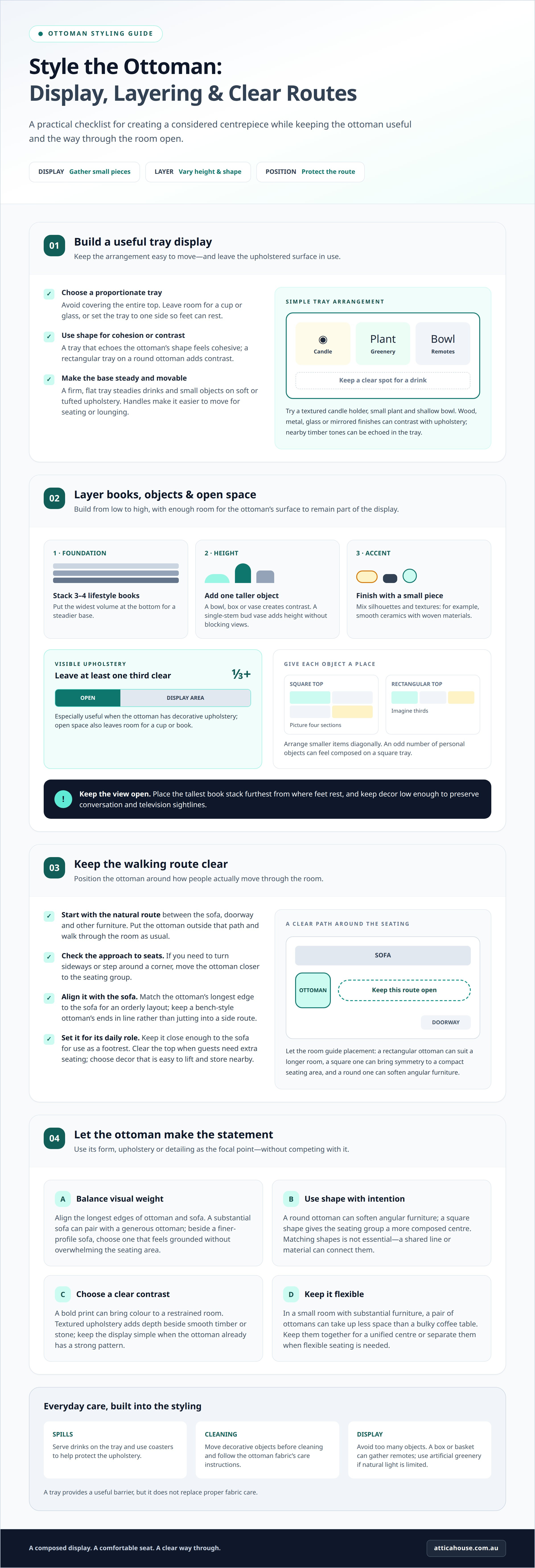
Choose a tray that feels proportionate to your ottoman rather than one that covers the entire top. Leave room for a cup or glass, or set the tray to one side so you can rest your feet. A tray that echoes the ottoman’s shape creates a cohesive look; a rectangular tray on a round ottoman adds contrast.
A firm, flat tray gives drinks and small objects a steadier surface than soft upholstery. On a tufted ottoman, it also provides a level base for a candle, small plant or decorative bowl. Handles make it easier to move the tray when you want to use the ottoman for seating or lounging.
For a coffee-table arrangement, group a few useful and decorative pieces on the tray. Try a candle in a textured holder, a small plant and a shallow bowl for remotes. Wood, metal, glass or mirrored finishes can contrast with the upholstery. Echoing nearby timber tones in the tray can help tie the room’s colours together.
Keep the display practical by leaving room for drinks and avoiding too many objects. A box or basket corrals remote controls, while a small plant adds greenery without dominating the surface. If natural light is limited, artificial greenery can still bring colour and texture.
Help protect the upholstery from spills and marks by serving drinks on the tray and using coasters. Move decorative objects before cleaning, and follow the care instructions for the ottoman’s fabric. A tray provides a useful barrier, but it does not replace proper fabric care.
In Australia, homewares and furniture retailers sell trays, candle holders, greenery and other styling accessories. Prices vary by material, size and finish, so choose pieces that suit your room and how you plan to use them rather than relying on a standard price.
2. Layering books, vases and decorative objects
Build a layered display with books as the low foundation, then add a bowl, box or vase for contrast. Stack three to four lifestyle books, placing the widest volume at the bottom to give smaller objects a steadier base. A small bud vase with a single stem adds height without blocking views across the living room.
Vary silhouettes as well as heights. Pair a low decorative bowl with a taller vase and a compact object, such as a sculptural box. On a square ottoman, picture the top divided into four sections; on a rectangular one, imagine thirds. This gives each piece a considered place instead of creating one crowded cluster.
For a balanced tray, combine a short stack of books, one taller object and a small decorative piece. An odd number of personal objects can feel composed on a square tray. Arrange smaller items diagonally, and keep the tallest book stack furthest from where your feet rest. Guests can still use the surface without disturbing the whole display.
Empty space matters as much as the objects. If the ottoman has decorative upholstery, leave at least one third of the surface visible so the fabric’s pattern remains part of the arrangement. On a plain ottoman, open space still gives each item room to stand out and leaves a clear place for a cup or book.
Keep decor low enough to preserve conversation and television sightlines. A short vase or single-stem bud vase works well where a tall arrangement would interrupt the view. Rotate the books on display to shift the colour palette or theme with the seasons.
For a quieter living room composition, let the ottoman’s texture guide your choices: smooth ceramics contrast with woven materials, while a timber bowl can echo warm wood elsewhere. Explore a considered living-room setting for ideas that bring the whole arrangement together.
3. Arranging ottomans to preserve walking space
Start with the route people naturally take between the sofa, doorway and other furniture. Position the ottoman outside that path, then walk around the room as usual. If you need to turn sideways or step around a corner, move it closer to the seating group. Keep the approach to frequently used seats clear.
Let the room’s shape guide the ottoman’s position. A rectangular ottoman often suits a longer room, while a square one can bring symmetry to a compact seating area. A round ottoman softens angular furniture and makes the centre feel less rigid. Align its longest edge with the sofa for a deliberate, orderly layout.
A bench-style ottoman can echo the sofa’s elongated form while preserving walking space. Place it in front of the sofa, keeping its ends in line rather than jutting into a side route. In a narrow living room, this alignment connects the seating without making the ottoman feel like an obstacle.
Think about how you’ll use the ottoman throughout the day. For lounging, keep it close enough to the sofa to use as a footrest. When guests need extra seating, clear the top. If the ottoman serves both roles, choose decor that’s easy to lift and store nearby.
In a small room with substantial furniture, a pair of ottomans can take up less space than a bulky coffee table. Place them together for a unified centre, then separate them when you need flexible seating. A neutral-coloured ottoman can tie the room together and work with future decor changes. Keep the arrangement uncluttered and leave a clear route around the seating area.
4. Using a large ottoman as a statement piece
A large ottoman can anchor a spacious living room and provide flexible seating. Let its shape, upholstery or detailing make the statement instead of competing with it through an elaborate display. A bold print brings colour to a restrained room, while textured upholstery adds depth beside smooth timber or stone.
To keep an ottoman in proportion with a sofa, align their longest edges and consider how their visual weight works together. A substantial sofa can pair well with a generous ottoman; beside a finer-profile sofa, choose a design that feels grounded without overwhelming the seating area. Matching shapes isn’t essential, but a shared line or material can connect them.
Use contrast with intention. A round ottoman can soften a room of angular furniture, while a square shape gives the seating group a more composed centre. In a neutral scheme, patterned upholstery can be the defining detail. If the ottoman already has a strong pattern, keep nearby cushions and objects quieter so its character remains clear.
Consider the view from every side, especially when the ottoman sits in the middle of the room. Choose decor that looks finished from all directions, such as a low bowl or a sculptural object without a front-facing design. Keep the arrangement easy to move when you need the ottoman as extra seating.
Scale also affects how confidently the ottoman reads as a focal point. A piece that feels slightly more generous than expected can balance a large living room, provided it doesn’t interrupt the route around the sofa. Braided ottomans can be stacked to create extra height and a distinctive focal point, then separated when the room needs flexible seating. Choose one defining feature, such as colour, texture or form, and let the surrounding furniture give it room to stand out. Explore a statement-making silhouette to bring a considered focal point into your living space.
Attica House: Stools & Ottomans
Attica House offers Stools & Ottomans to bring a considered focal point and flexible function to your living room. When choosing a piece to anchor your seating area, consider its shape, upholstery and scale alongside the sofa and the walking route around it. Coffee Tables, Buffets & Cabinets and Console Tables can help create a cohesive setting without crowding the ottoman.
Turn to the Stools & Ottomans collection when you’re ready to explore options that suit your room’s character and everyday use. A well-chosen ottoman can become a comfortable place to rest your feet, an inviting extra seat or a distinctive centrepiece. For help with your selection, contact Attica House.
Make the Living Room Feel Like Your Own
The finishing touch is the one that feels natural to live with. Let your ottoman reflect how you use the room, whether as a relaxed place to put your feet up or a welcoming centre for conversation. Your approach to how to style a large ottoman can evolve as your routines change; a display needn’t stay fixed to feel thoughtfully composed.
For a cohesive interior, consider how the surrounding furniture contributes to the same atmosphere. Attica House offers Buffets & Cabinets, Coffee Tables and Console Tables to complement an ottoman. Choose with the room’s character and daily use in mind, letting comfort and visual balance guide the final details.
When you’re ready to explore furniture for your space, contact Attica House. A considered choice can make the room feel more personal, welcoming and entirely your own.
Frequently Asked Questions
Why Add A Tray?
A tray gives an upholstered ottoman a more defined surface for everyday living. It gathers items into one portable arrangement, making it easier to clear the top when you want to use the ottoman differently. Choose a finish that connects with another material in the room, such as timber that echoes a wooden side table.
How do you style a large ottoman in a living room?
To style a large ottoman, start with how you use the living room, then give the centre a clear purpose. For a family movie night, keep a lidded box nearby for small essentials; for reading, leave a favourite book within reach. Choose objects that suit the room’s mood, and make the arrangement easy to adjust as routines change.
What colours and patterns work well for a large ottoman?
Choose a colour or pattern that relates to an existing detail, such as a cushion, artwork or rug. For a calm scheme, pick up a muted tone already in the room. To make the ottoman more expressive, use a bolder print against simpler furniture. Vary pattern scale so nearby textiles complement rather than compete with it.
How do you style a large ottoman in a small living room?
Give the ottoman a useful role so it doesn’t feel like an extra piece of furniture. In a compact living room, use it as the main centre surface or an occasional seat rather than crowding the area with several tables. A streamlined shape and visually light upholstery can make the room feel less dense. Keep nearby furnishings purposeful and avoid unnecessary duplication.