


When to Splurge vs Save on Furniture: A Thoughtful Buying Guide
What if the most expensive piece in the room isn’t the one worth investing in? A higher price doesn’t automatically mean better long-term value, and a striking style can feel less certain when your tastes or needs may change. When deciding when to splurge vs save on furniture, look beyond the price tag: consider how often you’ll use a piece, how it fits your space and what its care requirements mean for your routine.
It’s understandable to pause when a sofa, dining table, rug and finishing touches all compete for attention. The right choice is personal, shaped by everyday use, comfort, style and the flexibility you want as your home evolves. This guide offers a practical way to weigh those priorities, compare furniture choices and plan purchases in stages. You’ll find ways to identify which pieces deserve more of your attention, where a simpler choice can work beautifully, and how to decide what to buy now and what can wait.
Key Takeaways
- To decide when to splurge vs save on furniture, weigh how often you’ll use a piece, whether it suits your space, how easily it adapts and what it means to you.
- Prioritise furniture that supports regular routines, such as a sofa or dining table, rather than assuming a higher price guarantees greater value.
- Keep changeable accents flexible, and consider delaying purchases that don’t serve a clear everyday need.
- Build your furnishing plan in stages: list what you need, rank it by use, set priorities and compare suitable pieces before buying.
Splurge vs Save on Furniture: 4 Questions to Ask First
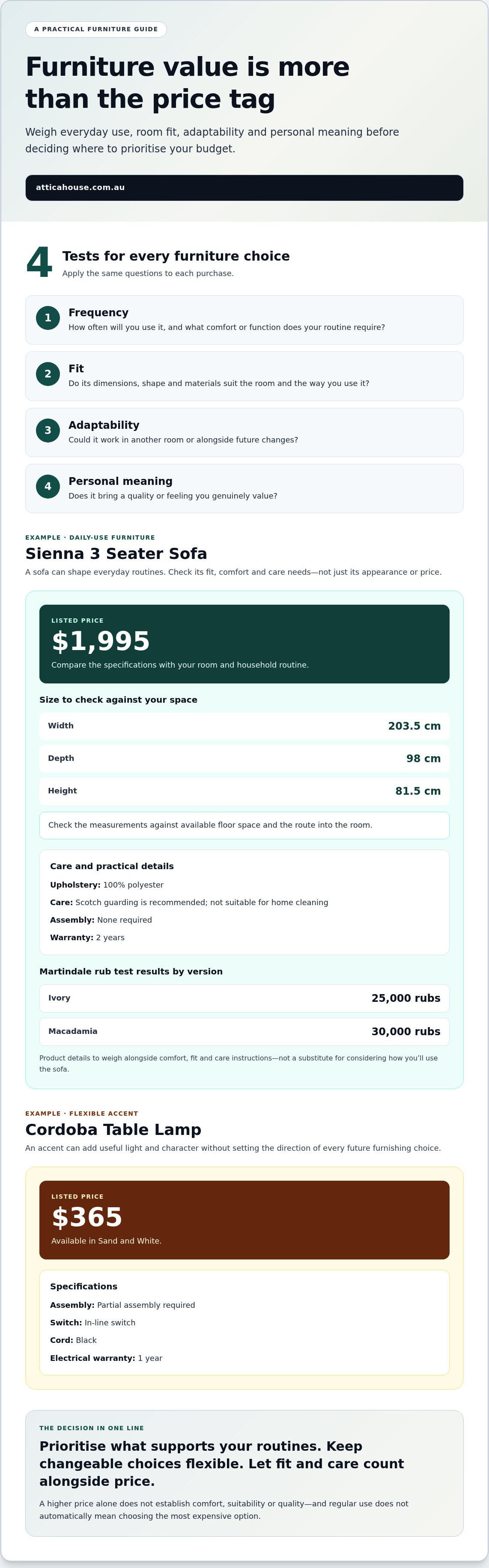
Creating a considered home means making choices within a finite budget. The challenge is deciding which pieces deserve priority without assuming the highest price means the best fit. To work out when to splurge vs save on furniture, apply the same four tests to each purchase:
- Frequency: How often will you use it, and what comfort or function does your routine require?
- Fit: Do its dimensions, shape and materials suit the room and the way you use it?
- Adaptability: Could it work in another room or alongside future changes?
- Personal meaning: Does it bring a quality or feeling you genuinely value?
How often will the piece be used?
Daily-use furniture has a different role from occasional seating, a display cabinet or a decorative accent. Consider the moments it will support: settling into a sofa each evening, gathering around a dining table, or using a bedside table every morning. For a frequently used piece, check the dimensions and care instructions as well as its appearance. Think about what comfort, function and visible wear mean within your household’s actual routine. Regular use can make these qualities more consequential, but it doesn’t automatically mean you need the most expensive option.
Will it still feel right as your home changes?
Think beyond the room it occupies today. A coffee table or armchair with a versatile shape may suit a new layout later, while a strongly distinctive piece can still be worthwhile if you expect its character to remain meaningful to you. Consider proportions, palette and purpose rather than following a trend alone. The luxury furniture guide offers broader ideas for curating a home with lasting personal character.
Personal meaning matters, too. A piece that anchors a treasured daily ritual may earn its place even if it isn’t used constantly. For a wider grounding in furniture’s forms and materials, see History and Types of Furniture. Furniture value is usefulness, fit and lasting appeal, not price alone. Compare those qualities with the cost, then decide whether a considered investment or a more flexible choice suits this particular piece.
Where to splurge on furniture: comfort, function and considered focal points
A sofa that shapes your evenings or a dining table used for meals, work and conversation may deserve attention early in your furnishing plan. But priority isn’t the same as prestige: a higher price alone doesn’t establish comfort, suitability or quality. Think about your household’s needs, including how you use a piece, whether it fits the room and how much care it requires. Prioritise the furniture you rely on most, then assess its fit and specifications.
Prioritise furniture that supports daily routines
Start with the activities you most want your home to support. For a sofa, consider how it feels during the time you actually spend sitting, whether its dimensions suit the room and how many people it needs to accommodate. For a dining table, consider the space it occupies and how it serves everyday meals or other routines. Comfort, dimensions and practical use are separate considerations. Weigh each against your needs rather than assuming one expensive option will suit everyone.
For example, the Sienna 3 Seater Sofa is listed at $1,995 and measures 203.5 cm W × 98 cm D × 81.5 cm H. Check those measurements against your available floor space and the route into the room before deciding if it fits. The sofa requires no assembly and has a 2 year warranty. Its upholstery is 100% polyester, and Scotch guarding is recommended. The product is not suitable for home cleaning, so include its care requirements in your decision, not just its look and price.
Choose a statement piece with a clear role
A focal piece can give a room shape and intention, whether that’s a distinctive sofa, dining table or rug. Before prioritising it, picture how its scale, colour and character will sit alongside your existing furnishings. A statement piece can be expressive without overwhelming the room; its value lies in how it supports the atmosphere you want to create.
Specifications can help you compare, but they aren’t promises of how an item will perform in every home. The Sienna 3 Seater Sofa in Ivory has a Martindale rub test result of 25,000 rubs; the Macadamia version has a result of 30,000 rubs. These are disclosed product details to weigh alongside comfort, fit and care instructions, not a substitute for considering how you’ll use the sofa.
As you decide when to splurge vs save on furniture, explore sofas, dining tables and other considered furniture as possible priorities for the routines and spaces that matter most.
Where to save on furniture: flexible accents and decisions you can defer
Not every purchase needs to settle a room for years. Decorative accents can be easier to change than foundational furniture, particularly if your palette, layout or tastes are still taking shape. This doesn’t mean a more affordable choice is less attractive or well made. It means you can consider how easily you might revisit the decision and whether buying now adds something meaningful to daily life.
Save when a choice is easy to revisit
Smaller accents can shift with the seasons of a home. A wall art print can change rooms, while a lamp can add useful light and character without determining the direction of every future furnishing choice. If you’re unsure about a look, begin with an accent or wait until the room’s larger pieces are in place. Keep the decision intentional, but leave room for your preferences to evolve.
For a concrete comparison, the Cordoba Table Lamp is listed at $365 in Sand and White. Both versions require partial assembly and have an in-line switch, a black cord and a 1 year electrical warranty. The shade fitting is a standard B22 bayonet cap, with a maximum 60 W rating; the globe is not included. Check the lamp’s dimensions against the surface and space where you plan to use it. The travertine element may vary in markings, colour and veining, so expect natural variation in that detail.
Treat rugs and wall art as deliberate choices
A rug may be an accent, but it can also define a seating area and influence how the whole room feels. Before deciding whether to spend more or less, consider its placement, the scale of the room and the role it needs to play. A piece that anchors a frequently used space may deserve more thought than one chosen mainly for a temporary colour note. Consider the artistry and character a rug brings to the room alongside its size and position.
Wall art also depends on context: consider how its scale relates to the wall and furnishings, and whether you want its look to remain part of the room over time. The wall art guide offers ideas for curating art with intention. Delay or simplify choices whose value depends mainly on a look you may change. That principle can help clarify when to splurge vs save on furniture without making every flexible choice feel disposable.
Explore designer rugs and wall art prints as considered accents for your space.
A practical splurge-or-save furniture plan for your home
A clear sequence can make competing furniture choices feel more manageable. Rather than furnishing every room at once, use your household’s needs to decide what belongs at the top of the list and what can wait. This gives you a practical way to apply when to splurge vs save on furniture across different rooms, without treating every purchase as equally urgent.
Make a room-by-room priority list
Separate essential functions from finishing touches. In a living room, a sofa may be central to how you relax, while a rug or wall art can help complete the atmosphere. In a dining area, a table may come before decorative accents. Note each item’s intended use, the dimensions it needs to suit, the care involved and the style qualities you want to carry through your home.
- List your needs. Record the rooms you’re furnishing and the furniture or decor each one needs to work well.
- Rank by use. Identify which pieces support regular routines and which are enhancements you can comfortably defer.
- Set priorities. Decide what to purchase first, taking account of how you live and the feeling you want each space to create.
- Compare suitable pieces. Review options against your recorded needs, including dimensions, care instructions and listed specifications, rather than being swayed by appearance or price alone.
Compare the details before deciding
Look at product specifications, care guidance and warranty details, then weigh them against an item’s role in your home. Check whether dimensions suit the available space and whether the care instructions fit your routine. A sofa, table or cabinet might answer a practical need; a designer rug or decor piece might help establish the room’s mood. The luxury furniture guide offers wider context for bringing considered pieces together.
Purchasing in stages can help when several rooms compete for attention. Begin with the pieces that make daily life more comfortable or functional, then return to finishing touches as your rooms take shape. Explore Attica House furniture and decor to consider sofas, tables, cabinets, rugs and accents for your furnishing plan.
Let your home take shape at its own pace
A home doesn’t need to feel finished all at once. Leave space for your routines to reveal what’s missing, and let each considered addition bring comfort or meaning rather than simply filling a room. As you browse, use product details as practical context: check dimensions, care requirements and warranty terms, then weigh them against the way a piece suits your space and preferences.
The answer to when to splurge vs save on furniture will shift as your household and rooms change. Give yourself permission to make one thoughtful decision at a time. A considered pause can be just as valuable as a purchase, especially when you’re still deciding which direction feels like home.
When you’re ready to plan your next purchase, explore Attica House furniture and decor and choose pieces that suit the way you live.
Frequently Asked Questions
How do I decide when to splurge vs save on furniture?
Begin by matching the purchase to a real routine, then consider fit, comfort and care. To decide when to splurge vs save on furniture, picture a typical week: which item gets frequent use, and what would be frustrating if it didn’t serve its purpose? For example, someone who eats at home daily may value a table’s usability more than a decorative feature. Compare options against that lived-in need, not a broad category rule.
Is expensive furniture always better quality?
No. A higher price isn’t proof that a piece will suit your room or perform as you need it to. Compare like-for-like details, including listed materials, dimensions, care instructions and warranty terms, then consider the design and how it will be used. A premium finish or prominent silhouette may matter to your taste, but neither alone settles value. Choose the option whose documented details and role best match your priorities.
Can I furnish a home gradually instead of buying everything at once?
Yes, a gradual approach lets you make decisions with more context. Before buying, note what you already own and what’s working well, then choose one unresolved need to address. After bringing in a piece, live with the arrangement before adding another layer. This can reveal whether a room needs more seating, storage or simply time to feel settled, helping each purchase respond to actual use rather than an imagined finished room.
Should I save on furniture if I might move house?
Not necessarily. A possible move makes it useful to favour pieces that can suit more than one arrangement. Before buying, compare the item’s dimensions with likely future room layouts and the routes through your home, such as doorways and stairs. Ask whether you need the item now or can wait until your next space is clearer. This avoids choosing solely from fear of moving while keeping flexibility in view.
How can I make a room look considered without splurging on everything?
Choose one element to lead the room, such as a rug pattern, artwork or the shape of a coffee table, then let other pieces support rather than compete with it. A restrained palette or repeated material can create connection without requiring every furnishing to match. Keep the room’s scale in mind: leave breathing space around focal pieces and avoid buying accents just to fill empty spots. Cohesion comes from choices.