


Leather vs Fabric Sofa Debate: Which Upholstery Suits Your Home?
What if the best answer to the leather vs fabric sofa debate isn’t a material, but a care routine you’re happy to live with? A sofa can look composed in a showroom and feel different during long evenings, changing seasons and the small spills of everyday life.
It’s natural to weigh softness against practicality, or wonder whether a beautiful choice will be difficult to maintain. Neither leather nor fabric is a universal winner. The right upholstery depends on how you like to settle in, who shares your home and the atmosphere you want to create.
This guide compares comfort, care, durability and style so you can make a considered choice. You’ll learn how each material may suit different household routines, why appearance alone can’t tell the whole durability story, and which product details deserve a closer look, from upholstery composition to care guidance and test results.
Key Takeaways
- The leather vs fabric sofa debate has no universal winner. Weigh how each feels, looks and fits the care routine you can sustain.
- Compare product-specific cleaning guidance with material and construction details to understand likely upkeep and wear.
- Choose in sequence: identify your comfort preferences, assess household routines, review product details, then consider how the sofa will shape your interior.
- Attica House’s Sienna 3 Seater Sofa is upholstered in 100% polyester. Ivory tests at 25,000 Martindale rubs and Macadamia at 30,000. Scotch guarding is recommended, the sofa isn’t suitable for home cleaning, and both colourways have a two-year warranty.
Leather vs Fabric Sofa: What Really Separates the Two?
Neither leather nor fabric is automatically best for every household. In the leather vs fabric sofa debate, start by comparing how each feels, looks and fits the care routine you’re comfortable maintaining. Upholstery choices vary within each category, so the material name alone won’t tell you the whole story.
| Consideration | Leather | Fabric |
|---|---|---|
| Feel | Often smooth, with a surface that can feel cooler or warmer depending on the room. | Can feel soft or textured; the hand-feel depends on the weave and fibre. |
| Visual character | May lend a sleek, defined look, with finish and colour shaping its presence. | Offers varied weaves, textures and colours, from understated to richly tactile. |
| Care expectations | Care needs vary by leather type and finish; follow the maker’s guidance. | Cleaning requirements vary by fibre and construction; check the product-care instructions. |
| Potential wear | Can develop surface marks; the way these show depends on the leather and finish. | May show wear differently according to weave, fibre, colour and construction. |
How leather and fabric differ in feel and appearance
Leather is often chosen for its smooth surface and distinct grain, while fabric can feel softer or more textured. These are tendencies, not guarantees. A tightly woven fabric may feel structured, and leather finishes can range from matte to more polished. Texture, colour and sheen all affect how a sofa catches light and sits within a room. For a broader introduction to types of upholstery, consider how the covering works alongside the sofa’s underlying construction.
Why there is no single best sofa upholstery
Your choice should reflect how you use the living space: the feel you prefer, the upkeep that suits your routine, and whether you want the sofa to blend in or make a statement. Compare the exact material, construction, finish and care details, not just the broad label. The best upholstery for you is the one that suits your daily habits, comfort preferences and the atmosphere you want to create.
Leather vs Fabric Sofa Durability and Care: What the Trade-Offs Mean
Durability isn’t simply a choice between wipe-clean leather and high-maintenance fabric. Everyday cleaning is one consideration; how upholstery responds to repeated use is another. Both depend on the specific material, its construction and finish, and whether its care guidance suits the routine you can realistically maintain.
Cleaning and upkeep depend on the specific upholstery
For either covering, follow the maker’s instructions rather than applying a familiar cleaning method by default. Leather may need surface dust removed and care suited to its finish. Fabric may call for routine vacuuming and upholstery-specific attention to spills or stains. The right approach varies, and an unsuitable cleaner or technique can cause damage. Before choosing, read the care notes and decide how you’ll manage dust and everyday spills. If the recommended upkeep feels impractical, consider another product.
What a Martindale rub result can, and cannot, tell you
A Martindale result indicates how upholstery fabric performs in an abrasion test. It offers a point of comparison for resistance to rubbing, not a forecast of how long a sofa will last in your home. Use it alongside material, construction and care information. A higher result is not a promise of extra years of use.
For example, the Attica House Sienna 3 Seater Sofa is upholstered in 100% polyester. Its Ivory colourway tests at 25,000 rubs, while Macadamia tests at 30,000 rubs. These figures describe the respective abrasion-test results; neither establishes a lifespan. Product guidance recommends Scotch guarding and states that the sofa isn’t suitable for home cleaning, so the care instructions matter as much as the test figure.
A rub rating describes a test result, not a promise of years in service. As you weigh the leather vs fabric sofa debate, compare the care routine you’ll sustain with the product’s specifications. You can review Attica House sofas with their upholstery and care details in mind.
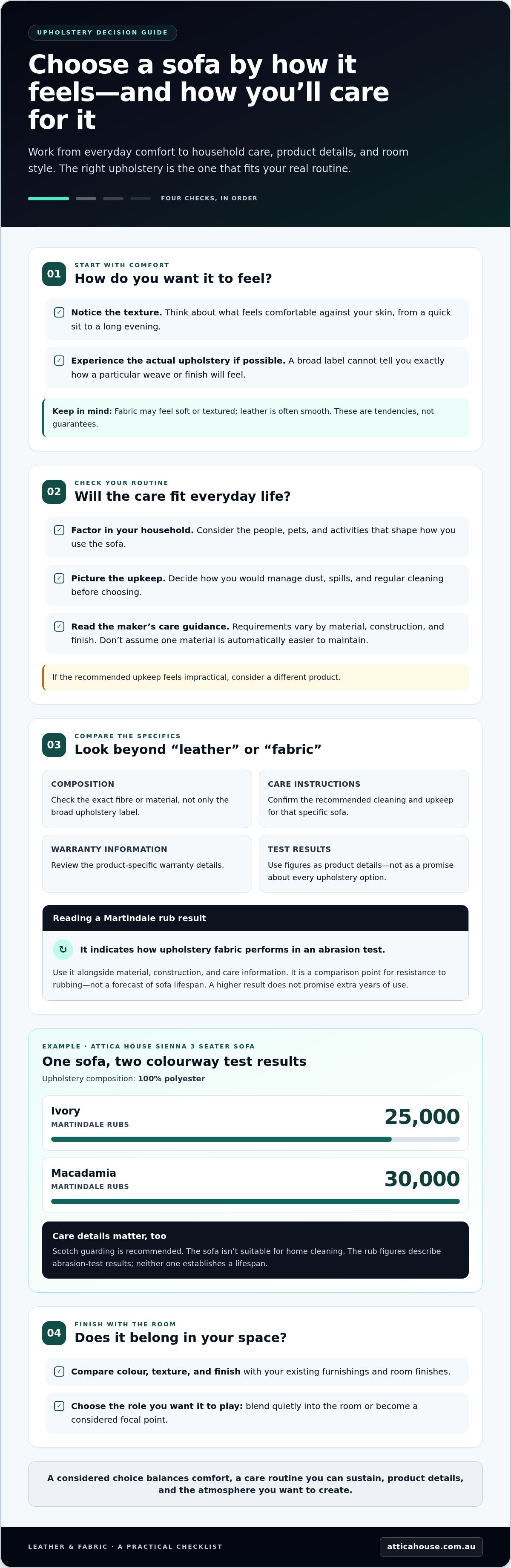
How to Choose Between a Leather and Fabric Sofa for Your Home
Work from everyday comfort towards appearance. This approach helps ensure a striking colour or finish doesn’t distract you from the routines that will shape how the sofa feels to live with.
- Set your comfort priorities. Think about the texture you enjoy against your skin and how the sofa feels during a quick sit or a long evening. If possible, experience the upholstery in person. Broad material labels can’t tell you exactly how a particular finish or weave will feel.
- Assess your care habits. Consider the people, pets and activities in your household, along with how you’d handle dust, spills and regular upkeep. Choose care instructions that fit your real routine, rather than assuming one material is automatically easier.
- Compare product details. Review upholstery composition, care guidance, warranty information and any test results on each product page. Treat each as a specific detail about that sofa, not a blanket promise about every leather or fabric option.
- Consider the room’s style. Look at colour, texture and finish beside your existing furnishings and room finishes. The sofa should feel at home in the space, whether it blends quietly or becomes a considered focal point.
Match upholstery to comfort and care preferences
Make a shortlist based on touch and upkeep before narrowing it by appearance. A broad label like “fabric” doesn’t reveal the exact fibre or texture, just as “leather” doesn’t specify its grade or finish. Product-specific information gives you a more useful basis for comparison. For a wider perspective on thoughtful furniture choices, explore this luxury furniture guide.
Use swatches and room styling to refine your choice
Compare upholstery with nearby finishes and furnishings in the light where the sofa will sit. Consider how its texture relates to the floor and rug, not just whether its colour looks appealing on a screen. Check colour alongside your room’s other materials, and think about whether you want the sofa to blend in or stand out. A handcrafted rug can also help bring different tactile elements together.
To compare sofa options with your comfort and care priorities in mind, explore Attica House sofas.
A Fabric Sofa Example: Assessing Attica House’s Sienna 3 Seater
A product page makes upholstery comparisons more tangible. The Sienna 3 Seater Sofa is a specific fabric-sofa example, not a direct comparison with leather. Its details show how to read material, abrasion results and care guidance together, rather than treating one specification as a verdict on comfort or long-term performance.
Read the Sienna sofa’s upholstery details accurately
Both Sienna colourways are upholstered in 100% polyester. The Ivory version has a 25,000-rub Martindale test result, while Macadamia has a 30,000-rub result. These figures describe the respective abrasion-test results; they don’t establish how many years either sofa will last, or determine which will better suit your room and routines. The leather vs fabric sofa debate is a reminder to assess the actual product, not just its material category.
Turn product specifications into a confident next step
Care information is just as important as a test result. For the Sienna, Scotch guarding is recommended, and the sofa isn’t suitable for home cleaning. Read that guidance as part of your decision: it sets a clear expectation for care, rather than inviting assumptions based on general advice about polyester upholstery. Both Sienna colourways also have a two-year warranty. The sofa measures 203.5 cm W × 98 cm D × 81.5 cm H, which can help you check its fit in your room before choosing. No assembly is required.
Use the same careful approach with any sofa you’re considering. Review its upholstery composition, care instructions, warranty and available test results together, then judge whether the details align with your comfort preferences and household routine. A specification is most useful when you understand what it tells you and what it doesn’t.
Ready to apply that considered approach to your own search? Explore Attica House and discover the sofas and furnishings available for your home.
Choose the Sofa That Feels Right for Everyday Living
The most confident choice is one you can picture living with, not simply admiring. Before deciding, imagine an ordinary week: where you settle in, how the room is used and what kind of upkeep feels reasonable. That practical picture can bring clarity to the leather vs fabric sofa debate and help you focus on the details that matter to you.
Use product information to turn that preference into a considered choice. The Sienna 3 Seater shows the value of reading upholstery composition, colour-specific abrasion results and care guidance together, rather than letting a single specification stand in for the whole experience. Apply the same attention to the sofa you’re considering, and let comfort, care expectations and the character of your interior guide your decision.
When you’re ready to shape a more welcoming living space, explore Attica House’s considered furniture collection. Compare the product details and choose a sofa that feels at ease in your home.
Frequently Asked Questions
Is leather or fabric better for a home with pets?
Neither leather nor fabric is automatically the better choice for a home with pets. Think about your animal’s habits: claws may mark surfaces, shedding can settle into upholstery, and accidents call for prompt, material-appropriate care. Before choosing, read the sofa’s cleaning guidance and consider whether its texture and construction suit your household. The leather vs fabric sofa debate is best settled by the specific product and your daily routine.
Can sunlight affect the colour of a sofa?
Yes, prolonged direct sunlight may affect upholstery colour, though the degree of change depends on the material, dye and exposure. Note where sunlight falls across the room during the day and consider whether the sofa will sit in a bright spot for long periods. Product-care guidance can offer material-specific advice; general assumptions about leather or fabric can’t predict how a particular colour will respond.
Does a higher Martindale rub count mean a sofa will last longer?
No, a higher Martindale result doesn’t guarantee a longer-lasting sofa. It gives one point of information about abrasion resistance, while the full picture also depends on construction, how the sofa is used and how it’s cared for. Compare results only as a like-for-like clue for the specific upholstery. Also review the product’s other specifications, since a single test figure can’t describe every aspect of wear.
Should I choose a sofa by upholstery colour or material first?
Start with comfort and care, then consider material and colour together. A shade that looks calm online may read differently in your room beside flooring, wall finishes and existing furnishings. If you can, compare a swatch in the space and look at it in different natural and artificial light. This helps you judge both the upholstery’s tactile character and the way its tone contributes to the room.