


How to Tell If a Rug Is Good Quality: A Practical Guide
What if the detail that tells you most about a rug’s quality is the one you can’t see in a product photo? A carefully styled image may show colour and pattern, but not the feel of the fibres, the structure of the weave or the finish at the edges. Knowing how to tell if a rug is good quality means looking beyond first impressions.
Material names and construction terms can be difficult to compare, especially when product descriptions use broad phrases such as “premium quality”. Quality isn’t decided by appearance, price or one specification alone. A good choice also needs to suit the way you live, whether it’s for a quiet bedroom or a busy shared space.
This guide explains what to look for in a rug’s materials, construction and finish, including what the back and edges can reveal. It also offers practical ways to compare those details with your room, household and intended use, so you can make a more informed choice.
Key Takeaways
- Learn how to tell if a rug is good quality by looking beyond styling to observable details at its edges, surface and back.
- Compare fibre, pile and construction information in the context of how and where you plan to use the rug.
- Use a simple buying checklist to clarify your needs, review specifications and consider care before deciding.
- Balance finish, material information and suitability rather than relying on premium appearance or price alone.
How to Tell If a Rug Is Good Quality: Start With the Finish
Beautiful styling can make a rug feel like the perfect choice, but it can’t show every detail of its workmanship. If you’re learning how to tell if a rug is good quality, look beyond colour and pattern to the observable finish: the edges, corners, surface and backing. These clues help you assess a rug, but no single detail proves quality on its own.
Rug quality comes from the combined effect of construction, finish and suitability for the way the rug will be used. Handmade pieces may have small, intentional variations, so don’t mistake every irregularity for a flaw. Start by understanding the item itself: The term rug is often used interchangeably with carpet, though rugs are generally smaller and loose-laid.
What should the edges and backing look like?
Look for edges that appear secure and evenly finished, without obvious unravelling or sections that seem to be separating. Check the corners for tidy, consistent detailing, then view the backing where possible. Its appearance should make sense alongside the construction described in the product information. Loose threads or uneven details are reasons to examine the rug more closely, not automatic proof that it is poorly made.
Can you judge a rug by how it looks?
Visual consistency can help you judge whether the pattern, colour and surface look considered and whether the design suits your room. Appearance alone can’t establish the exact fibre content, how the rug was made or how it will perform over time. Polished photography may soften texture or hide close-up details, while broad claims such as “premium quality” are hard to assess without specific information.
Use images as a starting point, not a final verdict. Zoom in on detail shots, compare them with the written specifications and check whether the finish looks consistent across the rug. If a handmade finish shows subtle variation, consider whether it looks deliberate and harmonious rather than assuming perfect uniformity is the only sign of care.
How Materials and Construction Shape a Rug’s Quality
A rug’s fibre, pile, construction and intended setting each contribute a different part of the quality picture. Fibre affects its feel and care needs; pile describes the visible and tactile surface; construction explains how the rug is assembled. Assess these details together, rather than judging any one in isolation. Material and construction are among the key factors in assessing a rug’s quality.
Material and construction make the most sense when assessed together, with the rug’s use and care in mind. A soft feel may appeal in a restful room, while a frequently used space calls for closer attention to the stated care instructions and construction details. These are considerations, not universal rankings. The right balance depends on your household and priorities.
Which material details are worth comparing?
Start with the stated fibre content. Specific descriptions are more useful than broad phrases such as “premium fibre” because they let you compare rugs and consider how each may feel and need to be cared for. Wool, synthetic fibres and blends can have different characteristics, so don’t assume one is best for every home. Read the care information and weigh it against the room, your household and the maintenance you’re prepared to do.
What does rug construction tell you?
Terms such as hand-knotted, hand-tufted and machine-made describe different ways a rug can be produced. The construction label helps explain how the rug is made, but doesn’t guarantee a particular standard. Workmanship and finishing still matter. Compare the construction details with the material information and visible finish, and consider whether they align with your needs.
That’s a practical way to approach how to tell if a rug is good quality: compare the stated details, then decide whether the material, pile and construction suit the room you have in mind. If you’re weighing up options for a considered interior, explore Attica House’s designer rugs with these criteria in view.
A Practical Checklist for Assessing Rug Quality Before You Buy
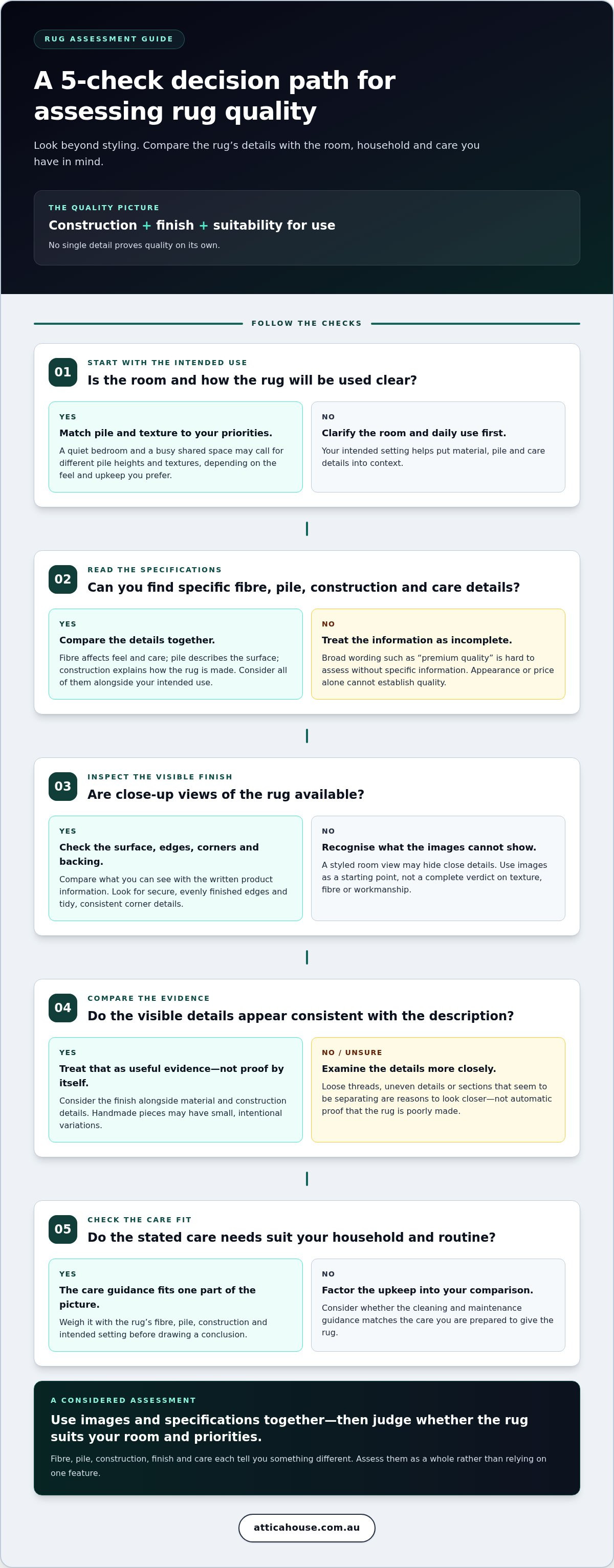
When shopping online, you can’t run your hand across a rug or inspect it in person, but you can still make a considered comparison. Use this checklist to assess how to tell if a rug is good quality, treating product details and images as complementary evidence.
- Clarify the use. Decide which room the rug is for and how it will be used. A quiet bedroom and a busy shared space may call for different pile heights and textures, depending on the feel and upkeep you prefer.
- Read the specifications. Look for the stated fibre, construction, pile details and care guidance. Specific information gives you something useful to compare.
- Inspect the finish. Review close-up images of the surface, edges, corners and reverse where available. Check whether the details appear consistent with the product description.
- Compare the evidence. Consider whether the photography and written details tell a coherent story. Images show appearance; specifications provide information that a styled image can’t convey.
- Assess care needs. Decide whether the cleaning and maintenance guidance fits your household and routine before choosing.
How can you assess a rug when shopping online?
Look for more than a room scene: close views of the pile, edges and backing can reveal details that a wide shot hides. Compare those views with the construction and fibre information instead of treating either source as complete on its own. When assessing a rug online, use the details shown in the images alongside the written specifications to build the clearest possible picture.
Which quality details matter for your household?
Think about daily activity, your preferred underfoot feel and how much care you’re comfortable giving the rug. Pile and texture influence how a rug feels in a space, so weigh those qualities against how the room is used rather than assuming one type suits every home. For broader context as you compare options, explore Attica House’s designer rugs and use the checklist to guide your selection.
Choose a Well-Considered Rug for Your Interior
A thoughtful choice brings together what you’ve learned about construction, finish and material information with the room’s everyday needs. No single feature settles the question of how to tell if a rug is good quality. A polished appearance or higher price alone can’t establish how a rug is made, how it should be cared for or whether it suits your home.
How do you balance quality, design and everyday use?
Begin by shortlisting rugs that make sense for the room. Consider how often the space is used, the feel and pile you prefer, and whether the stated care guidance fits your routine. Then compare colour, pattern and visual presence with the rest of the interior. This order helps keep an appealing design from overshadowing practical details.
Your priorities matter. One household may value a particular texture, while another may prefer a rug with care requirements that feel manageable. There’s no universal quality score that captures those differences. Instead, weigh the available construction and material details alongside the finish and intended use, then decide which trade-offs feel right for your space.
Explore designer rugs with a clear eye
As you browse, apply the same framework to each option: consider the room, read the product information, review the available images and think about care. Use the details you can see and compare them with the stated materials and construction. This keeps your decision grounded while leaving room for the design to speak to you.
Attica House offers designer rugs as part of a considered approach to interiors. Take your time comparing options, then explore designer rugs and begin shaping a space that feels both beautiful and well suited to daily life.
Make Your Next Rug Choice with Confidence
A rug can do more than anchor furniture. It can soften a room’s mood, bring a palette into focus and make a space feel more distinctly yours. The most satisfying choice isn’t necessarily the one with the grandest description or the highest price. It’s the one whose qualities make sense for the way you want to live. That’s the heart of learning how to tell if a rug is good quality: choosing with care, rather than chasing a universal ideal.
As you browse, keep your priorities in view and consider how each design might sit within your home. Attica House offers a curated range of designer rugs for customers across Australia.
Take the next step and explore Attica House’s designer rugs to find a considered starting point for a space that feels welcoming, balanced and entirely your own.
Frequently Asked Questions
How can you tell if a rug is good quality?
Assess its construction, stated materials, finishing and suitability together rather than relying on one feature. To understand how to tell if a rug is good quality, compare the product description with close-up details and care information. A striking pattern may suit your room beautifully, but appearance alone can’t verify what the rug is made from or how it’s assembled. Look for details that give a consistent account.
What is the best material for a high-quality rug?
There isn’t one best material for every room or household. Start by identifying the stated fibre, then consider the feel you want underfoot, where the rug will sit and whether its care requirements fit your routine. For example, a rug for a low-use reading nook may have different priorities from one in a frequently used living space. Compare specific product information, not broad claims about a fibre being best.
Does a heavier rug mean it is better quality?
No, weight alone can’t establish a rug’s quality. It may reflect several factors, including the fibres, construction and overall design, so a heavier piece isn’t automatically better made or more suitable for your room. Treat weight as one detail among others: consider it alongside the product specifications, the finish and the rug’s intended use. A lighter option may still align more closely with your practical needs.
Can you tell if a rug is good quality from photos?
Photos can help you assess visible details, but they can’t provide a complete quality judgement. Look for close views that show the surface and edges, then compare them with the written fibre and construction information. A styled room image is useful for judging colour and visual scale, but not for understanding the rug’s feel. Use the available images as part of your assessment, alongside the product information.
Are handmade rugs always better quality?
No. Handmade describes how a rug is produced, not a guaranteed level of quality. Compare the stated materials, construction details and finish, then consider whether the piece suits its intended place in your home. Small variations may be part of a handmade rug’s character, but they should still feel in keeping with its description. A handmade label is useful context, not a substitute for assessing the whole piece.