


What a Sideboard Is Used For in Dining Rooms and Beyond
A sideboard is as useful between meals as it is during them. If you’re wondering what a sideboard is used for, its traditional role is to provide a dining room with extra storage and a surface for serving food or displaying dishes. It can also bring practical storage and a considered focal point to a living room, hallway or other space.
That mix of function and presence is what makes a sideboard so versatile. Inside, it keeps dining essentials close at hand; on top, it provides space for serving dishes or a considered display. This guide explains what a sideboard is used for, how to choose one for your room and storage needs, and how sideboards, buffets and credenzas differ.
Key Takeaways
- Think of a sideboard as both practical storage and a useful surface for dining or display.
- Match its scale and storage layout to your room, furniture and everyday needs.
- Learn how sideboards, buffets and credenzas differ in form and common use.
- Style the top with serving pieces or personal objects, leaving breathing room for a composed look.
Sideboard definition and traditional dining-room purpose
A sideboard combines concealed storage with a broad, usable top. It’s often used in dining rooms, but the same piece can serve a different purpose in a living room, bedroom or hallway.
What Defines a Sideboard?
A traditional sideboard usually has cupboards or cabinets, one or more drawers and a wooden top. Drawers keep cutlery, napkins and candles organised; larger compartments hold dishes and serving pieces. This separation keeps dining essentials close without leaving them on view. The top provides a ready surface for food, serving dishes or a lamp.
Dining Room Storage and Serving Space
In a dining room, a sideboard provides concealed storage and a handy serving surface. Set out dishes on top so guests can serve themselves, with cutlery and napkins within reach in the drawers. After dinner, put supplies away to clear the dining table, especially useful when the room also serves as an everyday shared space.
Mixing and Matching with Dining Furniture
A sideboard doesn’t need to match every dining-room piece to feel at home. A timber sideboard, for instance, can relate to a dining table through a shared wood tone, while contrasting shapes or finishes add character. Repeat a colour, material or detail from the dining chairs or another feature to create a visual connection without making the room feel like a matching set.
Sideboards Across Dining and Living Rooms
Sideboards are commonly placed against a dining-room wall for storage and serving. In a living room, one can hold a television and store household items. To keep the arrangement balanced, consider the sideboard’s length in relation to the dining table and the available wall space. This helps the piece feel in proportion, whether the room is set up for meals or relaxing.
Choosing a sideboard to suit room size, layout and storage needs
Start with the space the sideboard will occupy. Measure the wall, nearby furniture and doorways along the route into the room. A compact sideboard can be 48 inches long, while pieces for grand dining rooms can reach 72 inches or longer. Choose a width that suits the available wall and leaves the room comfortable to move through.
Height shapes both the look and practical use of the furniture. Sideboards typically range from 30 to 36 inches high, so consider the window sill and anything displayed above the piece. If it sits beneath a window, keep its height below the window’s lower edge so it doesn’t block light. In a narrow space, a lower profile can help preserve an open feel.
Choose the storage layout to suit the items you want close at hand. Drawers work well for cutlery, napkins and smaller objects; cabinets can hold crockery, kitchenware and larger serving pieces. If you store dishes, prioritise cupboard space; if you reach for dining essentials often, look for accessible drawers. Matching the layout to your routine makes a sideboard easier to use.
A sideboard can store more than dining essentials. In a bedroom, it can hold linens, bedding, books or clothes; in a home office, it can organise files and stationery. In a living room, cupboards can conceal board games and household items. Consider what you need to store, how often you use it and whether drawers or cabinets will make access easier. These choices help the piece suit both the room’s layout and your routine.
Differences between sideboards, buffets and credenzas
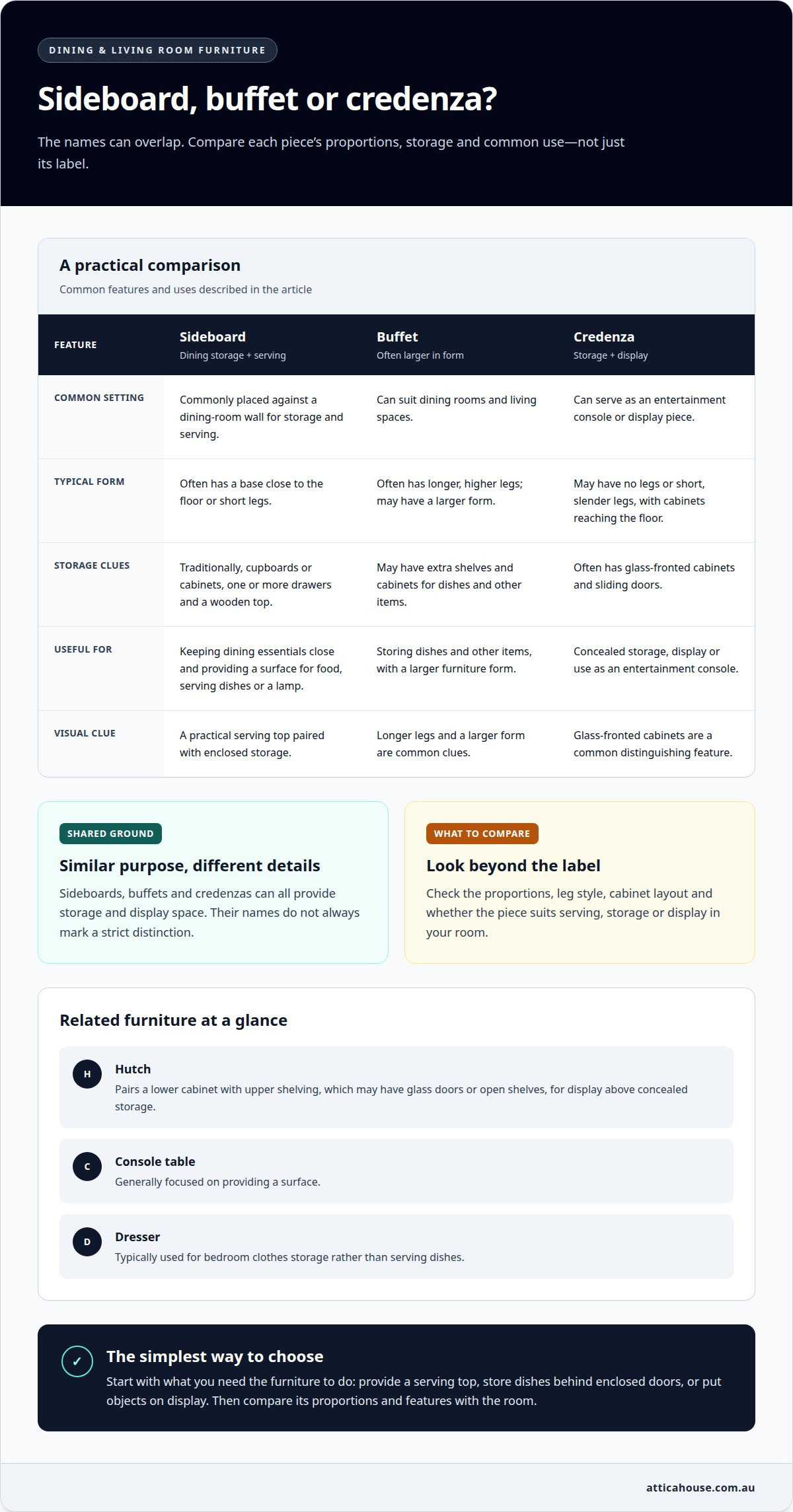
Sideboard, buffet and credenza can describe similar storage furniture, so the names don’t always mark a strict distinction. A sideboard is commonly associated with dining-room storage and serving. A buffet may have longer, higher legs, a larger form or extra shelves and cabinets for dishes and other items. A sideboard-style piece may also be called a server. Compare the proportions and features, not just the label.
Legs offer one visual clue. Short legs or a base close to the floor are often associated with a sideboard; longer legs supporting smaller cabinets or drawers are more characteristic of a buffet. Buffets can also suit living spaces, while sideboards are commonly used to store and serve dining essentials. Both can provide storage and display, so compare their layout and proportions for your needs.
A credenza resembles a sideboard but often has glass-fronted cabinets. It may have no legs or short, slender legs, floor-reaching cabinets and sliding doors, and can serve as an entertainment console or display piece. A console table is generally focused on providing a surface, while a cabinet is a broader term for enclosed storage. A dresser is typically used for bedroom clothes storage rather than serving dishes.
A hutch has a distinct silhouette, pairing a lower cabinet with upper shelving that may have glass doors or open shelves. This puts dishes and decorative pieces on display above concealed storage. For a dining room, decide whether you need a simple serving top, enclosed cabinets for dishes or shelving for display. What the furniture does matters more than its name.
Serving food and displaying serving dishes
A sideboard’s top can switch from display space to serving surface as the occasion calls for it. Group useful items together, then leave clear space for food or serving dishes.
Serving Food from a Sideboard
For a shared meal, use the sideboard as a buffet surface, arranging serving dishes within easy reach. Keep plates, cutlery and napkins nearby, and leave enough clear space for the food. After the meal, return serving pieces to storage so the top can resume its decorative role. This flexible setup helps keep the dining table clear and the room considered.
Styling and Organizing the Surface
To style a sideboard, combine a few objects of different heights, such as a vase, candles and framed photos. For a curated look, modern home products from ByTikac can bring both practical utility and contemporary design to your arrangement. Collectible plates, travel keepsakes or a small ornament can add personal character. Leave space between groupings so each piece can be appreciated. Keep frequently used serving dishes accessible, and give treasured objects a more prominent place.
A sideboard can also anchor a room’s visual composition. Hang art above it to create a focal point, then add shape with a plant or sculptural ornament. For a quieter look, repeat a colour from nearby furniture in a candle or vase. In a living room, a credenza can serve a similar display purpose, with the arrangement suited to its setting.
Think of the surface as a changing vignette rather than a permanent arrangement. For a dinner, clear space for platters; on an ordinary day, bring forward family photographs or a favourite collectible. Explore furniture for a thoughtfully composed home as you consider how display and function can work together.
Attica House
Attica House helps Australian readers bring practical storage and considered style together through its curated furniture range. If you’re choosing a sideboard for dining, storage or display, its Buffets & Cabinets sit naturally alongside pieces such as Dining Tables, Console Tables and Coffee Tables. Considering how these elements relate can help create a room that feels balanced, rather than assembled one item at a time.
Turn to Attica House when you’re ready to explore furniture that can complement your room’s function and character. A carefully chosen piece can support everyday routines while giving the interior a more composed feel. For guidance on your next furniture choice, contact Attica House.
Make Room for the Way You Live
Knowing what a sideboard is used for can guide more than a furniture choice. Consider how you want your home to support everyday routines, shared meals and personal displays. Choose a piece that suits the room now while leaving room for your needs and style to evolve.
Explore Attica House Buffets & Cabinets alongside Coffee Tables and Console Tables to make considered choices across connected living spaces. Let each room’s function guide your selection, and use materials, finishes and forms to create a sense of continuity.
If you’re ready to explore a piece for your home, contact Attica House. A thoughtful choice can make daily living feel more settled, welcoming and distinctly yours.
Frequently Asked Questions
What Is a Sideboard?
A sideboard is a freestanding storage piece with a usable top, usually placed against a wall. In a dining room, it can support serving and conceal household items; elsewhere, it can provide display space or practical storage. In an open-plan home, for example, it can help define the dining area without acting as a divider.
What Is a Sideboard in Furniture?
A sideboard is a low, broad cabinet that combines storage with a usable top. Drawers and cupboards set it apart from a simple table, while the top can hold decorative objects or serve a practical purpose. Depending on the room and what you want to keep nearby, a sideboard can suit a dining room, lounge or hallway.
What Is a Sideboard Used for in a Dining Room?
In a dining room, a sideboard supports meal preparation and hosting by keeping useful items close to the table. For a family lunch, you might set out serving platters and glasses on top, then store table linens nearby for easy access. It can also provide a place to arrange a water jug or spare dishes, leaving the dining table clearer for guests.
What Items Are Typically Stored in a Sideboard?
A sideboard can store cutlery, crockery, napkins, table linen and serving utensils. Use smaller drawers for teaspoons or placemats, and cupboards for larger dishes or tableware. Arrange items according to how often you use them: keeping everyday plates near the front, for example, makes them easier to reach than occasional serving pieces stored further back.
Can a Sideboard Be Used as a TV Stand or Hallway Storage?
A sideboard can work as a TV stand or hallway storage if its proportions suit the space and the task. Before placing a television on it, make sure the screen sits securely and at a comfortable viewing height. In an entryway, cupboards can conceal household essentials, while the top provides space for a lamp, keys or a small decorative object.
What Is the Difference Between a Sideboard, Buffet, and Credenza?
The names overlap, but their common features can help distinguish the pieces. Sideboards often have a low base or short legs; buffets are more likely to have longer legs and may be larger. A credenza commonly has sliding doors and cabinets close to the floor, and may serve as storage or an entertainment console. Compare the shape and storage layout, since labels can vary.