


Modular Lounge Layouts and Finishes for Family Homes
A family lounge doesn’t have to be one fixed sofa to feel settled and welcoming. To understand what a modular lounge is, picture seating made from separate sections that can be arranged together, from an open-ended sofa to a corner setting. The pieces can be rearranged or added to over time, making a modular layout practical as family needs change.
It’s natural to wonder whether a modular arrangement feels as comfortable and cohesive as a traditional sofa. The key difference is flexibility: a traditional sofa keeps its shape, while modules let you adapt the seating to your room and routines. The right choice depends on your available space, preferred layout and how much flexibility you want.
This guide explains configurations for different room sizes, upholstery and finish considerations, and how modular lounges compare with traditional sofas. You’ll learn how to plan the footprint and choose a look that feels considered and inviting in your home.
Key Takeaways
- Understand how separate seating modules connect and adapt, so you can choose a layout that can evolve with family life.
- Match the configuration to your room by planning the full footprint, circulation paths and nearby furniture before settling on an arrangement.
- Weigh upholstery by its feel, appearance and practical demands to find a finish that suits both your home and everyday routines.
- Compare flexible modular seating with a traditional sofa to decide which better fits your family’s space, moving needs and preferred look.
What a modular sofa is
If you're asking what a modular lounge is, it’s a sofa made from separate sections, or modules, designed to work together. Unlike a fixed sofa, its layout can change as your room or family’s needs shift.
Modular Sofa Definition and Construction
Each module is a portable seating section that connects with others to form a complete sofa. Joining brackets or clips underneath help keep the pieces from sliding apart during everyday use. Look at how the modules connect and which arrangements they support: a compatible collection might form an open-ended sofa or a corner setting. This construction makes it possible to rearrange selected sections or expand the configuration over time.
Adapting to Room Layouts
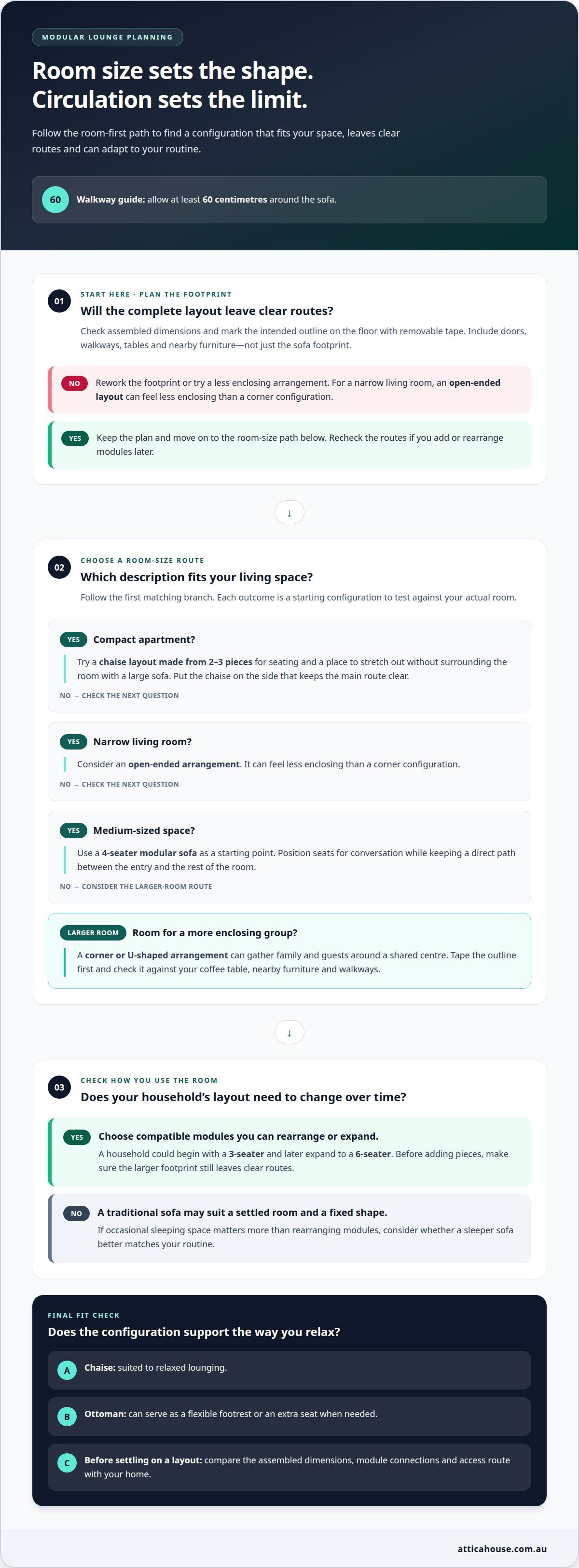
Start by measuring the complete footprint of your intended layout, then allow space to move around it. Account for doors, walkways, tables and other furniture, rather than filling every available centimetre. One guide is to leave at least 60 centimetres of walkway space around the sofa. For example, an L-shaped arrangement for a family room can use 4-5 modules, while a 5-seater U-shaped layout can create a generous setting for hosting.
Modularity also suits changing homes and family lifestyles. A small-apartment household could begin with a 3-seater configuration and later expand it to a 6-seater modular sofa. Before adding modules, consider whether the new footprint will still leave clear routes through the room. The ability to rearrange sections can also help adapt seating when a room’s purpose changes.
A traditional sofa may suit a household that prefers one fixed shape and has a settled room layout. It’s also a straightforward choice when you want a single, familiar seating piece rather than a configuration that can expand. A sleeper sofa may be a better fit if occasional sleeping space matters more than rearranging modules. In either case, compare the sofa’s function with your room size and daily routines before choosing.
Choosing a configuration for different room sizes
Before buying a modular lounge in Australia, check the assembled dimensions, module connections and access route. Compare the layout with doorways, walkways and tables to make sure the seating works in your room, not just on a floor plan.
In a compact apartment, a chaise layout built from 2-3 pieces can provide seating and a place to stretch out without surrounding the room with a large sofa. Arrange the chaise on the side that keeps the main route clear. For a narrow living room, an open-ended arrangement can feel less enclosing than a corner configuration.
For a medium-sized space, a 4-seater modular sofa offers a useful starting point, with the option to add pieces as your household’s needs change. Position the seats to support conversation while keeping a direct path between the entry and the rest of the room. This helps balance everyday comfort with easy movement.
A larger living room may accommodate a corner or U-shaped arrangement that gathers family and guests around a shared centre. Before settling on a shape, mark its outline on the floor with removable tape. This shows how the seating relates to a coffee table, nearby furniture and walkways.
Try each configuration against your daily routine. A chaise suits relaxed lounging, while an ottoman can provide a flexible footrest or extra seat when needed. If you’re considering an ottoman, explore ottoman seating options as part of the room’s overall arrangement.
A showroom visit can help you judge seat comfort, scale and how the frame feels in person. Compare the displayed seating with the dimensions and layout planned for your home.
Choose upholstery alongside the configuration, since colour and texture affect how the sofa sits within the room. A pale finish can keep a compact layout visually light, while a deeper tone can give a generous corner setting a composed presence. Consider how the fabric feels and suits your household’s routines.
Fabric, leather, colour and finish options
Upholstery shapes how a modular sofa feels in daily use and looks within a room. Fabric can bring a soft, textured quality, while leather has a distinct look and feel. Compare both with your household’s routines, comfort preferences and existing finishes, rather than choosing by colour alone.
For homes with children or pets, synthetic-blend upholstery is often easier to clean and more resistant to wear. That can make it a practical option for frequently used seating. Read the care guidance for the specific fabric, then consider how its texture and appearance will work across every section, including pieces that may later be rearranged.
Leather offers a different tactile and visual character. Its finish can influence the overall impression, from understated to polished, so compare it with the flooring, timber and other surfaces in your living room. For example, a warm leather tone can complement timber furniture, while a darker finish can contrast with pale walls.
Colour also affects how the full configuration reads. A light neutral may blend quietly into a compact space, while a deeper colour can define a larger seating arrangement. Consider the sofa alongside rugs, cushions and window treatments to choose a cohesive palette instead of selecting upholstery in isolation.
Before buying, order fabric or leather samples where available. Place each beside the materials and colours already in your home, then view it in natural and artificial light. A fabric that appears muted in one setting may look brighter beside a pale rug or timber floor. Comparing samples gives you a clearer sense of colour and texture.
Finally, consider whether all modules should share one finish or whether contrast would suit your room. A consistent fabric creates a unified appearance across separate sections. An accent colour can add character, but keep the wider palette in mind so future rearrangements still feel intentional.
Modular lounges compared with traditional sofas
A traditional sofa keeps one shape, while modular sofas use separate pieces that can be rearranged. That difference matters when a living space changes: a corner configuration can become open-ended, or additional modules can create more seating. In an apartment with a fixed floor plan, a traditional sofa may be simpler. If you expect to move or adapt your room, modular furniture offers more flexibility.
Moving is another practical distinction. A traditional sofa must pass through doorways and hallways as one large item, which can make access difficult in apartments with narrow entries or stairs. Modular sections can be separated for transport and reassembled in a new home. Before buying, compare the full dimensions of each configuration with the route into your home, including tight turns and door openings.
Neither format is automatically more comfortable. Seat depth, support, upholstery and how your family uses the lounge all shape comfort. Try the seating in person where possible, and consider whether your preferred arrangement suits conversation, reading or stretching out. A fixed sofa can feel cohesive and straightforward; modular pieces suit people who value the freedom to change their layout.
How much does a modular lounge cost in Australia? There’s no single set price: the total depends on the number and type of modules, upholstery and configuration. A larger arrangement uses more pieces, while fabric or leather selection also affects the final price.
How do you clean and maintain a modular lounge? Vacuum between the sections once a week, blot spills immediately with a clean cloth, and use mild detergent. Rotating middle modules every few months can encourage more even wear.
Choose a traditional sofa for a settled layout and one-piece simplicity; choose modular seating if adaptable pieces better suit your home. Explore sofa styles for your living space to consider the look alongside your preferred layout.
Attica House
Attica House helps you consider how complementary furniture can bring a modular lounge into a thoughtfully composed living space. Its curated collection includes coffee tables, buffets and cabinets, console tables and dining tables, each of which can shape how the room feels and functions around its seating.
For example, consider how a coffee table relates to the lounge’s arrangement and the space needed to move around it. A buffet or cabinet can add storage elsewhere in the room, while a console table can furnish an entry or wall. Choosing these pieces with the lounge’s scale, finish and role in daily life in mind helps create a cohesive home.
Contact Attica House to explore furniture for your living space.
Let your living room evolve with you
The right lounge should feel at home in the life you lead now, while leaving room for that life to change. Before deciding, picture an ordinary day in your living room: where people gather, where a quiet moment happens, and how the room works when everyone is home. That everyday picture can guide a personal choice, rather than one dictated by a passing trend.
Understanding what a modular lounge can offer is a useful starting point, but your home’s character comes from how each piece works together. Let the lounge set the mood, then consider the details that make the space feel complete and distinctly yours. A considered choice can bring ease to daily routines and make room for new ones.
If you’re ready to explore the next step for your home, contact Attica House about your lounge plans. Move forward at your own pace, with a clearer sense of the atmosphere you want to create.
Frequently Asked Questions
Are modular sofas suitable for family homes?
Yes, modular sofas can suit family homes where seating serves different routines. A family might arrange sections for shared film nights, then create more open space for play or visitors. Consider how the lounge will be used throughout the day, and choose upholstery with your household’s care and wear needs in mind. The most useful layout works for lively gatherings as well as quieter moments.
Can I Customize the Fabric, Color, or Finish of My Lounge?
Fabric, colour and finish choices depend on the sofa’s design and available options. Customising may mean choosing from a range of upholstery colours rather than changing the lounge itself. To judge a shade accurately, compare a fabric or leather sample with your flooring, curtains and other furnishings. View it in daylight and evening lighting, since surrounding surfaces can make the same colour appear different.
Can modular sofas be rearranged after purchase?
Yes, modular sofas are made from sections designed to work together, so compatible pieces can be rearranged after purchase. You could shift a chaise from one side to the other or separate sections to suit a changed room setup. Before moving pieces, identify how they join and follow the sofa’s assembly guidance. This helps keep the modules connected as intended in their new arrangement.
How Do I Choose Between a Modular Lounge and an L-Shaped Lounge?
An L-shaped lounge describes a layout, while modular describes how the sofa is made. An L-shaped lounge may be modular or have a fixed shape. Choose modular seating if you value the option to rearrange compatible sections; choose a fixed L-shaped design if its footprint suits your room. Sketch the layout and consider which side should form the longer section before deciding.
How do modular couches differ from traditional sofas?
Modular couches consist of separate sections designed to form different seating arrangements; traditional sofas generally keep one fixed configuration. This distinction matters if your furniture needs to adapt to a new room or household routine. A traditional sofa may suit a settled space where you prefer a consistent silhouette. Compare the shape you need now with how much flexibility you may want later.
What are the advantages of modular furniture?
Modular furniture lets you organise compatible pieces around how a room is used, rather than committing to one permanent arrangement. In a living room that also hosts visitors, sections can be positioned to support conversation, then rearranged for another purpose. This approach can also help coordinate seating with other furnishings. Its main benefit is choice in how the pieces work together.