


Luxury chandeliers for modern and traditional interiors
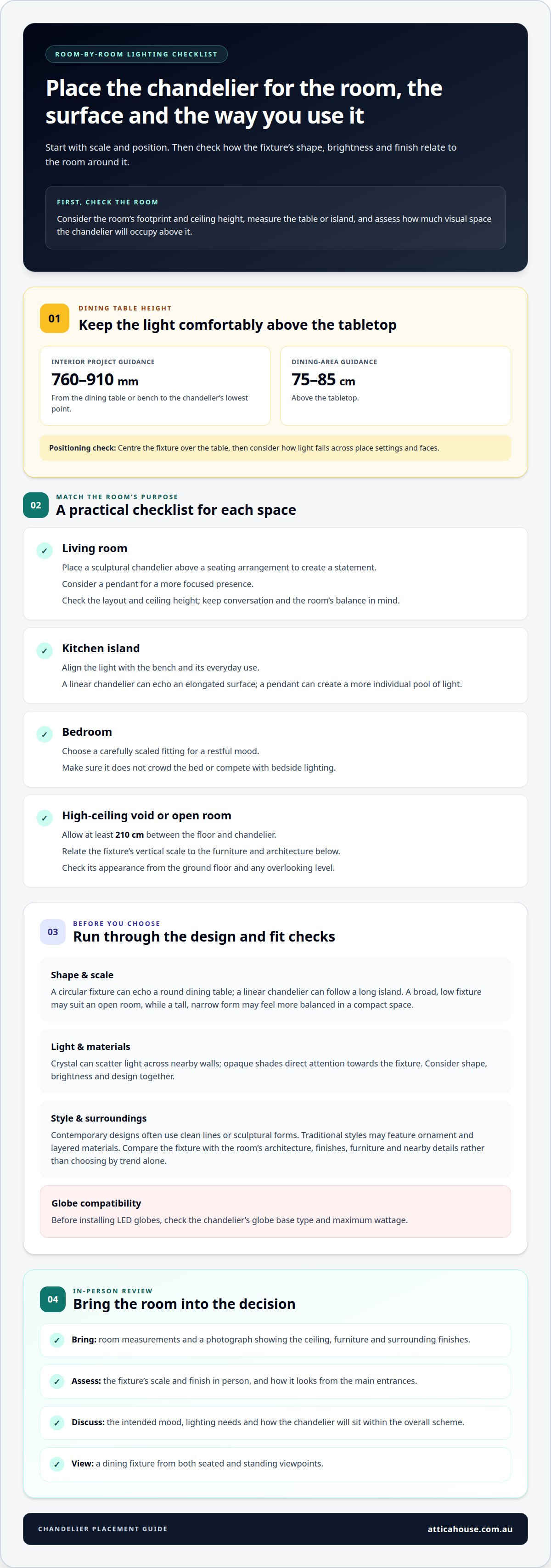
The right chandelier is sized to the room and positioned with purpose: for a dining area, hang it about 75-85 cm above the tabletop. Luxury chandeliers can become a room’s focal point, so consider their shape, light and design alongside the space they’ll occupy.
Choosing luxury chandeliers means balancing visual impact with comfort. A fixture that suits your dining table may overwhelm a bedroom, while the right silhouette can add warmth and definition to a living room or kitchen island.
This guide explains how to assess scale and style, position a chandelier in different rooms, and choose between modern and traditional looks. Use these practical checks to make the light feel considered within the room, rather than simply suspended above it.
Key Takeaways
- Choose a fixture in proportion to the room and the surface beneath it, considering its shape and brightness as well as its visual impact.
- Adapt placement to the room’s purpose so the light feels comfortable above dining tables and kitchen islands, and balanced in living rooms and bedrooms.
- Pair contemporary or traditional details with your existing finishes to create harmony without losing the chandelier’s character.
- Use a statement fixture to establish a focal point, then support it with complementary furniture and décor for a more cohesive interior.
How to Choose the Right Size Modern Chandelier
Start with the room’s footprint, ceiling height and the surface beneath the fitting. Measure the table or island, then assess how much visual space the chandelier will occupy above it. A broad, low fixture can suit an open room, while a tall, narrow form may feel more balanced in a compact space. Check the silhouette from the main entrances, too. The right scale lets luxury chandeliers transform a room without overwhelming its furniture.
Consider shape, brightness and design together. A circular fixture can echo a round dining table; a linear chandelier can follow a long island. Reflective and opaque surfaces affect how light is distributed: crystal can scatter light across nearby walls, while opaque shades direct attention towards the fixture. Before installing LED globes, check the chandelier’s globe base type and maximum wattage. The J. Paul Getty Museum describes an ancient Roman terracotta chandelier lamp with twelve short, rounded nozzles around its ring, a reminder that light placement has long shaped a fixture’s character.
For Italian chandelier design, look closely at the balance between decorative detail and craftsmanship. Contemporary designs often use clean lines or sculptural forms; traditional styles may draw attention through ornament and layered materials. Local and international lighting designers bring different visual references to these choices. Compare how each design relates to your room’s architecture, rather than choosing by trend alone.
A showroom visit can help you judge a fixture’s scale and finish in person. Bring room measurements and a photograph showing the ceiling, furniture and surrounding finishes. During a design consultation, discuss the intended mood, the room’s lighting needs and how the chandelier will sit within the overall scheme. For example, a sculptural fitting above a dining table should feel considered from both seated and standing viewpoints. These steps make a stunning design choice more grounded in the way you use the space.
Lighting for dining tables, living rooms, kitchen islands and bedrooms
In dining areas, centre the chandelier over the table to establish a clear gathering point. For most interior projects, position its lowest point 760mm to 910mm above a dining table or bench. Dining-area guidance also places chandeliers about 75-85 cm above the tabletop. Consider how the light falls across place settings and faces, and keep the fixture visually balanced with the table beneath it.
A living room needs lighting that supports conversation without dominating the space. A sculptural chandelier can make a statement above a seating arrangement, while a pendant creates a more focused presence. Consider the layout and ceiling height before choosing between them. A classic silhouette can lend sophistication; a contemporary design may create a sharper focal point.
For a kitchen island, align the light with the bench and its everyday use. A linear chandelier can echo an elongated surface, while a pendant creates a more individual pool of light. In a bedroom, a carefully scaled fitting can establish a restful mood without crowding the bed or competing with bedside lighting.
High-ceiling voids need attention to vertical scale. In open rooms, allow at least 210 cm between the floor and chandelier. A statement fixture can draw the eye upward, but its shape should still relate to the furniture and architecture below. Consider how it appears from the ground floor and any overlooking level.
Compare a chandelier collection by how each piece shapes the room, not simply by its finish. Chandeliers often serve as the central statement, while pendant lights provide a more contained accent. To add a lower, more intimate glow beside a sofa or reading chair, explore a gold floor lamp as part of the lighting scheme.
Chandelier styles for contemporary and traditional interiors
In Australia, relate a chandelier’s style to the room’s architecture, materials and existing finishes. Compare its visual character with the dining furniture and surrounding details before choosing a fixture.
Classic Crystal and Sleek Contemporary Styles
A classic crystal chandelier brings sparkle as its facets catch and refract light. Its detailed form can complement traditional mouldings, timber furniture or a dining room with rich finishes. Sleek contemporary designs take a different approach, using pared-back lines, open forms and restrained materials. In a minimalist interior, consider whether the fixture adds definition without competing with other shapes. Compare the crystal’s shimmer with the room’s natural textures.
Style Trends
Rather than choosing a chandelier only because it feels current, look for design qualities that suit your home over time. Sculptural silhouettes can create a strong focal point, while warm-toned materials soften clean contemporary spaces. In a traditional room, a classic crystal fixture can reinforce existing decorative details. Consider how its finish relates to nearby hardware, furniture and wall colours. This keeps a distinctive choice connected to the rest of the interior.
Chandelier Styles and Types
Think of style and type as related decisions: style describes a fixture’s character, while type describes its overall form. A crystal chandelier may feel ornate or streamlined, depending on its shape and detailing. Linear designs suit long furniture arrangements, while circular forms can echo rounded tables. In a contemporary Australian home, compare these outlines with the room’s materials and architecture. A considered match makes the chandelier feel integrated, not simply decorative.
Before deciding, view the fixture from different points in the room. Check how its finish sits beside timber, metal or glass, and whether its details complement nearby furniture. These comparisons help you spot a lasting fit and avoid a style that feels disconnected.
Chandeliers as statement pieces and focal points
A focal point gives the eye a place to settle, and a chandelier can provide that centre. In an open-plan living and dining area, a sculptural fixture can define the dining zone without adding a wall. When choosing luxury chandeliers, make one element visually dominant, then let furniture and smaller decorative pieces support it. This creates hierarchy rather than competition.
Start by identifying the view that matters most: the sightline from an entry, the centre of a dining table or the perspective from a living room sofa. Choose a design that reads clearly from that position. A broad, open silhouette may stand out against a quiet ceiling, while intricate detailing can bring character to a simpler interior.
A finish shapes the atmosphere as much as form. A reflective surface catches surrounding light and draws attention upward; a subdued finish can make a dramatic outline feel more restrained. Relate the chandelier’s metal or glass to nearby pieces, such as dining chairs, table hardware or framed artwork. Repeating one material helps connect the fixture with the room without matching every surface.
Treat the ceiling as part of the composition. In a room with decorative moulding, a chandelier with elaborate details may echo the architecture. Against a smooth ceiling, a strong geometric form can create contrast. Keep the surrounding area visually calm: a patterned rug, layered artwork and ornate fixture may compete unless they share a consistent colour or shape.
Use this practical sequence: identify the main viewing angle, choose the fixture’s visual role, then coordinate its finish with nearby materials. Finally, assess the room with the chandelier switched on and off. A crystal design, for example, can add sparkle when illuminated and remain a sculptural presence in daylight. This deliberate approach helps a statement fixture bring cohesion, character and atmosphere to your interiors.
Attica House: Luxury Outdoor Furniture
Attica House offers chandeliers alongside furniture to help create a cohesive home interior. If you’re choosing a statement light, consider how its finish and silhouette might sit with nearby pieces, such as Buffets & Cabinets or Coffee Tables. Luxury Outdoor Furniture can carry a considered aesthetic into outdoor spaces.
These pieces can help establish visual continuity between rooms, while allowing each area to retain its own character. A chandelier can anchor the room; complementary furniture can support the atmosphere without competing for attention. Explore the collection at your own pace, then contact Attica House to discuss your selection.
Let the lighting shape what comes next
A chandelier can be more than a finishing touch; it can set the mood for the rest of a room. As you refine your interiors, consider how its presence relates to the furniture and textures around it. Luxury chandeliers feel most personal when they express the character of your home, rather than follow a look for its own sake.
Attica House offers Buffets & Cabinets, Coffee Tables and Console Tables, giving you considered furniture choices to bring into the same visual conversation. For a softer layer of light, explore gold floor lighting alongside your chandelier selection.
Let each choice support the atmosphere you want, from a welcoming dining space to a restful corner. A thoughtful combination can make everyday rooms feel composed and distinctly yours.
Frequently Asked Questions
Are LED bulbs suitable for modern chandeliers?
Yes, LED globes can suit a modern chandelier when they meet its requirements. Check the fixture’s globe base type and maximum wattage before choosing compatible globes. This helps avoid an unsuitable fit or exceeding the stated limit. Consider the light’s colour and brightness, too: a warm tone can soften a dining area, while a clearer light may suit a practical workspace.
Can I customise a chandelier to suit my specific design preferences?
You can tailor the overall look by choosing a chandelier that complements your preferred materials, shape and interior style. Consider how its finish relates to existing furniture and hardware, and whether its silhouette suits the room’s architecture. This means selecting a design that feels cohesive with your home’s character and the atmosphere you want, rather than having a fixture custom-made.
Can I install a chandelier myself, or do I need a professional?
For a hardwired chandelier, or a fixture that is heavy or difficult to position, professional installation is the safer practical choice. An experienced installer can assess the ceiling support, mounting point and electrical connection before fitting it. Avoid attempting work beyond your experience, particularly if the existing wiring or ceiling structure needs alteration. Planning installation around access and furniture placement can also help protect the room.
Do modern chandeliers suit open-plan living areas?
Yes, a modern chandelier can help give an open-plan area a sense of structure. For example, place a distinct fixture above the dining zone to visually separate it from a nearby lounge without blocking sightlines. Keep its form in harmony with the room’s other finishes, and consider how it looks from connected areas. A consistent design language helps unify the open space while each zone keeps its purpose.
How do I clean and maintain my chandelier?
Follow the care instructions supplied with the fixture, since crystal, glass and metal finishes can need different treatment. Turn the light off and let the globes cool before cleaning. Use a soft, dry cloth for routine dusting, and avoid abrasive materials that could mark delicate surfaces. For a chandelier with many small components, clean a manageable area at a time and support parts to prevent unnecessary strain.
How to Select the Ideal Chandelier for My Space?
Start by deciding what the chandelier needs to do: anchor a dining setting, add atmosphere to a bedroom or define a seating area. Then compare its shape and finish with the room’s architecture and furnishings. A crystal design may bring sparkle, while a simpler outline can suit restrained interiors. Choose luxury chandeliers that express your taste and feel at home in daily life.