


How to Match a Rug with Furniture: The Art of Refined Coordination
A rug is far more than a mere floor covering; it is the visual soul that anchors your furniture’s narrative. Most homeowners understand that a space feels incomplete without one, yet the challenge of how to match a rug with furniture often leads to a sense of creative paralysis. You might find yourself questioning if a bold pattern will clash with your designer sofa, or if the cool elegance of a marble coffee table will be diminished by the wrong pile height. These uncertainties are natural when you're striving for a home that reflects a sophisticated, lived-in luxury rather than a showroom floor.
Mastering this interplay is about finding harmony between texture, scale, and colour to transform your living space into a cohesive, designer-led sanctuary. We'll share the secrets to refined coordination, giving you the confidence to mix materials like velvet and stone with handcrafted textiles. We'll explore how to select dimensions for large-scale seating and use tonal layers to evoke a sense of calm. By the end, you'll possess the expertise to curate an environment where every element feels intentional, balanced, and beautifully at home.
Key Takeaways
- Discover why a rug serves as the essential foundation of a room, grounding designer sofas to create a space that feels deeply intentional and secure.
- Master architectural placement techniques that define the scale of your environment, from expansive luxury to intimate, open-plan balance.
- Learn the nuances of how to match a rug with furniture by creating material harmony, such as pairing the cool weight of marble with rich, tactile textures.
- Gain the confidence to blend patterns and palettes using professional design ratios that foster a sense of internal calm and visual symmetry.
Understanding the Visual Anchor: Why Rugs and Furniture Must Converse
A rug acts as the silent conductor of a room's symphony. It serves as the physical and visual foundation that prevents your belongings from appearing adrift. When considering how to match a rug with furniture, it's vital to view the rug as an anchor that secures the visual weight of your pieces. A substantial designer sofa, for instance, requires a generous rug to provide a sense of stability. Without this base, even the most exquisite furniture can feel untethered, floating in a way that disrupts the room's flow. This dialogue between the floor and eye-level elements relies on fundamental interior design principles to create a sanctuary that feels grounded. When these components converse, the home transforms into a true refuge, offering a psychological sense of security and internal balance.
The Role of the Rug in Open-Plan Living
In the context of spacious Australian homes, rugs function as vital architectural tools. They create "islands" of intimacy within vast, open-plan areas, allowing you to define distinct zones without the need for restrictive walls. By placing a handcrafted rug beneath a dining table or a curated lounge suite, you establish clear boundaries between social and culinary spaces. This technique fosters a feeling of curated structure while maintaining the airy flow of modern living, ensuring each area feels like a purposeful destination rather than a transitional space.
Establishing Your Style Narrative
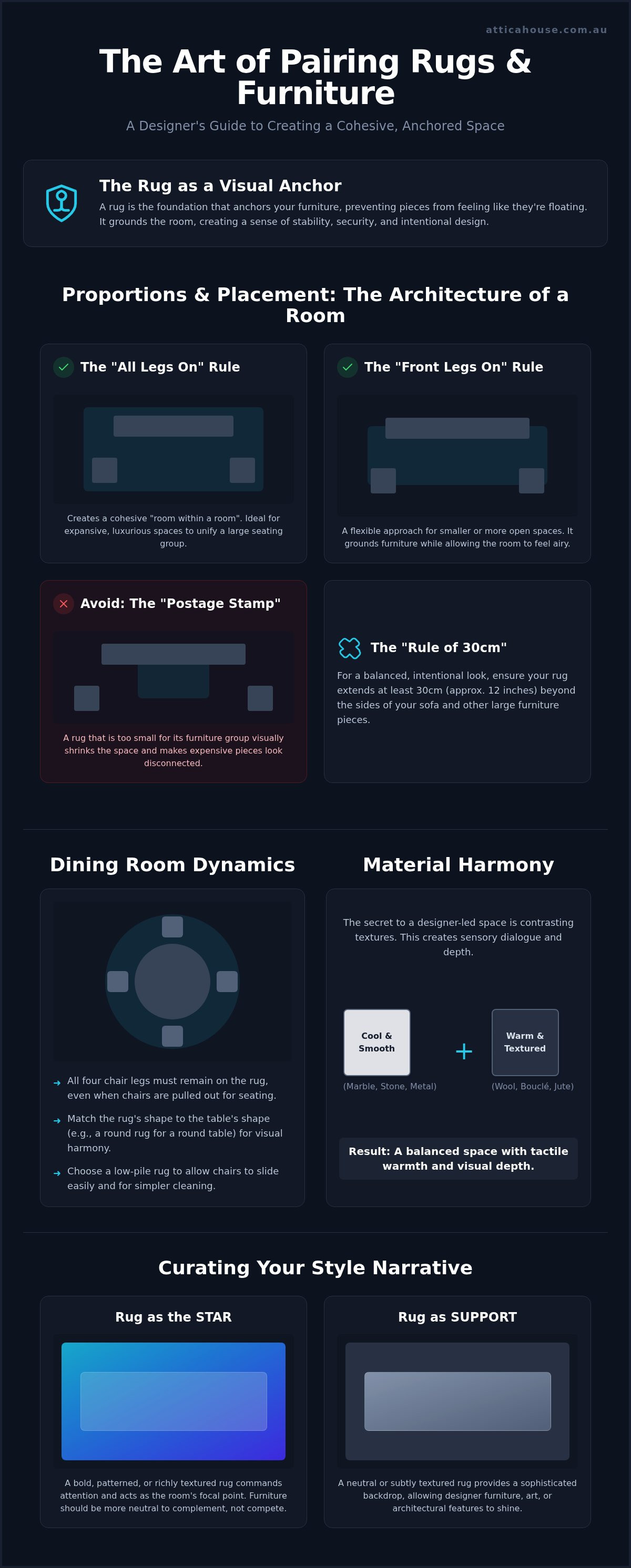
Every room tells a story where you decide the hierarchy of attention. Sometimes a rug is the lead actor, commanding notice with intricate patterns or bold textures that invite the eye to linger. Other times, it serves as the supporting cast, providing a neutral, sophisticated backdrop that allows your designer furniture or marble coffee tables to shine. Spatial harmony is the balance between tactile comfort and visual structure. Understanding this relationship is the first step in learning how to match a rug with furniture for a truly evocative interior.
Proportions and Placement: The Architecture of a Balanced Room
Achieving visual balance requires more than just aesthetic taste; it demands an architectural approach to your floor plan. When exploring how to match a rug with furniture, the "All Legs On" rule stands as the gold standard for expansive luxury. By ensuring every piece of a seating group rests entirely on the rug, you create a cohesive "room within a room" that feels unified and grand. In more intimate settings, the "Front Legs Only" approach offers a sense of openness, grounding the furniture while allowing the room to breathe.
Sizing for Sofas and Armchairs
Measure your lounge suite carefully to avoid the "postage stamp" error, where a rug is too small for the furniture it supports. This mistake visually shrinks the space and devalues your investment. Follow the "Rule of 30cm," ensuring the rug extends at least 30cm beyond the sides of your sofa to look intentional. If you wish to pair a patterned rug with furniture, correct scaling is vital for a polished, designer-led result. You might explore our handcrafted rug collection to find the perfect dimensions for your sanctuary.
Dining Room Dynamics
For dining areas, the rug must be large enough to accommodate dining chairs even when they're pulled out. All four legs should remain on the textile to ensure stability and comfort during long, lingering meals. Shape is equally important; a round rug creates a stunning, harmonious silhouette beneath round dining tables or other sculptural pieces. Opting for a lower pile height in these spaces ensures chairs glide effortlessly while maintaining a refined and functional aesthetic.
Material Harmony: Pairing Textures from Marble to Bouclé
The secret to a professionally styled room lies in the sensory dialogue between surfaces. When exploring how to match a rug with furniture, the principle of contrast is your most powerful tool. A cool, smooth marble coffee table finds its perfect partner in a high-pile or heavily textured rug. This juxtaposition prevents the space from feeling clinical, grounding the stone with warmth and tactile resonance. If your monochromatic furniture set feels flat, a rug with varied loop heights can introduce essential depth. Conversely, when your designer furniture features rich textures like bouclé, opt for a sophisticated flat-weave rug. This avoids "texture overload," ensuring each element has the space to be appreciated.
Softening Statement Pieces
A plush, handcrafted textile can dramatically "warm up" the sharp lines of sculptural buffets or the ethereal transparency of glass console tables. By layering different material finishes, you create a multi-dimensional environment that invites the touch. Natural fibers such as wool and silk bring an organic softness that beautifully elevates the rigid strength of timber and metal accents. It's about creating a home that feels as good as it looks.
Durability and Craftsmanship
Selecting a high-quality handcrafted rug is an investment in both beauty and longevity. The substantial weight of luxury furniture requires a dense, resilient pile to prevent permanent crushing over time. In high-traffic Australian living zones, the natural elasticity of wool ensures your foundation remains pristine. Explore our curated collection of luxury rugs to find a piece that honors the craftsmanship of your home and provides lasting internal balance.
Curating the Palette: Balancing Colour and Pattern for a Cohesive Interior
Color selection represents the final, vital layer in achieving a truly composed home. To master how to match a rug with furniture, many designers employ the 60-30-10 rule. In this framework, your dominant room color occupies 60% of the space, the secondary color takes 30%, and the accent hue makes up the final 10%. A rug often serves as that crucial 30%, providing a sophisticated bridge between neutral sofas and vibrant accents. If you've chosen a patterned rug, it's best to pair it with solid-coloured upholstery to maintain visual clarity. Conversely, a minimalist sofa allows for a more expressive, patterned foundation. You can also use the rug to echo a subtle pigment found in your wall art, grounding the entire room in a unified narrative. Remember that natural light shifts throughout the day, fundamentally altering how a rug's pigment interacts with the wood or metal finishes of your furniture.
Tonal vs. Contrast Coordination
Decide if your rug should be a quiet sanctuary or a bold exclamation. Tonal coordination, where the rug’s palette closely mirrors the flooring and furniture, creates a sense of internal calm and seamless flow. This approach is ideal for creating a restful retreat. Contrast coordination uses the rug to define a space with deliberate energy. A dark, charcoal rug beneath a cream bouclé sofa creates a striking, modern silhouette that feels both confident and thoughtfully curated.
Seasonal and Emotional Shifts
Swapping a rug is one of the most effective ways to refresh your environment without replacing substantial furniture pieces. In cooler months, deeper tones and heavier textures provide a sense of cocoon-like warmth. A rug’s specific hue can fundamentally alter the perceived temperature of a room, making it feel either sun-drenched and airy or cozy and enclosed. This flexibility allows your home to evolve alongside your personal story, ensuring your sanctuary remains a constant reflection of the self.
Refining the Art of Living Well
Your home is a canvas where every element reflects your unique story. By mastering the nuances of how to match a rug with furniture, you've moved beyond mere decoration into the realm of intentional design. You now understand that a rug is the essential anchor that secures your space; the contrast between smooth marble and tactile wool creates a sensory experience that invites true comfort. Whether you're balancing proportions or weaving a cohesive palette, these choices foster a deep sense of internal calm and refuge.
Our offerings are featured in luxury Australian homes and provide handcrafted quality that lasts generations. With seamless Australia-wide delivery, it's never been easier to elevate your environment. Explore our curated collection of Handcrafted Rugs and Designer Furniture to find the essential components of your meaningful life. Embrace the transformative power of a well-composed room and enjoy the sanctuary you've so thoughtfully created.
Frequently Asked Questions
Should the rug be lighter or darker than the sofa?
Choosing a rug that is either lighter or darker than your sofa creates the necessary contrast for visual definition. A darker rug provides a grounded, moody foundation that anchors the seating area with confidence. If you prefer a lighter textile, it often evokes an airy, expansive feeling that highlights the sofa's silhouette. The key is ensuring the tones don't blend too closely, which can make your designer pieces feel indistinct.
How do I match a rug with a patterned armchair?
Achieving harmony starts by selecting a rug that shares one common pigment with the armchair’s pattern. Opting for a solid-coloured or tonal foundation allows the chair to remain the focal point without causing visual clutter. If you're layering patterns, vary the scale significantly to maintain balance. This technique simplifies the process of how to match a rug with furniture, ensuring your lounge feels professionally curated and calm.
Can you put a rug on top of carpet with heavy furniture?
Layering a rug over carpet is an excellent way to introduce texture and define a specific zone. To prevent the textile from rippling under heavy pieces like buffets or cabinets, use a high-quality, non-slip underlay designed for carpeted floors. This provides the necessary grip and structural stability. It's a sophisticated design choice that adds a plush, multi-dimensional feel to your home while protecting the underlying carpet from permanent weight indentations.
What is the best rug material for under a heavy marble dining table?
Wool is the premier material for supporting substantial pieces like marble dining tables. Its natural resilience and high fiber density allow it to withstand significant weight without suffering from permanent pile crushing. Handcrafted wool rugs also offer a soft, organic counterpoint to the cold, rigid surface of natural stone. This material harmony ensures your dining space feels warm and inviting, blending durability with a refined, high-end aesthetic.
How much of the floor should show around the edges of a rug?
Maintaining a visible floor border of approximately 25cm to 45cm around the perimeter of your rug is ideal. This gap creates a sense of architectural intentionality and prevents the room from feeling overwhelmed by textiles. In modern Australian interiors, showing a sliver of the original floor maintains a sense of openness. It ensures the rug appears as a curated choice rather than a wall-to-wall covering, allowing the room’s symmetry to shine.