


How to Create a Gallery Wall with Art That Feels Connected
A gallery wall feels connected when distinct artworks share a visual thread, rather than matching exactly. When creating a sophisticated gallery wall, repeat a colour or theme across the pieces and leave approximately 8 cm between frames to give the arrangement room to breathe. Above furniture, the overall grouping should feel balanced with the piece beneath it, not like an unrelated collection floating on the wall.
A cluster of beautiful works can still feel unsettled when scale, spacing and placement are not working together. Creating a sophisticated gallery wall starts with a plan that suits the room while leaving space for your personal taste.
In this guide, you’ll learn how to connect different artworks through colour and theme, plan a layout before hanging, and balance the finished gallery above furniture. The result can feel collected rather than crowded, with a sense of calm that makes the whole room feel more considered.
Key Takeaways
- Combine varied artwork and frame styles, then use a recurring visual detail to make the collection feel intentional.
- Choose a shared colour or theme to connect pieces without making the display feel overly matched.
- Test your arrangement digitally, on the floor or with paper templates before hanging anything.
- Relate the gallery’s overall scale and placement to the furniture beneath it for a more balanced room.
What Is a Gallery Wall?
A gallery wall brings prints, photographs and dimensional objects together in a considered display. Start with at least three pieces, then build a palette and arrangement that suit the room.
-
Choose a Mix of Prints, Frames, and Objects
Combine prints, family photographs and tactile objects, such as textile art, through a shared colour or subject. One to three larger works can anchor the display, with smaller pieces adding detail. Use soft, even room lighting to keep artwork comfortable to view and reduce glare on framed surfaces. Spread visual focal points across the arrangement rather than clustering them in one area.
-
Combine Frame Styles, Sizes, and Orientations
Mix horizontal and vertical pieces, and repeat each frame finish across two to three works so the variety feels deliberate. Three finishes can add contrast without making the palette feel scattered. For example, pair a broad landscape with smaller portrait prints, balancing the overall grouping instead of using frames that are all the same size.
-
Use Custom Mats with Store-Bought Frames
Use a custom mat to give a small print more presence inside a larger store-bought frame. A 5×7 family photo can sit within an 11×14 frame or larger, creating a generous border. In Australia, the cost of a gallery wall depends on the artwork, frame sizes, matting and what you already own. Plan those choices before purchasing.
-
Combine Framed and Unframed Art
Pair framed works with unframed canvases or textile pieces, leaving approximately 8 cm between frames for breathing space. Keep unframed pieces visually connected through colour, scale or subject. To hang safely, choose fixings suited to the wall type and artwork weight, and follow the fixing instructions. Avoid crowded gaps, uneven spacing and placing every large work together.
Choosing a theme or colour to connect different artworks
A shared palette or subject helps different artworks feel cohesive without making every picture match. Creating a sophisticated gallery wall starts with choosing a visual thread that suits your collection and the room’s character.
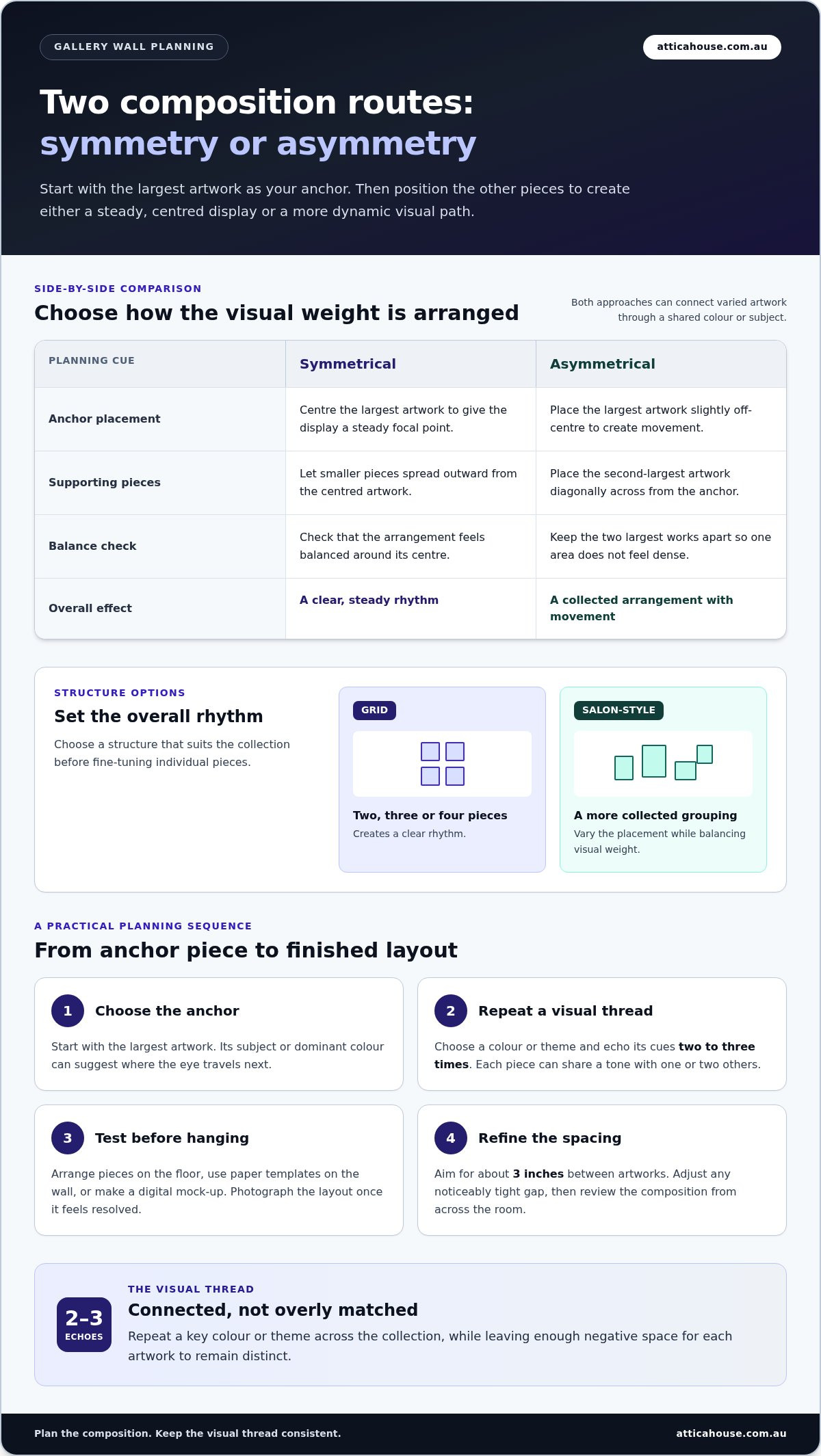
- Choose the largest artwork as your anchor, then decide whether to place it near the centre or slightly off-centre. A central anchor can steady a symmetrical display, while an off-centre one creates movement in an asymmetrical layout. Let its subject or dominant colour suggest where the eye should travel next.
- Choose a colour or theme, then repeat its visual cues across the collection. Echo key colours two to three times, with each piece sharing a tone with one or two others. For example, a coastal photograph might connect with a print featuring a similar muted blue.
- Arrange the artwork on the floor before hanging it. Start with the largest piece, then try smaller works around it until the visual weight feels balanced. Keep the two largest works apart to avoid making one area feel dense. Photograph the layout once the composition feels resolved.
- Leave negative space so the palette and subject have room to register. Aim for about 3 inches between artworks, adjusting the arrangement if one gap looks noticeably tighter. Consistent spacing gives the eye a clear path and helps each object remain distinct within the wider display.
- Review the arrangement from across the room and follow its visual movement. In an asymmetrical layout, try placing the second-largest artwork diagonally across from the anchor. Creating a sophisticated gallery wall means checking that repeated colours guide the eye naturally, rather than drawing attention to one picture or corner.
Planning a layout digitally, on the floor or with paper templates
Planning before hanging helps each piece find its place in the composition. For Australian rental walls, choose removable fixings suited to the surface and artwork’s weight. Avoid drilling unless your rental agreement permits it.
-
Use Paper Templates to Plan the Layout
Trace each frame onto paper, mark its orientation, then cut out the shapes. Arrange the templates on the wall with removable tape, taking the actual frame dimensions into account. This lets you measure the display and adjust gaps without moving heavy pieces. In a rental, templates also help you test positions before choosing a hanging method.
- Choose a structure that suits your collection: a grid of two, three or four pieces creates a clear rhythm, while a salon-style arrangement feels more collected. For symmetry, centre the largest artwork and let smaller pieces spread outward. In an asymmetrical layout, place the second-largest work diagonally across from the largest to distribute visual weight.
-
Photograph the Planned Layout
Take a straight-on photograph once the arrangement feels resolved. Use it as a reference while hanging, especially when several frames share similar dimensions. A clear picture helps preserve the spacing and positions you chose, even if templates shift. In a studio or living room, compare the image from the usual viewing distance before settling on the final layout.
- Test the composition on the floor before drilling or attaching anything. Lay out the frames in the planned order, then step back and compare the overall shape with the available wall space. Move a favourite print or adjust a frame’s orientation if the arrangement feels lopsided. Alternatively, photograph the empty wall and place artwork images over it in a digital mock-up.
Balancing a gallery wall above furniture
Size the grouping in relation to the furniture beneath it: its width, height and visual weight should feel connected. Hang the centre artwork around 57 inches, or about 145 centimetres, from the floor; a suggested centre height for wall art is around 1.5 metres.
- Measure the furniture and available wall area before choosing the display’s outer dimensions. Let a broad sofa guide a wider arrangement, while a compact console may suit a smaller cluster. In a living room, relate the gallery to the furniture without overwhelming its silhouette or crowding the wall.
- Position the grouping’s visual centre in relation to the furniture, not just the empty wall. Artwork centred above a sofa can create a clear feature, while a slightly off-centre arrangement may balance a nearby lamp, tall plant, or tabletop artwork. When curating three-dimensional fine art for a console or buffet, consulting a guide to acquiring original bronze sculptures can help you select statement pieces that ground the overall display. Check the composition from the main seating position and the room entrance.
- Use the furniture’s shape to guide the gallery’s outline. A long, low sideboard pairs naturally with a horizontal arrangement; a narrow console may suit a vertical grouping. Keep the largest artwork near the centre or just off-centre, then distribute smaller pieces so neither side feels noticeably heavier.
- Assess colour and visual weight together. If a dark-framed piece sits on one side, balance it with another substantial work or a deeper tone elsewhere. A restrained palette can connect different artworks, while breathing space around the grouping helps distinguish it from the furniture below.
- Stand back and check the relationship between artwork, furniture and nearby objects before hanging. If the display feels too high, lower the whole arrangement while preserving its internal spacing. For a refined living room feature, explore furniture for your living room to consider how the pieces below can complement the wall.
Attica House: Buffets & Cabinets
Attica House offers Buffets & Cabinets for rooms where the furniture beneath a gallery wall matters as much as the artwork above. A buffet can ground a dining-room display, while a console table can suit a narrower wall. Consider the furniture’s scale, finish and silhouette as you plan the gallery, so the whole setting feels thoughtfully composed.
If you’re refining the room around your artwork, explore Coffee Tables and Dining Tables as part of the wider interior. Each can help balance the wall with the space below.
Visit atticahouse.com.au to explore Attica House’s furniture and wall art prints.
Let Your Gallery Shape the Room Around It
A gallery wall can become the starting point for a room’s next chapter. As you refine the space, consider how the furniture beneath the artwork contributes to its mood, scale and sense of welcome. A considered setting gives treasured prints room to stand out while keeping the room connected to the way you live.
Attica House offers Buffets & Cabinets, Coffee Tables and Console Tables to furnish the spaces that frame your artwork. Whether you’re shaping a quiet living-room corner or adding presence to an entryway, choose pieces that feel at home with your collection. Creating a sophisticated gallery wall is about more than what hangs on the wall: it’s also about how the whole room comes together.
Contact Attica House to discuss your space and explore a thoughtful next step for your home.
Frequently Asked Questions
Are Gallery Walls Still in Style?
Yes, gallery walls remain a personal way to display art and meaningful objects. Their appeal comes from reflecting the people who live with them, rather than following a fixed trend. In a contemporary home, a restrained group of prints can feel crisp, while a layered arrangement can bring warmth. Choose work you’ll enjoy seeing every day, not only pieces that match a passing look.
How do you plan a sophisticated gallery wall layout?
Begin by deciding what the display should relate to, such as a sofa, dining table or architectural feature. Consider the wall’s shape and the room’s existing lines, then set an approximate boundary for the artwork. A narrow wall may suit a vertical composition, while a broad wall can accommodate a wider arrangement. Review the outline from the room’s main entrance before finalising it.
What art and frame combinations create a polished gallery wall?
Connect artworks through a shared visual note, such as a recurring hue, subject or period, rather than relying on identical frames. For example, combine botanical prints, a monochrome photograph and a small textile piece, then echo one colour across the group. Similar mat borders can bring varied frame finishes together. The result feels curated while allowing each work to retain its character.
What spacing should you use between frames on a gallery wall?
Aim for approximately 8 cm between frames, measuring from the outer edges rather than the artwork inside. Keep the gaps consistent across the arrangement, then adjust only where a frame’s scale makes the spacing look unbalanced. A small test with paper outlines can help you judge the rhythm from across the room before committing to the final positions.
How do you arrange gallery wall frames before hanging them?
Lay the frames on the floor near the wall, in a clear area large enough to view the whole composition. Place the strongest visual piece first, then move the remaining frames around it until the group feels balanced. Take a straight-on photograph and label the backs or paper outlines with position notes. Use these as a reference while hanging to preserve your chosen order.
What are the best ways to hang gallery wall art safely on different wall types?
Choose fixings suited to the wall type and artwork’s weight, and follow the instructions. For rental walls, use removable fixings suited to the surface and weight. Avoid drilling unless your rental agreement permits it.