


Furniture to Fill an Empty Corner with Cosy Seating
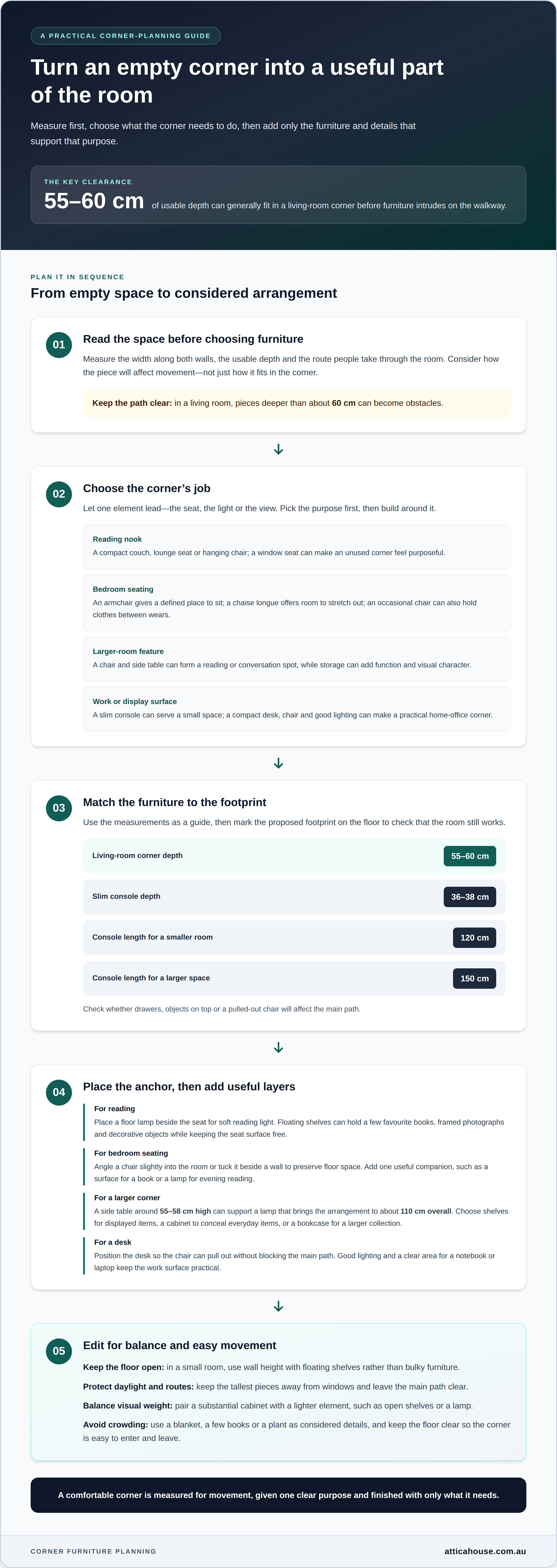
A corner doesn’t need a deep piece of furniture to feel considered. In a living room, furniture to fill an empty corner can generally have about 55cm to 60cm of usable depth before it intrudes on the walkway. The right choice depends on whether you want a quiet reading nook, extra seating or a more purposeful feature.
It’s easy to focus on the empty space itself, but how people move through the room matters just as much. A comfortable seat, slim console or small desk can make a corner feel welcoming, as long as the arrangement leaves the surrounding space easy to use.
Explore ways to create a cosy reading nook, add seating, balance a larger room or make a corner work with a desk or console. These practical ideas can help you choose pieces and arrange them so the result feels calm, comfortable and at home.
Key Takeaways
- Make a reading nook feel inviting with a comfortable seat, soft lighting and a few personal touches.
- Choose an armchair or chaise longue to turn an unused bedroom corner into a place to relax, read or set aside clothes.
- In a larger room, build a balanced corner arrangement by layering a side table, lamp and wall art.
- For a practical corner, consider a slim console or a compact desk with a chair and good lighting.
1. Creating a cosy reading nook
Start with a comfortable seat that suits the corner’s shape: a compact couch, lounge seat or hanging chair can each create a reading spot. In a living room, furniture with about 55cm to 60cm of usable depth can generally fit before intruding on the walkway. Measure the clear space and consider how people move past it before choosing a piece.
Next, give the seat a focused pool of light. A floor lamp beside a lounge seat adds soft, atmospheric illumination and can help reduce eye strain while reading. If floating shelves suit the wall, place a lamp there instead, leaving the seat’s surface free for a book or a cup.
Keep the display personal, not crowded. A small stack of books can serve as a simple plinth for a potted plant. Alternatively, floating shelves can hold a few favourite titles, framed photographs and decorative objects above the seat. These touches draw the eye upwards while keeping the nook’s footprint modest.
Comfort comes from thoughtful layers. In cooler weather, fold a blanket over the arm of a couch or lounge seat, ready for an evening read. For a meaningful touch, a bespoke throw from Just T-Shirt Quilts can add warmth and personal character to the space. Choose an inviting texture that suits the upholstery, and keep the floor clear so the corner remains easy to enter and leave.
A window nook can give an unused corner a clear purpose. Set a comfortable seat near the window, then use the sill or a nearby shelf for a small selection of books. When the nook is not in use, the window setting can remain an attractive feature with little upkeep.
For a balanced result, let one element lead: the seat, the light or the view. Furniture to fill an empty corner works best when each addition supports reading rather than competing for attention. Start with the seat, then add only the lighting and details the corner needs.
2. Adding seating, such as an armchair or chaise longue
An armchair, chaise longue or occasional chair can turn an empty bedroom corner into useful seating. Choose based on how you’ll use the spot: an armchair offers a defined place to sit, while a chaise longue gives you room to stretch out with a book. An occasional chair can provide a quiet reading seat or hold clothes between wears.
Consider the chair’s position in relation to the bed and the room’s main path. Angling it slightly into the room can feel welcoming; tucking it beside a wall may leave more floor space open. Leave enough room to sit down comfortably and walk past without squeezing through.
Give the chair a clear purpose with one useful companion. A nearby surface can hold a book or reading glasses, while a floor lamp provides light for evening reading. Keep accessories selective: a blanket over the chair’s arm adds a soft layer without crowding the corner.
A mirror can make the arrangement feel brighter and more open. Angle a freestanding mirror in the bedroom corner to reflect available light, or place it behind the chair as a simple backdrop. If it competes with artwork or another focal point, reposition it until the seating area feels composed.
For a cohesive look, relate the chair’s scale and finish to nearby furnishings. A softly upholstered armchair can balance a room with hard surfaces, while a more sculptural silhouette can make the corner feel intentional. Explore armchairs for a bedroom corner when a dedicated seat would make the space more comfortable. Let the chair lead, then add only the details that support its purpose.
3. Corner layouts for larger rooms
A generous corner can anchor a seating area rather than simply hold leftover furniture. Try a side table beside a chair, with a lamp above it, to create a composed reading or conversation spot. A side table around 55cm to 58cm high can support a lamp that brings the arrangement to about 110cm overall.
Choose storage based on what the corner needs to hold. Floating shelves suit books, framed pictures and decorative objects, while a cabinet keeps everyday items out of sight. A bookcase works well for a larger collection, especially when you want storage to contribute to the room’s visual character.
In a small room, use the wall height rather than filling the floor with bulky furniture. Floating shelves can display a few treasured objects, and a narrow stool can provide a perch or hold a plant. Keeping the floor open makes it easier to move through the room.
Measure the corner before arranging anything. Note the width along both walls, the usable depth and the route people take through the room. In a living room, about 55cm to 60cm of usable depth can generally fit before furniture intrudes on the walkway; pieces deeper than about 60cm can become obstacles.
To balance the arrangement without blocking movement or daylight, keep the tallest pieces away from windows and leave the main path clear. Pair a substantial cabinet with a lighter element, such as open shelves or a lamp, rather than crowding the corner with heavy pieces. In a layered living-room arrangement, a side table and lamp add height while leaving more wall visible.
4. Furnishing a corner with a desk or console
A console table can make a corner useful without dominating the room. A depth of 36cm to 38cm lets it sit against one wall with limited intrusion. For a smaller room, a 120cm table can suit the available scale; a 150cm table can feel more at home in a larger space.
Measure both walls and the route through the room before choosing a piece. Mark the table’s width and depth on the floor, then consider whether drawers or objects on top will affect movement. Furniture deeper than about 60cm can become an obstacle in a living room corner, so keep walkways in mind.
For a home office corner, bring together a small desk, chair and good lighting. Position the desk so the chair can be pulled out without blocking the room’s main path. A lamp defines the work surface, and a clear area for a notebook or laptop keeps the setup practical.
How much does corner furniture cost in Australia? The price depends on the piece’s dimensions, materials, construction and storage features. Compare these details with your needs and the corner’s intended use to narrow down your options.
Where can you buy corner furniture in Australia? Look for a retailer offering the furniture type that fits your space and purpose. For a slim surface to style or use for storage, explore console tables at Attica House.
Style a console with restraint. A lamp, small stack of books or bowl can make the surface feel considered without crowding it. If the table sits beneath wall art, such as handcrafted metal decor from tintin.co.nz, keep the display proportionate; in a compact corner, leave some tabletop clear for daily use. A well-chosen console can hold keys or provide a subtle work surface while preserving the room’s open feel.
Attica House: Luxury Outdoor Furniture
Attica House offers considered pieces for corners that need a practical surface, storage or a refined outdoor setting. A console table creates a slim display area, while a coffee table can anchor a seating arrangement. For concealed storage, Buffets & Cabinets offer another option. Luxury Outdoor Furniture can bring the same thoughtful approach to an outdoor corner.
Choose according to the space’s purpose: a surface for everyday objects, storage for items you want close at hand, or furniture that makes an outdoor area more inviting. Attica House’s range provides options to bring function and considered style together, without adding pieces that don’t suit the corner.
For help finding a suitable piece for your space, contact Attica House.
Make the Corner Part of Everyday Living
Before choosing a piece, consider how the corner could serve you in an ordinary day. It might offer a quiet pause, hold the objects you reach for or make an open room feel more settled. Let that purpose guide your choice, and keep the arrangement personal rather than filling every available surface.
The best furniture to fill an empty corner is a piece that feels at home in your routines as well as your room. Attica House offers Buffets & Cabinets, Coffee Tables and Console Tables, each suited to a different use. Decide which role matters most, then choose a piece that serves it with ease.
If you’re ready to explore a considered option for your space, discuss your corner furniture needs with Attica House. A thoughtful choice can make that overlooked spot feel naturally woven into the life of your home.
Frequently Asked Questions
How deep can a corner piece be?
In a living room, about 55cm to 60cm of usable depth generally fits before furniture intrudes on the walkway. A console table around 36cm to 38cm deep is a more compact choice when space is tight. Measure from the wall to the edge of the clear path, then account for anything that projects beyond the furniture, such as handles or a lamp base.
Should every corner be filled?
No. An empty corner can help a room feel open and give the eye somewhere to rest. Furnish it only if the space needs a purpose, such as extra storage or a place to sit. For example, leave a corner clear beside a frequently used doorway, but consider a small stool where it won’t interrupt movement.
What can I put in an empty living room corner?
A small occasional chair, floor mirror, plant or compact cabinet can make a living-room corner feel intentional. Choose based on what the room lacks: seating, a reflective surface or concealed storage. A chair beside a mirror can create a dressing spot near an adjoining bedroom, while a cabinet keeps living-room essentials close.
What furniture works best for an empty corner in a living room?
The best furniture to fill an empty corner depends on its purpose. Choose an armchair for extra seating, a console table for a narrow display surface, or a cabinet to put items away. Match the piece’s visual weight to nearby furniture, and avoid creating a second focal point if the room already features prominent artwork or a fireplace.
How do I choose the right size furniture for a corner?
Measure the width of both walls, the usable depth and the space needed to move around the piece. Mark the intended footprint on the floor with paper or removable tape, then open nearby doors and drawers to see whether they clear it. For a console, a 120cm length can suit a smaller room, while 150cm may suit a larger one.
What furniture can fill an empty bedroom corner?
An armchair or chaise longue can create a place to sit, read or pause before bed. In a tighter bedroom, a bedside table adds a useful surface without creating a separate seating area. If the corner feels dim, angle a freestanding mirror to catch available light and brighten the arrangement without adding another bulky piece.