


Choosing a Sofa for a Bad Back: Ergonomic Luxury Guide
A sofa should be a masterpiece of both form and feeling, a silent guardian of your well-being rather than a beautiful burden. You shouldn't have to choose between a piece that defines your room's aesthetic and one that respects your spine. It's frustrating when a deep, plush seat leaves you struggling to stand or nursing a dull ache after just twenty minutes of repose. Understanding how to choose a sofa for a bad back isn't about settling for clinical, uninspired designs that belong in a recovery ward. Instead, it's about finding the intersection of sculptural beauty and physical restoration.
In this guide, you'll discover how to balance sophisticated aesthetic design with the precise structural support your spine requires for long-term comfort. We'll peel back the upholstery to examine the technical specs that matter, such as foam density and seat height, ensuring your next selection is an investment in both your home and your health. Your living space is a reflection of your personal story, and true luxury means never having to sacrifice your comfort for your style.
Key Takeaways
- Identify how the "hammock effect" of overly soft cushions compromises your posture and learn to seek out the hidden architecture that supports a healthy pelvic tilt.
- Master how to choose a sofa for a bad back by selecting high-density foam and integrated lumbar support that preserves the spine's natural alignment.
- Utilise the 90-degree rule for hips and knees to ensure your sofa's proportions offer a refined fit that promotes circulation and ease of movement.
- Bridge the gap between aesthetic excellence and ergonomic necessity by opting for designer pieces that prioritise both sculptural beauty and structural longevity.
The Hidden Architecture: Why Your Current Sofa May Be Failing Your Spine
Many people experience what experts call sofa-induced back pain, a lingering ache born from a lack of lumbar engagement. When you consider how to choose a sofa for a bad back, the internal framework is far more critical than the outer aesthetic. Cheap, transactional furniture often forces the pelvis into an unnatural tilt. This causes the lower spine to lose its vital curve. This passive collapsing feels like relaxation, but it's actually taxing your musculoskeletal system.
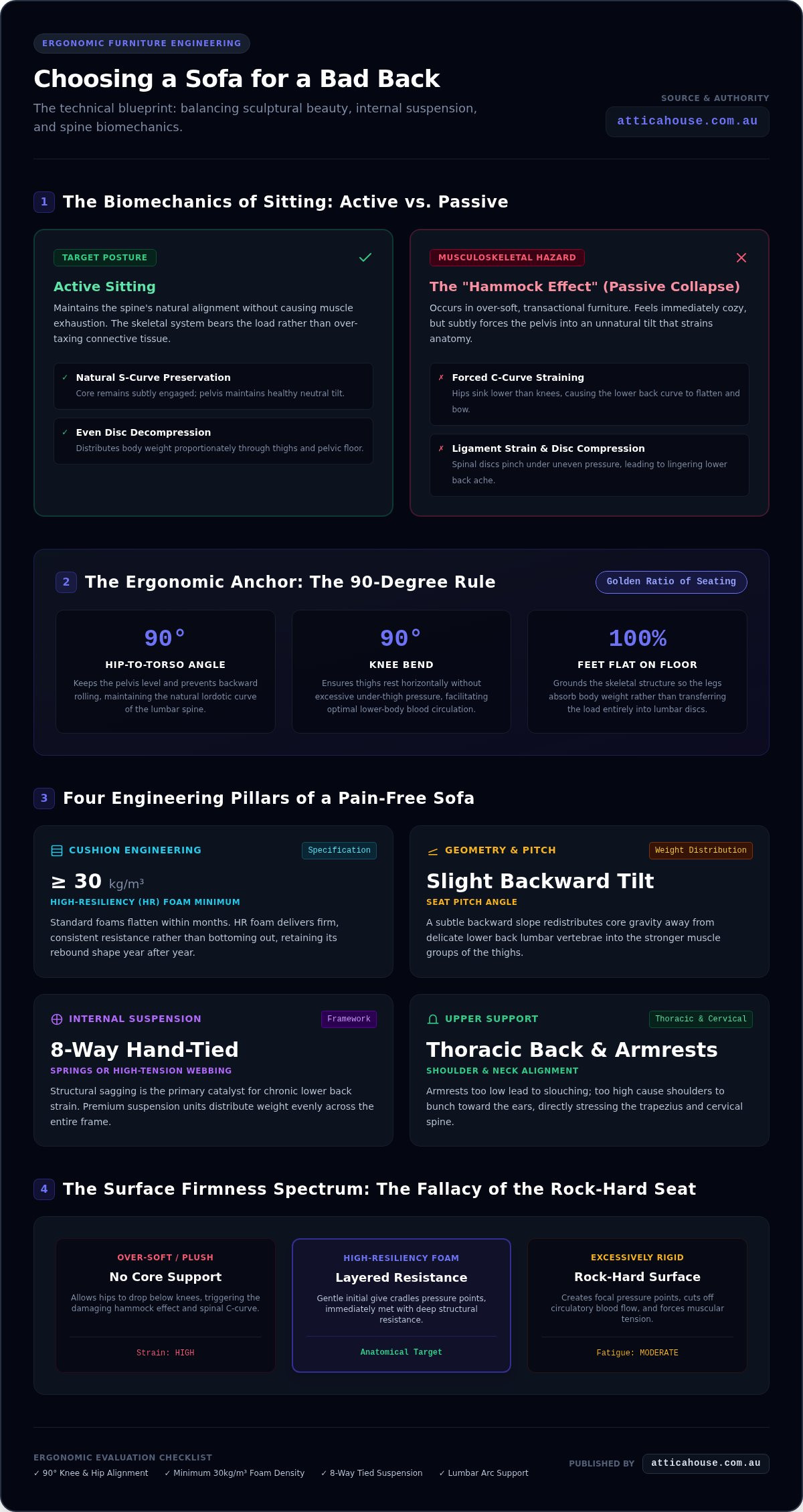
Low-quality construction often leads to the hammock effect. This occurs when over-soft cushions allow the hips to sink lower than the knees, forcing the spine into a strained C-curve. Unlike pieces built with ergonomic design principles in mind, mass-produced sofas lack the structural integrity to support your body's natural alignment. High-end design prioritises a balance between comfort and posture:
- Active Sitting: Your core remains subtly engaged, and the spine maintains its natural S-curve.
- Passive Collapsing: The body slumps into the frame, straining ligaments and compressing spinal discs.
The Myth of Surface Firmness
When learning how to choose a sofa for a bad back, many assume a rock-hard seat is the only solution. However, excessive firmness can create pressure points that disrupt circulation and cause discomfort. True luxury seating utilises high-resiliency foam that offers a gentle initial give followed by deep, reliable support. This layered approach ensures the body is cradled without being swallowed by the upholstery.
The Role of Internal Suspension
The longevity of your comfort depends on what lies beneath the surface. High-end sofas often employ 8-way hand-tied springs or high-tension webbing to distribute weight evenly across the frame. Structural sagging is the primary cause of long-term lower back strain. By investing in superior internal suspension, you ensure your sanctuary remains a place of genuine physical restoration rather than a source of fatigue.
Key Features of an Ergonomic Designer Sofa
Selecting a piece that honours your physical needs requires a discerning eye for detail. When you're deciding how to choose a sofa for a bad back, look beyond the silhouette to the specific ergonomic markers that define a quality build. Lumbar support is paramount; a subtle outward curve or the addition of weighted cushions ensures the lower spine's natural arc is maintained. This alignment is vital, as noted in the Harvard Health posture and back guide, to prevent muscular fatigue during long periods of repose.
Seat pitch also plays a quiet but transformative role. A slight backward tilt shifts weight from the delicate lower back to the stronger muscle groups in the thighs. For true stability, foam density should ideally reach a minimum of 30kg/m3. This ensures the seat provides firm, consistent resistance rather than giving way under pressure. Consider, too, the backrest height. While low-profile designs offer a modern, airy aesthetic, your spine may require a higher back to provide essential thoracic support for the mid-back and shoulders.
High-Resiliency Foam and Longevity
High-Resiliency Foam and Longevity
High-resiliency (HR) foam is the hallmark of enduring comfort. Unlike standard materials that flatten within months, HR foam is engineered to retain its original shape, providing the same level of support year after year. It's a foundational element in The Ultimate Guide to Luxury Furniture in Australia, which highlights how high-end craftsmanship influences long-term well-being and interior harmony. These same principles of craftsmanship and support are vital in the office; you can learn more about Smart Buy Office Furniture to see how professional-grade furniture maintains spinal health throughout the workday.
Correct armrest height is often overlooked. If they're too low, you'll find yourself slouching; too high, and your shoulders will bunch toward your ears, straining the neck and upper trapezius. Sculptural armchairs can serve as excellent supplementary seating, offering focused support for reading or quiet reflection. Exploring a curated collection of statement designer sofas allows you to find that perfect balance between high-end aesthetics and anatomical precision.
The Proportional Fit: Choosing a Sofa Based on Your Height
A sofa that feels like a sanctuary for one person might be a source of strain for another. Precision matters. Understanding how to choose a sofa for a bad back involves more than just testing the foam; you must look at the proportions of your own frame. A fundamental principle of comfort is the 90-degree rule. Your hips and knees should ideally rest at right angles, with your feet flat on the floor. This posture is essential for supporting the spine's natural curvature and preventing unnecessary pressure on the lumbar discs.
The relationship between seat depth and your femur length is a frequently overlooked factor in furniture selection. If a seat is too deep, you'll find yourself slouching to reach the backrest, which rounds the spine. If it's too shallow, your thighs won't receive enough support, leading to muscle fatigue. A "one size fits all" approach rarely works in luxury design because true comfort is inherently personal and tied to your unique anatomy.
Measuring for Your Body Type
To find your ideal fit, sit in a firm chair and measure the distance from your lower back to the back of your knees. Petite users often find comfort in depths of 50cm to 55cm, while taller individuals may require 60cm or more to avoid feeling perched. Seat depth is the most critical variable for sciatica relief. Measuring carefully ensures your body remains in neutral alignment without cutting off circulation behind the knees.
The Hybrid Solution: Modular Versatility
Couples of different heights often struggle to find a single piece that suits both individuals perfectly. Modular sofas offer a sophisticated solution, allowing for varying depths or the addition of ottomans within the same living space. You can learn more about these customisable arrangements in our guide on How to Choose The Perfect Sofa For Your Home. To find a piece that aligns with your physical needs, explore our designer sofas today.
Curating a Pain-Free Sanctuary with Attica House
Designing a home is an act of self-care. While technical specifications like foam density and seat pitch are vital, the ultimate goal is a space that feels like a warm embrace. When you understand how to choose a sofa for a bad back, you move beyond mere utility to discover a world where sculptural silhouettes meet unyielding support. Attica House curates pieces that reject the clinical aesthetic of traditional ergonomic furniture, offering instead a refined collection where beauty and physical well-being exist in perfect harmony.
True comfort often requires a layered approach. Incorporating stools and ottomans into your living area allows you to elevate your legs, which can significantly reduce pressure on the lower lumbar region. This simple adjustment encourages a healthier pelvic tilt and promotes circulation. Viewing your sofa as a long-term investment in your health ensures that your sanctuary remains a place of genuine restoration for years to come.
Beyond the Sofa: The Complete Ergonomic Lounge
A well-composed room considers every tactile detail. For those with back concerns, the transition from sitting to standing is often the most challenging moment. Placing one of our Handcrafted Rugs Online Australia beneath your seating provides a stable, non-slip surface that offers the necessary grip for a safe and effortless rise. These designer rugs add a layer of quiet luxury while serving a practical, grounding purpose in your daily ritual.
The Art of Careful Selection
Finding the perfect balance of support and style is a deeply personal journey. We invite you to visit our partner showroom for a physical sit test, where you can feel the precise resistance of our high-density foam for yourself. It's the only way to truly appreciate the Attica House difference. By mastering how to choose a sofa for a bad back, you're not just buying furniture; you're creating a private refuge that supports both your soul and your spine with a gentle, authoritative hand.
Investing in Your Daily Restoration
Your living space should be a sanctuary that heals rather than hinders. We've explored how the hidden architecture of a frame and the precise density of high-resiliency foam dictate your long-term comfort. By mastering how to choose a sofa for a bad back, you ensure that every evening spent reclining is an act of physical recovery. True luxury lies in the intersection of sculptural beauty and anatomical support. A well-chosen piece respects your spine's natural curvature while elevating your home's aesthetic through timeless craftsmanship and intentional design.
At Attica House, we believe in the transformative power of a thoughtfully composed environment. Our pieces are expertly selected for their structural integrity and high-end appeal, serving as a lasting investment in your well-being. With national Australia-wide delivery, your journey toward a pain-free home is effortless. Explore our curated collection of luxury designer sofas and find the perfect balance for your lifestyle. May your home always be a place of enduring ease and quiet elegance.
Frequently Asked Questions
Is a firm or soft sofa better for lower back pain?
A medium-firm seat is generally superior for managing lower back pain because it provides a stable base for the pelvis. While a soft sofa feels initially inviting, it often leads to the hammock effect where the spine loses its natural curve. Conversely, a surface that's too hard can create uncomfortable pressure points. The goal is to find high-resiliency foam that offers a gentle initial give followed by deep, structural support.
What is the ideal seat height for someone with a bad back?
The ideal seat height should allow your feet to rest flat on the floor with your knees bent at a 90-degree angle. For most individuals, this falls between 43cm and 50cm. If a seat is too low, it places excessive strain on the lower back when standing up. A higher seat facilitates a more graceful transition and ensures your weight is distributed evenly across your thighs and feet, promoting better long-term comfort.
Can I use cushions to make an unsupportive sofa better for my back?
Weighted lumbar pillows or firm cushions can offer temporary relief by filling the gap between your lower back and the sofa. These additions help maintain the spine's natural S-curve during short periods of rest. However, they cannot compensate for a sagging internal suspension or poor frame construction. If you're researching how to choose a sofa for a bad back, it's better to invest in a piece with integrated structural integrity from the start.
Should I choose a recliner if I have chronic back issues?
Recliners can be beneficial as they allow you to shift weight away from the lower spine, reducing the vertical pressure caused by gravity. It's essential, however, that the chair provides consistent lumbar support even when tilted back. Without proper mid-back engagement, a reclined position can still lead to muscle strain. Many find that a well-proportioned armchair paired with a matching ottoman offers a similar, more aesthetically refined level of relief.
What sofa depth is best for tall people with back pain?
Tall individuals typically require a deeper seat, often 60cm or more, to accommodate longer femur lengths. When a seat is too shallow, the thighs don't receive adequate support, which forces the lower back to work harder to maintain stability. Ensuring the seat depth matches your proportions is a key part of how to choose a sofa for a bad back, as it prevents slouching and maintains neutral spinal alignment during extended lounging.