


Chandeliers for Choosing the Right Size, Style and Light Count
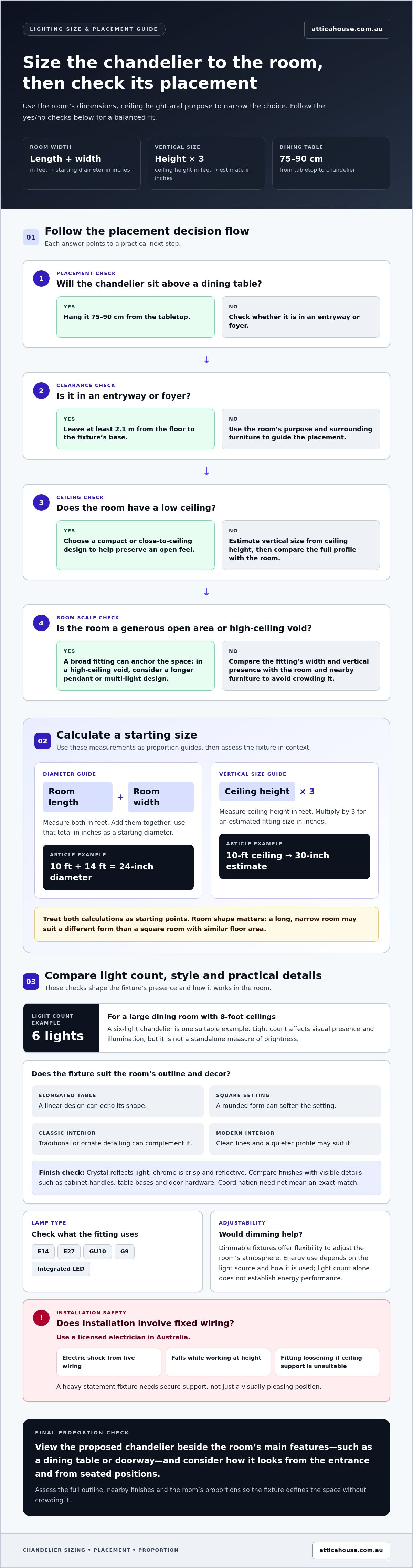
For a large room, choose a chandelier diameter in inches equal to the room’s length and width in feet added together. A 10-foot by 14-foot room, for example, suits a 24-inch fixture. Above a dining table, hang it 75-90 cm from the tabletop. These measurements help chandeliers feel balanced rather than overwhelming.
A generous space can make bold lighting feel inviting, but scale is only part of the decision. Ceiling height, the table below and the number of lights all shape how comfortably a fixture fits the room. Well-chosen chandeliers can also bring the dining area into focus.
This guide explains how to size statement lighting for larger areas, compare light counts and choose a style that works with your existing decor. You’ll also find practical guidance on placement above a dining table, so you can choose chandeliers that bring the room together without crowding the space below.
Key Takeaways
- Match the fixture to the room’s dimensions, ceiling height and existing decor for a balanced result.
- For a low ceiling, choose a compact or close-to-ceiling design to keep the room feeling open.
- Compare light counts with the room’s scale; a six-light fixture is one example for a large dining room with 8-foot ceilings.
- Before choosing a fitting, consider its lamp type and whether dimming would help adjust the room’s atmosphere.
How to choose the right chandelier?
Begin with the room’s purpose, dimensions and ceiling height, then consider the style already present. In Australia, a well-chosen fixture should feel composed in daylight and after dark.
Choosing a Chandelier by Room
Choose a design to suit how each room is used. In a dining room, consider the table’s shape and the atmosphere you want for meals. For a bedroom, a quieter silhouette can sit comfortably among softer furnishings. In an entryway or foyer, leave at least 2.1 m from the floor to the fixture’s base. This clearance helps create a welcoming arrival without dominating the passage.
Compare the fitting with the room’s existing finishes. Traditional detailing can suit a classic interior, while modern chandeliers can create crisp contrast with restrained furnishings. Chrome is reflective, so consider how it relates to nearby hardware and other metal pieces. Aim for a deliberate connection, not an exact match.
Sizing by Room Dimensions
Measure the room’s length and width in feet, then add those figures. Use the total in inches as a starting point for the fitting’s diameter. For example, a room measuring 10 feet by 14 feet suggests a 24-inch diameter. This calculation relates the light’s width to the room’s footprint, especially in an open living or dining area.
Ceiling height offers another sizing guide. Multiply the room’s height in feet by 3 to estimate an appropriate vertical size. For a 10-foot ceiling, the example gives a 30-inch fitting. Use this as a proportion guide: a long, narrow room may call for a different shape than a square room with similar floor area.
Matching Fixture Scale to Room Proportions
Assess the whole room before settling on a size. A broad fitting can anchor a generous space, while an oversized silhouette may crowd a compact room. In a low-ceiling room, choose a compact or close-to-ceiling design to preserve an open feel. Compare its width and vertical presence with the room’s dimensions, ceiling height and surrounding furniture.
For a final proportion check, view the proposed design alongside the room’s main features, such as a dining table or doorway. A 10-foot ceiling, for instance, can be considered alongside the 30-inch vertical estimate. Then weigh style and finish: chandeliers in a refined chrome finish and classic forms create different impressions, even at similar dimensions.
How is the appropriate size for a statement pendant or chandelier selected for a large area?
In a large area, consider a fixture’s visual weight as well as its measurements. First identify the zone it should define, such as a dining table, lounge setting or open-plan transition. Broad, sculptural chandeliers can anchor generous rooms, while a slender silhouette may suit a long passage. Shape matters too: a linear design echoes an elongated table, while a rounded form softens a square setting.
Compare the fixture’s outline with nearby furniture and architectural lines. In an open-plan Australian home, a prominent fitting can distinguish the dining zone without creating a visual barrier. Consider how it appears from the entrance and from seated positions. Layered arms or suspended elements can make chandeliers feel more substantial than a simpler form of similar width, so assess the full profile.
Materials and finishes help set the mood. Crystal catches and reflects light, adding a bright, decorative quality to restrained furnishings. Metal finishes create a different impression: chrome looks crisp and reflective, while darker or warmer tones can contrast with pale ceilings. Compare the finish with visible details, including cabinet handles, table bases and nearby door hardware. Coordination feels intentional without requiring every surface to match.
To narrow your options, shortlist styles that suit the room’s existing aesthetic, then compare their shapes and finishes in context. Ornate detailing can complement a classic interior, while a modern setting may favour clean lines and a quieter profile. View each option beside key materials such as timber, stone and glass. This helps reveal whether its colour and texture enrich the space or compete with existing pieces.
For inspiration, explore crystal pendant lighting and consider how reflective materials create a focal point. Choose chandeliers that relate to the room’s proportions, furnishings and palette, rather than standing apart from them.
Chandeliers with different numbers of lights
Light count shapes both illumination and visual presence, but it isn’t a standalone measure of brightness. Consider the room’s scale, purpose and other lighting before choosing a fixture. In a large dining room with 8-foot ceilings, a 6-light chandelier is one suitable example. Its multiple lamps can create a composed focal point without relying on one central bulb.
For Australian homes, check the fitting’s lamp type and how its light output can be adjusted. Options may use E14, E27, GU10, G9 or integrated LED. Dimmable fixtures offer flexibility, while energy use depends on the light source and how it’s used. Light count alone doesn’t establish a fitting’s energy performance or whether it meets applicable requirements.
If installation involves fixed wiring, use a licensed electrician in Australia. The main safety risks include electric shock from live wiring, falls while working at height and a fitting loosening if its ceiling support is unsuitable. A heavy statement fixture needs secure support, not just a visually pleasing position.
In a high-ceiling void, a longer pendant or multi-light design can draw the eye through the vertical space. Compare its overall shape with the room’s proportions. A pendant light often has a simpler, more focused silhouette, while a crystal chandelier can add layered sparkle and elegance to a formal interior. Neither style replaces thoughtful placement or suitable general lighting.
Wall-mounted chandelier lighting can add a secondary glow where a ceiling fixture doesn’t provide enough visual balance. Treat it as an accent, and consider how its light works with the main fixture. For an entryway or foyer, maintain at least 2.1 m of clearance from the floor to the chandelier’s base. This helps preserve comfortable movement beneath the fitting.
Chandelier placement above dining tables
For a dining table, begin with the distance between the tabletop and the chandelier’s lowest point. A common placement range is 75-90 cm above the surface. Another recommendation places a statement pendant or chandelier 760-910 mm above a dining table or bench. These ranges offer a starting point for judging how the fixture relates to seated diners and the table setting.
Measure from the table surface, not the floor, then assess the view from seated positions. The light should feel connected to the dining area without interrupting conversation or sightlines across the table. Centre it over the table’s midpoint, rather than the room’s, especially when the dining setting is part of an open-plan living space.
Table shape can guide placement and form. A linear design can follow the length of a rectangular table, while a rounded fixture may complement a circular setting. Align the visual centre of the fitting with the table’s centre, then check its position from each chair. This creates a considered balance between the fixture, dining chairs and surrounding furniture.
Ceiling height changes the relationship between the light and the room. One dining-room example places a chandelier 5 feet from the floor, but this is a separate floor-based measurement. For a practical clearance reference, chandeliers should remain at least 6.5 feet above the floor, with 7 to 8 feet preferred for safety. In a dining setting, use the tabletop measurement to position the fixture, then consider overall clearance.
Choose a style that supports the room’s character. Contemporary designs can bring clean lines to a restrained interior, while an antique-inspired fitting can add contrast among modern furnishings. For a refined focal point above your table, explore crystal pendant lighting and consider how its finish will sit with your dining room palette.
Attica House: Buffets & Cabinets
Attica House offers furniture to help complete the dining setting around a statement light. Choose Buffets & Cabinets for practical storage and a visual anchor. A Dining Table helps establish the proportions and character of the space beneath your chosen fixture, while Dining Chairs bring the setting together for everyday meals and relaxed gatherings.
For an adjoining living area, Coffee Tables and Console Tables can carry the same palette into nearby spaces for a more cohesive interior. Consider each piece’s shape, finish and relationship to the dining room’s existing details. The result is a setting where lighting and furniture feel thoughtfully connected, rather than competing for attention.
Explore furniture for your dining space at atticahouse.com.au, or contact Attica House to discuss your needs.
Let the Room’s Character Guide Your Next Choice
A considered lighting choice can give a room its own sense of rhythm. Before deciding, picture how the space feels during a quiet morning, a shared meal and an evening at home. The right chandelier should feel at home in each moment, complementing the room rather than competing with it.
Think beyond the fitting itself. Attica House’s Buffets & Cabinets, Coffee Tables and Console Tables can carry a room’s materials and visual character into surrounding spaces. A restrained palette can let a distinctive light take focus, while layered textures create a softer, more collected atmosphere.
When you’re ready to explore a luminous focal point for your home, browse crystal pendant lighting. Let your room’s proportions, furnishings and everyday rituals shape the choice, and create a setting that feels distinctly yours.
Frequently Asked Questions
What are the key differences between a chandelier and a statement pendant light?
A chandelier often has several arms, branches or light sources, while a statement pendant commonly hangs as one central form. The distinction isn’t absolute: some pendants have elaborate shapes, and some chandeliers have pared-back designs. For a reading nook, a focused pendant can suit the task; above a broad dining setting, a multi-arm fitting can create a more expansive visual presence.
Which types of chandeliers are best?
The best type depends on the room’s ceiling, furnishings and desired atmosphere. A compact, close-to-ceiling design suits a lower room, while a larger multi-light fixture can anchor a spacious dining area. Crystal adds a reflective quality; metal and simpler silhouettes can feel more restrained. Compare the complete shape and finish with nearby materials, then choose a style that complements the room’s character.
How Much Does A Chandelier Cost?
Cost varies with a fixture’s materials, construction, dimensions, light count and finish. A hand-finished design with crystal elements may have different production requirements from a simpler metal form. Consider the fitting as part of the full lighting plan: bulb type, dimming capability and installation requirements can affect the overall project budget. Compare these characteristics rather than judging a fixture by appearance alone.
How do I clean my chandelier?
Switch off the light and let its bulbs cool before cleaning. Dust glass or crystal elements gently with a microfiber cloth, working across the visible surfaces. For a more thorough clean, use mild soap and water, wiping each piece carefully before letting it dry. A gentle cleaner can suit metal finishes. Keep track of removed components so they return to their original positions.
What Key Things About a Chandelier Should You Keep In Mind?
Check the lamp type before choosing bulbs: fittings may use E14, E27, GU10 or G9 lamps, while others have integrated LED. Confirm that the bulb base matches the fitting and consider whether dimming would help set different moods. Also think about how the fixture’s finish relates to nearby hardware. These practical details can shape daily use as much as the design does.
What Should Be the Height of Your Chandelier?
Above a dining table, position the chandelier’s lowest point 75-90 cm above the tabletop. Measure from the surface, then view the fitting from seated positions to judge its relationship with conversation and sightlines. In an entryway or foyer, leave at least 2.1 m between the floor and the fixture’s base. The right placement depends on both the room and the surface below.