


Buffets & Chests: How to Choose the Right Statement Piece
The most striking buffet or chest isn’t always the right one for your home. If it overwhelms the room, offers awkward storage or feels too precious for daily use, its beauty can quickly lose its appeal. Choosing buffets & chests is about balancing visual presence with the way you live.
It’s easy to focus first on a finish or silhouette, especially when the piece will anchor a dining area, entry or open-plan space. But proportion, storage layout and construction matter just as much. Start by measuring the space and thinking about what you’ll store. Then compare the piece’s dimensions, access and details with your room and routine. This guide covers comfortable circulation, useful storage configurations and how finishes and craftsmanship contribute to a piece’s character. The aim is a considered choice: a distinctive focal point that feels at home and earns its place in everyday life.
Key Takeaways
- Choose buffets & chests around the room’s purpose, so the surface and storage support how you live.
- Measure the available footprint, doorways and access routes before settling on a size or placement.
- Compare finishes and front details with your existing furnishings; no single style suits every space.
- Look beyond appearance to everyday practicality, then explore distinctive options such as ribbed detailing, brass accents and a marble top.
What Are Buffets & Chests, and What Can They Do for Your Room?
A buffet or sideboard is a storage piece with a flat, useful surface, often placed in a dining area or living space. A chest is generally taller, with storage arranged vertically. Both can hold everyday essentials and create a focal point, but the best choice depends on what you need to store and where the piece will sit.
Begin with the job the furniture needs to do, rather than a style label. Dinnerware and serving pieces may call for enclosed cupboards and a generous top. Keys, mail or other daily clutter may be easier to sort in drawers. If display is important, consider how much clear surface you’ll want for ceramics, books or a lamp. Defining these needs first makes it easier to choose a silhouette and finish that feel right in the room.
Buffet, sideboard or chest: what is the difference?
Retailers may use “buffet” and “sideboard” interchangeably, while “chest” can describe a range of taller storage forms. The terms aren’t consistent, so compare each piece’s dimensions and storage layout instead of relying on its label. The Sideboard entry offers useful background on the related terms and their serving and storage functions.
A lower, wider silhouette can provide an accessible surface for serving or display. Taller storage may be useful when vertical capacity matters more, as long as the piece fits comfortably and doesn’t dominate the room.
Where can a buffet cabinet work beyond the dining room?
In a dining room, a buffet can keep tableware close at hand. In a hallway, it may offer a landing surface and concealed storage, provided there’s enough clearance to move past it. In open-plan living, it can help organise belongings or visually define an area without closing it off. Consider the doors, walkways and furniture around the intended position, then match the piece’s role to the space available.
The same balance of purpose and character can guide choices throughout the home. For a broader perspective, explore the luxury furniture guide alongside this practical look at buffets & chests.
How to Choose Buffets & Chests by Size, Storage and Placement
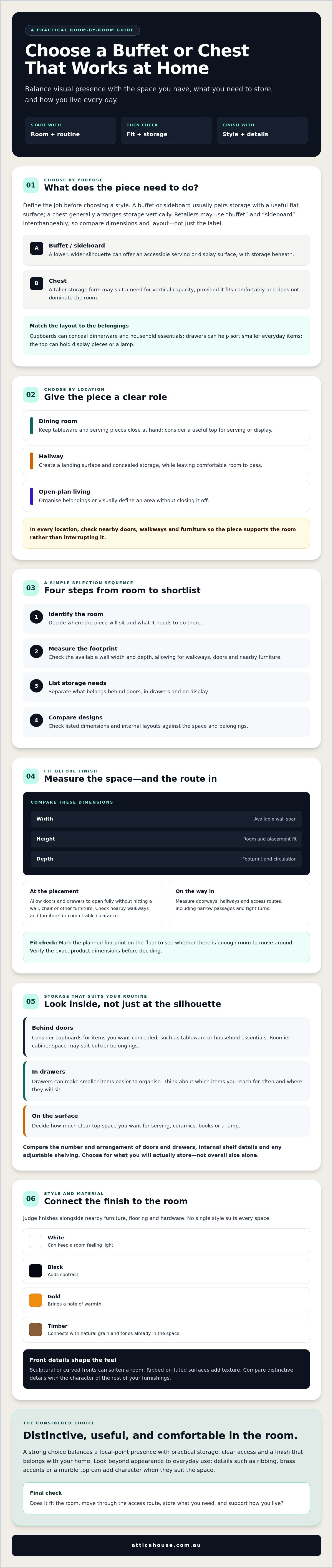
A considered choice starts with the room and your routine, not a scroll through finishes. Use this four-step process to narrow the options:
- Identify the room: Decide where the piece will sit and what it needs to do there.
- Measure the footprint: Check the available wall width and depth, allowing for nearby furniture, walkways and doors.
- List your storage needs: Note what belongs behind doors, in drawers or on display.
- Compare designs: Check listed dimensions and internal layouts against your space and belongings.
A piece that fits the wall still needs to fit the journey into the room. Measure doorways, hallways and access routes, including tight turns, before ordering bulky furniture. The history of the sideboard traces how a simple table evolved to include storage; today, the right configuration depends on how you plan to use it.
Which measurements should you take before buying?
Measure the intended wall and note nearby doors, walkways and furniture that need comfortable clearance. Compare the product’s listed width, height and depth with the available footprint. Allow space for doors and drawers to open fully without hitting a wall, chair or other furniture. Measure the route into the room too, from entry points through any narrow passage or turn. If you’re unsure about the fit, mark the planned footprint on the floor and check that it leaves enough room to move around. Verify the exact dimensions on the product page before deciding.
How much storage do your everyday items need?
Separate items you want concealed, such as tableware or household essentials, from objects intended for display on the top surface. Check the number and arrangement of doors and drawers, along with the internal shelf details and any adjustable shelving. A roomy cabinet may suit bulkier belongings, while drawers can make smaller items easier to organise. Think about what you’ll reach for often and whether its position within the cabinet will be convenient. Match the layout to what you’ll actually store, rather than choosing by overall size alone.
Once you’ve mapped the space and storage, compare the buffets and chests collection with your checklist in mind.
How to Compare Buffet Styles, Materials and Practical Details
Choose a finish in relation to the furnishings around it. White can keep a room feeling light, black adds contrast, gold brings a note of warmth, and timber connects with natural grain and tones already in the space. Look at nearby furniture, flooring and hardware together, rather than judging a finish on its own. If you’re comparing options online, consider how each finish will sit with those fixed elements in your room.
Silhouette matters, too. Sculptural or curved fronts soften a room; ribbed and fluted surfaces introduce texture, while geometric details create a more defined rhythm. None is automatically the better choice. Consider how much visual presence you want and whether other patterns or shapes in the room will complement the design.
| Room mood | Design detail | Storage consideration | Collection example |
|---|---|---|---|
| Light and relaxed | Hamptons-inspired panelling | Check the listed cabinet layout | Bayview 3-Door Buffet Cabinet |
| Art Deco character | Ribbing, brass accents | Confirm shelves and compartments | Monte Carlo Buffet Cabinet |
| Soft, sculptural feel | Curved form | Match the interior layout to what you’ll store | Amara |
| Natural warmth | Timber grain and stone top options | Compare the listed configuration | Benedict buffet ranges |
Which buffet style suits a modern, coastal or Art Deco interior?
For a Hamptons-inspired room, the Bayview 3-Door Buffet Cabinet offers panelling to consider alongside light, relaxed furnishings. The Monte Carlo Buffet Cabinet pairs a ribbed façade with brass accents and a Carrara marble top for an Art Deco-inspired statement. Amara’s sculptural curves offer a softer profile. Treat these as points of comparison, not fixed rules: the right choice depends on the palette, shapes and details already in your interior.
Which details make a buffet practical as well as striking?
Before choosing on appearance alone, check the product listing for shelf arrangement, door and drawer configuration, and the usable top surface. Consider what you’ll place on the top and how you’ll access items inside. Benedict buffet ranges offer several timber finishes and top options, including marble or travertine. Compare the timber tone with existing furnishings, then confirm the specific finish and top details on the listing.
Compare buffets and chests in different styles and finishes to see which details suit your home.
Standout Buffets & Chests: Find a Design That Feels Right at Home
A useful shortlist starts with the character you want the piece to bring to the room. These buffets & chests offer distinct visual directions rather than a ranked list. Consider how each detail relates to your furnishings, palette and preferred level of contrast, then check whether the size and storage suit your needs.
For a sculptural statement: compare Monte Carlo, Huxton and Amara
- Monte Carlo White: A ribbed Art Deco façade, brass accents and a Carrara marble top create a layered, refined focal point. Consider it if you want texture and contrast to draw the eye.
- Huxton: Its black-and-white geometric bone inlay brings a more graphic quality. It may suit a room where pattern can complement, rather than compete with, other strong details.
- Amara: A curved Art Deco form softens the profile. Its sculptural silhouette offers a different kind of presence from the sharper geometry of Huxton or the ribbed texture of Monte Carlo.
Each design makes a different visual statement. Look at the room’s existing patterns and shapes, and consider whether you want the buffet to blend in or stand out. Check the current product listing for exact specifications before choosing.
For a softer or more natural look: compare Benedict and Portofino
Benedict buffet ranges offer several timber finishes and top options, giving you different tones and textures to compare with your furnishings. Confirm the specific finish and top available on the relevant listing rather than assuming a particular variant. Portofino’s curved silhouette brings a gentler outline, while its listed finish choices can be compared with the colours already in your room.
Let proportion, visual character and everyday needs guide the final choice. Take time to compare the details, then browse buffets and chests at Attica House to explore current options for your home.
Choose a Piece That Feels at Home
The right buffet or chest balances presence with purpose. Start by measuring the space and access route, then match the storage layout to what you’ll keep inside and how you’ll use the surface. From there, consider how its silhouette and finish will sit alongside the furnishings already in your room.
Attica House’s curated collection of buffets & chests brings together sculptural, curved, fluted and geometric designs, with examples in timber, marble, painted and decorative finishes. These details offer different ways to add character while keeping everyday function in view. Check each product’s current dimensions and listed features as you compare.
Take your time finding a piece that supports your routine and feels considered in its setting. Explore the Attica House buffets and chests collection to discover designs that could bring useful storage and distinctive character to your home.
Frequently Asked Questions
Is a buffet cabinet the same as a sideboard?
Retailers often use “buffet” and “sideboard” interchangeably, but naming isn’t consistent, so the label alone won’t tell you whether a piece suits your needs. Compare its height, width and depth, then review the internal layout. A lower, wider option may offer a useful serving surface and concealed dining storage, while taller buffets & chests can provide a different balance of vertical storage and display.
How do I choose the right size buffet for my room?
Measure the intended wall and nearby furniture, then compare those dimensions with the buffet’s listed width and depth. Allow room for doors and drawers to open, and preserve comfortable pathways through the space. Also measure the route into your home, including narrow doorways and turns. Before ordering, confirm the exact dimensions on the current product listing and check that the piece can reach its intended position.
Can you use a buffet cabinet in a living room or hallway?
Yes, a buffet can work in a living room or hallway if its size and placement suit the space. In a living room, consider whether you need concealed storage, a surface for display, or both. In a hallway, make sure the piece won’t obstruct movement or doorways. Its finish and silhouette can also help it feel connected to the furniture nearby.
What should I look for inside a buffet cabinet?
Start with the items you plan to store, then check the listing for shelves, adjustable shelf details, drawers and the number of doors. Compare the interior layout with the size and shape of your belongings, and consider which items need frequent access. Storage configurations can differ between products and variants, so verify the listed features for the exact finish you’re considering.
Ready to compare sizes, storage layouts and finishes? Explore Attica House’s buffets and chests collection.