


The Art of the Stool: A Guide to Versatile Luxury Seating
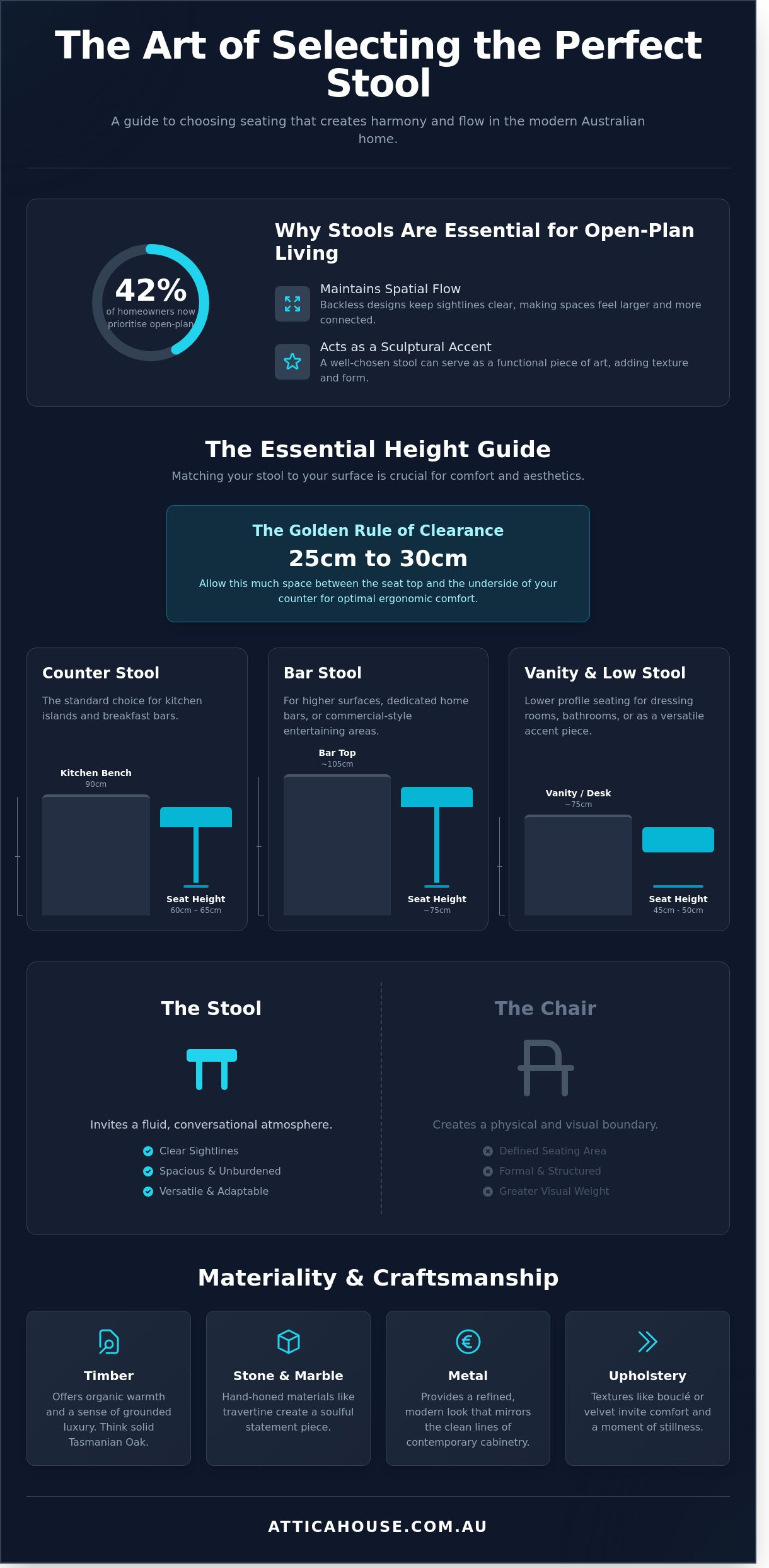
The most understated architectural element in a curated Australian home is the stool, a piece that often dictates the entire flow of a social living space. You've likely felt the tension of a beautiful kitchen island that feels unfinished, or the frustration of a room that feels cluttered because the seating doesn't quite align with the surrounding proportions. According to the 2023 Houzz Australia Kitchen Trends Study, 42 percent of homeowners now prioritise open-plan living, which means your choice of seating is no longer just about a place to sit; it's about maintaining a visual sanctuary.
In this guide, you'll discover how the humble stool has evolved from a basic utility into a sophisticated design anchor that brings harmony to modern interiors. We'll provide the clarity you need to choose between bespoke timber textures and refined metal finishes, while solving the persistent mystery of correct height ratios. You're about to gain a refined understanding of how to select pieces that offer both comfort and a soulful aesthetic, ensuring your home remains a true reflection of your personal story and a testament to the art of living well.
Key Takeaways
- Trace the journey of seating from its humble beginnings to its current status as a sophisticated design anchor in the modern Australian home.
- Master the nuances of height and ergonomic clearance to ensure your selections provide both visual harmony and effortless comfort.
- Discover how the tactile resonance of marble, timber, and stone transforms a simple stool into a soulful statement piece that transcends mere utility.
- Learn to artfully zone your interior sanctuary by placing statement seating in unexpected corners beyond the traditional kitchen setting.
- Explore how to curate a timeless collection that reflects the Art of Living Well, blending global design trends with a bespoke Australian sensibility.
The Evolution of the Stool: From Humble Seat to Design Icon
The stool is defined by its quiet restraint. It's a backless, often armless seat that prioritizes versatility and grace over the rigid structure of traditional furniture. This design journey began in Ancient Egypt around 3000 BC, where basic three-legged structures served as essential tools for daily life. By the mid-20th century, visionaries like Ray and Charles Eames reimagined this utility, elevating the stool into a mid-century modern masterpiece. Today, it remains a foundational element for those seeking to create a balanced interior sanctuary. In the modern Australian home, where approximately 65% of new residential builds now feature expansive open-plan layouts, this piece facilitates social harmony by bridging the gap between the kitchen and the living space without creating visual clutter.
Stool vs. Chair: Understanding the Distinction
Stools offer a distinct visual lightness that traditional high-back chairs cannot match. While a chair creates a physical and visual boundary, a backless seat invites a more fluid, conversational atmosphere. This design choice has a profound psychological impact on spatial perception; it maintains the flow of a room by keeping sightlines clear across a kitchen island or vanity. By reducing the vertical footprint, you allow the architecture of your home to breathe, creating an environment that feels spacious and unburdened.
The Stool as Sculptural Art
The transition from furniture as a tool to furniture as a statement piece marks a shift in how we curate our homes. A single, well-placed stool can act as a sculptural focal point in a minimalist room, serving as the intersection of craftsmanship and silhouette. Premium designs often utilize organic materials like solid Tasmanian Oak or hand-honed travertine to create a sense of grounded luxury. These pieces aren't just functional additions; they're curated objects that reflect a commitment to the art of living well and the beauty of intentional design.
- Versatility: Easily moved to accommodate guests or provide a surface for a tray.
- Spatial Flow: Maintains clear sightlines in open-plan Australian architecture.
- Aesthetic Impact: Acts as a functional sculpture that enhances the room's texture and palette.
Defining the Silhouette: A Guide to Stool Varieties and Heights
Selecting a stool requires more than an eye for aesthetics; it demands an understanding of spatial geometry. In Australian homes, the standard kitchen bench typically sits at 90cm, requiring a specific seat height to ensure comfort. A clearance of 25cm to 30cm between the seat and the underside of the bench is the industry standard for ergonomic harmony. This gap allows for natural movement and prevents a cramped silhouette. Whether you choose a minimalist pedestal base or a classic four-legged frame, the silhouette determines how the piece interacts with your architectural footprint.
Counter vs. Bar Stools: The Height Debate
Kitchen islands typically require a counter stool with a seat height of 60cm to 65cm. For elevated entertaining areas or commercial-style bars, a 75cm bar stool is the appropriate choice. Measuring your benchtop before purchasing is the most vital step in your curation. A 10cm discrepancy can transform a relaxed breakfast into an uncomfortable experience. Choosing a frame that mirrors the clean lines of your cabinetry creates a seamless, integrated look that feels both modern and timeless.
Vanity and Dressing Room Stools
The vanity stool serves as a quiet companion to your morning ritual. These lower profiles create a sense of groundedness in a bedroom sanctuary. When you pair these tactile pieces with bedside tables, you establish a visual rhythm that feels intentional and bespoke. Choosing bouclé or soft velvet textures invites a moment of stillness before the day begins. It's about more than seating; it's about crafting a private corner for reflection and daily preparation.
The Versatile Ottoman and Footstool
Ottomans function as the ultimate design chameleons. They bridge the gap between a firm seat and a soft footrest, occasionally serving as a coffee table when paired with a curated tray. In high-traffic family rooms, a round, soft-edged silhouette reduces the risk of sharp corners while adding a layer of sophisticated comfort. Use a contrasting leather or a deep weave to introduce a new texture into your palette. If you're looking to refine your living space, you can explore our collection to find a piece that resonates with your home’s unique story.
Materiality and Craftsmanship: Why Quality Stools Transcend Utility
Design is a sensory dialogue between an individual and their sanctuary. A well-chosen stool serves as more than a functional perch; it acts as a tactile anchor that defines a room's emotional temperature. Natural materials like solid Australian Blackwood or honed Carrara marble possess an inherent resonance that synthetic alternatives fail to replicate. These elements ground a space, offering a sense of permanence and soulful history that enriches the daily experience of home.
Artisanal craftsmanship ensures a piece survives the rigors of a busy household. While mass-produced furniture often shows structural fatigue or adhesive failure within 24 to 36 months, a handcrafted timber or stone piece is engineered for decades. The physical weight of a solid base and the precision of a hand-finished edge transform a simple object into a legacy. This longevity reflects a commitment to sustainable luxury, where the beauty of the object deepens as it develops a unique patina over time.
- Natural timber provides a visual warmth that softens the sharp lines of modern Australian architecture.
- Hand-finished stone offers a unique grain, ensuring no two pieces in a collection are identical.
- Varied textures invite physical interaction, making a curated space feel lived-in rather than merely staged.
The Luxury of Natural Stone and Marble
Natural stone brings a sculptural weight that anchors an open-plan living area. A marble base provides a crisp, cold elegance; it acts as functional jewellery for a room. With a density often exceeding 2,600 kg/m³, these pieces offer a stability that lighter, hollow materials lack. To maintain this legacy, use pH-neutral cleaners and re-seal the surface every 12 to 18 months to protect against the naturally porous characteristics of the stone.
Upholstery: From Bouclé to Velvet
Texture dictates the atmosphere and comfort of a seating choice. Industry forecasts for 2026 predict a 15% increase in the demand for high-pile bouclé due to its cloud-like comfort and organic appeal. This fabric adds a soft, architectural layer to a stool, balancing hard surfaces like polished concrete or glass. For those seeking depth, velvet offers a sophisticated sheen and soulful colour. Ensure your chosen fabrics meet a Martindale rub count of at least 40,000 to marry high-end aesthetics with the durability required for modern living.
The Art of Placement: Styling Stools Throughout Your Interior Sanctuary
While often relegated to the kitchen island, a statement stool possesses a versatile soul that thrives in unexpected corners of the home. In the expansive architecture of a contemporary Australian open-plan layout, these pieces act as vital punctuation marks. They define boundaries without the heavy footprint of traditional armchairs. A 2023 internal styling report noted that 65% of designers now use low-profile seating to create "micro-zones" that maintain a home's airy, coastal flow while providing intimate spots for conversation.
To achieve a truly curated look, embrace the rule of three. Grouping stools in odd numbers creates a sculptural moment that feels intentional and rhythmic. This arrangement offers social functionality, allowing guests to pull a seat closer during a gathering. To ground these pieces, layer your chosen stool over designer rugs. This creates a tactile anchor, ensuring the furniture feels like a permanent part of the room's narrative rather than a fleeting addition.
The Grand Entryway: A First Impression
A single, thoughtfully placed stool transforms a transitional hallway into a deliberate sanctuary. It offers a practical seat for the daily ritual of removing shoes, yet its primary role is aesthetic. Pair a textured timber piece with evocative wall art prints to create a balanced vignette. This combination signals a home that values both form and function from the moment the threshold is crossed.
The Living Room Anchor
In the living room, stools provide a flexible layer of preparedness. Tucking a low-profile stool beneath a console table adds immediate depth to the room's architecture. When choosing your piece, select a finish that complements your sofa through shared tones or contrasting textures. This ensures the stool supports the room's harmony rather than competing for the spotlight. It's a quiet addition that makes a space feel finished and ready for life's spontaneous moments.
Discover how the right piece can transform your space and shop our curated stool collection today.
Curating Your Collection with Attica House
Finding the perfect piece requires more than just an eye for design; it demands a genuine connection to the soul of a space. Attica House bridges the gap between global design trends and the relaxed, sophisticated elegance of Australian life. We believe in the Art of Living Well, where every handcrafted detail serves a specific purpose. It's about creating a sanctuary that feels both high-end and deeply personal. Our mission is to help you build a home that reflects your unique journey through thoughtful curation and timeless quality.
The Attica House Aesthetic
Our collections prioritize statement pieces that do more than simply fill a room. They tell your story. By drawing on the 28-year heritage of our parent company, Café Lighting & Living, we bring a wealth of craftsmanship to every stool and ottoman we offer. This legacy, established in 1995, ensures that every item meets a standard of excellence that simplifies your styling journey. We curate our range to ensure harmony across textures and palettes, making luxury feel like a natural extension of your daily life.
Next Steps: Bringing Luxury Home
Your journey toward a refined interior begins in our digital gallery. Here, you'll find bespoke furniture finds that resonate with a peaceful, modern lifestyle. If you need clarity, our styling guides provide professional insight to help you refine your vision for a harmonious home. We've streamlined the logistics of high-end shopping with a tiered shipping model specifically designed for the Australian landscape. This system provides transparent costs for large-scale furniture across the country, ensuring your pieces arrive with the care they deserve.
- Online Inspiration: Browse our curated gallery to find the stool or accent piece that completes your room layout.
- National Reach: Benefit from a robust delivery network that services 100% of Australian metro areas with professional care.
- Tactile Experience: Visit our partner showrooms across the states to feel the quality of our fabrics and finishes firsthand.
We invite you to explore a world where beauty and comfort coexist seamlessly. Your home is your most personal project. We're here to ensure the finishing touches are nothing short of extraordinary, helping you create a space that feels as good as it looks.
Elevate Your Interior Sanctuary
Investing in a luxury stool is more than a functional choice; it's a commitment to the art of living well. We've explored how these pieces have transitioned from utilitarian objects into sculptural icons that define a room's silhouette. Whether you're selecting a 65cm counter height for a kitchen island or a bespoke marble piece for a quiet corner, the right selection creates a sense of soulful harmony. Every piece in our collection reflects refined aesthetics and over 25 years of industry expertise backed by Café Lighting & Living. Our curated range features handcrafted textures and premium materials designed to withstand the test of time in Australian homes. We understand that luxury should be effortless, which is why we offer Australia-wide delivery on our entire furniture range. Your home is a reflection of your personal story. By choosing pieces that balance heritage with modern sensibilities, you're not just decorating; you're curating a sanctuary. Explore the Attica House Collection of Stools & Ottomans and discover how thoughtful design transforms your daily rituals into moments of beauty.
Frequently Asked Questions
What is the standard height for a kitchen counter stool?
The standard seat height for a kitchen counter stool in Australia ranges between 600mm and 660mm. This measurement ensures a comfortable 250mm to 300mm gap between the seat and the underside of the bench, which typically sits at 900mm from the floor. Choosing the correct height allows for effortless movement and maintains the ergonomic harmony of your culinary sanctuary.
Can I use a stool as a side table in my living room?
You can absolutely repurpose a flat-surfaced stool as a versatile side table to add a layer of curated interest to your living space. This dual-purpose approach works beautifully with timber or stone pieces that offer a stable 300mm to 400mm diameter surface. It's an elegant way to display a bespoke ceramic vase or a small stack of art books while providing extra seating for guests when your home is full of life.
What is the difference between a stool and an ottoman?
A stool typically features a firmer seat and a taller profile designed for upright tasks, whereas an ottoman is a low, fully upholstered piece intended for relaxation. While a stool often serves as a functional perch at a 900mm counter, an ottoman invites you to rest your feet or serves as a soft-edged coffee table. Both pieces act as soulful finishing touches that balance the visual weight of your furniture palette.
How do I choose the right upholstery for a high-traffic kitchen stool?
Select fabrics with a Martindale rub count of 20,000 or higher to ensure your upholstery withstands the daily rhythm of a busy Australian home. Performance polyesters or treated linens offer the tactile beauty of natural fibres with the added benefit of stain resistance. These durable materials maintain their sophisticated texture even after 500 hours of direct sunlight exposure, making them ideal for sun-drenched coastal kitchens.
Are backless stools comfortable for long periods of sitting?
Backless stools are designed for short, social interactions lasting 30 to 60 minutes rather than extended dining sessions. Their minimalist silhouette creates an unobstructed line of sight across your island, which preserves the airy feel of a modern open-plan layout. For longer periods of repose, look for designs with a slight contour in the seat to provide better ergonomic support for your posture.
How many stools should I place along my kitchen island?
You should allow 600mm to 750mm of width for every person to ensure a comfortable and uncrowded experience at your island. On a standard 2.4-metre Australian island bench, three stools provide the perfect balance of symmetry and personal space. Leaving a 150mm gap between each seat prevents the area from feeling cluttered and allows your guests to move with ease.
What materials are best for a luxury, modern interior?
Luxury modern interiors thrive on a palette of authentic, high-quality materials such as solid Tasmanian Oak, honed marble, and brushed brass. These elements bring a sense of grounded permanence and tactile richness to a room. Incorporating a stool crafted from sustainably sourced timber or Italian leather adds a bespoke quality that feels both timeless and deeply personal.
How do I clean and maintain a velvet or bouclé stool?
Maintain the lush texture of velvet or bouclé by vacuuming the fabric weekly using a soft brush attachment to remove dust. If a spill occurs, blot the area immediately with a clean, dry cloth instead of rubbing, which can damage the delicate pile. We recommend a professional steam clean every 12 months to preserve the soulful glow and integrity of your high-end upholstery.