


The Art of Selection: How to Match a Rug with a Sofa for a Refined Home
What if the most exquisite designer sofa in your living room isn't actually the piece that defines the space? It's a common realization for those who value a refined home; even the finest velvet or linen seating can feel adrift without the right foundation. You've likely experienced the frustration of a rug that feels just a bit too small or the worry that a rich texture might overwhelm your furniture's clean lines. Understanding how to match a rug with a sofa is about more than just coordinating colours; it's about creating a silent, sophisticated dialogue between every element in the room.
You deserve a space that feels like a curated sanctuary rather than a showroom floor. By mastering the interplay of scale, tonal palettes, and handcrafted materials, you'll gain the confidence to mix textures that elevate your interior from merely furnished to deeply personal. We'll explore how to anchor your living area using artisanal wools and earthy, nature-inspired tones that reflect the modern Australian lifestyle. From avoiding common scale mistakes to selecting investment-grade fibres, this guide provides the professional framework needed to compose a room that resonates with quiet luxury and enduring comfort.
Key Takeaways
- Discover why a handcrafted rug serves as the essential visual anchor that prevents your luxury furniture from feeling disconnected within a room.
- Master the art of how to match a rug with a sofa through sophisticated tonal layering or deliberate textural contrasts that highlight quality craftsmanship.
- Avoid the common pitfall of selecting undersized textiles by applying architectural layout blueprints that expand the perceived scale of your sanctuary.
- Learn to integrate artisanal rugs with sculptural timber buffets and side tables to create a cohesive, professionally styled living space.
The Foundation of a Sanctuary: Why the Rug-Sofa Dialogue Matters
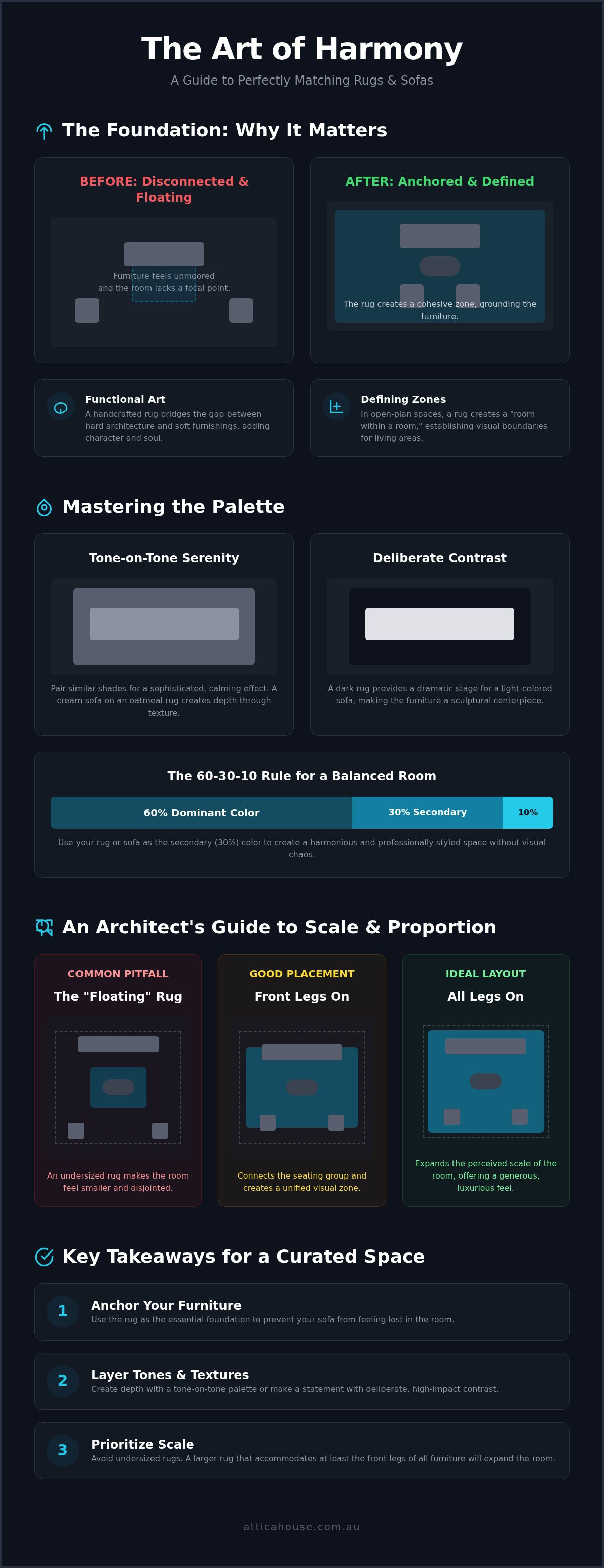
A designer sofa is an investment in personal comfort, but without a purposeful foundation, even the most exquisite piece can feel unmoored. It often appears to float in the centre of a room, disconnected from the architecture and the life unfolding around it. When you consider how to match a rug with a sofa, you're doing more than selecting a floor covering; you're establishing the architectural stage for your home. This pairing creates a vital sense of refuge, defining the emotional boundaries where you can truly unwind. It is the essential first step when curating luxury furniture in Australia, as the rug sets the tonal and tactile baseline for every other element in the space.
Beyond aesthetics, handcrafted rugs function as a form of "functional art." They bridge the gap between the hard surfaces of a building and the soft textures of a lived-in environment. By grounding your seating, you create a visual anchor that draws the eye and invites the body to rest. This dialogue between the rug and the sofa establishes a rhythm of balance and proportion, ensuring the room feels intentional rather than accidental.
Handcrafted Artistry vs. Mass Production
The soul of a home resides in the details that a machine simply cannot replicate. A hand-knotted rug carries the subtle, beautiful irregularities of its maker, offering a visual depth that gives a room its character. Natural fibres like wool and silk provide a tactile longevity, serving as a sustainable investment that ages gracefully. This commitment to quality reflects fundamental design principles, ensuring that the beauty you see is matched by a heritage of craftsmanship you can feel beneath your feet.
Defining Zones in Open-Plan Living
Modern Australian architecture often embraces expansive, open-plan layouts that can feel cavernous if left unstructured. A thoughtfully selected rug acts as a visual boundary, creating "rooms within rooms" without the need for restrictive walls. By anchoring your sofa and coffee table on a shared surface, you dictate the natural flow of movement and conversation. This layering transforms a vast floorplan into a series of intimate, curated sanctuaries that prioritize internal balance and spatial harmony.
Navigating the Palette: Harmonising Colour and Pattern
Selecting the perfect hue requires an understanding of how light and shadow interact within your living space. When exploring how to match a rug with a sofa, the most sophisticated interiors often rely on a tone-on-tone approach. This creates a monochromatic sanctuary where interest lies in the subtle shifts of texture rather than jarring colour changes. For instance, pairing a cream linen sofa with a high-pile wool rug in a slightly deeper oatmeal shade offers a sense of serenity and depth that feels both modern and timeless.
Alternatively, deliberate contrast can serve to spotlight your furniture as a sculptural centrepiece. A dark charcoal or deep navy rug provides a dramatic stage for light-coloured boucle or ivory leather seating. To ensure a cohesive environment, many professionals suggest applying the 60-30-10 rule. This involves keeping sixty percent of the room in a dominant colour, thirty percent in a secondary shade (often the rug or sofa), and ten percent as a bold accent. This balance prevents the space from feeling chaotic while allowing for personal expression.
The Golden Rules of Colour Matching
A useful guideline is to choose a rug that sits approximately two shades lighter or darker than your upholstery. This distinction provides enough visual separation to prevent the furniture from blending into the floor. You might also look beyond the furniture itself, using the rug to pull muted accent colours from statement wall art. This technique weaves a thread of continuity throughout the room, making the design feel unified and intentional.
Mastering Pattern Play
Pattern adds a layer of narrative to your home. Large-scale rug patterns generally pair best with solid-coloured designer sofas, as this prevents visual competition. You might consider pairing geometric rugs with sculptural furniture for a modern, Art Deco-inspired aesthetic that feels both bold and balanced. For those who appreciate heritage, balancing traditional hand-knotted motifs with contemporary, clean-lined sofas creates a timeless tension. Following fail-safe strategies from designers ensures that these patterns enhance rather than distract from your sanctuary.
As you refine your vision, you may wish to explore our curated designer rugs to find the perfect textural match for your seating.
Mastering Scale and Proportion: Architectural Layout Blueprints
The most frequent design error in Australian homes isn't a clash of colour, but a failure of scale. A rug that is too small acts as a visual island, causing your living space to appear fragmented and significantly smaller than its actual dimensions. When learning how to match a rug with a sofa, the "Front Legs On" rule is your most reliable blueprint. By ensuring at least the front third of your seating rests upon the fibres, you create a cohesive zone that feels intentionally composed rather than scattered. This simple adjustment binds the furniture together, transforming a collection of objects into a singular, inviting sanctuary.
Precision in measurement is vital for a balanced frame. Aim to leave between 30cm and 45cm of bare floor around the perimeter of the rug. This border allows the beauty of your floorboards or tiles to breathe while the rug anchors your larger pieces. This spacing is particularly important when coordinating your layout with designer marble coffee tables, as the rug provides a soft, textural contrast to the cool, sculptural weight of the stone. Without this breathing room, the room can feel cramped; with it, the proportions feel effortless and professionally styled.
Sizing for Different Sofa Configurations
The Sensory Science of Materials
The material you select dictates the room's daily rhythm and longevity. Wool remains a legacy choice for high-traffic family sanctuaries, offering natural stain resistance and a plush, resilient feel underfoot. For formal sitting rooms, rugs infused with silk or viscose add a sophisticated sheen that catches the afternoon light beautifully. Whether you prefer the crisp, modern look of a flatweave or the deep, evocative comfort of a high-pile finish, the texture should always mirror the functional needs of your home.
Ready to define your space with the perfect foundation? Explore our collection of handcrafted rugs to find the ideal scale and material for your home.
Curating the Complete Look: Integrating Statement Furniture
A truly refined home is more than a collection of beautiful objects; it's a series of thoughtfully composed vignettes. Once you've mastered how to match a rug with a sofa, the next step is to expand that harmony to include armchairs, side tables, and sculptural lighting. The rug acts as the boundary for this social island, ensuring every piece feels part of a single, cohesive story. Aligning this arrangement with architectural features, such as a central fireplace or grand windows, reinforces the sense of balance that defines high-end design. It's about creating a destination within the home where beauty and comfort coexist effortlessly.
For those seeking a more evocative, lived-in feel, the layered look offers a sophisticated solution. Placing a smaller, artisanal rug or a statement hide over a larger, neutral wool base adds immediate visual warmth and complexity. This technique allows you to introduce bold textures or patterns without overwhelming the room's serene foundation. When you source handcrafted rugs online in Australia, look for pieces that offer a distinct tactile contrast to your timber furniture, creating a rich interplay of natural materials that feels curated over time.
The Living Room Ecosystem
Precision in placement ensures that your larger storage pieces, such as buffets & cabinets, complement rather than compete with your floor coverings. In formal spaces, a centered arrangement creates a sense of classical symmetry that feels both grounded and authoritative. By leaving a consistent border of flooring between the rug's edge and your cabinetry, you maintain a sense of airiness that prevents the floor from feeling overcrowded. This spatial breathing room is essential for a home that feels like a sanctuary.
Extending the Aesthetic to Other Rooms
The principles of grounding furniture apply far beyond the lounge. In a luxury home office, a low-pile rug can anchor a desk and armchair to foster a sense of focus and professional calm. Similarly, selecting a rug that provides a soft, plush landing is the final touch for a refined bedroom sanctuary. In these private spaces, the relationship between textiles and furniture continues to dictate the room's emotional resonance, ensuring every corner of your home reflects a commitment to the art of living well.
Crafting Your Timeless Sanctuary
Creating a refined living space is a journey of intentional choices. You now understand that how to match a rug with a sofa is a delicate balance of architectural scale and sensory texture. By ensuring your rug acts as a generous anchor for your seating and selecting tonal palettes that resonate with your personal story, you transform a room into a true refuge. Whether you are layering textures for visual warmth or defining a sophisticated open-plan layout, the relationship between your textiles and furniture remains the heartbeat of your home.
At Attica House, we believe in the transformative power of artisanal handcrafted quality. Our sophisticated selection of statement furniture, from sculptural timber buffets to designer sofas, is designed to coexist with our premium rugs in perfect harmony. We invite you to explore our curated collection of handcrafted rugs and enjoy the ease of Australia-wide delivery for your next legacy investment. Your home is a reflection of your internal balance; let every selection be a testament to the art of living well.
Frequently Asked Questions
Should my rug be lighter or darker than my sofa?
Your rug should typically be at least two shades lighter or darker than your upholstery to ensure clear visual separation. This distinction prevents your designer furniture from blending into the floor, creating a sense of depth and architectural intent. If you prefer a monochromatic look, rely on textural shifts, such as a high-pile wool rug beneath a smooth leather sofa, to maintain a sophisticated dialogue between the pieces.
How much of the rug should sit under the sofa?
At least the front legs of your sofa should rest on the rug, ideally extending 20cm to 30cm under the frame. This "front legs on" rule is essential when considering how to match a rug with a sofa because it anchors the seating within the room's layout. For larger, open-plan Australian homes, placing the entire sofa and any accompanying armchairs on the rug creates an even more defined and intimate sanctuary.
Can I mix a patterned rug with a patterned sofa?
You can certainly mix patterns, provided you vary the scale to avoid visual competition. If your sofa features a subtle, small-scale weave, pair it with a bold, large-scale geometric rug to create a balanced narrative. The key is to find a common tonal thread that binds the two patterns together, ensuring the room feels like a curated collection rather than a chaotic arrangement of competing elements.
Is it okay if the rug doesn't touch the sofa at all?
A rug that doesn't touch the sofa often creates a "floating" effect that makes a room feel disjointed and smaller. To achieve a professionally styled look, the rug must act as the foundation for your furniture. If your rug is too small to reach the sofa, consider layering it over a larger, neutral natural fibre base to bridge the gap and restore spatial harmony to your living area.
What is the best rug material for a living room with high foot traffic?
Wool is the gold standard for high-traffic living rooms due to its natural resilience and stain-resistant properties. It maintains its plush texture and structural integrity even in the busiest Australian households. When learning how to match a rug with a sofa for a family environment, choosing a handcrafted wool piece ensures a legacy investment that balances luxury with the practical needs of daily life.