


Risk of Buying Furniture Sight Unseen: A Thoughtful 2026 Guide
What if the furniture you love on screen feels wrong once it reaches your home? The risk of buying furniture sight unseen isn’t only about colour. A piece can overwhelm a room, feel different from what you imagined or prove less suited to daily life than its styled photograph suggests.
That uncertainty is understandable. You can’t settle into a sofa, run your hand over its upholstery or compare its finish with your room before ordering. But careful research can make the decision clearer. Product details such as dimensions, materials and care guidance provide a more grounded picture than imagery alone.
This guide will help you assess scale, colour, texture and practical comfort, then review delivery arrangements and purchase terms before deciding. You’ll also see how to use real product information, including a sofa’s measurements and upholstery details, to weigh what’s known against what a photograph can’t show. The aim is fewer surprises and a choice that feels considered, not guessed.
Key Takeaways
- Reduce the risk of buying furniture sight unseen by comparing measurements with your room, walkways and existing furnishings.
- Separate what product details can tell you about materials and care from what only personal experience can reveal about texture and comfort.
- Review delivery arrangements and purchase terms before ordering, so you understand what to expect if the piece isn’t right for your space.
- Use clear product information to make a considered choice, while allowing for natural variation in finishes and materials.
What Is the Real Risk of Buying Furniture Sight Unseen?
The risk of buying furniture sight unseen is uncertainty about how a piece will look, fit, feel and function in your home. A product page can provide useful information, but a screen can’t reproduce the experience of seeing an item in your room or sitting on it. Caution is sensible when a purchase will shape a space you use every day. That doesn’t make online buying inherently unsafe; it means the decision deserves more than a quick glance at a styled image.
Due diligence can reduce uncertainty about furniture, but it can’t replicate the experience of touching its materials or trying its comfort.
Why furniture can feel different online
Lighting, surrounding colours and image styling all influence how furniture appears. A warm-toned room may make upholstery seem richer, while a wide-angle photograph can distort a table’s proportions. Your screen settings add another variable. Understanding Online Shopping helps frame this as a broader feature of buying through digital images: you assess a representation of the item, not the object in your space. Measurements and close-up product details offer a more grounded view than a room scene alone, but neither reveals exactly how a fabric feels beneath your hand.
Which uncertainties matter most before ordering?
Some questions have measurable answers. Width, depth and height can be compared with your room, while listed materials and care guidance help clarify what you’re considering. Other judgements are personal: whether a sofa feels supportive, a surface feels smooth or a colour feels right in your home. Product information can narrow the gap, but those impressions may remain uncertain until you experience the piece yourself.
The stakes depend on how the furniture will live with you. A dining table needs to suit the room’s layout and leave space to move around it. Upholstery should align with your expectations for touch and upkeep, especially if care instructions rule out home cleaning. Consider not only whether an item looks appealing, but whether its dimensions, material and maintenance needs make sense for your daily routines.
What You Cannot Fully Judge About Furniture From a Screen
A product page can answer important questions, but not every one. Measurements and listed materials are concrete; softness, support and the way a finish feels in your home remain personal. Knowing the difference helps you focus on what you can verify and approach the remaining unknowns with realistic expectations.
How to assess scale, colour and material online
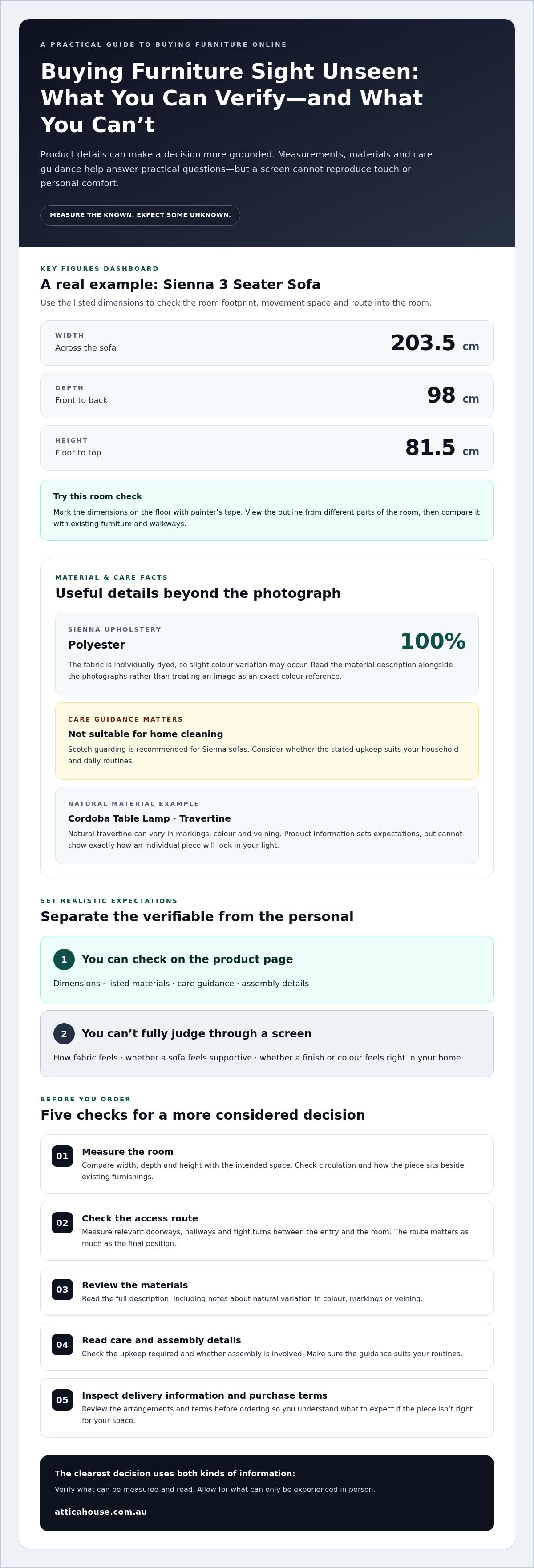
Start with the stated dimensions, then compare them with your available floor space and the route into the room, including doorways and tight turns. The Sienna 3 Seater Sofa, for example, is listed as 203.5 cm wide, 98 cm deep and 81.5 cm high. Mark those measurements on the floor with painter’s tape, then check the footprint from different parts of the room. This can help you picture how the sofa may sit alongside existing furnishings and affect movement through the space.
Read material descriptions alongside photographs rather than treating an image as an exact colour reference. Sienna upholstery is 100% polyester and individually dyed, so slight colour variation may occur. Natural materials can vary too: travertine on the Cordoba Table Lamp may differ in markings, colour and veining. These details set more grounded expectations, though they can’t tell you exactly how a particular piece will look in your light.
How care and construction affect everyday suitability
Appearance is only part of the decision. Review care guidance before ordering and consider whether it suits the way you use your home. Sienna sofas are not suitable for home cleaning, and Scotch guarding is recommended. That guidance matters if you’re choosing a sofa for everyday living, because upkeep is part of how well a piece fits your routines. A screen can communicate care requirements; it can’t let you test the fabric’s feel or judge your personal comfort.
These are the details that make careful browsing more than visual selection. The Attica House sofas and furniture product information gives you specific details to weigh, including dimensions, fabric composition and care guidance, while leaving the sensory qualities for you to consider.
Pre-Purchase Checklist for Sight-Unseen Furniture Risk
A little structure can turn browsing into a considered decision. Work through these checks before you place an order, so the practical details of the piece and the terms of purchase are part of the same picture.
- Measure the room. Record the intended footprint, then compare it with the item’s stated width, depth and height. Use tape to outline the dimensions on the floor, and check the space from different angles. Allow for circulation and consider how the furniture will sit beside existing pieces. A piece can fit on paper yet leave too little room to move comfortably.
- Check the access route. Measure relevant doorways, hallways and tight turns between the entry and the room. Compare these with the product’s dimensions, while avoiding assumptions about how delivery will be handled. The route matters as much as the final position.
- Review the materials. Read the full product description, including notes about natural variation in colour, markings or veining. Treat written specifications as your reference point, and remember that individual material details may differ from photographs.
- Read care and assembly details. Check what upkeep the item requires and whether assembly is involved. Make sure the guidance suits your household and daily routines before choosing a piece for a high-use space.
- Inspect purchase terms. Before checkout, read delivery information, damage procedures, product-specific warranty terms and the policy for change-of-mind returns, including any return-shipping conditions. Don’t assume a change-of-mind return is available for every order; understand the stated terms before buying.
For a more confident choice, review measurements, materials, care requirements and purchase policies together, rather than treating any one detail as the whole story. This joined-up check helps you see whether the furniture suits both your room and your expectations. The Attica House furniture range includes product information you can compare against this checklist.
Buying Furniture Sight Unseen With Greater Confidence at Attica House
Buying statement furniture online gives you time to compare pieces and consider how they might shape a room. Product pages can make the decision more informed, but they can’t reproduce the softness of upholstery, the feel of a finish or the experience of sitting down. The risk of buying furniture sight unseen is easier to weigh when you recognise both sides: what clear information can establish, and what remains a matter of personal sensation.
When online furniture buying may suit your needs
Detailed specifications help you compare a piece with your room, existing furnishings and practical requirements. Attica House product information can include dimensions, upholstery composition, care guidance and notes about natural variation. For example, the Sienna sofa listing brings together its measurements, fabric details and care advice, giving you concrete points to consider before deciding. These details won’t tell you exactly how the sofa feels, but they can help you judge whether its known qualities suit your needs.
Some shoppers are comfortable making a choice from photographs and written descriptions, particularly when the dimensions and care requirements align with their plans. If testing comfort or seeing a finish in person is central to your decision, that sensory experience may carry more weight than any product-page description.
A considered next step
Before settling on a favourite, revisit its measurements, finish notes and purchase terms. Consider which details feel clear and which qualities you’d prefer to experience firsthand. Attica House has a partner showroom at Café Lighting & Living where you can experience designs in person, without assuming that an online image can capture every nuance.
Once you’ve applied the checklist and weighed what matters most in your home, browse Attica House furniture with those priorities in mind.
Choose with a clearer sense of what matters
A thoughtful furniture choice isn’t about eliminating every unknown. It’s about understanding which details you can verify and deciding how much the remaining sensory questions matter to your home. The risk of buying furniture sight unseen becomes easier to weigh when your decision reflects your space, routines and comfort priorities, rather than an image alone.
As you consider a piece, use its product information to ground your expectations. Attica House product pages provide dimensions and material details for selected pieces, while the partner showroom at Café Lighting & Living offers an opportunity to experience designs firsthand. Let those options support the kind of decision that feels right for you, whether you’re ready to choose online or would value seeing a design in person.
Revisit the pieces that suit your plans, then choose the path that leaves you feeling considered and confident. Explore Attica House furniture and find a piece to begin shaping a more personal, welcoming home.
Frequently Asked Questions
Is it risky to buy furniture without seeing it in person?
It can be, but the risk of buying furniture sight unseen depends on what you need to know before deciding. Online information can help you assess specifications and practical suitability, while qualities such as comfort and the feel of a finish are harder to judge remotely. If those sensory details are essential to your choice, experiencing the design in person may help you feel more certain.
How can I tell if furniture will fit my room when buying online?
Use a floor plan or painter’s tape to mark the furniture’s footprint, then view the marked area from different parts of the room. This gives you a more realistic sense of how the piece may affect sightlines and movement than comparing dimensions alone. For dining furniture, picture chairs pulled out; for a sofa, consider whether the placement leaves a comfortable route through the space.
Can furniture look different in person from its online photos?
Yes. Screen brightness, display settings and the light in your home can all influence how a colour appears. A finish may also have texture or variation that a photograph can’t fully convey. Compare written descriptions with every available product image, and consider how the item’s tones might sit beside your flooring and furnishings. Treat images as a guide, not an exact preview of colour.
What should I check before buying a sofa online?
Alongside overall dimensions, look for seat measurements, since these can help you judge how the sofa may suit your posture and preferred way of sitting. For example, the Sienna 3 Seater Sofa lists a seat width of 160 cm, depth of 67 cm and height of 46 cm. Also review the product-specific warranty and assembly details to understand the practical expectations beyond appearance.
Can I return furniture if I change my mind after buying it online?
In Australia, businesses generally don’t have to accept change-of-mind returns, so read the retailer’s policy before ordering. Attica House accepts change-of-mind returns for orders valued up to A$1,000, with return shipping paid by the customer. This is separate from your rights under Australian Consumer Law if a product has a problem covered by consumer guarantees.