


Modern Abstract Art: Luxury Buyer’s Guide for 2026
What if the most transformative architectural element in your home isn't the custom millwork, but the emotional resonance of modern abstract art? Introducing significant art into a home often brings quiet hesitation. It's easy to worry that an expensive acquisition might feel lost on an expansive wall, disrupt a tranquil interior palette, or fail to deliver the tactile depth of a true gallery-grade work.
Living well means surrounding yourself with pieces that bring balance rather than uncertainty. Here, you'll discover how to select, scale, and style modern abstract art to transform your living spaces into refined sanctuaries. We will walk through the architectural rules for sizing works relative to your furniture, explore the archival standards that ensure lasting quality, and show you how to curate wall art prints that anchor your home with enduring grace.
Key Takeaways
- Define an evocative spatial mood by understanding how non-representational forms and tactile textures create depth without rigid figurative meaning.
- Discover the architectural scaling rules that ensure your modern abstract art anchors furnishings seamlessly, avoiding disproportionate silhouettes.
- Tailor visual energy across distinct zones of the home, pairing tranquil palettes with private sanctuaries and commanding focal points in entertaining areas.
- Identify the archival pigment standards, fine art paper weights, and framing methods that separate lasting gallery-grade prints from mass-market reproductions.
Understanding Modern Abstract Art: Defining Your Interior Aesthetic
Modern abstract art communicates through non-representational silhouettes, earthy pigments, and intentional brushwork to evoke an instinctive emotional response. Rather than imposing a rigid figurative subject, it establishes deliberate spatial depth that lets a room breathe. Rooted in the rich history of abstract art, refined residential curation begins by diagnosing the emotional atmosphere your environment requires:
- Contemplative Calm: Muted washes and subtle forms that quiet visual tension.
- Dynamic Balance: Rhythmic angles and bold marks that awaken architectural spaces.
Fluid Organic Abstraction vs. Structured Geometric Forms
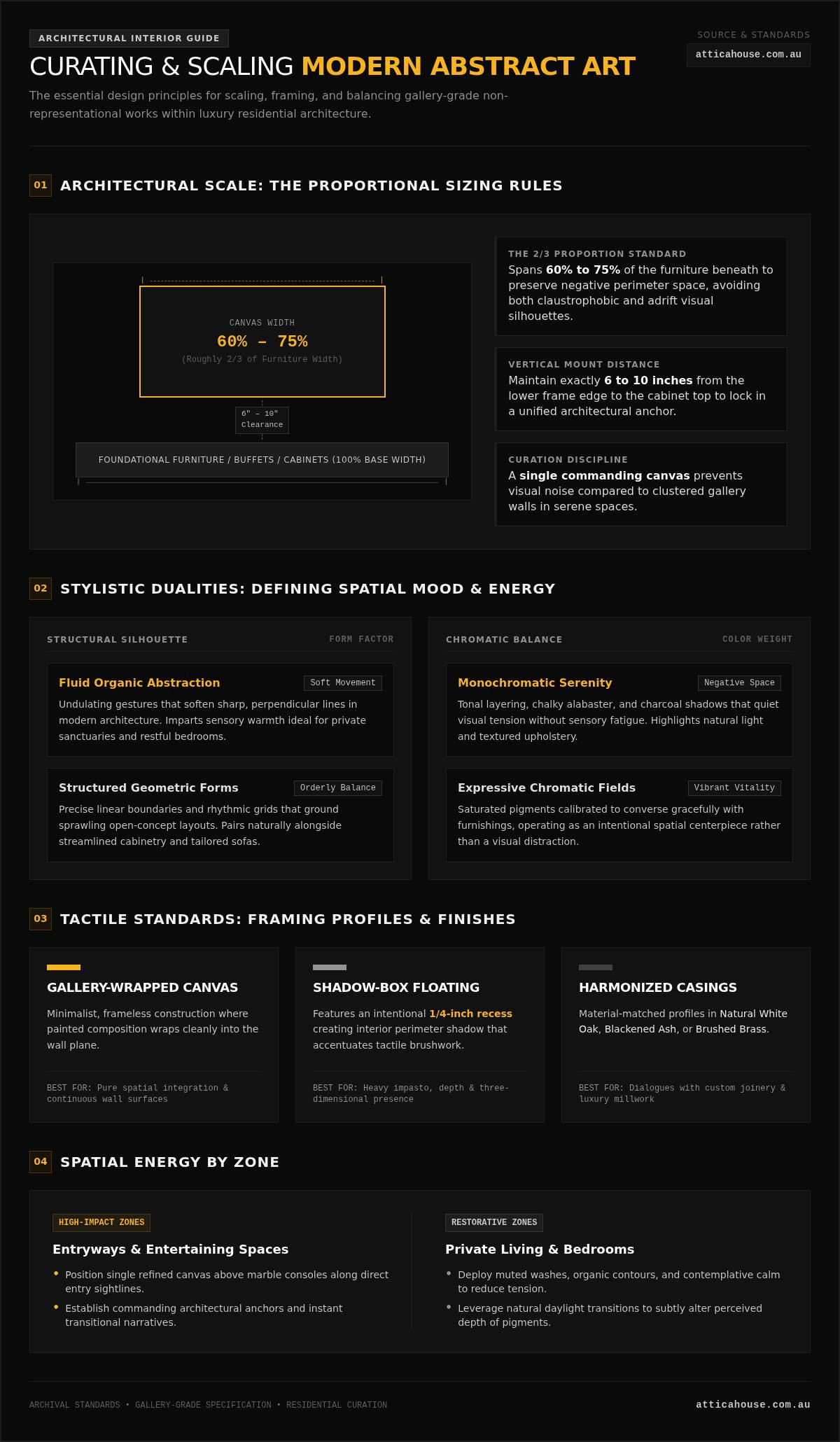
Organic abstraction introduces undulating gestures that soften the sharp, perpendicular lines common in contemporary architecture. These sweeping strokes bring gentle movement and sensory warmth to restful bedrooms and private living retreats. Conversely, geometric abstraction relies on precise linear boundaries and rhythmic grids to impose intentional structure. Hard-edged forms visually ground sprawling open-concept layouts, providing an orderly balance that pairs naturally alongside tailored sofas and streamlined cabinetry.
Monochromatic Serenity vs. Expressive Chromatic Statements
A room's chromatic weight dictates how an artwork resonates across an interior. Monochromatic modern abstract art utilizes tonal layering, chalky alabaster, and charcoal shadows to build subtle visual warmth without sensory fatigue. These restrained canvases celebrate negative space, letting natural light and textured upholstery take center stage. Alternatively, expressive chromatic fields inject vibrant vitality into a space. When choosing saturated pigments, select tones that converse gracefully with your furnishings, ensuring the canvas acts as an intentional centerpiece rather than a visual distraction.
Key Selection Criteria: Evaluating Scale, Proportion, and Texture
Modern abstract art achieves its greatest impact when conceived as an architectural anchor rather than mere decoration. While clustered gallery walls often create visual noise in serene interiors, a single commanding canvas commands immediate presence. Choosing the right piece means evaluating physical scale, surface texture, and framing harmony against the room's permanent architecture. As detailed in the Tate's guide to abstract art, pure relationships of line, tone, and spatial plane govern how non-representational works alter atmospheric perspective.
The Two-Thirds Rule: Sizing Art Above Luxury Furniture
Proportion dictates spatial elegance. To anchor an expansive wall, your artwork should span 60% to 75%, or roughly two-thirds, of the total furniture width beneath it. This proportion leaves generous negative space along the perimeter, preventing the canvas from appearing either claustrophobic or adrift. When mounting a large-scale piece, maintain six to ten inches between the bottom frame edge and the top surface of your buffets & cabinets to preserve an intentional, unified silhouette.
Canvas Substrates and Framing Profiles
Tactile richness distinguishes fine art statements from standard flat commercial reproductions. Consider how different finishes interact with ambient natural light:
- Gallery-Wrapped Canvas: Offers clean, minimalist edges that let the painted composition wrap smoothly into the wall plane.
- Shadow-Box Floating Frames: Provide a delicate quarter-inch recess that casts quiet interior shadows, accentuating textural brushwork.
- Harmonized Timber Casings: Select natural white oak, blackened ash, or brushed brass profiles that reflect the craftsmanship of your existing tables and joinery.
If you're exploring ways to anchor your living spaces, you can browse carefully curated wall art prints designed to bring structural balance home.
Room-by-Room Curation: Styling Abstract Art Across the Home
Every residential living space performs a unique function, demanding its own deliberate tempo of visual energy. True spatial harmony occurs when your chosen artwork converses directly with foundational luxury furniture australia. As morning sun transitions to ambient evening lamplight, directional illumination alters the perceived depth of pigments and brushwork. Positioning modern abstract art directly along key sightlines greets you upon entry, creating an intuitive transition into refuge.
The Living Room and Entryway: Creating Lasting Impressions
An entryway establishes the architectural narrative of the home. A single, refined canvas positioned above a marble console sets an immediate tone of calm prestige. In open living spaces, monumental statement pieces command emotional attention. Connect these visual gestures to the room's tactile foundation by echoing earthy pigments across plush handcrafted rugs online australia, which softens acoustics and visually grounds large seating arrangements.
The Bedroom and Executive Study: Cultivating Refined Focus
Private sanctuaries require visual restraint. Suspending low-saturation, fluid compositions six to eight inches above a headboard promotes circadian tranquility and sensory rest. Drawing from our curation of luxury bedroom ideas, soft earth tones and organic washes help quiet the mind before sleep. Conversely, an executive study benefits from structured, contemplative geometric forms that stimulate focus and disciplined creativity.
Ready to enrich your home's aesthetic dialogue? Explore modern abstract art prints crafted to elevate every room with enduring distinction.
Curating Your Collection: Selecting Exceptional Wall Art Prints
Acquiring modern abstract art is an intimate journey of visual alignment. True refinement requires balancing an immediate emotional affinity with enduring interior timelessness. Rather than chasing fleeting decor trends, seek pieces that converse gently with architectural mouldings, natural stone, and tailored upholstery without clamoring for attention. The most rewarding compositions cultivate quiet balance day after day.
Standout Abstract Expressions for the Discerning Collector
A considered collection relies on intentional stylistic variations to articulate spatial mood:
- Textural Impasto Prints: Evoke the tactile weight of artisan palette knife work, introducing physical depth that shifts softly across changing daylight.
- Minimalist Line Studies: Offer understated restraint and clarity, thriving in expansive, sunlit contemporary living zones.
- Layered Botanical Abstractions: Form an organic visual bridge between indoor living spaces and adjacent garden landscapes.
Transforming Your Walls with Attica House
Completing a home sanctuary demands curation rather than accumulation. Attica House offers a curated portfolio of over 90 modern abstract art statements, featuring artisan finishes that seamlessly blend global contemporary design with timeless craftsmanship. Each piece provides an evocative focal point, anchoring living rooms and retreats with effortless poise.
Discover our thoughtfully assembled selection of wall art prints designed to complete elevated residential interiors. With nationwide delivery and specialized handling for fragile art, welcoming fine aesthetic statements into your private haven is seamless. Elevate your personal sanctuary with our curated modern abstract art today.
Bringing Timeless Artistry into Your Private Sanctuary
Curating a home that feels both grounded and deeply inspiring is an intentional art. When you respect architectural proportions, honor tactile canvas finishes, and align chromatic tones with foundational furnishings, modern abstract art ceases to be merely decorative. It becomes an essential expression of personal sanctuary, shaping light, texture, and quiet contemplative refuge throughout your daily rhythms.
With an artisan portfolio of over 90 curated statement artworks, Attica House balances global contemporary design trends with timeless craftsmanship. Each piece is crafted to anchor elevated interiors seamlessly, supported by specialized Australia-wide delivery to ensure fragile decor arrives in immaculate condition. Take the next step toward completing your aesthetic vision: explore our curated modern abstract art collection and bring enduring serenity home.
Frequently Asked Questions
How do I choose the correct size modern abstract art for my wall?
Choose a modern abstract art piece that spans roughly two-thirds to three-quarters (60% to 75%) of the total width of your anchor furniture. For an unobstructed wall without furniture beneath it, select a canvas that fills roughly 60% of the visible surface. Generous perimeter margins prevent visual crowding, allowing a commanding oversized statement to establish structural balance without overwhelming the room.
Should abstract art match the exact color scheme of the room?
No, your artwork should harmonize with your broader interior palette rather than mirror every textile shade precisely. Exact color matching can make an interior feel staged and static. Instead, look for compositions that echo subtle secondary undertones, like chalky alabaster, warm taupe, or deep umber. This thoughtful chromatic layering creates depth and engages in a natural dialogue with upholstery, stone, and timber finishes.
What is the ideal hanging height for large abstract wall art?
The universal gallery standard is to position the vertical center of the artwork at 57 to 60 inches from the floor. This height corresponds to average human eye level. When mounting large artwork above a low console, sofa, or buffet, suspend the lower edge six to ten inches above the furniture top to keep the vignette feeling unified, intentional, and architecturally anchored.
How can I distinguish between mass-market prints and luxury art prints?
Luxury prints utilize heavyweight, acid-free archival rag paper and 10-to-12-color aqueous pigment inks rather than fugitive dye inks on chemical poster paper. True fine art reproductions feature paper weights of 250 to 315+ gsm, providing textural depth and lightfast permanence engineered to endure for a century. They are typically paired with artisan timber floating frames that accentuate the tactile nature of the substrate.
Can I pair modern abstract art with traditional or classical furniture?
Yes, pairing modern abstract art with classical furniture creates an intentional, curated tension that elevates both styles. Juxtaposing an expansive, gestural canvas against rich antique timber, heritage mouldings, or classical marble consoles keeps historical silhouettes feeling fresh. The non-representational forms bring light and vitality, weaving a layered narrative between Old World craftsmanship and contemporary spatial design.