


How to Protect Wood Floors from Furniture: Simple, Lasting Tips
Even a beautifully considered room can hide its hardest wear beneath the furniture. A dining chair pulled back from the table may leave a fine scratch, while a heavy cabinet can press a lasting mark into timber. If you’re wondering how to protect wood floors from furniture, adding any pad and hoping for the best isn’t enough. The protector needs to suit the furniture leg, how often it moves and the floor’s finish.
A poorly matched or worn protector can shift, collect grit or leave residue. A few practical checks can help prevent scratches, dents and scuffs without compromising the floor’s finish or the room’s considered feel. This guide explains how to choose protectors for different furniture legs, fit and maintain them, move furniture carefully and use rugs as an additional layer in high-use areas. With regular attention, furniture and timber floors can coexist beautifully.
Key Takeaways
- Understand how dragging, trapped grit and concentrated weight can leave different marks, so you can focus protection where it matters most.
- Learn how to protect wood floors from furniture by matching pads, glides or cups to the furniture’s use and checking guidance for your floor’s finish.
- Follow a simple routine to inspect and clean furniture contact points, fit suitable protectors, move pieces carefully and recheck them over time.
- Use rugs thoughtfully in high-use areas to add a protective layer while helping your furniture and timber floors feel beautifully composed.
How furniture damages wood floors, and where protection matters most
Furniture can leave fine scratches, dull scuffs or dents where its weight presses into the floor. Scratches mark the surface, while scuffs often appear as rubbed or transferred marks. Repeated friction can also wear the finish over time. The most exposed spots are usually beneath chair and table legs, where chairs slide in and out, and along routes where furniture is shifted.
A furniture floor protector sits between a furniture foot and the floor to reduce friction, spread pressure or limit direct contact. It can help reduce the risk of damage, but the right choice depends on the furniture and flooring. Wood flooring includes different constructions, such as solid and engineered boards, and the surface finish also affects how it should be cared for.
Which everyday movements create the most risk?
Repeatedly pulling a dining chair across the floor can abrade its finish, particularly if a leg has a rough edge or its protector has worn away. Sliding a heavy cabinet or table can leave deeper marks because its feet bear concentrated weight as they move. Even a small grain of sand or dirt caught beneath a furniture foot can act like abrasive grit. Check the contact points as well as the visible floor, especially after moving a piece or cleaning around it.
Does every wood floor need the same approach?
No single protector suits every floor. Solid and engineered wood differ in construction, and finishes can respond differently to materials placed against them. A pad that works on one surface may leave residue or affect another. If you’re unsure how to protect wood floors from furniture in your home, check the flooring-care instructions or ask the floor manufacturer about compatibility before fitting a particular pad or glide.
Choose floor protectors that suit your furniture and wood-floor finish
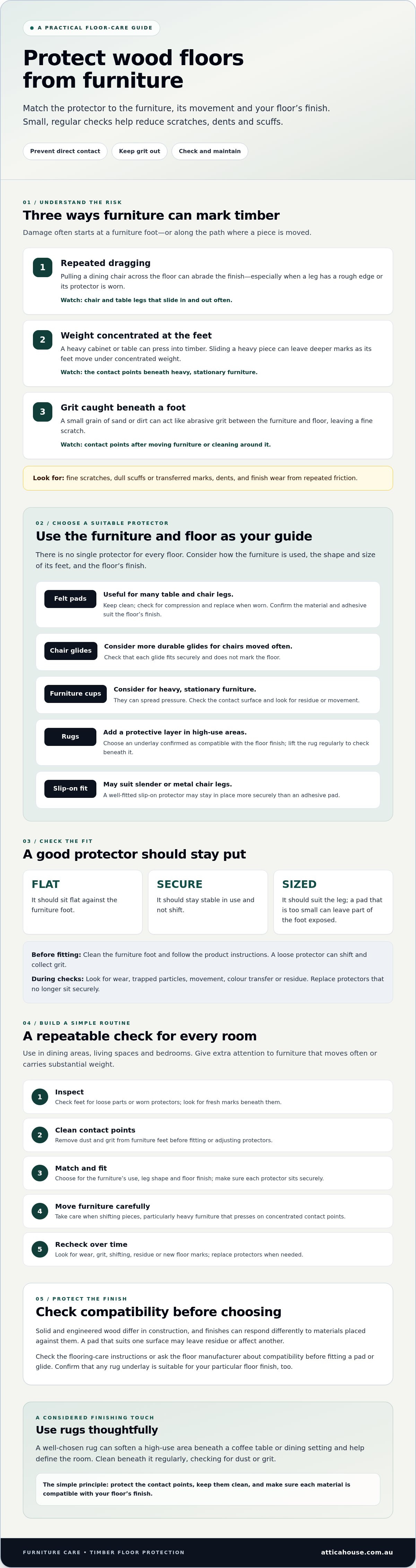
Choose a protector based on how the furniture is used, the shape and size of its feet, and the floor’s finish. Felt pads suit many furniture legs, while chairs that move frequently may need a more durable glide. A furniture cup may be worth considering for a heavy, stationary piece. For slender or metal chair legs, a well-fitted slip-on protector may stay in place more securely than an adhesive pad. Check the flooring and protector manufacturers’ guidance before choosing a material.
Use this comparison as a starting point for how to protect wood floors from furniture. Then confirm that the protector and any rug underlay are suitable for your particular floor.
- Felt pads: Useful for many table and chair legs. Keep them clean, check for compression and replace them when worn. Confirm the material and adhesive suit the floor’s finish.
- Chair glides: Consider durable glides for chairs moved often. Check that each glide fits securely and does not mark the floor.
- Furniture cups: Consider them for heavy, stationary furniture to spread pressure. Check the contact surface and look for residue or movement.
- Rugs: Useful beneath furniture in high-use areas. Clean beneath them regularly and confirm that any underlay is compatible with the floor finish.
What should go under chair, table and sofa legs?
Match the protector to the leg’s shape and size. It should sit flat and stay stable when the furniture is in use. A pad that is too small may leave part of the foot exposed, while a loose protector can shift and collect grit. Before fitting an adhesive pad, clean the furniture foot and follow the product instructions. Check protectors for wear, trapped particles, movement, colour transfer or residue, and replace them if they no longer sit securely.
Can rugs help protect wood floors beneath furniture?
A well-chosen rug can soften a high-use area beneath a coffee table or dining setting and help define the room. Choose an underlay confirmed as suitable for your floor finish, and lift the rug during routine cleaning to check for dust or grit beneath it. For a considered starting point, explore designer rugs and furniture from Attica House.
How to protect wood floors from furniture: a simple room-by-room routine
A few deliberate checks can make floor care part of your regular home routine. Use these steps in dining areas, living spaces and bedrooms, giving extra attention to furniture that moves often or carries substantial weight.
- 1. Inspect: Check furniture feet for loose parts or worn protectors, and look for fresh marks on the floor beneath them.
- 2. Clean contact points: Remove dust and grit from furniture feet before fitting or adjusting protectors.
- 3. Fit protectors: Make sure each protector sits securely and does not shift when the furniture is in use.
- 4. Move carefully: Clear the route, then lift furniture where practical rather than dragging it.
- 5. Recheck: Look for displaced or flattened pads and clean beneath rugs during routine cleaning.
Safest sequence: Clear the route, clean the furniture feet, lift the piece with appropriate help or equipment, then check its protectors once it’s in place.
How should you move furniture without scratching the floor?
Before moving a chair, table or cabinet, remove loose grit from its feet and clear the path ahead. Lift lighter pieces rather than sliding them. For heavy items, use suitable moving equipment or ask for help, and follow the equipment instructions. Avoid dragging furniture, even over a rug, because debris caught underneath can still mark the floor.
How often should furniture pads and rugs be checked?
Include a quick inspection in your regular cleaning routine and repeat it after moving furniture. Look for flattened or displaced pads, debris beneath furniture feet, shifted rug underlay and newly visible marks. A six-month check can serve as a useful reminder. Inspect more often where chairs or other pieces move regularly.
To find a rug that can help define a room as well as protect a high-use area, explore designer rugs from Attica House.
Keep your wood floors protected without compromising a considered interior
Protection works best when it reflects how each room is used. In a dining area, prioritise chairs that move often and the legs of the table. In a living room, consider the weight of sofas, armchairs and coffee tables, along with the routes people take around them. A rug can help shield a high-use area while giving the room a sense of definition. The aim is to make floor care part of the room’s composition, not an afterthought.
Thoughtful furniture selection and placement can support both comfort and long-term enjoyment. For ideas on choosing pieces for a considered home, read the luxury furniture guide and the handcrafted rugs guide.
Build protection into the way each room is arranged
Fit secure, well-sized protectors to chairs and other pieces that move often, and consider suitable support beneath heavier furniture. Keep rugs and underlays flat and aligned so their edges do not curl or create a trip hazard. If household routines change, such as when a dining table is moved or a walkway becomes busier, review the arrangement and check whether furniture feet or rugs need attention. This makes protecting wood floors part of everyday living.
When should you seek floor-care advice?
If you’re unsure whether a pad, underlay or cleaning method suits your floor’s finish, check the flooring manufacturer’s care instructions before proceeding. Avoid experimenting with products that may leave residue or affect the surface. If a mark persists or the finish appears damaged, arrange an assessment with a qualified floor-care professional rather than attempting an uncertain repair.
For a home where considered furnishings and practical floor protection work in harmony, explore Attica House’s furniture inspiration and rug selection.
Make floor protection part of everyday living
A lasting approach to how to protect wood floors from furniture starts with a few considered habits: choose protectors that suit both the furniture and the floor finish, move pieces with care, and check pads and rug underlays during regular cleaning. Pay extra attention to chairs and other pieces that shift often, as well as heavier furniture that stays in one place.
These small steps help care for timber floors without compromising on comfort or style. A thoughtfully placed rug can add a protective layer and give a room a more settled feel, while well-chosen furniture helps make a home a pleasure to live in every day.
Attica House offers furniture and designer rugs, with Australia-wide delivery. Explore thoughtfully selected furniture and rugs for your home, and create a space that feels both beautiful and practical.
Frequently Asked Questions
How do you stop furniture from scratching wood floors?
Fit clean, well-sized protectors to furniture feet and keep them in good condition. Felt pads suit many pieces, while chairs that move frequently may need a more durable glide. Clean the feet before attaching adhesive pads, and lift furniture where practical instead of dragging it. To protect wood floors from furniture effectively, match each protector to its use and check it regularly for trapped grit or wear.
Are felt pads safe for all wood floors?
No, felt pads aren’t automatically suitable for every wood floor or finish. Check the flooring manufacturer’s care instructions and the pad maker’s guidance before choosing one, especially if you’re unsure how the adhesive or pad material may interact with the surface. Fit pads to clean, dry furniture feet, then watch for movement, residue or colour transfer. If you notice a change, remove the pad and seek finish-specific advice.
Should you put a rug under furniture on a wood floor?
A rug can help protect a high-use area beneath furniture while defining the room, but check that its underlay is compatible with your floor’s finish. Keep the rug flat and secure, and lift it during routine cleaning to remove dust or grit trapped underneath. If the floor has recently been refinished, follow the flooring manufacturer’s instructions about when it’s safe to place a rug.
How do you move heavy furniture across a wood floor?
Avoid dragging heavy furniture across wood flooring. Clear loose grit from the route and the furniture feet, then lift the piece where practical with enough help to move it safely. For particularly heavy items, use suitable moving equipment according to its instructions. Once the furniture is in place, check that its protectors remain secure and that no debris or new marks have appeared beneath it.
How often should you replace furniture floor protectors?
Inspect protectors during routine cleaning and replace them when they’re dirty, flattened, damaged or displaced. A worn pad can trap grit and abrade the floor rather than protect it. As a reminder, check pads about every six months, and sooner for chairs or other furniture that moves frequently. Clean the furniture feet before fitting replacements, and confirm the new protector is suitable for your floor finish.