


How to Match a Rug with Your Sofa: The Art of Curating a Sophisticated Sanctuary
This guide reveals the professional secrets to pairing these two essential elements to create a harmonious, luxurious sanctuary that reflects your personal story. We'll explore how to navigate the interplay of textures, from the tactile warmth of handcrafted wool to the sleekness of designer upholstery. You'll gain the confidence to select the perfect dimensions and palettes, ensuring your living space feels like a balanced, professionally styled refuge. From understanding the nuances of texture maximalism to mastering the scale of large designer sofas, we'll walk you through the art of curated selection.
Key Takeaways
- Understand how a rug functions as an architectural anchor to define intimate conversation zones and ground your most cherished furniture pieces.
- Learn how to match a rug with your sofa using tone-on-tone palettes for serenity or intentional contrast to highlight your designer seating.
- Discover the "Texture Contrast" rule to balance smooth upholstery with tactile, handcrafted materials for a deeply layered and sensory environment.
- Master the geometry of spatial placement by learning the ideal rug-to-sofa ratios and the effective "Front Legs Only" layout technique.
- Complete your sanctuary's narrative by bridging the gap between floor and furniture with curated coffee tables and evocative wall art.
The Art of the Anchor: Why Your Rug and Sofa Relationship Defines the Room
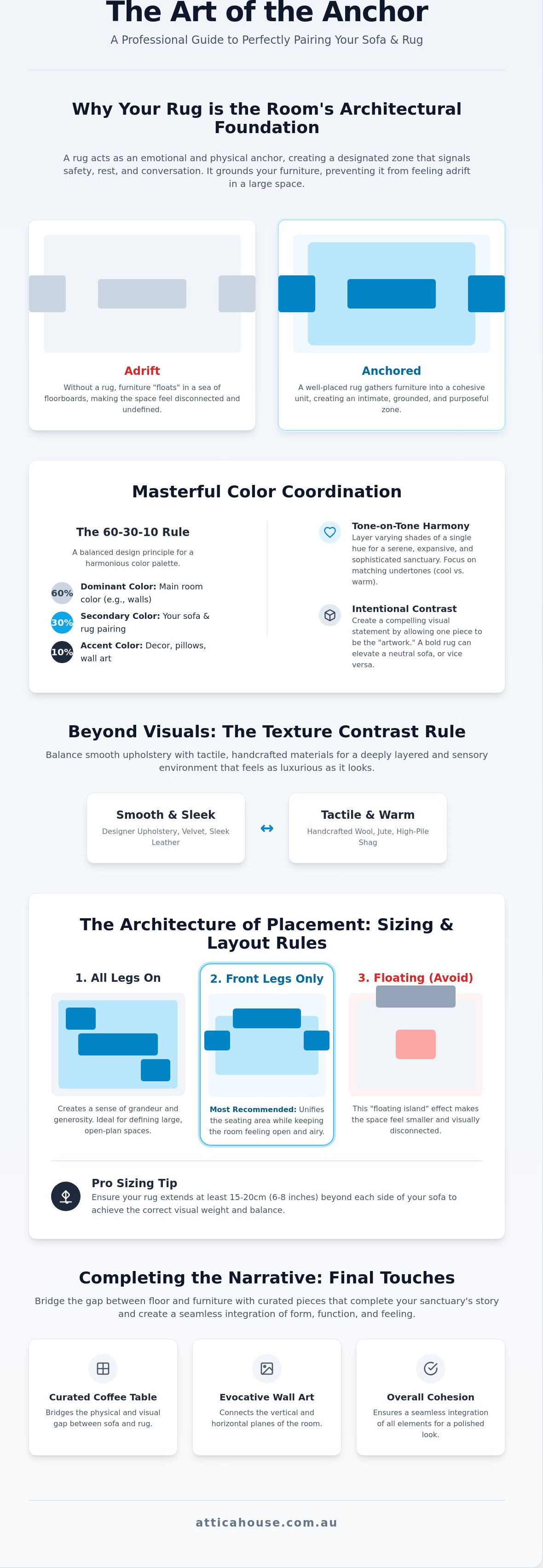
A living room is more than a collection of curated objects; it's a sanctuary where life unfolds in quiet moments and shared stories. The relationship between your seating and the floor beneath it forms the most critical visual dialogue in this space. When you begin to explore how to match a rug with your sofa, you aren't just choosing decor. You're establishing an architectural foundation. A rug acts as an emotional and physical anchor, creating a designated zone that signals safety, rest, and conversation. Without this grounding element, even the most exquisite sofa can feel adrift, lacking the context it needs to truly shine.
Balance is achieved through the careful management of visual weight. A large, deep-seated sofa possesses significant presence; it requires a rug with enough scale and substance to provide a counterpoint. By understanding color theory, you can ensure these two central pieces speak the same visual language, whether they harmonize through similar tones or create a compelling tension through contrast. This synergy transforms a house into a refuge, where the rug provides the literal and metaphorical ground for your daily life.
Establishing Visual Boundaries
In modern Australian homes, open-plan living is a hallmark of contemporary design. While these expansive spaces offer light and air, they often lack clear definition. Designer rugs serve as invisible walls, defining "rooms within rooms" without sacrificing the sense of flow. A well-placed rug prevents your furniture from "floating" in a sea of floorboards. It gathers the sofa, armchairs, and coffee table into a cohesive unit. Scale plays a vital role here; a larger rug that extends beyond the sofa's edges creates a sense of grandeur and generosity, while a more contained rug can foster a feeling of intimate seclusion.
The Emotional Resonance of a Grounded Space
The true luxury of a home is found in how it feels at the end of a long day. There is a profound sensory shift that occurs when you step off a hard surface onto the tactile warmth of a handcrafted wool rug. This physical grounding mirrors an internal shift toward balance and calm. A thoughtful pairing of your rug and sofa doesn't just look professionally styled; it feels intentional. It creates a space where the mind can settle. Spatial harmony is the seamless integration of form, function, and feeling. As you master how to match a rug with your sofa, you're ultimately prioritizing your own well-being by crafting an environment that supports your personal story.
- Visual Stability: A rug provides a heavy base that prevents large furniture from overwhelming the room.
- Tactile Comfort: High-quality materials like wool or silk blends offer a sensory experience that elevates daily living.
- Defined Purpose: The "anchor effect" clarifies the function of the seating area as a place for connection.
Masterful Colour Coordination: Should Your Rug Match or Contrast Your Sofa?
Color is the silent conductor of a room's mood. When you consider how to match a rug with your sofa, you're deciding whether the space should whisper in harmony or speak in a bold visual crescendo. A sophisticated way to manage this dialogue is through the 60-30-10 rule. This design principle suggests that 60% of the room's color should be a dominant shade, 30% a secondary color (typically your sofa and rug), and 10% an accent color found in wall art or decorative objects. This structure ensures your palette feels balanced rather than cluttered.
The "Neutral Dilemma" often causes hesitation during the selection process. Many worry that pairing a beige sofa with a cream rug will result in a flat, uninspired environment. The secret to success lies in the undertones. A warm oatmeal sofa paired with a rug featuring golden or sandy base notes feels rich and intentional. If you match cool greys with warm beiges without considering their color temperature, the room can feel discordant. Success comes from finding the shared DNA between the two pieces.
The Monochromatic Sanctuary
A monochromatic palette represents the height of sophisticated restraint. By layering varying shades of a single hue, you create a space that feels expansive and deeply calming. This tone-on-tone philosophy relies on subtle shifts in saturation rather than jarring color changes. For example, a charcoal sofa placed on a dove-grey rug provides enough depth to be interesting without overwhelming the senses. When curating such a refined space, sourcing high-quality luxury furniture australia ensures that the silhouettes and materials provide the necessary character that color alone might lack. Subtle pattern shifts, such as a faint herringbone or a soft marle effect, add the necessary complexity to a neutral room.
High-Contrast Drama
If you want your seating to be the undeniable star of the sanctuary, embrace intentional contrast. A dark, sculptural navy sofa placed upon a light, ethereal ivory rug creates an immediate focal point. This visual tension draws the eye and highlights the sofa's unique form. Conversely, a vibrant rug with rich earth tones can breathe life into a minimalist, neutral sofa. To prevent this from feeling chaotic, ensure the rug contains at least one small thread of color that echoes the sofa's upholstery. This connection makes the contrast feel like a deliberate, professional choice rather than an accidental clash.
Discover the perfect tonal partner for your living space by exploring our curated collection of designer rugs.
Beyond Visuals: Pairing Textures and Materials for Tactile Luxury
True luxury isn't merely a visual achievement; it's a sensory experience that unfolds through touch. While color coordination provides the initial allure, the interplay of materials determines how a room feels during the quiet hours of the evening. Mastering how to match a rug with your sofa requires looking beyond the visible palette to consider the "Texture Contrast" rule. This principle suggests that a room achieves its highest state of balance when opposing textures are allowed to complement one another. If your seating is sleek and smooth, your floor requires a more tactile, expressive foundation to prevent the space from feeling clinical.
The choice between hand-knotted and hand-tufted construction also plays a vital role in the longevity of your sanctuary. Hand-knotted rugs represent the pinnacle of craftsmanship, offering a dense, resilient pile that matures beautifully over decades. In high-traffic areas, the structural integrity of these pieces ensures they remain a permanent part of your home's story. For those seeking this level of quality, sourcing handcrafted rugs online australia allows you to bring heritage-grade artistry into your private world. These materials don't just sit in a room; they elevate the "lived-in" feel of your luxury furniture by providing a soft, enduring counterpoint to heavy timber or metal accents.
Leather Sofas and Natural Fibres
Leather is a timeless choice, yet its cool and sleek surface can occasionally feel austere. To soften this aesthetic, pair your leather lounge with high-pile wool or plush, handcrafted textures. The organic irregularities of a natural fibre rug, such as jute or sisal, can also create a sophisticated contrast with premium hide. This combination strikes a perfect balance between "rugged" and "refined," grounding the sleekness of the leather with the raw, earthy honesty of the floor. It's a pairing that feels grounded, intentional, and deeply welcoming.
Velvet Upholstery and Silk Accents
Velvet is a heavy, opulent fabric that demands a rug with equal presence but a different tactile language. Pairing a velvet sofa with a low-pile rug featuring silk or viscose accents creates a stunning "jewel-box" effect. The subtle lustre of the rug catches the light, echoing the sheen of the velvet without competing for attention. In these spaces, avoid overly shaggy textures that can make the room feel cluttered. Instead, opt for a refined silk-blend that offers a delicate, smooth feel underfoot, ensuring the material synergy feels cohesive rather than overwhelming. Knowing how to match a rug with your sofa in this context is about respecting the weight of each material while allowing their unique finishes to shine.
The Architecture of Placement: Sizing and Layout Rules
Placement is the silent architecture of a room. It dictates how we move, where we linger, and how we perceive the proportions of our most significant furniture. When you master how to match a rug with your sofa, you're essentially solving a puzzle of scale and symmetry. The most common error in luxury design isn't a clash of color; it's the selection of a rug that is far too small. A "postage stamp" rug floating in the center of a room makes even the most expensive designer sofa look diminished and disconnected. To avoid this, always measure your seating area rather than just the room itself.
For an L-shaped sofa or a large sectional, the rug must be expansive enough to accommodate the entire footprint. This ensures the furniture feels grounded rather than squeezed. In smaller Australian lounges, the "Front Legs Only" rule is a practical yet sophisticated compromise. By placing the front third of the sofa over the rug, you create a visual bridge that connects the seating to the rest of the room. This technique draws the eye inward, fostering an intimate atmosphere without overwhelming the floor space. It's a graceful way to anchor the room while allowing the beauty of your timber or stone flooring to remain visible.
The 'All Legs On' Standard
This layout is widely considered the pinnacle of luxury in spacious, open rooms. By placing all furniture legs entirely on the rug, you create a unified "island" of comfort that feels deliberate and grand. This approach defines the lounge as a distinct destination within the home. Aim to leave a border of approximately 30 to 45 centimetres between the edge of the rug and the walls. This gap allows the natural flooring to act as a frame, highlighting the craftsmanship of your rug while ensuring the room doesn't feel carpeted from wall to wall.
Styling for Open-Plan Living
In expansive Australian homes, rugs function as vital spatial markers. They separate the lounge from the dining area without the need for physical barriers, maintaining a sense of airy flow. If you're using multiple rugs within the same visual field, ensure they share a common thread, such as a similar pile height or a complementary undertone. Consistency in these details prevents the space from feeling fragmented. For more precise measurements tailored to your specific layout, consult our guide on how to choose a rug. Finding the right dimensions is the final step in ensuring your sanctuary feels both balanced and professionally curated.
Refine your home's architecture today by selecting from our range of premium designer rugs.
Curating the Narrative: Final Touches with Attica House
A room truly begins to breathe when the individual elements stop acting as isolated objects and start telling a collective story. While you've mastered the technical aspects of how to match a rug with your sofa through color and texture, the final narrative is written in the subtle layers that surround them. Coffee tables and side tables act as essential visual bridges. They physically and aesthetically connect your seating to the floor's foundation, providing a resting place for the eye and the curated objects of your daily life. This layering ensures the transition between your rug and sofa feels seamless rather than abrupt.
To elevate your living space into a true sanctuary, you must look to the vertical plane. Incorporating evocative wall art prints that echo the secondary tones of your rug creates a sense of enveloping harmony. It is an exercise in the art of living well, where every selection serves as a reflection of your internal balance. We invite you to explore our partner showrooms to experience these tactile qualities firsthand. Touching the natural fibers and seeing the depth of our designer collections in person is the best way to visualize how to match a rug with your sofa in your own private retreat.
The Attica House Designer Collection
Our collection is a testament to the power of handcrafted quality and timeless craftsmanship. Each piece is curated specifically for the nuances of sophisticated Australian interiors, where light, space, and comfort must coexist. We believe designer rugs should function as art for your floors, offering a sense of heritage that mass-produced items simply cannot replicate. This commitment to exclusivity ensures that your investment becomes a permanent, soulful part of your home’s history. Selecting from a curated range simplifies the styling process, as each piece is designed to resonate with a high-end, modern aesthetic.
Creating a Cohesive Story
A perfectly styled room feels matched but never "matchy-matchy." You can create a sophisticated resonance by linking the subtle geometric patterns in a hand-knotted rug to the abstract themes in your wall art. Introduce ottomans and stools to add layers of versatility and texture; these smaller pieces are perfect for experimenting with contrasting materials like bouclé or velvet. Before finalizing your sanctuary, consider this checklist for a balanced environment:
- Shared Undertones: Ensure the rug and sofa share a common warm or cool base temperature.
- Texture Play: Balance a sleek leather or linen sofa with a highly tactile, textured rug.
- Scale and Ratio: Verify the rug is large enough to ground all furniture legs or at least the front third of the lounge.
- Vertical Connection: Use wall art or cushions to pull colors from the rug up into the rest of the room.
Crafting Your Timeless Sanctuary
Curating a living space is a deeply personal journey that transforms a house into a soulful refuge. You've discovered that a rug is far more than a decorative layer; it's the architectural foundation that defines your seating and grounds your daily rituals. By mastering the nuances of color coordination and the subtle interplay of tactile materials, you now possess the clarity needed to make selections that feel both intentional and enduring. Understanding how to match a rug with your sofa is the first step in creating a room that resonates with internal balance and quiet luxury.
To bring this vision to life, we invite you to explore the Attica House Designer Rug Collection. Our expertly curated handcrafted rugs are selected for their refined aesthetic and commitment to excellence. With national Australia-wide delivery, we make modern luxury attainable for every home. Your sanctuary is a reflection of your own story. Trust your instincts as you layer texture, scale, and color to build a space that offers comfort and calm for many years to come.
Frequently Asked Questions
Should my rug be lighter or darker than my sofa?
Your rug should generally provide contrast to your sofa to ensure both pieces remain distinct and celebrated. If you have a dark charcoal or navy sofa, a lighter cream or silver rug creates an ethereal, high-contrast look. When you are deciding how to match a rug with your sofa, remember that a light linen sofa paired with a darker, earth-toned rug provides a sense of grounding. The goal is to avoid a flat appearance where the furniture and floor blend into a single mass.
Can I put a patterned rug with a patterned sofa?
You can certainly pair a patterned rug with a patterned sofa, provided you vary the scale of the designs. If your sofa features a large, bold floral or geometric print, choose a rug with a much smaller, subtle motif to avoid visual competition. Shared color palettes are essential here to ensure the two patterns feel like they belong to the same narrative. This approach adds a sophisticated layer of texture without overwhelming the room's sense of calm.
What is the best rug material for a house with pets and children?
Wool is the gold standard for households with pets and children due to its natural resilience and lanolin coating, which naturally resists stains. It's a durable fiber that maintains its shape even under the pressure of high-traffic play. For modern convenience, many families also opt for high-quality washable rugs that offer a balance of aesthetic beauty and practical ease. These materials ensure your sanctuary remains a place of refuge rather than a source of stress.
How much of a rug should show under a sofa?
Ideally, at least the front third of your sofa should sit on the rug to create a visual bridge between the furniture and the floor. In larger rooms, placing all four legs of the sofa and surrounding armchairs on the rug creates a grand, unified island of comfort. If the rug only sits in front of the sofa without any legs touching it, the furniture can feel like it's floating in the space. This often disrupts the room's architectural balance.
Can I layer two rugs together in the living room?
Layering two rugs is an excellent way to add depth and tactile interest to a living room. A common professional technique involves placing a large, neutral jute or sisal rug as a base and layering a smaller, more intricate handcrafted rug on top. This defines the seating area while introducing an extra level of softness and color. It's a particularly effective strategy when you love a designer rug that might be too small to anchor the entire room on its own.
How do I choose a rug colour if my sofa is a bold colour like navy or emerald?
When exploring how to match a rug with your sofa if the upholstery is a bold hue like emerald or navy, look to neutral tones or subtle complementary colors. A cream or soft grey rug with hints of the sofa's color in the pattern can create a sophisticated, cohesive look. Choosing a rug in a muted earth tone, such as mocha or terracotta, provides a grounding contrast that lets the jewel-toned sofa remain the undisputed star of the sanctuary.
Does the rug have to be centered with the sofa or the TV?
The rug should always be centered with the sofa and the primary seating arrangement rather than the television. The goal is to anchor the conversation zone and create a sense of symmetry within the furniture group. If the TV is off-center, use smaller accessories like side tables or floor lamps to balance the visual weight of the room. Centering the rug with the sofa ensures the foundation of the room feels stable and intentional.
How do I stop my rug from sliding on floorboards?
A high-quality rug pad is the most effective way to prevent sliding on polished floorboards. Beyond safety, a pad adds an extra layer of cushioning, which enhances the tactile luxury of your handcrafted rug and protects the fibers from wear against the hard floor. Look for a pad that offers both grip and felted thickness to ensure your rug remains a permanent, stable fixture in your thoughtfully composed world.