


How to Make Outdoor Furniture Last Longer With Smart Care
Replacing outdoor furniture isn’t the only way to refresh a weather-worn space. If you’re wondering how to make outdoor furniture last longer, start with breathable, well-fitted covers, clean each material appropriately, and protect wooden pieces with oil or stain. Store cushions and furniture away from prolonged rain and harsh weather. A simple routine can help preserve comfort and appearance.
Sun, rain and seasonal cold can gradually mark even beautifully made pieces, so it’s understandable to wonder which care steps are worth the effort. The best approach to how to make outdoor furniture last longer is to shape your routine around the materials you own and the conditions they face. This guide explains how to choose covers that allow airflow, clean wood, metal, resin and fabric, prepare furniture for freezing weather, and maintain pieces before deciding to replace them. Understanding how to make outdoor furniture last longer can help keep an outdoor setting a welcoming place to pause, gather and enjoy the Australian outdoors.
Key Takeaways
- Choose a well-fitted, breathable cover to help shield furniture from rain while allowing airflow.
- Match your cleaning method to each material, and let cushion covers dry fully before storing them.
- In freezing weather, reduce exposure to moisture and cold by moving furniture or cushions into sheltered storage where practical.
- Inspect finishes and address small signs of wear early; regular care may help preserve furniture before replacement becomes necessary.
1. Choosing weatherproof and well-fitted furniture covers
Measure each piece, including its widest points and height, before choosing a cover. It should fit closely without pressing against sharp corners or dragging on the ground. Excess fabric can catch the wind, while a tight fit may strain the seams. Choose breathable material that sheds water while allowing airflow, which helps reduce trapped condensation. Use the cover’s tie-downs to secure it in windy weather. Matching protection to the furniture and its exposure is a practical first step.
Use covers strategically, not as a substitute for dry storage. During heavy downpours, covering chairs and lounges helps keep cushions and seats from becoming soaked. Remove standing water from the cover afterwards, then let the area breathe when the weather clears. Store cushions indoors when they’re not in use, or use covers that resist water and UV rays. If heavy rain is forecast, remove washable cushion covers and store them until conditions improve.
In Australia, the cost of covers and protective treatments depends on furniture dimensions, material, fit and treatment type. A tailored cover and a wood treatment serve different purposes, so decide what you need based on the piece’s material and exposure.
For longer periods of wet weather, wash removable cushion covers according to their care instructions. Let them dry fully before storing them, as damp fabric can develop mildew. Keep cushions indoors through heavy rain months, rather than leaving them beneath a wet cover. A cover protects the frame, but dry indoor storage gives cushions a separate layer of protection. This is another practical way to make outdoor furniture last longer.
For maximum protection, store outdoor furniture indoors when space allows. If that isn’t practical, cover clean, dry pieces and secure loose edges before the wind picks up. Stack lightweight chairs to save space, but avoid placing weight on cushions or delicate surfaces. After strong weather, check the cover and clear any trapped moisture. Uncover furniture on dry days so covers protect rather than conceal developing wear.
2. Cleaning wood, metal, plastic, resin and fabric
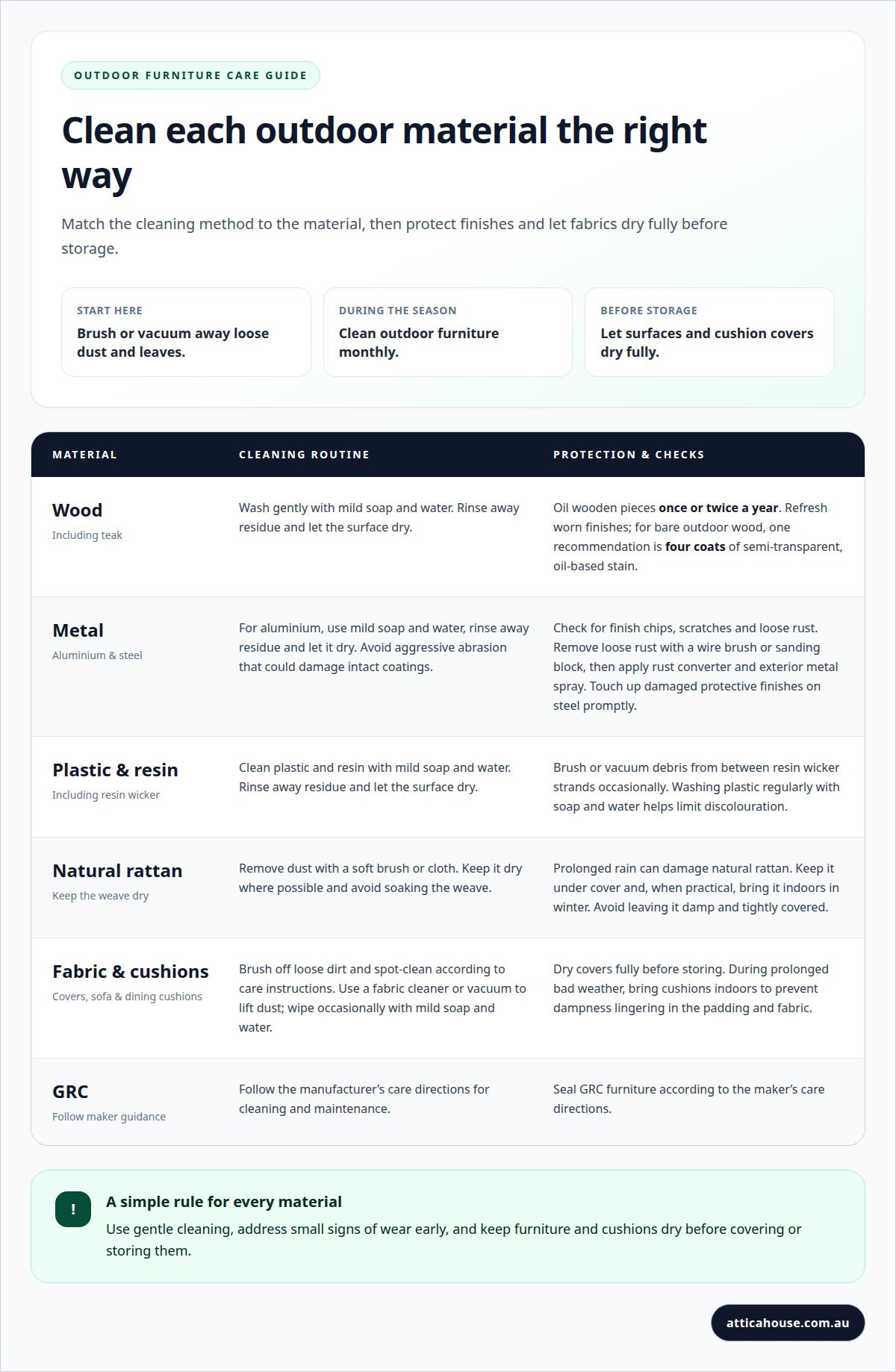
Start by removing loose dust and leaves with a soft brush or vacuum. For aluminium, teak, plastic and resin, use mild soap and water. Rinse away residue, then let each surface dry. This simple routine clears grime without abrasive scrubbing. Debris can collect between the strands of resin wicker, so brush or vacuum it occasionally and rinse with mild soapy water when needed.
Natural rattan needs gentler care. Keep it dry where possible and remove dust with a soft brush or cloth. Prolonged rain can damage natural rattan, so avoid soaking the weave. Regularly washing plastic furniture with soap and water helps limit discolouration. On teak, gentle washing removes surface dirt without disrupting a considered maintenance routine.
Clean outdoor furniture monthly during the season. For wooden pieces, oil once or twice a year to help prevent deep splitting and water damage. Repaint or refresh a finish when wear exposes the surface. For bare outdoor wood, one recommendation is four coats of semi-transparent, oil-based stain. Seal GRC furniture according to the maker’s care directions.
Check metal closely during cleaning. Remove loose rust before it spreads, using a wire brush or sanding block, then apply rust converter and exterior metal spray. Check aluminium finishes for chips or scratches, and promptly touch up damaged protective finishes on steel. Avoid aggressive abrasion that could damage intact coatings.
For cushions, regularly brush off loose dirt and spot-clean according to their care instructions. A fabric cleaner or vacuum can lift dust from outdoor sofa and dining cushions. Wipe them occasionally with mild soap and water, then dry covers fully before storing them. During prolonged bad weather, bring cushions indoors to prevent dampness lingering in the padding and fabric.
3. Protecting furniture from freezing temperatures
Where frost is expected, move furniture into a sheltered place before cold weather arrives. A garage, shed or covered area can limit direct exposure to frost and moisture. First, remove cushions and loose accessories, and make sure frames are dry before covering or storing them. If furniture must stay outside, raise it off damp ground and use a breathable cover secured against the wind. This helps prevent moisture lingering around legs and joints.
Wood needs protection through changing weather, not just winter storage. Oil or stain can help shield outdoor wooden furniture from the elements. Apply the finish to clean, dry timber, following the product directions. Pay attention to exposed edges, joints and end grain, where water can collect. In sun-heavy areas, choose a UV-protective outdoor finish. Place wooden pieces under an umbrella, pergola or in shade to reduce direct sun exposure, fading and surface wear.
Natural rattan needs a drier place to rest in winter. Keep it under cover, away from prolonged rain, and bring it indoors when practical. Before storage, gently brush away dust with a soft cloth. Avoid leaving damp rattan tightly covered, as trapped moisture can affect the weave. A sheltered, ventilated spot protects the material while allowing air to circulate.
Before storing a piece, inspect it for loose joints, scratches or coating damage. Address small issues while the furniture is accessible rather than leaving them exposed through winter. Fold umbrellas and store them in a garage or shed when not in use. If a glass tabletop can be removed, store it indoors and keep the frame sheltered. These steps protect vulnerable surfaces and make seasonal care easier.
Freezing conditions vary across Australia, so base your routine on the weather where you live. When frost threatens, prioritise a dry, sheltered position. For wooden furniture, pair that protection with suitable oil or stain, and keep UV exposure in mind when the weather turns sunny again.
4. Maintaining furniture instead of replacing it
Before discarding a weathered piece, inspect its frame, joints and finish. Tighten loose fixings, clean away grime and address surface damage. A faded finish may need refreshing, while a cracked frame or unstable joint can affect the furniture’s usefulness. Distinguish cosmetic wear from structural problems. Restoring a sound frame can preserve a familiar piece and keep it in use.
Wood often benefits from regular attention. Exterior oil, such as teak oil, can refresh hardwood, while a teak protector helps maintain its original colour. In rainy climates, marine-grade sealant can add protection. One contributor reported stained outdoor wood projects still looking good after 10 years. Another said almost any outdoor wood could last 20 or more years with occasional painting. These are individual experiences, not a lifespan promise.
Match maintenance to the material and its condition. Seal GRC furniture according to the manufacturer’s recommendations and wipe spills promptly. Check aluminium finishes for chips or scratches, and promptly touch up chips or scratches in steel’s protective finish. For synthetic wicker, replace damaged strands and tighten loose areas with outdoor-grade rattan if the frame is stable. Repairing a small, localised problem may keep the whole piece usable.
Consider how furniture sits between uses. Raise pieces on pallets or risers to limit exposure to ground moisture, and place them beneath a pergola, umbrella or other shade to reduce sun damage. Store glass tabletops indoors, even if the frames stay outside. These practical adjustments address wear at its source and can help keep furniture in use.
Keep a simple record of repairs and finish care, noting which areas need attention next. If a frame is stable, repair and maintenance may be the sensible next step. If it’s beyond practical repair, explore outdoor furniture options suited to your space.
Attica House: Buffets & Cabinets
Attica House offers considered furniture choices for refreshing spaces around your outdoor setting. If a piece has reached the end of its useful life, or you’re reworking an adjoining room, explore Buffets & Cabinets for storage, Coffee Tables for a living area, or Dining Tables for a welcoming place to gather. Console Tables can add a composed finishing touch to an entryway or living space.
Choosing a replacement is different from maintaining what you own. Let each piece’s condition guide your decision, and consider how a new furnishing will work with your home’s existing materials, scale and style. A carefully selected piece can complement the relaxed atmosphere you’ve created outdoors without requiring a full redesign.
For a closer look at furniture options, explore Attica House’s collections.
Make your outdoor space a lasting part of home
A well-kept outdoor setting can become more than a place to sit. It can hold slow breakfasts, quiet afternoons and easy gatherings, changing gently with the seasons. Let the way you use the space guide future choices: consider how the furniture feels to live with, how it sits alongside your home, and whether each piece still serves its purpose.
Making outdoor furniture last longer also means choosing pieces that suit your daily life. A considered replacement can complement what you’re keeping rather than prompt a complete change. Aim for a cohesive setting that feels inviting and personal, with room to evolve as your needs do.
If you’re weighing a refresh or exploring furniture for your home, contact Attica House for outdoor furniture advice. A thoughtful next choice can help your space feel welcoming for seasons to come.
Frequently Asked Questions
How should outdoor furniture be cleaned and maintained in Australia?
Use care suited to each material and adapt your routine to its exposure. Furniture beside a garden may collect leaves and pollen, while an uncovered dining setting may need attention after spills. Clear debris before washing, then inspect dry surfaces, feet and joints. Follow care instructions for fabrics and finishes, since a cleaner suitable for one surface may not suit another.
What is the best way to protect outdoor furniture from Australian sun and UV damage?
Reduce direct exposure with shade, and use a UV-protective finish on wooden furniture in sun-heavy areas. A pergola or umbrella can create a cooler, more sheltered position. Notice how sunlight moves across your outdoor space, then reposition vulnerable pieces if one side gets prolonged direct sun. Check fabric and timber for fading or worn finishes as part of seasonal care.
How can outdoor furniture be protected from rain, humidity, mould and coastal salt air?
Prioritise airflow and quick drying, especially after rain or humid nights. Lift furniture off damp ground and leave space around pieces so moisture doesn’t stay trapped. Stainless steel and aluminium withstand rust and fading, making them suitable for humid or coastal settings. In salt-exposed areas, rinse away surface residue with fresh water, then dry metal frames and inspect joins for early signs of wear.
Are furniture covers or storage better for extending outdoor furniture life?
Indoor storage offers the strongest shelter from the weather, while a breathable cover is useful when furniture must stay outside. Choose based on available space, material and exposure. Before covering furniture, remove cushions and make sure surfaces are dry. On a small balcony, a fitted cover may be practical; during prolonged severe weather, sheltered storage gives the whole setting more protection.
How do you maintain timber outdoor furniture, including teak and eucalyptus?
Clean timber gently and use an exterior oil or finish suited to the wood. Teak and eucalyptus contain natural oils that help resist moisture, rot and insect damage, but exposure still matters. Keep timber clear of standing water, and look for changes around joints and end grain. A teak protector can help retain the original colour if you want to preserve that appearance.
How do you prevent rust and corrosion on metal outdoor furniture?
Choose stainless steel or aluminium for humid and coastal settings, and keep metal surfaces clean and dry. Inspect protective coatings for chips or scratches, particularly around joints and contact points. If rust appears, remove loose material before it spreads, then use rust converter and exterior metal spray. Avoid scraping intact coatings during routine cleaning, since the finish helps shield the metal beneath.