


How to Layer Rugs in a Bedroom: A Guide to Creating a Refined Sanctuary
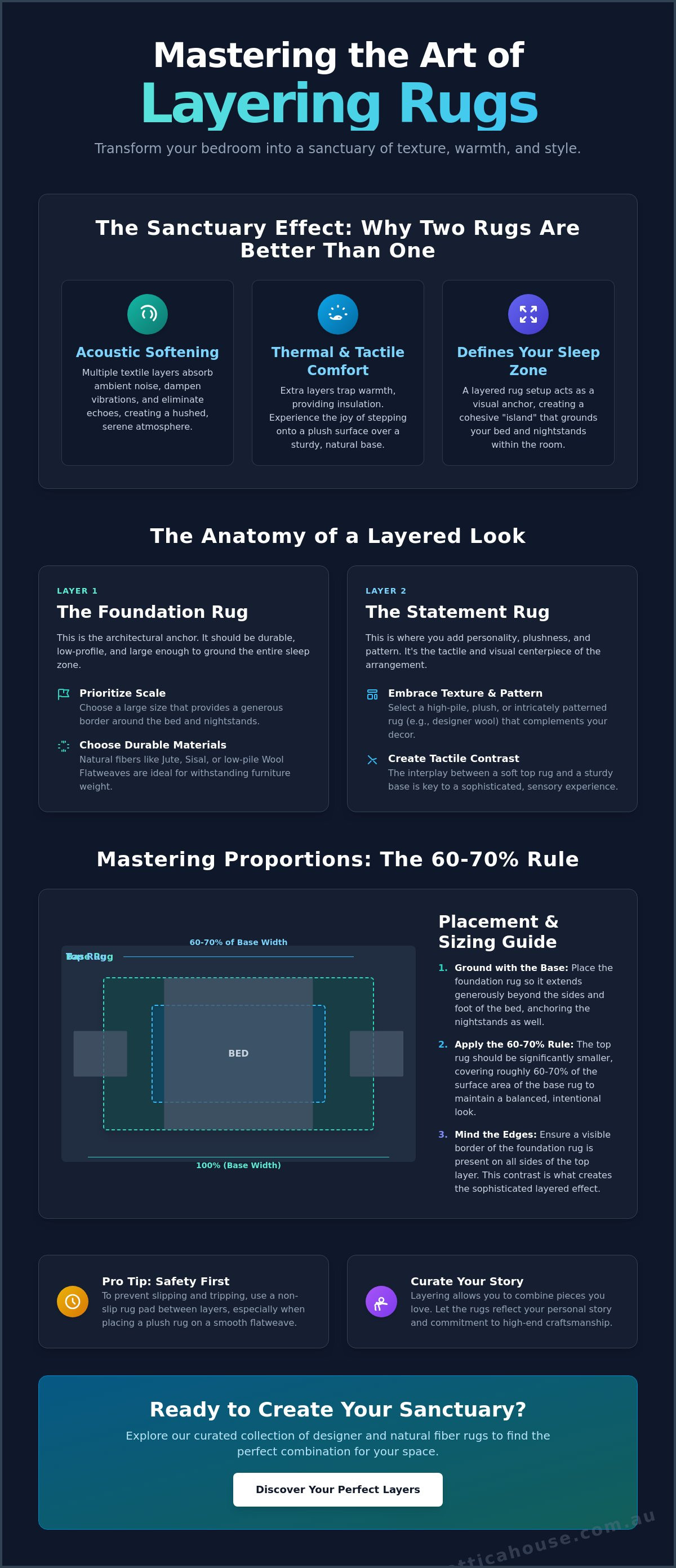
What if the most profound shift in your home's atmosphere doesn't come from a new coat of paint, but from the deliberate arrangement of what lies beneath your feet? Many homeowners dream of that plush, hotel-luxe aesthetic yet hesitate when faced with the logistics of mixing textures. You might find yourself worrying about clashing patterns or whether the dimensions will dwarf your bed. Understanding how to layer rugs in a bedroom is the secret to resolving these tensions, turning a cold floor into a masterclass in sensory depth and warmth.
We agree that your private retreat should feel like a sanctuary, not a design puzzle that's impossible to solve. You deserve a space where every step feels intentional and every texture invites you to linger. In this guide, you'll discover how to master the art of rug layering to infuse your bedroom with sophisticated luxury and improved acoustics. We'll walk through the essential principles of scale, the beauty of pairing natural fibers like jute with designer wool rugs, and the practical techniques to ensure your sanctuary remains safe and trip-free.
Key Takeaways
- Understand the Sanctuary Effect and how stacking textures improves room acoustics and thermal comfort for a deeper sense of refuge.
- Learn the essential rules of scale to ensure your foundation rug provides a generous, grounded border around your bed.
- Discover how to layer rugs in a bedroom using the 60-70% proportion rule to maintain a sophisticated, intentional balance.
- Master the interplay of tactile materials by pairing a plush, high-pile statement rug with a durable jute or wool base.
- Explore the art of careful selection to create a bedroom that reflects your personal story and a commitment to high-end craftsmanship.
The Art of the Layered Bedroom: Why Two Rugs Are Better Than One
Rug layering is a strategic stacking of textiles that transforms a simple floor into a canvas of depth and warmth. It's an invitation to slow down and appreciate the craftsmanship beneath your feet. While a single rug might ground a space, two rugs create a dialogue between texture and scale. You're not just covering a floor; you're building a foundation for your personal history. This approach allows you to bridge the gap between grand architectural scale and the intimate, tactile needs of a private retreat.
A bedroom should be a refuge. We call this the "Sanctuary Effect." This effect is the quiet power of a well-composed room to alter your physical and emotional state. Extra padding does more than cushion your step. It serves as a thermal barrier, keeping the warmth of the day trapped within the fibers during cooler nights. This is particularly effective when you understand how to layer rugs in a bedroom to maximize coverage, ensuring that the first thing your feet touch in the morning is soft and insulating rather than cold and jarring.
To further enhance this sense of refuge, you might explore Sexy lingerie from Lingerie Seduction, ensuring every element of your private space contributes to a feeling of luxury and personal well-being.
The Sensory Benefits of Textile Stacking
When you invest in handcrafted rugs online australia, you're choosing pieces that prioritize tactile quality and longevity. Layering these pieces creates a multi-dimensional experience that a single flatweave cannot replicate. A deeper understanding textile materials reveals how different densities and pile heights work together to absorb ambient noise. This ensures your sleep remains undisturbed by the hollow sounds of a bare room or the echoes of a large house. The result is a hushed, serene atmosphere that feels intentionally curated.
- Acoustic Softening: Multiple layers of wool or jute dampen vibrations and footsteps.
- Tactile Contrast: The joy of stepping off a plush high-pile rug onto a sturdy, natural base.
- Lived-in Luxury: Stacking creates a sense of history and "soul" that feels more personal than a showroom floor.
Defining Your Sleep Zone
Larger bedrooms often suffer from "floating furniture" syndrome, where pieces feel disconnected from the walls and each other. Learning how to layer rugs in a bedroom provides the visual anchor needed to ground your sanctuary. The rugs act as a cohesive "island," uniting your bed frame and bedside tables into a single, purposeful zone. This technique is central to modern luxury bedroom ideas, as it provides a framework for the rest of the room's decor.
By using a large base rug to establish the architectural scale of the room, you create a border that frames the entire sleep area. A smaller, more expressive top layer then introduces your personality. Whether you choose designer rugs with intricate patterns or subtle, tone-on-tone textures, the layering process ensures your most private space feels both grand and deeply personal. It's about creating a room within a room, a dedicated space where the outside world feels miles away.
Selecting the Foundation: Choosing the Perfect Base Layer
The foundation is the unsung hero of a refined sanctuary. It acts as the architectural anchor of the room, providing a sense of permanence and poise. When considering how to layer rugs in a bedroom, the base layer must prioritize scale above all else. A rug that is too small for the bed frame creates a fragmented visual, making the room feel smaller and less cohesive. Instead, look for a piece that provides a generous, quiet border around your furniture. This ensures the entire sleep zone feels intentional and grounded, rather than scattered.
Durability is a practical necessity for this bottom layer. It must withstand the significant weight of heavy bed frames and foot traffic without losing its structural integrity. Choosing a high-quality, low-pile material ensures that the rug doesn't "crush" or develop permanent indentations too easily. This thoughtful selection process is what makes luxury feel both attainable and enduring in a modern home.
Finding these high-quality pieces often involves looking beyond traditional showrooms. For instance, Direct-to-Consumer Product Sales from brands like Cozy Rugs allow you to source premium, durable rugs that serve as the perfect foundation for any bedroom layering project.
The Case for Natural Fibres and Flatweaves
Natural materials like jute and sisal offer an organic, grounding aesthetic that is difficult to replicate with synthetics. These fibers bring a raw, tactile quality to the room, serving as a textured canvas for more intricate top layers. Low-profile wool flatweaves are equally compelling, particularly for those who prioritize a softer feel without the added height. These slim profiles are essential for maintaining stability under furniture and preventing trip hazards. These design tips for layering rugs often emphasize that a neutral, solid base allows the "hero" rug to truly shine. By choosing a base with a subtle weave or a muted earth tone, you create a sophisticated backdrop that invites sensory exploration.
Sizing the Foundation for Your Bed
Precision in measurement is what separates a designer-led space from a standard room. The "Golden Rule" of bedroom rug placement suggests extending the base rug at least 45 to 60 centimeters beyond the sides of a King or Queen bed. This ensures you have a soft, warm landing for your feet every morning. A common question is whether the rug should sit beneath the bedside tables. Standard designer preference leans toward placing the tables fully on the rug. This visually tethers the nightstands to the bed, creating a unified island of comfort.
Finding the right anchor is a deliberate act of care for your environment. Exploring our collection of designer rugs can help you find that perfect, durable foundation that balances high-end aesthetics with lived-in luxury. Whether you choose hand-spun jute or a dense wool blend, the right base sets the stage for a truly masterclass approach to how to layer rugs in a bedroom.
The Statement Layer: Adding Texture, Pattern, and Soul
Once your foundation is secure, the top layer becomes the storyteller of the room. This is the "Hero" of your arrangement. It's where you introduce the vibrant colours, intricate patterns, or evocative textures that define your personal aesthetic. While the base provides the architectural scale, this secondary layer adds the soul. It invites the eye to linger and the feet to explore. Understanding how to layer rugs in a bedroom requires a shift in perspective; you aren't just adding a second rug, you're layering a personality over a structure.
Mixing textures is a hallmark of sophisticated design. Imagine the contrast of a plush, high-pile shag or a supple hide draped over a sturdy jute flatweave. This juxtaposition creates a sensory richness that feels both curated and lived-in. It breaks the monotony of a single surface. For those with a more minimalist lean, the "Odd Shape" trick works wonders. Placing a round rug or an organic cowhide at an angle beneath a corner of the bed disrupts the rigid linear lines of traditional bedroom furniture. It adds a touch of effortless movement to the space, making the layout feel less like a showroom and more like a home.
Patterns should be chosen with a sense of rhythm. If your wall art features bold, large-scale motifs, consider a more intricate, medium-scale pattern for your rug to avoid a visual clash. This balance ensures the room feels cohesive rather than chaotic. It's a delicate dance of scales that, when done correctly, elevates the entire room's aesthetic profile.
High-Pile and Sheepskin Accents
High-pile rugs and sheepskins are best reserved for the top layer. Their delicate fibers and luxurious height are prone to crushing under heavy furniture, so keeping them as accents ensures they remain "cloud-like" for years. Placing a smaller sheepskin exactly where your feet land in the morning is a small act of self-care. It transforms the start of your day into a tactile luxury. These smaller pieces are also easier to clean or rotate, making them practical additions to a high-end sanctuary. It's about creating a soft landing in the most intimate area of your home.
Introducing Pattern and Colour with Intent
When selecting a designer rug for your top layer, look to your existing palette for inspiration. Use this piece to pull subtle colours from your bedding or curtains to tie the room together. We recommend the "Single Anchor Colour" rule: ensure both rugs share at least one tonal thread, even if their patterns are vastly different. This shared hue acts as a bridge between the two textiles. Mastering how to layer rugs in a bedroom is ultimately about these quiet connections that create a sense of internal balance and visual harmony.
Mastering Proportions: Sizing and Placement Rules
Precision is the silent partner of beauty. When you explore how to layer rugs in a bedroom, the relationship between the two textiles is just as vital as the pieces themselves. We recommend the 60-70% Rule. This guideline suggests that the top rug should cover roughly two-thirds of the base rug's visible surface area. By leaving a generous border of the foundation exposed, you create a framing effect that feels intentional and grounded. It prevents the top layer from appearing like a small, lost island in a sea of floor space, ensuring the arrangement feels like a single, cohesive unit.
Height management is a practical necessity that preserves the room's serenity. To maintain a safe environment, the total combined pile height of your layers shouldn't exceed 2.5 centimeters. Anything thicker risks becoming a trip hazard or making furniture feel unstable. Always secure your arrangement with high-quality rug pads and double-sided textile tape. These hidden elements ensure your sanctuary remains a place of calm, not a source of frustration. Browse our curated designer rugs to find the perfect foundation for your sanctuary.
The Centred Stack
This approach is for those who value symmetry and a sense of architectural order. It creates a formal, polished look that mirrors the balance of high-end spatial design.
- Step 1: Position your large base rug so it sits two-thirds of the way under the bed, extending well past the footboard.
- Step 2: Overlay your accent rug, centring it precisely with the bed's footboard for a balanced visual.
- Step 3: Ensure you've maintained equal "breathing room" on all three sides of the base rug to create that signature designer border.
The Asymmetrical "Artful Toss"
For a more relaxed, bohemian-luxe aesthetic, consider an asymmetrical placement. This involves angling a cowhide or a smaller textured accent rug at one corner of the bed's foot. It breaks the room's rigid lines and creates a more fluid, lived-in feel. This technique is particularly effective for drawing the eye toward other curated elements, such as a statement armchair or a sun-drenched window nook. It suggests a life lived with ease and a deep respect for personal style, making the room feel like a multi-functional sanctuary rather than just a place to sleep.
Curating Your Collection: The Attica House Approach
Building a timeless home is a deliberate act of careful selection. At Attica House, we believe that every element in your sanctuary should tell a story of quality and intention. Learning how to layer rugs in a bedroom is just the beginning of a larger journey toward a curated life. It's about more than just floor coverings; it's about how those textiles interact with the light, the walls, and the furniture to create a sense of internal balance. Our collection of designer rugs is specifically envisioned to complement luxury furniture in Australia, ensuring that your investment feels cohesive and elevated.
Investing in handcrafted pieces is a commitment to longevity. These aren't just objects. They are essential components of a meaningful life that age gracefully alongside you. While the structural rules of design provide a necessary framework, we encourage you to trust your intuition. If a particular combination of textures resonates with your spirit, that's often the most sophisticated choice you can make. Your home should be a reflection of your personal story, a private world where beauty and comfort coexist without compromise.
Quality That Lasts
The difference between a mass-produced item and a handcrafted one is felt immediately underfoot. High-quality wool and natural fibres possess a resilience that budget synthetics simply can't match. They maintain their pile and lustre for years, even in the intimate, high-traffic areas of a bedroom. Beyond the tactile benefits, these materials carry a unique soul that infuses the room with character. Choosing high-end craftsmanship also offers a quiet environmental benefit. By selecting pieces built for longevity, you move away from the cycle of frequent replacements, fostering a home that values quality over quantity.
Completing the Look
A masterfully layered floor deserves a worthy centerpiece. Pairing your new rug arrangement with our designer beds completes the total room transformation, anchoring the sleep zone with undeniable presence. To finish your sanctuary, consider how lighting and bedside accessories interact with your textiles. A soft glow from a chandelier or the sleek surface of a bedside table can highlight the varied pile heights of your rugs, casting gentle shadows that add to the room's sensory depth. We invite you to explore our curated collection online or visit our partner showroom to experience these textures in person. Your journey to a refined, layered sanctuary begins with a single, thoughtful choice.
Begin Your Transformation Toward a Layered Sanctuary
Mastering the nuance of rug layering is an act of devotion to your personal comfort. By prioritizing the architectural scale of your foundation and introducing soul through a textured statement piece, you create a space that feels both grounded and deeply expressive. Remember to respect the proportions of the 60-70% rule and maintain a safe pile height to ensure your retreat remains as functional as it is beautiful. These deliberate choices transform a simple room into a masterclass in sensory depth.
Now that you understand how to layer rugs in a bedroom, it's time to bring your vision to life. We invite you to explore our curated collection of designer rugs to begin your layering journey. Each piece in our selection is a testament to handcrafted artistry, designed to age gracefully with your home. Whether you choose to shop with our Australia-wide delivery or visit our partner showroom in Sydney for a tactile viewing, we're here to guide your selection with a gentle, expert hand. Trust your intuition and take the first step toward a room that truly reflects your story.
Frequently Asked Questions
Can you layer rugs over wall-to-wall carpet in a bedroom?
Yes, layering over carpet is a sophisticated way to introduce a focal point and protect the underlying textile. It works best when the base carpet is low-pile or level loop. Choosing a firmer rug pad specifically designed for carpet-to-carpet contact prevents the top layer from shifting under the weight of your furniture, ensuring a stable and plush surface.
How do you prevent layered rugs from sliding or bunching up?
Stability is achieved through the use of premium non-slip rug pads and double-sided textile tape. These hidden layers provide the necessary grip to prevent bunching or sliding, especially in high-traffic zones near your bedside. This ensures your sanctuary remains a safe, serene environment where you can walk with confidence and ease.
What is the best rug size for a Queen-sized bed?
For a Queen-sized bed, a base rug measuring approximately 240cm by 300cm offers the most balanced proportions. This size allows for a generous border of soft texture on either side of the mattress. It ensures your feet land on warmth every morning while providing enough scale to ground the entire sleep zone and your bedside tables.
Is it okay to layer two patterned rugs together?
You can certainly pair two patterns if you vary their scale and share a common tonal thread. For instance, a large-scale geometric base pairs beautifully with a medium-scale floral or vintage motif on top. This creates a rich, layered history within the room without overwhelming the visual senses or creating unnecessary chaos.
How do I clean layered rugs without moving the heavy furniture?
Routine maintenance of layered rugs is possible with a high-quality vacuum and careful spot cleaning. Use the upholstery attachment for the edges of the top layer and avoid using a beater bar on delicate handcrafted fibers. For deeper soil, professional cleaning is the best path to preserve the longevity and tactile quality of your investment without disrupting your layout.
Should the top rug be the same material as the base rug?
Contrast in materials often yields a more sophisticated result than using identical fibers. Pairing a sturdy jute base with a plush wool top layer creates a sensory dialogue that adds physical and visual depth. This variety is a core principle in understanding how to layer rugs in a bedroom to achieve a designer-led aesthetic that feels curated rather than accidental.
What happens if my bedroom is small—can I still layer rugs?
Small bedrooms can absolutely benefit from layering by using more intimate scales or asymmetrical placements. Instead of a full-room base, try layering a small sheepskin or textured accent rug over a compact flatweave at the foot of the bed. This adds depth and character without making the floor plan feel crowded or cluttered, maintaining the room's sense of refuge.
Does the base rug have to be a neutral colour?
While neutrals are a classic choice for a foundation, a deep solid color can act as a powerful anchor for your room. A dark navy or charcoal base provides a moody, sophisticated backdrop that allows a lighter or more vibrant top rug to pop. The key is ensuring the base remains relatively solid to avoid visual noise when considering how to layer rugs in a bedroom for a refined look.