


How to Hang Heavy Wall Art Safely: The Elegant Curator’s Guide
A masterpiece only truly breathes when it's anchored by the quiet confidence of structural integrity. You've likely felt that familiar pang of hesitation while holding a substantial mirror or a bespoke framed textile against a pristine wall. Understanding how to hang heavy wall art safely is more than a simple home improvement task; it's a vital act of preservation for both your investment and your peace of mind. We agree that nothing disrupts the soulful harmony of a curated room like the lingering fear of a shattered frame or a compromised plasterboard surface.
This guide promises to replace that anxiety with the steady hand of a professional curator. You'll master the art of securing even the most imposing pieces using techniques that respect the delicate balance of your home's architecture. We'll walk through everything from selecting $11.98 heavy duty toggle anchors for hollow walls to installing precision French cleats that distribute weight with effortless grace. By the end of this journey, your statement art will sit level and secure, allowing you to finally rest within the sanctuary you've so thoughtfully composed.
Key Takeaways
- Understand the physics of weight and wall tension to ensure your most substantial pieces remain securely anchored for years to come.
- Master how to hang heavy wall art safely by selecting professional hardware like French cleats and high-capacity toggle bolts that distribute weight effectively.
- Adopt precision marking techniques with painter’s tape and levels to achieve a flawless, gallery-standard installation without unnecessary wall damage.
- Elevate your interior aesthetic by learning to balance symmetry and scale, turning a single heavy piece into a soulful sanctuary anchor.
- Ensure lasting peace of mind with simple maintenance routines that preserve both the integrity of your hardware and the beauty of your collection.
Understanding the Anatomy of Heavy Wall Art and Surfaces
Before a single hook meets the plaster, a curator must understand the dialogue between the object and the architecture. Mastering how to hang heavy wall art safely begins with a deep respect for the physical forces at play. We often focus on the visual harmony of a piece, yet its structural presence is what truly secures the sanctuary of your home. A heavy frame is more than a decorative choice; it is a permanent gravitational commitment that your walls must be prepared to honor.
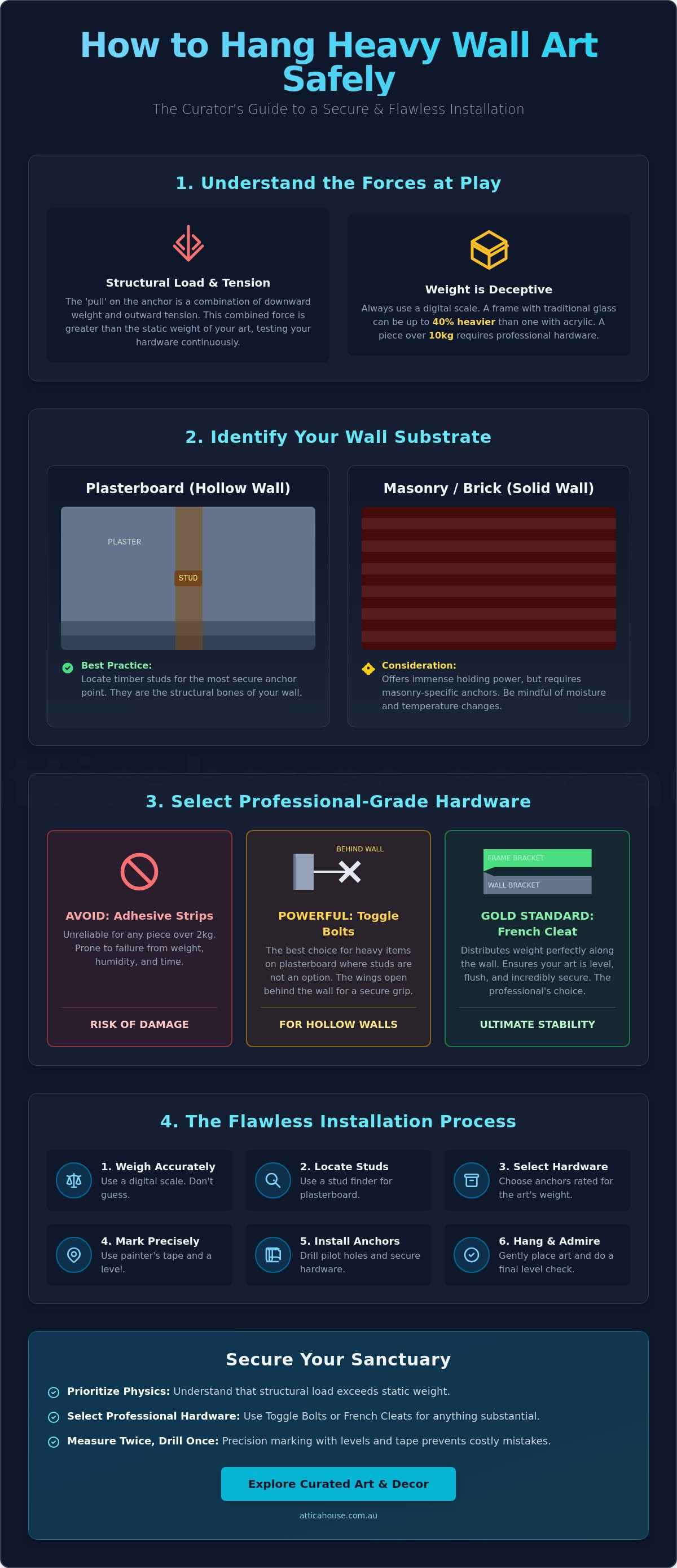
Structural load refers to the total force exerted by the artwork’s mass combined with the gravitational pull on the wall’s internal support system. While static weight is the number you see on a scale, the "pull" or tension exerted on a wall anchor is often much higher. This force acts outward and downward, testing the integrity of your hardware every hour of the day. If a frame's construction is bespoke and heavy, perhaps featuring solid oak or ornate guilding, it dictates a hardware solution that can withstand this constant mechanical stress without fatigue.
Weighing Your Investment: Tools and Techniques
Accuracy is the cornerstone of safety. You should never guess the weight of a piece that feels substantial, especially when dealing with items over 10kg. Use a standard digital scale to find the exact mass of your framed investment. Remember that oversized frames with traditional glass can weigh up to 40% more than those using modern acrylic glazing. This distinction is critical; a frame that seems manageable might actually exceed the 22kg limit of a standard expansion plug, requiring a shift to more robust toggle bolts or cleat systems.
The Science of Wall Substrates
Identifying your wall type is the next vital step in the curation process. Hollow plasterboard walls provide a beautiful, smooth finish but lack the density to hold significant weight on their own. In these environments, locating wall studs is the most reliable way to create a permanent anchor point. These timber supports are the literal bones of your home, offering the necessary resistance to counter the downward pull of a heavy mirror or canvas.
For those living in heritage homes with solid masonry or brick, the challenges are different but equally manageable. While these surfaces offer immense holding power, they are susceptible to moisture and temperature fluctuations. In humid climates, the expansion and contraction of wall materials can subtly loosen hardware over time. Choosing the right substrate-specific anchor ensures that your art remains a timeless fixture, undisturbed by the changing seasons or the weight of its own presence.
Essential Hardware for Securing Substantial Pieces
While the art itself captures the eye, the hardware behind it ensures the story continues uninterrupted. Selecting the right components is a refined process that prioritizes stability over convenience. You'll want to avoid adhesive strips or "sticky" solutions for any piece exceeding 2kg. These temporary fixes often succumb to humidity or weight fatigue, leading to heartbreaking damage to both your art and your sanctuary. Instead, lean into bespoke engineering. High-quality, weight-rated D-rings paired with braided steel wire provide a reliable foundation, though for the most substantial statement pieces, a more architectural solution is required.
The French Cleat: The Gold Standard for Stability
For those seeking ultimate security, the French cleat remains the professional choice. This system utilizes two interlocking metal or timber brackets; one is secured to the wall and its counterpart is fixed to the rear of the frame. Because the cleat runs along a significant portion of the frame's width, it distributes weight evenly across the surface rather than concentrating it on a single, precarious point. This is particularly vital for hand-painted wall art or heavy mirrors that require a perfectly level, flush-to-wall finish. As highlighted in professional installation notes, this method provides a level of structural integrity that standard hooks simply cannot match. It transforms a heavy object into an integrated part of the room’s architecture.
Choosing the Right Anchor for Plasterboard
Plasterboard requires a thoughtful approach to tension. If you're wondering how to hang heavy wall art safely on a hollow surface, toggle bolts are your most powerful ally. Unlike standard expansion plugs that rely on friction, toggle bolts feature a spring-loaded wing that expands behind the plasterboard, creating a wide "butterfly" anchor that resists being pulled through the wall. A single 1/4 inch toggle bolt can often support up to 40kg in 1/2 inch drywall, providing a robust solution when a timber stud isn't perfectly positioned for your layout.
Threaded drywall anchors are suitable for medium-weight pieces, but they lack the heavy-duty pull-out resistance of a toggle. Regardless of the anchor chosen, the safest method always involves securing at least one side of your hardware into a timber stud. This direct connection to the home's frame offers the highest weight capacity and the greatest peace of mind. Once you've secured your foundation, you can truly enjoy the curated beauty of your collection without a second thought. It's about creating a space where beauty and safety coexist in perfect harmony.
Step-by-Step: How to Hang Heavy Wall Art Safely
The physical act of mounting a substantial piece of art is where curatorial vision meets the reality of your home’s structural integrity. It requires a deliberate, rhythmic pace and a deep respect for the materials involved. Whether you are working with Australian internal plasterboard or solid masonry, the process must be methodical to ensure the result is both level and secure. Learning how to hang heavy wall art safely is a skill that protects your investment while maintaining the serene atmosphere of your living space. We approach this task not as a chore, but as the final, essential step in the art of living well.
Preparation and Precision Marking
Precision begins long before the drill touches the wall. In many Australian homes, you'll encounter a mix of hollow plasterboard and load-bearing timber studs. Use a high-quality electronic stud finder to map the internal framework, as securing your hardware directly into timber is the gold standard for safety. Once you've identified your anchor points, employ the "tape trick" to ensure perfect alignment. Apply a strip of painter’s tape across the back of the frame, marking the exact center of each D-ring or the edge of the French cleat. Transfer this tape directly to your wall at the desired height, typically 150cm from the floor to the center of the piece.
Calculating the "drop" is a vital nuance. This is the vertical distance from the top edge of the frame to the point where the hanging hardware will actually catch the wall hook. Measuring this precisely ensures your artwork sits exactly where you envisioned it, rather than a few centimeters too low. Using a spirit level atop your painter’s tape will guarantee that your horizontal axis is flawless before any permanent marks are made.
Installation and Mounting Protocol
When you're ready to proceed, drill pilot holes to prevent the plasterboard from crumbling or the timber from splitting. This small step ensures your anchors or screws enter the substrate with maximum friction and grip. Following expert advice from art conservators, always verify that your selected hardware is rated for at least double the weight of the artwork. This 2:1 safety ratio provides a necessary buffer against the "pull" forces discussed in earlier sections, ensuring your sanctuary remains undisturbed by mechanical failure.
The mounting of an oversized item should always be a communal effort. The "Two-Person Lift" is a non-negotiable safety protocol for any piece over 15kg. One person supports the primary weight of the frame while the other carefully guides the hardware onto the wall mount. This collaborative approach prevents accidental scuffing of your pristine wall surfaces and ensures the frame doesn't slip during the final engagement. Once the piece is seated, perform a final check to ensure it sits flush against the wall. A piece that is perfectly level and firmly anchored creates a sense of soulful harmony, allowing the art to speak without the distraction of a precarious tilt.
The Elegant Curator’s Approach to Placement and Styling
Placement is the silent language of a room. It dictates how energy flows and where the eye naturally rests. While the previous sections focused on the mechanical necessity of how to hang heavy wall art safely, the curator’s eye looks for something deeper: harmony. A substantial piece of art acts as a gravitational anchor. It can center a sprawling living area or provide a soulful backdrop to an intimate dining space. By grounding your collection with luxury furniture, such as a hand-finished console or a minimalist stone bench, you create a visual conversation between the wall and the floor. This layered approach transforms a simple decoration into a curated sanctuary.
Choosing between symmetry and asymmetry depends on the story you wish to tell. A single, heavy statement piece placed dead-center above a fireplace creates a sense of formal elegance and stability. Conversely, offsetting a large canvas can introduce a modern, rhythmic energy to the room. The key is to ensure the piece feels intentional rather than accidental. When an object has significant mass, it requires enough "white space" around it to breathe. Overcrowding a heavy frame with smaller trinkets can dilute its impact and create visual clutter that disrupts the calm of your home.
The Rule of Eye Level and Scale
Gallery standards suggest the center of your artwork should sit between 145cm and 150cm from the floor. This height ensures an effortless connection between the viewer and the piece. However, when positioning art above buffets & cabinets, the rules shift to accommodate the furniture’s silhouette. Aim for a gap of 15cm to 25cm between the bottom of the frame and the top of the cabinet. This creates enough breathable space to prevent the arrangement from feeling cramped while maintaining a cohesive unit. Scale is equally vital; a piece of art should generally occupy two-thirds to three-quarters of the width of the furniture below it to maintain a balanced palette of proportions.
Lighting and Environmental Protection
The Australian sun is a beautiful but formidable force. Protecting your investment means positioning heavy frames away from the direct path of UV rays, which can cause pigments to fade and paper to become brittle over time. To illuminate the intricate textures of a canvas or the depth of a bespoke frame, consider dedicated picture lights. These fixtures offer a sophisticated glow that highlights the piece without the harshness of overhead lighting. Maintaining a calm atmosphere through thoughtful, curated spacing allows each element of your room to shine. Explore our curated collection of designer mirrors to find the perfect anchor for your next styling project.
Long-Term Maintenance and Collection Care
A curated home is never static; it’s a soulful reflection of an evolving personal story. Once you've achieved the perfect installation, the focus shifts toward the graceful stewardship of your collection. Understanding how to hang heavy wall art safely is the essential foundation, but consistent maintenance ensures that the tranquility of your sanctuary remains undisturbed for years. A heavy frame exerts a constant, silent force on your walls, and respecting that physical reality is what separates a casual decorator from an elegant curator. By treating your art with the same respect as the architecture it inhabits, you preserve the harmony of your lived-in luxury.
When it comes to cleaning, a gentle touch is paramount. Use a soft microfibre cloth or a natural ostrich feather duster to remove surface particles from heavy frames. Avoid spraying liquid cleaners directly onto the piece, as moisture can migrate behind the glass or seep into the wall substrate, potentially weakening the anchor points. If you ever notice fine cracks in the plasterboard or if a piece seems to have developed a slight tilt, it’s time to investigate. Recognizing when a mounting challenge exceeds DIY safety limits is a hallmark of a sophisticated homeowner who values the integrity of their investment above all else.
The Annual Safety Inspection
Set aside time each year to perform a brief but thorough structural audit of your most substantial pieces. Use a flashlight to check for "wall pull," which is a subtle gap appearing between the frame and the wall surface. This gap can indicate that an anchor is fatiguing or that the plasterboard has been compromised by seasonal humidity fluctuations. Take a moment to ensure that D-rings remain tight and that braided steel wires show no signs of fraying or tension fatigue. These small, proactive steps prevent mechanical failure and maintain the quiet confidence of a professionally mounted collection.
Integrating Art into a Lived-In Luxury Lifestyle
Refreshing your interior palette by rotating curated pieces is a wonderful way to breathe new life into your sanctuary. When you decide to move a statement piece, ensure the transition is as refined as the original installation. Use high-quality spackle to patch old anchor holes, followed by light sanding and a precise touch-up of your wall paint. This meticulous approach ensures your home remains a pristine canvas for your next discovery. By caring for your walls with this level of intentionality, you build a residence that isn't just a house, but a meaningful reflection of your personal journey and aesthetic vision.
Bringing Your Vision to Life
Mastering the technical nuances of how to hang heavy wall art safely is the final step in transforming a house into a soulful sanctuary. By respecting the structural load of your pieces and choosing professional hardware like interlocking French cleats, you ensure your investment remains a permanent part of your home’s story. This meticulous care protects the integrity of your walls while allowing the beauty of your collection to resonate without distraction. A perfectly level, securely anchored statement piece does more than fill a void; it establishes a sense of harmony and refined order that defines the art of living well.
Now that you possess the expertise to mount with confidence, it's time to find the piece that speaks to your personal narrative. Discover our curated collection of statement wall art, where each designer piece is selected for its timeless aesthetic and emotional resonance. We provide Australia-wide delivery for fragile items, ensuring your chosen masterpiece arrives ready to anchor your modern sanctuary. Trust your instincts, follow the protocols of the curator, and enjoy the transformative power of a beautifully composed space.
Frequently Asked Questions
How much weight can a single stud hold for wall art?
A single timber stud can typically support between 35kg and 45kg when you use a high quality 65mm screw. This direct connection to your home’s internal framework provides the most reliable foundation for your most substantial statement pieces. It's a professional standard that ensures your art remains a permanent, secure fixture in your sanctuary.
Can I hang a heavy mirror on plasterboard without a stud?
You can safely hang a heavy mirror on plasterboard by using heavy duty toggle bolts, which are often rated for loads up to 40kg or 50kg. Mastering how to hang heavy wall art safely in these scenarios involves using multiple anchor points to distribute the weight across the board. This prevents the tension from concentrating on a single, vulnerable area of the wall.
What is the best wall anchor for heavy items in Australia?
The zinc-plated toggle bolt is the superior choice for Australian internal plasterboard walls. Unlike standard plastic expansion plugs, toggle bolts feature a spring-loaded wing that opens behind the wall to create a wide, secure grip. This mechanism is essential for any piece exceeding 10kg, providing a level of structural integrity that smaller hardware cannot offer.
How do I know if my wall art is too heavy for a standard hook?
Any piece weighing more than 5kg generally requires a more robust solution than a standard nail-in hook or adhesive strip. If your frame features solid timber construction or traditional 3mm glass, it likely needs a weight-rated anchor. Always check the manufacturer’s weight limit on the hardware packaging to ensure it exceeds the mass of your artwork by at least 50%.
Is it better to use wire or D-rings for heavy frames?
D-rings are the preferred choice for heavy installations because they allow the art to sit flush against the wall and prevent frame distortion. While braided wire is suitable for lighter pieces, it can stretch or even snap under the constant gravitational pull of a 20kg mirror. Mounting directly to D-rings provides a more stable, professional finish that preserves the life of the frame.
How do I prevent my heavy art from tilting forward?
Positioning your hanging hardware approximately one-quarter to one-third of the way down from the top of the frame keeps the center of gravity close to the wall. This simple adjustment prevents the top of the piece from leaning outward. For the most secure and flat result, a French cleat system is the ultimate solution for maintaining a sleek, gallery-style silhouette.
Should I use two hooks instead of one for heavy pictures?
Using two hooks spaced apart is a vital safety protocol that halves the weight load on each individual wall anchor. This dual-point system also offers superior stability, ensuring your art doesn't shift or become crooked over time. It's a simple way to gain extra peace of mind while creating a balanced, level aesthetic in your curated space.
What should I do if I live in a rental and need to hang heavy art?
Communicate with your property manager about installing professional toggle bolts, as the 10mm holes they leave are easily repaired with spackle and touch-up paint. If permanent anchors are strictly prohibited, consider leaning your larger mirrors or canvases against a wall atop a sturdy buffet. This creates a relaxed, sophisticated look that avoids structural changes while still showcasing your personal style.