


The Art of Preservation: A Luxury Furniture Care and Maintenance Guide
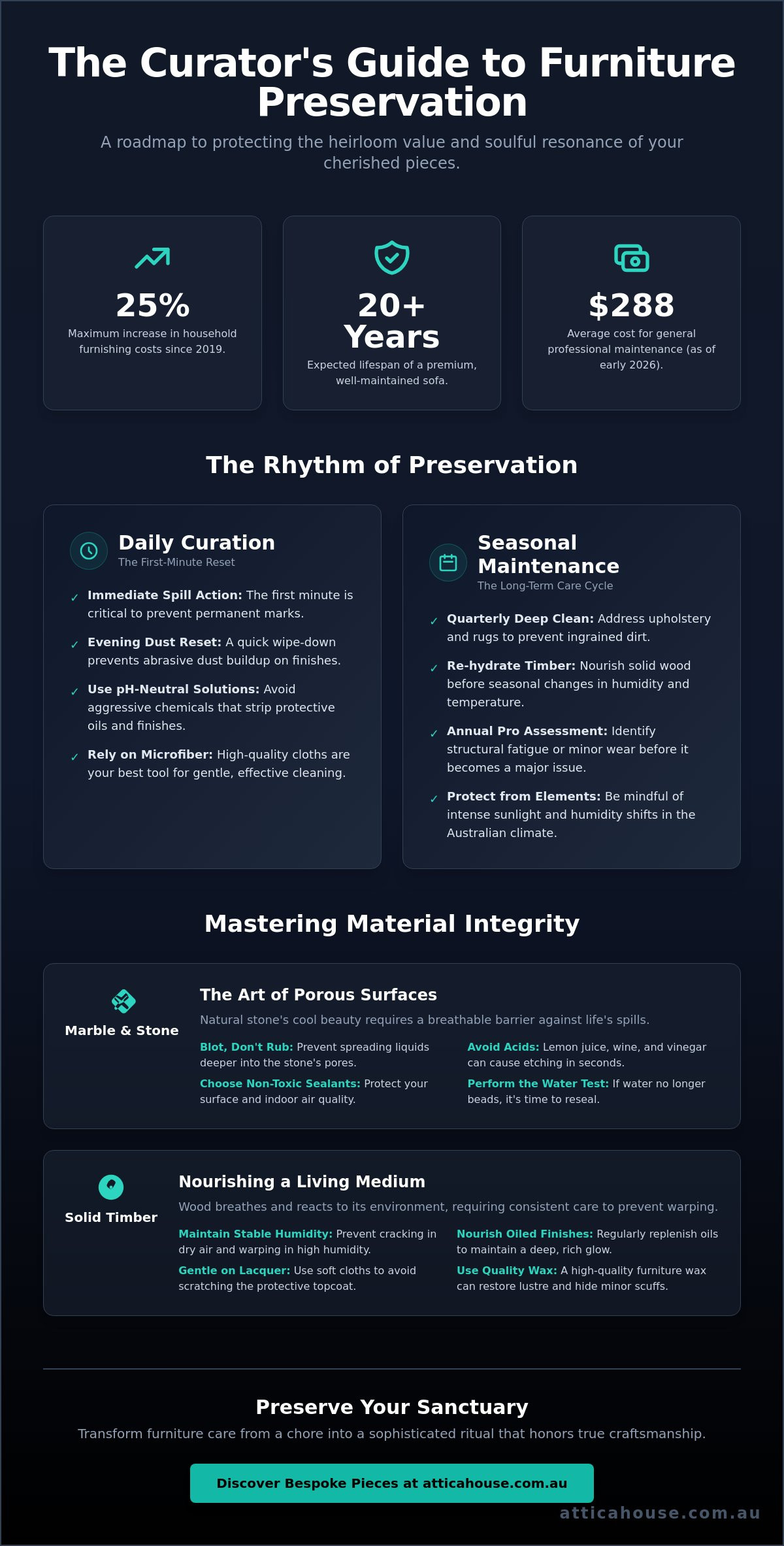
Did you know that the cost of household furnishings has climbed by as much as 25% since 2019? When you invest in a premium sofa designed to last 20 years or more, you aren't just buying a seat; you're curating a legacy. It's completely understandable if you feel a sense of trepidation when a glass of wine nears your marble coffee table. This furniture care and maintenance guide helps you move past the fear of accidental damage and into a space of confident preservation.
You've worked hard to create a home that feels like a sanctuary, and we'll show you how to protect the integrity and soulful resonance of your designer pieces. We'll explore how to navigate the 2026 landscape of non-toxic care, including the impact of recent PFAS bans in states like California and Maine. From the delicate hydration of fine leather to the specific rituals that keep marble pristine, we're providing the essential roadmap to preserving the beauty and heirloom value of your most cherished objects.
Key Takeaways
- Transform furniture maintenance from a chore into a sophisticated ritual that honors the craftsmanship and soulful resonance of your bespoke timber and stone pieces.
- Utilize our furniture care and maintenance guide to master the delicate balance of hydrating solid woods and protecting porous marble from the rigors of everyday life.
- Learn how to preserve the tactile comfort and structural integrity of soft furnishings by preventing uneven wear and the damaging effects of harsh environmental elements.
- Identify the precise threshold where gentle home preservation ends and professional artisan restoration begins to ensure your pieces retain their significant heirloom value.
The Philosophy of Preservation: Why Luxury Furniture Care Matters
Preservation is an act of devotion. It is the quiet, intentional practice of safeguarding the structural integrity and aesthetic resonance of an object that brings harmony to your home. When you welcome a designer piece into your sanctuary, you're not merely acquiring a functional item; you're becoming the guardian of its story. This furniture care and maintenance guide shifts the focus from reactive cleaning to a proactive philosophy of stewardship. To truly honor these pieces, one must understand the foundational principles of furniture conservation and restoration, which elevate simple upkeep into a sophisticated ritual of respect for craftsmanship.
Adopting the mindset of an Elegant Curator means seeing every timber grain and marble vein as a living element. Since 2019, furniture prices have increased by 11% to 25%, making your collection a significant financial and emotional asset. A premium sofa costing over $3,000 is designed to provide comfort for 20 years or more, yet this longevity depends entirely on the consistency of your care. By distinguishing between the light touch of daily curation and the deeper cycles of long term maintenance, you ensure your investment retains its "showroom new" allure while growing more soulful with age.
The Ritual of Daily Curation
Luxury thrives in the details of a daily rhythm. For high traffic areas, a simple evening "reset" prevents the accumulation of dust that can act as an abrasive on delicate finishes. The first minute is the most critical window for any spill; immediate action prevents a temporary lapse from becoming a permanent mark on porous stone or bespoke fabric. Your toolkit is your most important asset. Stick to pH-neutral solutions and high quality microfiber cloths. Avoid the aggressive chemicals found in supermarket sprays, as these can strip the protective oils from timber and cloud the clarity of polished metals.
Setting a Seasonal Maintenance Calendar
Your home breathes with the seasons, and your furniture should follow suit. The Australian climate, with its intense light and shifting humidity, demands a structured approach to preservation. Use a quarterly schedule to deep clean upholstery and re-hydrate solid timber pieces before the dry heat of summer takes hold. Annual professional assessments are equally vital. These checkups identify structural fatigue or minor wear before they require expensive intervention. A well timed professional service, which typically averages $288 for general maintenance as of early 2026, acts as an insurance policy for the enduring beauty of your curated environment.
Mastering Material Integrity: Caring for Marble, Timber, and Metal
True luxury is found in the tactile reality of natural materials. Marble is a paradox. Its cool, solid presence suggests invulnerability, yet its microscopic pores are remarkably thirsty for liquids and oils. With the consumer price index for household furnishings rising by 3.9% in early 2026, protecting these surfaces is a matter of both aesthetic pride and financial wisdom. This furniture care and maintenance guide provides the framework to ensure your stone, wood, and metal elements remain as vibrant as the day they entered your home.
The Elegance of Marble and Natural Stone
Natural stone requires a breathable barrier. Porous materials like marble and travertine are highly sensitive to acidic substances; even a drop of lemon juice can cause etching in seconds. Use the "blot, don't rub" rule for any spills to prevent spreading the liquid deeper into the stone's structure. As of April 2026, new regulations in Washington require manufacturers to report PFAS chemicals in hard surface sealers. It is now more important than ever to choose non-toxic, high quality sealants that provide protection without compromising your indoor air quality. If water no longer beads on the surface, it is time to reseal rather than simply polish.
Timeless Timber: Hydration and Protection
Solid timber is a living medium that reacts to its environment. A premium wood piece can last 20 years or more, but it requires stable humidity to prevent warping or checking. Oiled finishes need regular nourishment to maintain their deep glow, while lacquered surfaces require a gentler touch to avoid scratching the protective topcoat. For minor scuffs, a high quality furniture wax can often restore the lustre without the need for a full refinish. When selecting new pieces to complement your collection, consider the enduring quality of bespoke furniture that prioritizes these natural, resilient finishes.
Polished Perfection: Metal and Glass
Metal accents provide the jewelry for a room, but they are prone to oxidation and fingerprints. Brass and copper will naturally develop a patina over time; decide early if you prefer this aged character or the bright shine of polished metal. Use specialized, non-abrasive cloths to clean these elements. Avoid scouring pads at all costs, as they create permanent micro-scratches that dull the reflective quality of both metal and designer glass. For glass dining tables, a simple solution of distilled water and a drop of pH-neutral soap ensures a streak-free finish that allows the architecture of the piece to shine.
Soft Furnishings and Rugs: Maintaining Texture and Comfort
The tactile allure of a designer sofa or a hand-woven rug is what transforms a house into a sanctuary. While timber and stone provide the architecture, soft furnishings provide the soul. However, maintaining that "showroom loft" requires more than just aesthetic appreciation. This furniture care and maintenance guide emphasizes the importance of a "rotation rule." By flipping loose cushions and rotating floor coverings every six months, you ensure that wear and sunlight exposure are distributed evenly. This simple habit prevents the premature aging and uneven fading that often plagues static arrangements in sun-drenched Australian living rooms.
As of early 2026, a premium sofa is an investment designed to last 10 to 20 years or more, provided the fibers are respected. While the national average cost for professional upholstery cleaning currently sits around $184, the daily habits you cultivate are what truly protect the structural integrity of your pieces. Seeing maintenance as a ritual of care rather than a chore allows you to stay connected to the craftsmanship of your home's most comfortable corners.
Upholstery Preservation for Sofas and Armchairs
Weekly vacuuming is non-negotiable for high-end fabrics. It removes the microscopic grit that acts like sandpaper against delicate threads, gradually thinning the weave. If you notice small bobbles or pilling on your upholstery, it's often just excess fiber working its way out of a new weave. A high-quality fabric shaver can safely restore the surface without damaging the integrity of the textile. For leather, the Australian climate can be particularly drying. Regular conditioning with pH-balanced creams keeps the hide supple and prevents the cracking that occurs in low-humidity environments. Be mindful of the 2026 PFAS regulations; when choosing protective sprays, ensure they're free from "forever chemicals" to maintain a healthy indoor environment.
The Art of Rug Care
Handcrafted rugs are essentially floor-bound art, often colored with sensitive natural dyes. Understanding how to clean a rug is vital to prevent bleeding or fiber distortion. Always use a high-quality underlay. It doesn't just prevent slipping; it acts as a shock absorber that protects the rug's foundation from being crushed between heavy furniture and hard flooring. To manage indentations left by heavy tables, gently mist the area with water and use a soft brush to lift the pile back to its original height. These small acts of curation ensure your rugs remain a vibrant, textural foundation for your home for decades.
Environmental Stewardship: Protecting Your Sanctuary from the Elements
Australia's light is a signature part of our lifestyle, yet it is also a powerful force that can quietly alter the character of your interior. This furniture care and maintenance guide acknowledges that preservation is as much about managing your home's atmosphere as it is about cleaning surfaces. With the average homeowner spending $8,808 annually on home maintenance as of January 2026, a proactive approach to environmental protection is a necessary investment in your sanctuary's longevity. Protecting your pieces from the elements ensures that their soulful resonance remains intact for decades.
Sunlight and Fade Prevention
UV damage is often irreversible. Dark timbers, rich velvets, and delicate silks are the most susceptible to the bleaching effects of the sun. You can conduct a "shadow test" by placing a piece of card on a surface for several days; if the surrounding area lightens, your piece is at risk. Strategic styling offers a sophisticated solution. Consider using lightweight linen throws during peak afternoon hours or investing in UV-filtering window films that block up to 99% of harmful rays without sacrificing your view. Automated blinds can be programmed to follow the sun's path, ensuring your statement pieces remain in the shade during the most intense heat of the day.
Climate Control and Air Quality
Maintaining the ideal humidity range, typically between 40% and 60%, is vital for a luxury furniture Australia collection. Excessive dry air from winter heating or summer air conditioning can cause solid timber to shrink and leather to lose its natural oils. Integrated air purification systems do more than improve health; they significantly reduce the buildup of abrasive dust on intricate carvings and deep textures. This reduction in particulates lessens the frequency of physical cleaning, further protecting delicate finishes from unnecessary wear and tear. A stable environment is the invisible foundation of a well-preserved home.
Explore our latest arrivals to find pieces designed to thrive in a thoughtfully curated Australian home.
The Curators Final Word: Professional Care and Long-Term Value
The decision to intervene in the natural aging process of a designer piece requires a discerning eye. While this furniture care and maintenance guide empowers you to handle the daily rhythms of preservation, certain moments demand the steady hand of an artisan. Understanding the threshold between a simple surface refresh and a deep structural restoration is what separates a well-kept house from a true legacy home. As of April 2026, the average cost for specialized furniture repair sits at $189, but complex antique restoration can range up to $3,173. Investing in professional expertise at the right moment doesn't just fix a flaw; it secures the piece's historical and financial worth for the next generation.
Vetting a specialist is a ritual in itself. When seeking an artisan, prioritize those who understand the specific chemistry of your materials, from the pH-sensitivity of certain marbles to the hydration requirements of rare timbers. It's wise to maintain a dedicated care log for your most significant investment pieces. Documenting professional treatments, the types of sealants used, and the dates of deep cleanings creates a provenance that enhances resale value and provides a clear roadmap for future guardians of the piece. This level of detail reflects the "Elegant Curator" mindset, treating furniture not as a disposable commodity but as a soulful component of a meaningful life.
When to Call a Professional Specialist
Structural issues often hide beneath the surface. If you notice doors misaligning or joints loosening in your buffets & cabinets, professional intervention is required to prevent permanent warping. Attempting to buff out deep marble etches or patch leather tears at home carries the risk of creating uneven textures that catch the light. Similarly, while home vacuuming is essential, handcrafted rugs require professional immersion washing every few years. This process is vastly superior to standard "steam cleaning," which can trap moisture in the foundation and lead to fiber rot in delicate, natural-dyed textiles.
Building a Legacy of Style
Furniture preservation is a quiet form of environmental stewardship. By extending the life of a premium piece from ten years to fifty, you reduce the cycle of consumption and honor the artisans who first shaped the material. This commitment to quality translates into every room, whether you're implementing luxury bedroom ideas that prioritize serene longevity or curating a living space that grows more beautiful with time. At Attica House, we believe that caring for your home is an act of love. When you treat your surroundings with respect, they reward you with a sense of calm, harmony, and enduring sanctuary.
Cultivating a Legacy of Timeless Beauty
Embracing these preservation rituals transforms your relationship with your home. You've moved beyond the uncertainty of care and into a space of confident stewardship. This furniture care and maintenance guide serves as your companion in protecting the tactile beauty of natural stone and the structural soul of bespoke timber. By respecting the nuances of material integrity and the shifts of the Australian climate, you're ensuring that your sanctuary remains a reflection of your personal story for the 20 years or more these premium pieces are designed to last.
When you're ready to add a new chapter to your home's story, explore our curated collection of timeless luxury furniture. Our pieces represent the pinnacle of heritage-quality craftsmanship and contemporary Australian design. To protect your investment from the very beginning, we offer specialized national delivery for fragile items, ensuring every object reaches its new sanctuary safely. Your home is a living gallery that deserves to grow more soulful with every passing year.
Frequently Asked Questions
How often should I professionally clean my designer sofa?
Professional cleaning is recommended every 12 to 18 months to maintain the structural loft of your piece. While the national average cost for upholstery cleaning is approximately $184 in 2026, this investment removes deep-seated grit that standard vacuuming cannot reach. High-traffic homes or those with pets may benefit from a 12-month cycle to prevent fiber fatigue and ensure the textile remains a soulful centerpiece of your living space.
Can I use vinegar and water to clean my marble coffee table?
No, you should never use acidic solutions like vinegar or lemon juice on natural stone. Vinegar will cause immediate etching on porous marble, leaving dull, permanent marks on the polished surface. Instead, use a pH-neutral cleaner specifically formulated for stone. This furniture care and maintenance guide suggests always using coasters to prevent even mild condensation from reacting with the delicate minerals in your table.
What is the best way to prevent my timber dining table from cracking?
Maintaining a stable environment is the most effective way to prevent timber from checking or warping. Aim for a consistent humidity range between 40% and 60% to keep the wood fibers stable. Avoid placing your table directly over floor heating vents or under air conditioning units, as localized temperature fluctuations can dry out the timber. Regular nourishment with a high-quality furniture wax will also help the wood retain its natural moisture.
Is fabric protection worth it for luxury armchairs?
Yes, professional fabric protection is a vital layer of defense for high-end investment pieces. Adding a protective solution like Scotchgard typically costs an additional $20 to $35 as of early 2026 and provides a critical window of time to blot away spills before they become permanent stains. Ensure your specialist uses PFAS-free treatments to comply with modern health standards while preserving the tactile integrity and texture of your armchairs.
How do I remove a watermark from a timber surface?
White watermarks can often be lifted by gently buffing the area with a soft cloth and a tiny amount of non-gel toothpaste or a specialized furniture ring remover. These marks are usually moisture trapped in the wax finish rather than the wood itself. If the mark is dark, it indicates the moisture has reached the grain. In these cases, a professional restorer is required to treat the piece without compromising its heirloom value.
Can handcrafted rugs be vacuumed with a rotating brush head?
No, you should always use the suction-only setting or a flat floor tool when cleaning handcrafted rugs. Rotating beater bars are often too aggressive for delicate natural fibers like silk or hand-knotted wool. They can pull at the intricate knots and cause premature fraying or "sprouting" of the fibers. Suction-only vacuuming effectively removes abrasive grit from the foundation without damaging the artisan weave that gives the rug its character.
What should I do if my marble furniture gets etches instead of stains?
Etches require a professional marble restorer to physically re-polish the stone's surface. Unlike a stain, which is a discoloration, an etch is a chemical burn that physically dulls the stone's finish. While minor surface etches can sometimes be masked with a high-quality stone sealer, deeper damage requires specialized diamond abrasive pads to restore the original clarity. Proactive sealing every six to twelve months remains the best defense against these marks.
How does humidity affect my luxury furniture in the Australian climate?
Extreme fluctuations in humidity cause natural materials to expand and contract, leading to structural stress. In the Australian climate, high humidity can encourage mold in soft furnishings, while the dry air of summer can cause timber to shrink. This furniture care and maintenance guide recommends using a hygrometer to monitor your sanctuary's air quality. Keeping your home at a stable, temperate level protects the long-term integrity and harmony of your entire collection.