


How to Create a Focal Point in a Room with Artwork
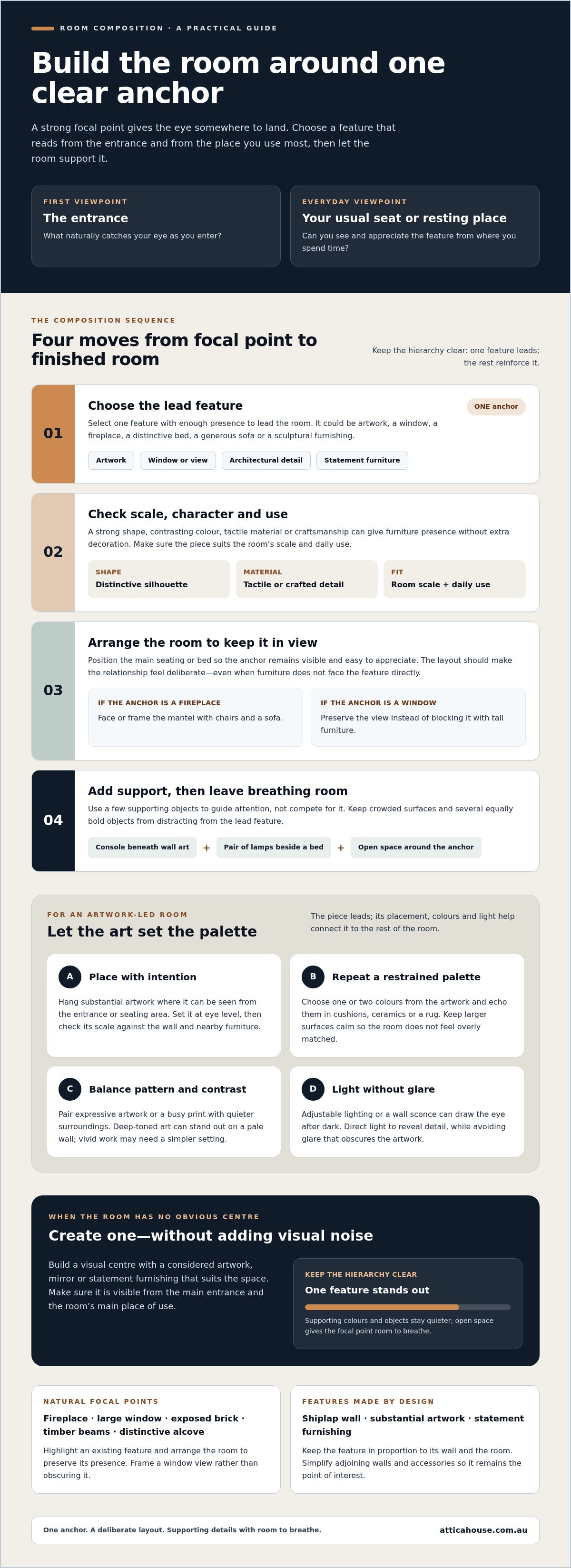
A room doesn’t need a fireplace or dramatic architectural detail to have a clear centre. To decide how to create a focal point in a room, choose one feature that catches the eye from the entrance and feels compelling from the place you spend the most time. It might be artwork, a window, an architectural detail or a statement piece of furniture, with the rest of the room arranged to support it.
If your space feels visually scattered, adding more colour, objects or feature walls can be tempting. Often, a more considered approach is to choose one anchor and give it room to breathe. This can make the room feel calmer and more cohesive while still reflecting your taste.
Learn how to assess a room’s natural focal points, use artwork and architectural features with intention, and create a visual centre where none exists. Thoughtful choices about scale, placement, colour and lighting can help the whole room feel balanced.
Key Takeaways
- Choose a single visual anchor by considering what draws attention from the entrance and from the places you use most.
- Give artwork breathing room, then echo a restrained selection of its colours elsewhere in the room.
- Let architectural features guide the layout, using furnishings and lighting to emphasise rather than compete with them.
- If the room lacks a natural centre, build one with a considered artwork, mirror or statement furnishing that suits the space.
What is the best way to choose a focal point in a room?
Start by looking at what’s visible from the entrance and from the place you use most. In a living room, a window, artwork or sofa might draw the eye; in a bedroom, the bed or art above it can lead the composition.
-
Choose furniture or art as the focal point
Choose one feature to lead the room, such as a large artwork, sculptural coffee table or distinctive bed. Check that it’s visible from the doorway and your usual seat or resting place. A considered art collection can anchor the room, while one contrasting piece adds emphasis. Avoid giving several bold objects equal prominence, which can make the interior feel unsettled.
-
Anchor the room with statement furniture
Give the room a clear lead with a piece that has presence, such as a generous sofa, striking armchair or distinctive dining table. A strong shape, contrasting colour, tactile material or craftsmanship can establish its role without extra decoration. Check that the furniture suits the room’s scale and daily use. In a quiet living room, for example, a sculptural chair can provide an accent while remaining comfortable.
-
Arrange furniture around the focal point
Position the main seating or bed so the chosen feature stays visible and easy to appreciate. For a fireplace, arrange chairs and a sofa to face or frame the mantel; for a window, preserve the view instead of blocking it with tall furniture. Seating doesn’t have to face the focal point directly, but the layout should make the relationship feel deliberate.
-
Frame the focal point with accessories
Use a few supporting objects to guide attention towards the anchor. Place a console beneath wall art, or arrange a pair of lamps beside a bed to give its headboard visual weight. On a mantel or shelf, vary accessory heights, placing larger pieces behind smaller details. Leave open space around the main feature; crowded surfaces compete with it.
Arranging artwork and drawing colours from it
Artwork, colour and lighting can work together to establish a clear visual anchor. Choose the piece first, then use its placement and surrounding palette to guide the eye.
-
Arrange artwork as a focal point
Place substantial artwork where it’s visible from the room’s main entrance or seating area. Hang it at eye level, then check its scale against the wall and nearby furniture. A broad landscape above a sofa can anchor the wall, while a gallery arrangement can draw the eye along a narrower space. Keep surrounding objects restrained so the artwork stands out.
-
Draw colours from the artwork
Choose one or two colours from the artwork and repeat them through cushions, ceramics or a rug. For example, echo a muted green from a landscape in a cushion, while keeping larger surfaces calm. This repetition connects the artwork to the room without making every object match. If a fireplace is nearby, keep its mantel styling simple so it doesn’t compete.
-
Add accent colours and patterns
Add an accent through a small furnishing or textile that relates to the artwork’s strongest colour. A patterned cushion can pick up a line or shape from an abstract piece, while a plain throw gives the eye a place to rest. Consider pattern scale: a busy print beside intricate artwork can compete, so balance one expressive element with quieter surroundings.
-
Balance colour contrast and clutter
Use contrast to help the chosen piece stand out. Artwork with deep tones can read clearly against a pale wall; a vivid work may need a quieter setting. Clear nearby surfaces and leave breathing space around the frame. Add adjustable lighting or a wall sconce to draw the eye after dark, but avoid glare that obscures the artwork’s detail. For a considered starting point, explore artwork inspiration.
Using architectural features as natural focal points
Choose a feature that already shapes the room, then make it noticeable without overwhelming the space. A feature wall or artwork should suit the scale of the wall and room, with artwork hung at eye level.
-
Identify architectural features to highlight
Stand at the entrance and notice what naturally draws your attention: a fireplace, large window, exposed brick, timber beams or distinctive alcove. Choose one feature to lead, then arrange the room to preserve its visual presence. A beautiful window view, for example, can become the statement feature when curtains frame rather than obscure it. Avoid adding competing décor to an already detailed surface.
-
Highlight a feature with lighting
Use adjustable lighting to reveal the texture or shape of an architectural feature. A wall sconce can highlight exposed brick, while directed light can draw attention to a mantel or alcove. Observe how the feature looks in daylight and after dark, then adjust the light’s direction to reduce glare. Avoid harsh overhead lighting that flattens surface detail.
-
Create a shiplap feature wall
Choose one wall for shiplap when the room needs texture and a clear point of interest. Its repeated horizontal lines can add structure behind a bed or sofa, while a considered paint colour helps it sit comfortably with nearby furnishings. Keep adjoining walls and accessories simpler so the panelling remains the feature. Check that the wall is visible from the room’s main entrance.
-
Set feature wall or artwork size relative to the room
Before committing, compare the proposed feature with the full wall, nearby furniture and the room’s visual weight. Small artwork can disappear on a broad wall, while an oversized piece may crowd a compact setting. Choose artwork large enough to anchor its wall and hang it at eye level. For a feature wall, let its colour or texture define one area rather than overpower every surface.
Creating a focal point where none exists
In Australia, the cost depends on whether you use existing pieces or add artwork, lighting or furniture. Rearranging a sofa or restyling a bookshelf can create visual focus without a purchase; a new statement piece changes the cost according to what you choose.
In a small room, choose one compact but distinctive element, such as a mirror, artwork or sculptural lamp. Keep nearby surfaces clear and arrange furniture to maintain balance, so the focal point draws attention without making the space feel crowded.
- Choose one anchor. Start with a blank-room view from the doorway, then select a single element to lead. A colourful armchair, tall mirror or carefully styled bookshelf can create a visual centre without architectural detail. In a compact living area, choose a piece of furniture that serves a purpose as well as attracting attention.
- Use height and placement. Position the selected piece where it’s easy to see on entering. A floor lamp beside a reading chair, for example, can draw attention to a quiet corner. Keep its silhouette distinct from nearby objects, and avoid placing several decorative pieces at the same height.
- Build balance around it. Arrange surrounding furniture to acknowledge the anchor, rather than competing with it. A sofa can face a statement chair, while a small side table makes the arrangement useful. Leave clear pathways and open surfaces, especially in a narrow room, to keep the overall composition cohesive.
- Introduce texture or light. Add one supporting detail, such as a textured rug beneath a chair or a lamp that illuminates a bookshelf. In a covered alfresco area, a considered seating arrangement can establish a welcoming centre; explore luxury outdoor furniture for an outdoor setting.
- Edit and reassess. View the room from its entrance and usual seating position. Remove any accessory that pulls attention away from the anchor. If the space still feels visually unsettled, adjust the furniture grouping or lighting before adding another decorative element.
Creating a focal point can cost nothing if you reuse or rearrange pieces you already own. If you buy a new statement piece, the cost depends on your choice.
Attica House: Buffets & Cabinets
Attica House offers Buffets & Cabinets for rooms that need a considered visual anchor and useful display surface. Choose a buffet to ground a dining area, then style its top with a few objects that echo the room’s artwork or materials. In a living room, a Coffee Table can define the seating arrangement, while a Console Table can give an entry or open wall a clear point of interest. Dining Tables can also anchor a room through their presence and everyday purpose. These pieces can help translate your focal-point plan into a cohesive setting, whether you’re furnishing a room or refining its existing layout. Explore the furniture selection and visit Attica House online.
Make your next design choice with intention
A focal point can be more than a styling decision. It can become the detail that makes a room feel personal, inviting and distinctly yours. As you refine your space, notice which objects you return to and what atmosphere you want them to create. That feeling can guide how to create a focal point in a room that feels considered rather than simply decorated.
When a furnishing could bring your idea into focus, Attica House offers buffets and cabinets, coffee tables, and console tables that combine presence with purpose. Choose a piece that suits the room’s scale, how you use it and the character you want to bring forward.
Contact Attica House to explore furniture for your room, and take the next step towards a home that feels beautifully your own.
Frequently Asked Questions
How do you choose a focal point for a room?
A useful first step in how to create a focal point in a room is to consider what the space is for and how you want it to feel. In a dining area, a distinctive table may suit the room better than wall art; in a reading nook, a comfortable chair can make the space inviting. Let the room’s purpose guide your choices.
How do you create a focal point without a fireplace?
Use an existing element, such as a window, or introduce a distinctive object. A tall bookcase can add depth to a plain wall, while a mirror positioned to reflect a garden view can draw attention to natural light. In a rental, a freestanding lamp or piece of furniture can add visual focus without changing the walls or making permanent alterations.
How do you arrange furniture around a focal point?
Arrange furniture to support the room’s activities while keeping the focal point in view. In a living room, angle chairs slightly towards each other to encourage conversation, with a coffee table within easy reach. Keep the route from the doorway clear, and make sure a tall chair or cabinet doesn’t interrupt movement through the space.
What mistakes should you avoid when creating a focal point?
When considering how to create a focal point in a room, avoid making every surface demand attention. Several bold artworks, patterned furnishings and decorative objects can compete, leaving the room without a clear visual lead. Consider daily use, too: a display that blocks a window or interrupts a walkway can quickly become frustrating. Step back from the doorway to spot distractions.