


How to Clean Designer Rugs: The Art of Preserving Luxury Underfoot
A designer rug is far more than a simple floor covering; it is a silent anchor for your room and a testament to handcrafted artistry. Understanding how to clean designer rugs is an essential act of stewardship for anyone who views their home as a curated sanctuary. It's natural to feel a sense of protective anxiety when life happens atop these delicate fibres. You likely worry that a single misplaced cleaning product could permanently dull the rich lustre of your wool or silk investment. We understand that the fear of causing damage often leads to hesitation when immediate action is required.
This guide will help you master the delicate balance of maintaining luxury underfoot with expert-led preservation techniques. You'll gain the confidence to manage unexpected spills and learn the specific nuances that distinguish the care of hardy wool from the ethereal fragility of viscose. We'll outline a sustainable maintenance rhythm that preserves both texture and tone. By the end, you'll know precisely when a gentle touch is enough and when it's time to call upon a professional specialist to safeguard your home's foundation.
Key Takeaways
- Learn to distinguish between natural protein and cellulose-based fibres to ensure your cleaning methods respect the unique integrity of wool, silk, and viscose.
- Master the "suction-only" vacuuming technique to prevent the abrasive damage that rotating brushes can inflict on delicate hand-knotted and hand-tufted weaves.
- Gain confidence in managing spills by mastering the art of how to clean designer rugs using a gentle "blot, never rub" philosophy and a kit of pH-neutral solutions.
- Identify the optimal schedule for professional full-immersion washing to preserve the tactile quality and deep colour of your statement pieces for decades to come.
Understanding the Materiality of Designer Rugs
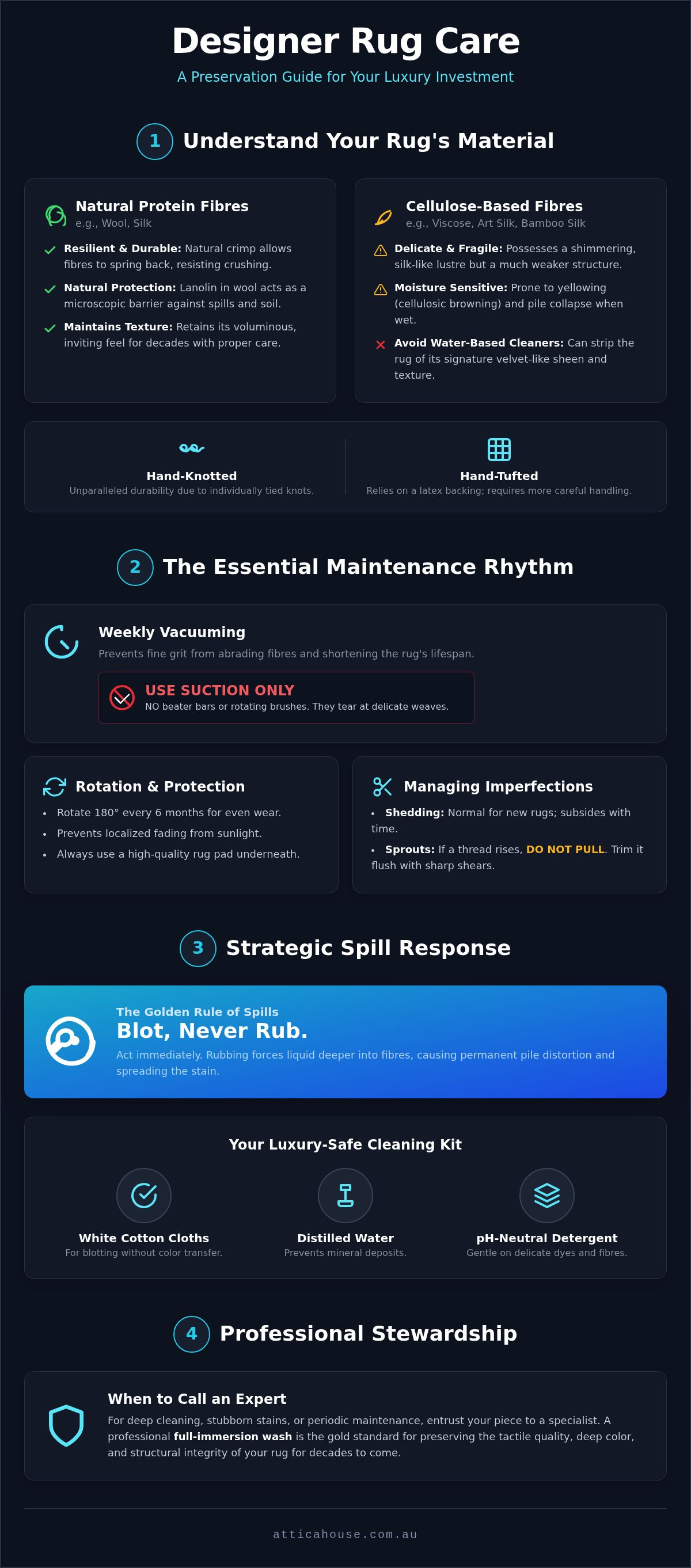
Every masterpiece begins with its medium. Before mastering how to clean designer rugs, you must first understand the soul of the piece: its fibre. Natural protein fibres, such as wool and silk, are resilient organic structures. In contrast, cellulose-based fibres like viscose and bamboo silk are delicate, plant-derived filaments that require a significantly lighter touch. The construction also dictates its life span. A hand-knotted rug offers unparalleled durability due to the individual knots securing the foundation, while hand-tufted pieces rely on a latex backing that demands more careful handling. Pile distortion occurs when the physical structure of the rug's surface fibres is permanently altered or flattened through aggressive mechanical action or improper moisture application. Always consult the artisan's label on the reverse side to verify the exact composition before any treatment begins.
Wool: The Resilient Foundation
Wool remains the perennial choice for a refined Australian home. Each fibre is shielded by a natural lanolin coating, acting as a microscopic barrier against spills and soil. Maintaining the natural crimp of the wool is vital for tactile comfort. This inherent springiness allows the rug to recover its shape after the weight of furniture or footsteps has passed, ensuring the piece retains its voluminous, inviting feel for decades.
Viscose and Art Silk: The Delicate Lustre
Viscose provides a shimmering, silk-like aesthetic but possesses a significantly more fragile temperament. These cellulose fibres are exceptionally sensitive to moisture and are prone to cellulosic browning, a yellowing effect that occurs during slow drying. You should avoid the use of water-based cleaners on these fibres to prevent pile collapse, which can strip the rug of its signature velvet-like sheen and soft texture.
The Essential Maintenance Ritual: Vacuuming and Rotation
Preserving the beauty of your investment requires a consistent, thoughtful rhythm. Establishing a weekly vacuuming cadence is the most effective way to prevent "traffic-grime" from settling into the foundation. This fine grit acts like sandpaper, abrading the base of the fibres and shortening the piece's life span. When considering how to clean designer rugs at home, the most critical rule is to use "suction only" settings. Beater bars and rotating brushes are the enemies of high-end weaves, as their aggressive mechanical action can tear at delicate fibres and cause premature wear.
Physical stewardship also involves managing the environment around the rug. You should rotate your rug 180 degrees every six months. This practice ensures even wear from foot traffic and prevents Australia's intense sunlight from causing localized fading in one area. Additionally, always place a high-quality rug pad beneath your piece. This provides a protective cushion that absorbs impact and reduces friction against the floor, much like the refined comfort found in our curated collection of designer rugs.
The Correct Vacuuming Technique
Effective cleaning isn't about force; it's about patience. Use slow, overlapping passes to allow the vacuum to draw out dust from deep within the pile. Avoid aggressive scrubbing motions that can distort the texture. This gentle approach is a cornerstone of how to clean designer rugs without compromising their structural integrity. When you reach the edges, vacuum away from the fringe rather than toward it to prevent the suction from catching and unravelling the delicate hand-finished tassels.
Managing Shedding and Sprouts
It's common for handcrafted rugs online Australia to shed small amounts of fibre during their first few months in a home. This is a natural characteristic of premium yarns and will subside with regular care. If you notice a "sprout", a single thread rising above the pile, resist the urge to pull it. Instead, manicure the rug by trimming the thread flush with the surface using a pair of sharp textile shears.
Strategic Stain Removal: The Gentle Intervention
Accidents are an inevitable part of a home's story, but they needn't be a permanent chapter. Mastering how to clean designer rugs requires a shift in mindset from aggressive scrubbing to gentle stewardship. The "Golden Rule of Spills" is simple: act with immediate poise and follow a "blot, never rub" philosophy. Rubbing forces the liquid deeper into the foundation and risks the pile distortion we discussed earlier. To prepare for these moments, keep a luxury-safe cleaning kit containing white cotton cloths, distilled water, and a pH-neutral detergent. Before applying any solution, perform a colour-fastness test on a discreet corner to ensure the dyes remain stable. When drying, always opt for natural air circulation. Artificial heat can cause organic fibres like wool to shrink or become brittle.
Step-by-Step Spill Response
Follow this sequence for the best results:
- Gently scrape away any solids with a blunt spoon.
- Blot liquids repeatedly with a clean white towel until no more moisture transfers.
- Apply minimalist amounts of distilled water only if necessary.
For a red wine spill on a wool piece, a mixture of lukewarm distilled water and a tiny drop of pH-neutral soap is often the most effective remedy. The goal is to lift the pigment without saturating the backing.
The Viscose Emergency Exception
Viscose and art silk require a different protocol. Because these fibres are so sensitive to moisture, water-based DIY efforts often lead to permanent yellowing or "water-marking." For these materials, use specialized dry-cleaning powders instead of liquids. If a spill persists, stop your intervention and contact a specialist. Knowing how to clean designer rugs made of cellulose requires recognizing when to step back. Protecting the unique lustre of your investment is paramount, whether you are maintaining a legacy piece or selecting new designer rugs for your space.
Professional Stewardship and Seasonal Care
While weekly rituals maintain the surface beauty, true preservation requires periodic professional intervention. Every 12 to 18 months, your statement pieces should undergo a thorough deep clean. Experts in how to clean designer rugs utilize "full-immersion washing," a meticulous process where handcrafted rugs are submerged in specialized wash pits. This method gently flushes out deeply embedded particulates that standard vacuums cannot reach. Professional stain protection treatments are also recommended at this stage. These invisible barriers are essential for maintaining luxury furniture Australia, providing an extra layer of security against future spills. If you must store your piece, wrap it in breathable acid-free paper rather than plastic to prevent humidity-induced mildew.
Choosing a Rug Specialist
Not all cleaning services are created equal. You should avoid standard "carpet cleaners" who often use high-heat steam or aggressive chemicals unsuitable for delicate weaves. When vetting a specialist, ask if they use a centrifugal rug wringer to extract moisture safely and ensure their detergents are strictly pH-balanced. A true expert understands that a hand-knotted treasure requires a bespoke approach, not a commercial-grade machine intended for synthetic broadloom. This distinction is vital for anyone learning how to clean designer rugs without risking structural damage.
The Longevity Mindset
Caring for your rug is an act of respect for the artisans who crafted it and the personal story your home tells. It's a commitment to the art of living well, where beauty and comfort are preserved through mindful stewardship. When you view these pieces as heirlooms, the maintenance becomes a rewarding part of home curation. We invite you to explore our Designer Rugs collection to discover your next foundational piece, knowing you now possess the knowledge to ensure its lustre lasts for generations.
Cultivating a Legacy of Comfort
Integrating the knowledge of how to clean designer rugs into your home ritual transforms maintenance into a gesture of care. By respecting the unique materiality of your piece and employing a "suction-only" approach to vacuuming, you protect the intricate artistry of the weave. Immediate, gentle blotting remains your most powerful tool against life's unexpected moments, ensuring that spills don't become permanent marks on your sanctuary. These mindful practices ensure your investment remains a source of tactile joy and visual harmony for years to come.
At Attica House, we offer handcrafted quality specifically selected for timeless Australian interiors. Whether you are seeking a new foundation or caring for a cherished heirloom, we provide Australia-wide delivery for all luxury furnishings. We invite you to discover the curated collection of Designer Rugs at Attica House and find a piece that resonates with your personal story. With the right stewardship, your rug will remain a beautiful, enduring anchor for your home, reflecting a life well-lived and spaces well-loved.
Frequently Asked Questions
Can I use a steam cleaner on my designer rug?
You should avoid using home steam cleaners on handcrafted pieces. The intense heat and excessive moisture can cause natural fibres like wool or silk to shrink and may trigger permanent colour bleeding. These machines often leave the backing damp, which risks mildew growth. For a deep clean, it's safer to trust a specialist who understands how to clean designer rugs using professional submersion methods.
What is the best way to remove pet hair from a high-pile rug?
A rubber-edged squeegee is the most effective tool for lifting pet hair from high-pile textures. Gently glide the tool across the surface to gather the fur into manageable clumps without damaging the delicate fibres. This method is far superior to aggressive vacuuming, as it prevents the friction that leads to pile distortion. It's a simple, gentle way to maintain the tactile quality of your sanctuary.
How do I get rid of indentations left by heavy furniture?
You can easily revive flattened fibres by using a small amount of moisture and a soft-bristled brush. Mist the indentation lightly with distilled water and gently lift the pile with your fingers or a brush. For deeper marks, hold a steam iron several centimetres above the surface, ensuring it never touches the fibre. Once the area is damp and warm, brush the pile back into its original position.
Is it normal for my new wool rug to smell?
A faint, earthy scent is perfectly normal for a new wool rug. This "sheepy" aroma comes from the natural lanolin within the fibres and is a hallmark of high-quality, authentic wool. The smell usually dissipates within a few weeks of being unpacked. Increasing the air circulation in your room will help the rug settle into its new environment and allow the fragrance to fade naturally and gracefully.
How can I prevent my rug from fading in the Australian sun?
Protecting your investment from Australia's intense UV rays requires a proactive approach. Apply a high-quality UV-protective film to your windows or use sheer curtains during peak daylight hours to soften the light. Regular 180-degree rotation is also essential to ensure any gradual exposure remains even across the entire surface. This preserves the rich, evocative colours that define the aesthetic soul of your statement piece.