


Flat Pack vs Assembled Furniture: Choose What Suits Your Home
The flat pack vs assembled furniture choice isn’t simply a question of which option is better quality. Flat-pack pieces arrive in components for assembly at home, while assembled furniture arrives ready to place; durability depends on the materials, hardware and workmanship, as well as how well the piece is put together. Each format can suit a different home and way of living.
It’s understandable to weigh convenience against value, especially when a new piece needs to fit both your room and your routine. This guide compares quality, storage, delivery and customisation, so you can decide which format feels right for your space. You’ll also find a practical decision guide to help you choose with clarity, whether you’re furnishing a settled home or planning around a move.
Key Takeaways
- Choose flat-pack furniture when compact packaging and easier storage suit your delivery or moving plans.
- Judge quality by materials, hardware and workmanship, not by whether furniture arrives assembled.
- Match standard-sized pieces to straightforward rooms, and consider custom furniture when unusual dimensions or layouts call for a tailored fit.
- Weigh assembly effort, delivery logistics and the way you use your space before deciding which format belongs in your home.
Storage and delivery benefits of flat-pack packaging
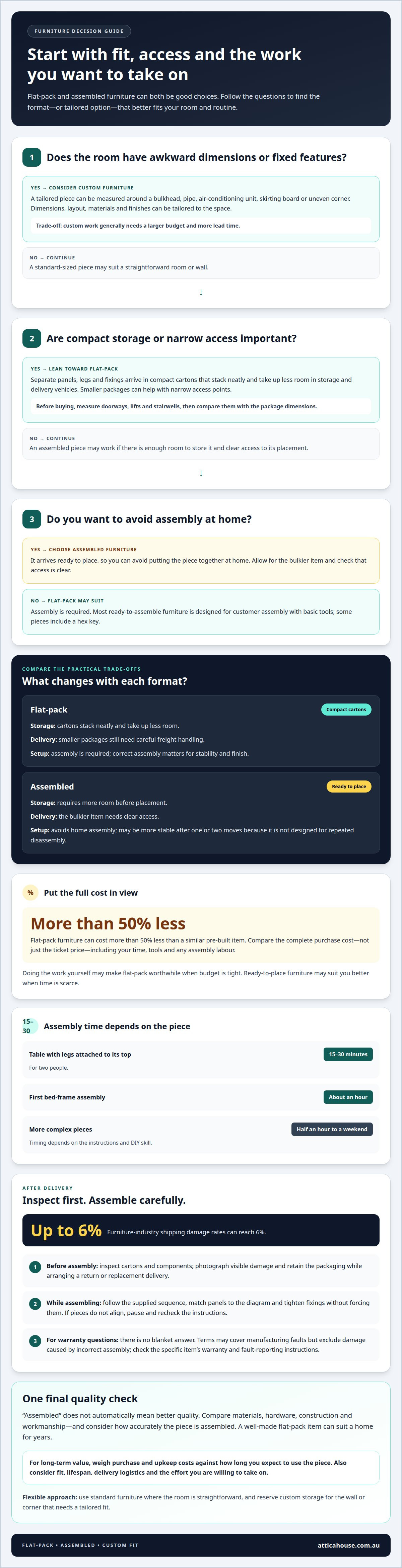
Flat-pack cartons hold separate panels, legs and fixings in compact packages. Compared with a fully assembled table, they take up less room in storage and delivery vehicles. That can help when storage is limited or a delivery must pass through narrow access points. Measure doorways, lifts and stairwells before you buy, then compare those measurements with the package dimensions.
Compact packaging can reduce shipping expenses and the risk of transit damage, though careful freight handling still matters. Furniture-industry shipping damage rates can reach 6%. On arrival, inspect cartons and components before assembly; photograph visible damage and retain packaging while arranging a return or replacement delivery. Replacing a damaged panel can be simpler than returning a fully assembled piece, but the process depends on the seller’s returns terms.
Do Australian furniture warranties cover damage during self-assembly? There’s no blanket answer: warranty terms may cover manufacturing faults but exclude damage caused by incorrect assembly. Read the warranty for the specific item, paying particular attention to instructions for tightening fixings, handling panels and reporting faults.
Colour is a separate factor from packaging. A pale timber-look or dark finish can arrive flat-packed; the colour itself doesn’t determine whether assembly is required. If you’re considering professional assembly or upgraded delivery, check what’s included, such as carrying cartons inside, assembling the item or removing packaging. These options can reduce the work at home, but may affect the delivery arrangement and total cost.
| Option | Storage | Delivery handling | Setup |
|---|---|---|---|
| Flat-pack | Compact cartons stack neatly | Smaller packages need careful freight handling | Assembly is required |
| Assembled | Requires more room before placement | Bulkier item needs clear access | Can be placed without home assembly |
Choose flat-pack when compact storage and easier access matter most; choose assembled furniture when you want to avoid putting the piece together at home.
Is Assembled Furniture Better Quality?
Not automatically. Quality depends on materials, hardware, construction and how accurately the piece is assembled. A pre-built item may be more stable after one or two moves because it isn’t designed for repeated disassembly, but a well-made flat-pack piece can also suit a home for years. When comparing flat pack vs assembled furniture, focus on construction, not format alone.
When is flat-pack furniture better value than assembled furniture? It can be the better buy when its lower upfront price outweighs your time, tools and any assembly labour. Flat-pack furniture can cost more than 50% less than a similar pre-built item, but compare the complete purchase cost rather than the ticket price alone.
How long does it take to assemble common flat-pack furniture? A table with legs attached to its top takes 15 to 30 minutes for two people; a first bed-frame assembly takes about an hour. More complex pieces can take half an hour or an entire weekend, depending on instructions and DIY skill.
Reliability also depends on correct assembly. Loose fixings, misaligned panels or forced hardware can affect stability and finish. Pre-assembled furniture can reduce installation work at home, while flat-pack shifts that work to the buyer or an assembler. If budget is tight, doing the work yourself may make flat-pack worthwhile; if time is scarce, ready-to-place furniture may suit you better.
Custom-built furniture is a different option. Its quality depends on materials, hardware, measurements and workmanship, and tailoring can address a difficult room. That flexibility generally requires a larger budget and more lead time. To assess value over time, consider the purchase and upkeep costs alongside how long you expect to use the piece. Quality assembled furniture may suit a longer stay; a lower-cost flat-pack option can make sense when plans or needs may change. For a flat pack vs assembled furniture decision, weigh fit, lifespan and the effort you’re willing to take on.
Differences between flat-pack and custom furniture
Flat-pack furniture is made in standard sizes, packed into boxes and assembled at home. Custom furniture is made or tailored for a particular room, measurement or purpose. A standard sideboard can suit a straightforward wall, while custom cabinetry can work around a bulkhead, pipe or uneven corner. The difference is fit: one uses repeatable dimensions, while the other responds to the space.
Awkward spaces can make standard pieces difficult to position. Custom joinery can be measured around existing features, such as an air-conditioning unit or skirting boards. It can also be tailored in dimensions, layout, materials and finishes. That precision takes planning and joinery work, so custom furniture generally requires more lead time and a larger budget than standardised pieces.
Flat-pack furniture offers flexibility through placement and arrangement rather than bespoke sizing. You can combine a standard cabinet with custom storage elsewhere, reserving tailored work for a wall with pipes or an uneven alcove. This mixed approach keeps straightforward spaces simple while addressing the features that make one area harder to furnish.
Most ready-to-assemble furniture is designed for customer assembly with basic tools; some pieces include a hex key. Follow the supplied sequence, match each panel to its diagram and tighten fixings without forcing them. What are the common risks of assembling flat-pack furniture incorrectly? Misaligned panels, loose fixings and forced hardware can leave drawers uneven, weaken stability or damage the finish. If pieces don’t align, pause and recheck the instructions.
Customising flat-pack furniture can add a personal touch, but changes should respect the original design. Decorative handles, for example, may refresh a cabinet, while drilling new holes can interfere with its structure or hardware. Check dimensions and fixing positions before altering any pieces. Choose custom furniture for a precise fit or unusual spaces; choose flat-pack when standard dimensions meet your needs and self-assembly suits your plans.
Flat-pack and pre-assembled furniture definitions
Flat-pack, also called ready-to-assemble furniture, arrives as separate components inside a box. The buyer assembles the pieces at home or on site, using instructions to join panels, legs or shelves. Standard sizes and boxed components define the format, not a particular material or finish. A flat-pack table, for example, may arrive with its top, legs and fixings separated. In a flat pack vs assembled furniture comparison, the key distinction is what arrives ready to use.
Pre-assembled furniture arrives with its main structure already put together. Some items may still need final positioning or minor fitting, but you don’t construct the whole piece from separate panels. A dining chair delivered assembled can go straight to the table, while a flat-packed chair needs its parts joined first. That difference can shape how much preparation a room needs before delivery.
The label describes how furniture is supplied, not how it was made. “Assembled” doesn’t automatically mean custom-built, handcrafted or higher quality; a standard design can arrive ready to use. Likewise, “flat-pack” doesn’t mean every item uses identical components. Materials, construction and finishing vary, so format alone can’t determine quality. Another consideration when comparing flat pack vs assembled furniture is how much setup suits your routine.
There’s also a practical difference between assembled furniture and built-in joinery. A freestanding cabinet can be delivered assembled and moved later; fitted cabinetry is designed for a particular wall or alcove. For an awkward space with a pipe or uneven wall, custom joinery may offer a closer fit. In a straightforward room, standard-sized furniture may be simpler.
To compare options, identify what delivery includes: boxed components, a fully assembled piece or an item requiring final installation. Then consider access, available assembly space and whether the instructions and tools suit your plans. This makes the choice clearer than relying on a product label alone. For a considered starting point, explore furniture for your home.
Attica House: Luxury Outdoor Furniture
Attica House offers Luxury Outdoor Furniture for creating a considered extension of your home into the open air. For interiors, Buffets & Cabinets, Coffee Tables and Console Tables can bring practical function and a distinctive focal point to living spaces. Choose pieces with your room’s proportions, intended use and preferred finish in mind, then consider how each will sit alongside the furniture you already own. Whether you’re furnishing a quiet reading corner or shaping a welcoming outdoor setting, the right selection can help the space feel cohesive and personal. For furniture chosen with care, explore the pieces that suit your home, then contact Attica House to discuss your selection.
Shape a home that feels distinctly yours
Choosing between flat-pack and assembled furniture comes down to how you want your home to support daily life. Let the room’s purpose guide your choice: a dining space may call for an inviting centrepiece, while a living area benefits from pieces that balance function with visual calm. Consider how each piece will sit with the objects and finishes already in your home.
Attica House offers Buffets & Cabinets, Coffee Tables and Console Tables for considered spaces, with each piece balancing form and function. Whether you’re refining one room or creating a more cohesive feel throughout your home, choose furniture that suits your routines and personal style.
Discuss your furniture options with Attica House, and take the next step towards a home that feels welcoming, composed and entirely your own.
Frequently Asked Questions
Flatpack vs pre-built furniture: Is there a middle ground?
Yes. Some furniture arrives mostly assembled, with a small amount of final fitting needed at home. For example, a piece may come in two parts that need joining rather than requiring full construction from separate panels. Before ordering, read the item’s delivery description and instructions to understand whether setup involves simple positioning or a fuller assembly process.
Which Pieces Normally Arrive Fully Assembled?
It depends on the item, so the product listing is the best guide. At Attica House, most furniture arrives fully assembled or in two parts, with instructions included where needed. The Remi sofas and Kira Swivel Arm Chair are listed as fully assembled. Check the product details to plan room access and placement before delivery.
What is the difference between flat-pack and assembled furniture?
Flat-pack furniture is delivered as separate components for assembly at home or on site; assembled furniture arrives with its main structure already put together. The distinction describes delivery and setup, not necessarily materials or quality. When comparing listings, look for terms such as “ready to assemble,” “fully assembled” or “assembly required” to clarify what happens after delivery.
How much does flat-pack furniture cost compared with assembled furniture in Australia?
Flat-pack furniture can cost more than 50% less than similar pre-built items, but the total comparison should include more than the listed price. Assembly labour, delivery, wall fixing, packaging removal and replacement parts can affect the final expense. If you’ll assemble the piece yourself and already have the required tools, the lower upfront price may offer better value.
How durable is flat-pack furniture compared with factory-assembled furniture?
Durability depends on materials, hardware, workmanship and assembly, rather than the delivery format alone. High-quality assembled furniture typically lasts 15-25 years, while many flat-pack items are replaced within 5-7 years. These are broad comparisons, not guarantees for an individual piece. For a fair assessment, consider the intended use, construction quality and whether the furniture will need to withstand frequent moving.
Is flat-pack furniture harder to move, deliver or return in Australia?
Flat-pack furniture is generally less bulky to store and transport, but moving it later may involve disassembly and careful packing of small fixings. Assembled pieces can be easier to relocate within a home, although their size may complicate stairwells, lifts or vehicle loading. For a return, retain the packaging where possible and consider whether the item can be safely repacked for collection or transport.