


The Art of the Console Table: A Masterclass in Entryway Curation
Your entryway has exactly seven seconds to tell your home's story, yet 64% of Australian homeowners admit their hallway feels like a cluttered afterthought rather than a curated invitation. It's the first thing guests see and the last thing you experience when leaving your sanctuary; it deserves more than a mismatched surface. We understand the frustration of finding a luxury console table that looks beautiful in a showroom but feels far too deep for a narrow Victorian terrace or a modern coastal corridor.
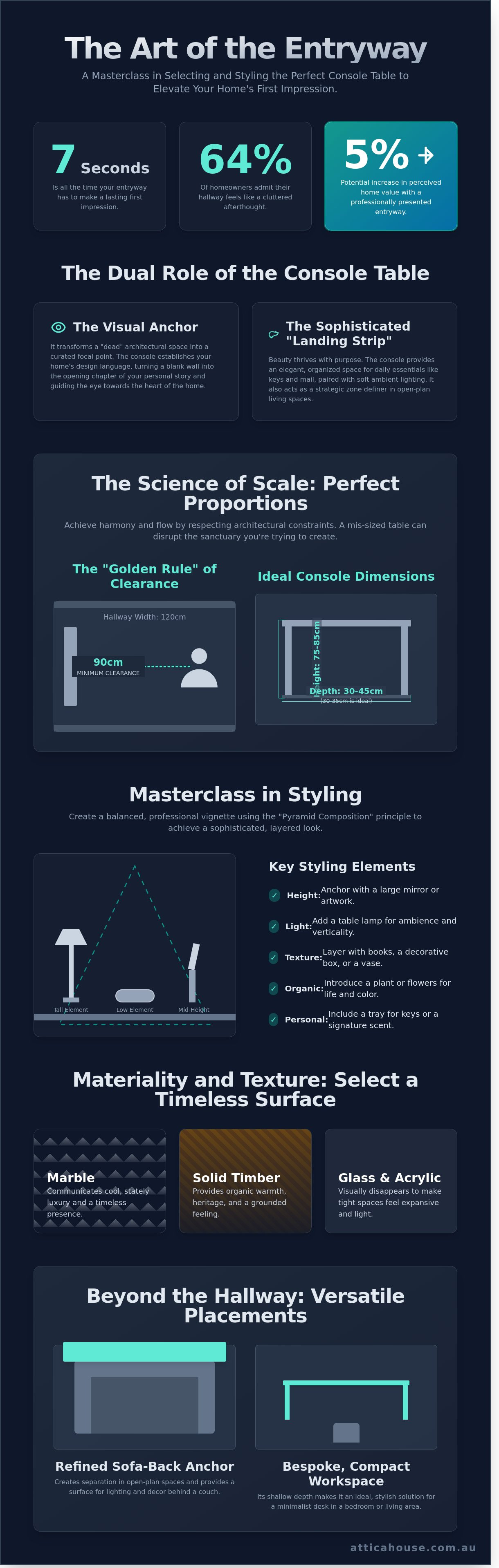
You likely believe that your home should feel like a cohesive narrative from the moment the front door opens. We agree that true luxury is found in the harmony of scale and material. This masterclass will show you how to select a piece that acts as a soulful anchor, potentially increasing your home's perceived value by 5% through professional presentation. We'll explore the precise measurements for narrow spaces, the art of layering textures, and how to curate a vignette that feels both personal and polished.
Key Takeaways
- Learn how a thoughtfully placed console table serves as a transitional anchor, transforming your entryway into a soulful sanctuary for guests and residents alike.
- Master the science of scale by applying the "Golden Rule" of 90cm clearance to ensure a graceful flow through your home’s corridors and hallways.
- Discover professional styling techniques for creating a balanced vignette, using height and layering to achieve a sophisticated pyramid composition.
- Explore the emotional resonance of different materials, from the cool luxury of marble to the organic warmth and heritage of solid timber.
- Uncover how to extend the utility of your piece by reimagining it as a refined sofa-back anchor or a bespoke, compact workspace for modern living.
The Role of the Console Table in a Refined Home
The entry of a home is more than a simple passageway. It serves as a vital threshold, a physical and emotional bridge between the bustling exterior world and the quietude of your private sanctuary. A thoughtfully placed console table acts as the anchor for this transition. It provides a sense of arrival that grounds the space and sets a rhythmic pace for the rest of the interior. When you step through the front door, the composition of this single piece of furniture communicates the soul of the home within the first three seconds.
Historically, the console table originated in the 17th century as a decorative bracket fixed to a wall. While it began as a formal fixture of French aristocracies, it has evolved into a freestanding modern statement piece that balances elegance with approachability. Unlike buffets or sideboards, which are defined by their heavy, closed storage and dining room utility, the console is characterized by its slender profile and graceful legs. This lightness allows it to inhabit narrow hallways or foyers without crowding the architectural flow.
The psychological impact of a well-curated entryway is profound. For residents, it's a visual signal to shed the day's stresses. For guests, it's a warm, wordless welcome. It creates a feeling of harmony and order that resonates through every adjacent room.
The Aesthetic Purpose: Creating a Visual Anchor
In many Australian homes, entryways and hallways often suffer from "dead" architectural space. These are areas that feel hollow or unfinished. A console provides a necessary focal point, turning a blank wall into a curated gallery. It establishes your design language immediately, using texture and form to lead the eye toward the heart of the home. Whether it's a bespoke timber piece or a minimalist stone surface, it acts as the opening chapter of your personal story.
The Functional Purpose: Sophisticated Utility
Beauty thrives when it's paired with purpose. The console serves as a sophisticated "landing strip" for daily essentials. It's the place for keys, mail, and soft ambient lighting that guides you home after dark. To ensure ergonomic comfort, most refined designs maintain a height between 75cm and 85cm. This specific range allows for ease of use without requiring the user to stoop. In open-plan Australian living, the console also serves as a strategic zone definer, subtly separating a lounge area from a dining space without the need for restrictive walls.
- Height: 75cm to 85cm for optimal ergonomics.
- Depth: Typically 30cm to 45cm to maintain hallway flow.
- Placement: Positioned to allow at least 90cm of walking clearance.
The Science of Scale: How to Choose the Right Dimensions
A home's entry sets the emotional tone for everything that follows. Selecting a console table requires a delicate balance between architectural constraints and the desire for aesthetic beauty. You must prioritize the "Golden Rule" of hallway clearance to maintain a sense of calm. A minimum of 90cm of walking space ensures a seamless flow for guests and daily life. If your corridor measures 120cm wide, a piece deeper than 30cm will likely feel restrictive and disrupt the sanctuary you're trying to build.
Symmetry creates a sense of order and soul. Align your table with the center of a window or the midpoint between two internal doors to create a focal point that feels intentional rather than accidental. Consider the visual weight of your chosen material. A glass or acrylic design disappears into the background, making a tight space feel expansive and light. Conversely, a solid Tasmanian Oak or marble piece provides a grounded, stately presence that commands attention in a larger foyer or a formal gallery space.
Width and Depth: Navigating Narrow Spaces
A depth of 30cm to 35cm represents the ideal sweet spot for most Australian homes. This specific range provides enough surface for a curated tray and a signature scent without encroaching on the walkway. For open-plan living areas, you might choose a grander piece to sit behind a sofa. Ensure the depth allows for daily essentials while avoiding the "clutter trap" that often plagues wider surfaces. You can explore a curated collection of consoles designed for these precise proportions.
Height Considerations for Lighting and Art
The height of your table dictates the placement of mirrors and lamps. Most standard designs sit between 75cm and 85cm tall. If you're placing a console table behind a sofa, its height should be level with or slightly below the sofa back to maintain a clean silhouette. In Australian homes with 3m high ceilings, opting for a taller, more substantial piece helps fill the vertical volume. This prevents the furniture from looking diminutive against the vast wall space, ensuring the room feels balanced and harmonious.
Masterclass in Styling: How to Compose a Professional Vignette
Styling a console table is an exercise in balance, transforming a functional surface into a soulful narrative that greets you the moment you step inside. Begin by establishing an anchor. A large-scale mirror or a piece of wall art should occupy approximately 60 to 75 percent of the table's width to provide a grounded focal point. This central element dictates the visual weight of the entire arrangement and sets the tone for the rest of the vignette.
Next, layer your heights to create a pyramid composition. Place a tall ceramic vase or a pair of linear candlesticks on one end to draw the eye upward. Intersperse these with organic textures. A fragment of raw travertine, a cluster of native Australian eucalyptus, or a stack of three leather-bound books adds tactile depth. These elements bridge the gap between cold surfaces and a lived-in sanctuary. Consider these steps for a professional finish:
- The Anchor: Choose a mirror or art piece that reflects your home's architectural scale.
- Height Layering: Use lamps or tall vases to lead the eye through the vignette.
- Texture Integration: Mix stone, greenery, and leather for sensory appeal.
- Lower Third Management: Place ottomans or baskets underneath to ground the piece.
- The Edit: Remove one item to ensure the composition feels airy and intentional.
Don't ignore the space beneath. Managing the lower third is crucial for a cohesive look. A pair of upholstered ottomans or hand-woven seagrass baskets provides both utility and visual weight. Finally, practice the edit. A 2023 design survey indicated that 15 percent of styled vignettes feel cluttered rather than curated. Remove one small item. Let the arrangement breathe.
The Rule of Three and Symmetrical Balance
The Rule of Three is a designer's secret for effortless harmony. Grouping objects in odd numbers creates a natural visual flow that feels intentional. For a formal entry, lean into symmetry with matching lamps on either side. If you prefer a relaxed Australian contemporary aesthetic, choose casual asymmetry. Layer a smaller artwork against your main anchor to create a curated, bespoke feel that invites guests to linger.
Lighting the Entryway: Atmosphere and Function
Lighting defines the mood at dusk. Choose a lamp with a base that doesn't exceed one-third of the console table depth to ensure the surface remains functional. A warm 2700K bulb creates an inviting glow, turning a transition space into a welcoming sanctuary. To maintain a luxury finish, use adhesive cord clips or a discreet cable box. A seamless look is essential for a polished, high-end result.
Materiality and Texture: Selecting a Timeless Surface
The tactile nature of your entrance sets the tone for the entire home. Choosing a console table involves more than just finding the right size; it's about the sensory experience of the surface. Marble remains a pinnacle of this experience. The weight and unique veining of a designer marble coffee table aesthetic translates beautifully to the entryway, offering a cool, stone-cold elegance that feels both grounded and opulent. This material choice creates an immediate sense of permanence as soon as you step through the door.
For those seeking a softer atmosphere, solid timber brings a soulful heritage to modern interiors. Using Australian hardwoods like Blackbutt or Spotted Gum adds organic warmth that glass or metal cannot replicate. If your entryway is compact, metal and glass silhouettes provide an airy, "invisible" quality that prevents the space from feeling cramped. Looking toward 2026, we see a shift toward ribbed textures and hand-carved sculptural silhouettes. These tactile finishes catch the light and add a layer of sophisticated complexity to a minimalist hallway.
Durability and Maintenance for High-Traffic Zones
Entryways are high-impact areas. Natural stone requires a high-quality sealant applied every 12 to 24 months to resist stains from keys or everyday oils. For timber pieces, the Australian climate can be quite drying; applying a bespoke furniture wax twice a year maintains that deep, handcrafted lustre. Glass surfaces offer a pristine look but require a daily microfibre wipe to remove fingerprints and maintain their spatial transparency.
Blending Materials with Your Existing Collection
Visual continuity is essential for a harmonious home. You can coordinate your console table with a side table in the adjacent lounge to establish a rhythmic flow between rooms. A curated palette doesn't mean everything must match perfectly. Instead, try mixing textures. Placing a heavy stone table on a soft, hand-woven wool rug creates a multi-dimensional feel that invites guests into your sanctuary. This contrast between hard and soft surfaces is a signature of refined Australian living.
Beyond the Hallway: Versatile Placements for Modern Living
While the entryway provides the first glimpse into your home's soul, the console table possesses a versatility that extends far beyond the front door. In contemporary Australian architecture, where open-plan living is preferred, these pieces serve as essential tools for spatial definition. They offer a refined way to separate a dining area from a lounge without the need for permanent walls or heavy, opaque partitions. By choosing a piece with a slender profile, you maintain the flow of natural light while adding a layer of sophisticated texture to the room.
The Sofa Table: Bridging the Lounge and Dining
Positioning a console against the rear of a couch is a classic design technique for sprawling, open-plan layouts. This placement demands a 360-degree styling strategy because the piece is visible from every corner of the room. A key rule for a polished finish is to select a table that sits approximately 2.5 to 5 centimetres (1 to 2 inches) below the sofa back. This ensures the lines of your furniture remain clean and intentional rather than disjointed. Pairing a slender timber or marble piece with a timeless sofa helps anchor the lounge, creating a layered aesthetic that feels both curated and comfortable.
Bedroom and Workspace Adaptations
In guest rooms or quiet nooks, the console transforms into a compact, sophisticated home office. It provides a curated workspace that avoids the sterile, corporate look of traditional desks, allowing you to maintain the home's residential warmth. This adaptation is particularly effective in Australian homes where square footage is at a premium, as the slim depth doesn't obstruct walkways. In the bedroom, the same piece can serve as a bespoke vanity. By adding a statement mirror and a textured ottoman, you create a dedicated sanctuary for morning rituals.
The dining room offers another opportunity for creative placement. A slim console table works beautifully as a minimalist bar or a serving station during intimate dinner parties. It provides just enough surface area for premium glassware and a curated selection of spirits without crowding the room. Ultimately, the console is a vital component of luxury furniture in Australia. It embodies the art of living well through intentional design, proving that a single, well-chosen piece can bring harmony and soulful purpose to every corner of the house.
Defining Your Signature Entryway Sanctuary
Your home’s narrative begins at the very first threshold. Masterful curation relies on understanding the science of scale and the soulful impact of tactile materials. Choosing a piece that balances these elements transforms a simple transition space into a deliberate, welcoming sanctuary. Whether you’re composing a professional vignette with bespoke ceramics or selecting a surface that captures the unique clarity of modern Australian light, the right choice anchors your entire interior. Every console table in our range is thoughtfully curated by the experts at Attica House, drawing on a 29-year legacy of design excellence to ensure timeless quality. These pieces aren't just furniture; they're essential components of a meaningful, well-lived life. We make refined luxury attainable with Australia-wide delivery on all designer pieces, ensuring your vision is realized with ease. It's time to translate these professional design principles into your own personal story and create a space that breathes with harmony and grace.
Explore our curated collection of luxury console tables
Frequently Asked Questions
What is the standard height for a console table in Australia?
The standard height for a console table in Australia typically ranges between 75cm and 85cm. This measurement ensures the piece sits comfortably below hip level for most adults, creating a balanced silhouette against your entryway wall. When selecting your piece, check the height of your power outlets; most Australian homes have points set at 30cm from the floor, allowing plenty of clearance for lamps and decorative accents.
How do I choose a console table for a very narrow hallway?
For a narrow Australian hallway, select a console table with a depth of 30cm or less. This slim profile maintains a clear thoroughfare, ensuring your home's entry feels open and effortless rather than cramped. Opt for designs with open metal frames or glass tops. These transparent materials allow light to flow through the space, making a 120cm wide hallway feel significantly more spacious and airy.
Should I hang a mirror or art above my console table?
Choosing between a mirror and art depends on the light levels in your foyer. A large mirror is the ideal choice for smaller entries as it reflects light and creates the illusion of a grander space. If your entry is already bathed in natural light, a curated piece of artwork adds a soulful, personal touch. Ensure the frame width is approximately 75 percent of the table's total length for perfect visual harmony.
Can I use a console table behind a sofa?
You can certainly use a console table behind a sofa to create a sophisticated transition between living and dining zones. This placement, often called a sofa table, should sit approximately 2cm to 5cm lower than the back of your lounge. It provides a beautiful surface for table lamps, which add a warm, ambient glow to your evening relaxation. It's a practical way to hide the back of a floating sofa while adding layers.
How do I style a console table without it looking cluttered?
To style a console table without clutter, embrace the "Rule of Three" by grouping items in odd numbers. Start with a tall anchor like a 60cm vase, add a medium sized stack of books, and finish with a small sculptural object. This creates a rhythmic flow that guides the eye. Leave at least 40 percent of the surface area empty to allow the curated pieces to breathe and maintain a sense of calm.
What is the difference between a console table and a hallway table?
The primary difference lies in the depth and intended location of the furniture piece. Console tables were historically designed to be fixed against a wall with brackets, while modern versions are freestanding and often deeper, ranging from 35cm to 45cm. Hallway tables are specifically curated for transit zones, featuring a shallower 25cm to 30cm profile to accommodate foot traffic in traditional Australian terrace homes or modern apartments where space is at a premium.
How long should a console table be compared to a wall?
A console table should ideally occupy 60 to 75 percent of the available wall length. If your entry wall is 200cm wide, a table measuring 120cm to 150cm creates a balanced, intentional look. Centering a shorter piece on a long wall can make the space feel unfinished. If you have a particularly long hallway, consider flanking a 150cm table with two matching chairs to fill the remaining space and add functionality.
Is a marble console table worth the investment?
A marble console table is a timeless investment that adds immediate tactile luxury and value to your home. High quality Carrara or Arabescato marble pieces often retail from A$1,500 upward in Australia, reflecting their durability and unique natural veining. These pieces retain their aesthetic appeal for decades, unlike synthetic alternatives. The weight of a 40kg marble top provides a sense of permanence and grounding that elevates the entire atmosphere of your sanctuary.