


The Art of Preservation: How to Clean a High-Pile Wool Rug
A high-pile wool rug is far more than a simple design choice; it is a tactile sanctuary that defines the soul of a room. When you first stepped onto those deep, plush fibers, you likely felt a sense of immediate comfort and refuge. However, maintaining that initial luxury requires more than just a passing thought. Learning how to clean a high-pile wool rug is an essential act of stewardship that ensures your home remains a clean, allergen-free environment without sacrificing the very softness that drew you to the piece.
It is common to feel a sense of hesitation when it comes to deep maintenance. You might worry about matting the delicate wool or fear that a single spill could become a permanent scar on your interior landscape. We understand that your home is a reflection of your personal story, and every element within it deserves to be treated with reverence. You don't have to choose between a clean home and a beautiful rug.
This article provides the professional techniques needed to lift trapped dust and address stains with confidence. We will guide you through the gentle, gravity-aware methods that preserve the longevity of your handcrafted wool. By following these refined steps, you can ensure your rug remains as soft and inviting as the day it arrived, creating a lasting foundation for a meaningful life.
Key Takeaways
- Master the "suction-only" rule to prevent fiber breakage and learn how to clean a high-pile wool rug without causing irreversible fuzzing or matting.
- Uncover the professional "Flip and Beat" ritual to dislodge deep-seated grit that acts as a hidden abrasive against the handcrafted backing.
- Understand the necessity of pH-neutral, Wool-Safe cleaners and meticulous blotting techniques to preserve vibrant dyes and natural softness.
- Cultivate long-term stewardship by using sheer curtains to shield delicate fibers from UV-induced degradation and scheduling professional deep cleans every 12 to 18 months.
The Anatomy of Luxury: Why High-Pile Wool Requires Specific Care
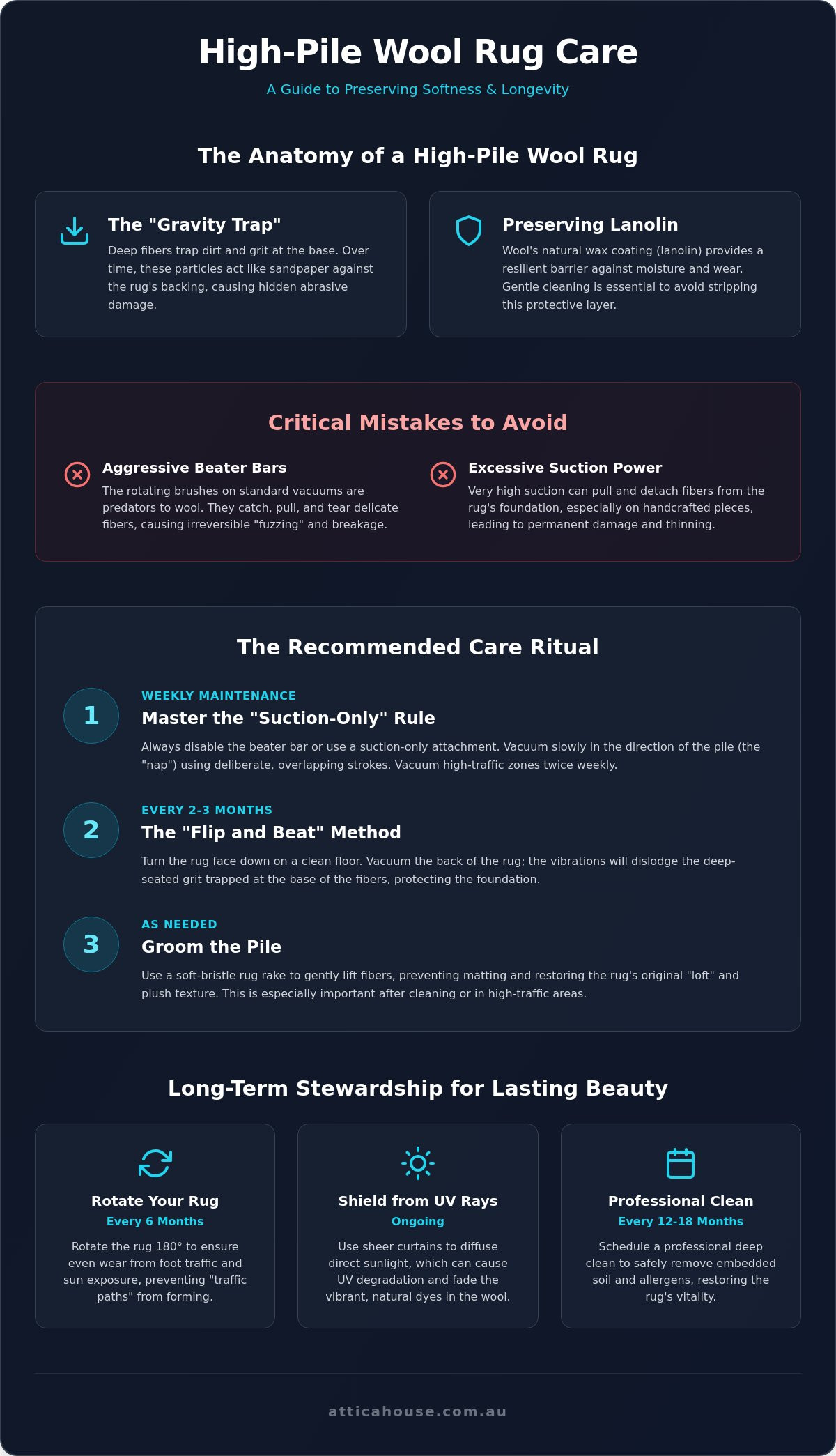
A high-pile wool rug acts as a tactile sanctuary within the home, offering a deep, plush landscape that invites a sense of calm. Unlike low-profile weaves, these long, luxurious fibers create a unique environment that traps more than just light and shadow. They also house what experts call a "Gravity Trap." Because the pile is so deep, microscopic dirt and grit don't simply rest on the surface; they settle at the very base of the fibers. Over time, these particles act like sandpaper against the rug's backing, potentially compromising the integrity of handcrafted designer rugs if left unaddressed.
The key to longevity lies in preserving lanolin, the natural wax found in wool. This organic coating provides a resilient barrier against moisture and wear. When considering carpet cleaning techniques, the goal is always to remove the grit without stripping away this essential protection. Understanding this delicate balance is vital for anyone learning how to clean a high-pile wool rug, as aggressive methods can lead to irreversible matting and fiber tangling.
The Role of Wool in a Refined Home
Wool is a living, breathable material that contributes significantly to the art of living well. Beyond its soft touch, wool naturally regulates indoor humidity by absorbing and releasing moisture, acting as a silent steward of your home's internal balance. This sensory experience transforms a room into a refuge, where beauty and physical well-being coexist seamlessly. Selecting wool is a commitment to a material that ages with grace, provided the care matches the quality of the craft.
Common High-Pile Misconceptions
Many homeowners mistakenly believe that high-powered suction is the best way to approach how to clean a high-pile wool rug. In reality, excessive suction can pull at the fibers, causing them to fray or detach from the foundation. The most significant danger comes from standard upright vacuums equipped with aggressive beater bars. These rotating brushes are designed for synthetic carpets and can quickly "fuzz" or tear the delicate tips of high-pile wool, destroying the very texture that makes the rug a masterpiece.
A Ritual of Maintenance: The Weekly High-Pile Care Guide
Maintenance isn't a chore; it's a ritual of preservation that honors the craftsmanship of your home. To truly master how to clean a high-pile wool rug, you must first embrace the "Suction-Only" rule. Most modern vacuums feature a rotating beater bar designed to agitate synthetic fibers, but for a high-pile wool masterpiece, this bar is a predator. It catches and pulls at the delicate loops, leading to "fuzzing" and premature breakage. Always disable this feature or use a dedicated suction attachment to ensure the fibers remain intact and elegant.
While surface cleaning is vital, the "Gravity Trap" requires a more profound approach to reach the grit hiding at the base. Every few months, employ the "Flip and Beat" method. Turn your rug face down on a clean floor and vacuum the back. This vibration dislodges the deep-seated particles that have migrated to the foundation. This professional secret, alongside expert advice on wool rug care, ensures the backing remains supple and strong over decades of use.
The Proper Vacuuming Technique
Success lies in the direction of the stroke. Always move your vacuum in the direction of the pile—the "nap"—rather than pushing against it. Think of it like stroking a pet; going against the grain creates unnecessary friction and stress. Use slow, overlapping strokes to penetrate the density of the fibers. This deliberate pace allows the suction to reach into the depths of the pile where dust lingers.
Grooming the Pile
A soft-bristle rug rake is an indispensable tool for maintaining the "loft" of your rug. Gently raking the fibers after cleaning prevents them from matting or beginning to "felt," a process where wool fibers entwine and lose their individual character. If you notice the tips of the wool losing their definition, it's time for a gentle grooming session. To ensure even wear and longevity, rotate your rug 180 degrees every six months to prevent "traffic paths" from forming in high-use areas. For optimal results, vacuum high-traffic zones twice weekly and low-traffic areas once every seven to ten days. Taking these steps ensures your designer rugs continue to serve as a beautiful, enduring foundation for your home's story.
Tactical Stain Removal: Preserving the Softness
In a home where beauty and comfort coexist, a spill is not a catastrophe but a moment for precise action. The Golden Rule of wool care is simple yet non-negotiable: always blot, never scrub. When learning how to clean a high-pile wool rug, your primary tool should be a clean, white cotton towel. Using colored cloths risks dye transfer, which can permanently mar the subtle tones of a handcrafted piece. By pressing firmly with a white towel, you draw the liquid upward and away from the core of the fibers.
Chemical selection is equally critical. You must use pH-neutral, Wool-Safe certified cleaners and strictly avoid oxygen-based bleaches or "oxi" products, as these can strip the natural lanolin and leave fibers brittle. For common alkaline spills, such as pet accidents or certain food items, a mild acidic solution is often the best remedy. To neutralize alkaline spills, mix a precise ratio of one part white vinegar to four parts water. This gentle solution helps stabilize the dyes and restores the natural balance of the wool.
Step-by-Step Spill Response
Begin by containing the area. Scoop up any solids with a spoon, then blot liquids from the outside of the spill toward the center to prevent spreading. Adhere to the "Damp, Not Soaked" principle. High-pile rugs are exceptionally absorbent, and excessive water can seep into the backing, leading to structural rot or mildew. Your goal is to treat the fiber surface without saturating the foundation.
Restoring Texture After Cleaning
Once the stain is addressed, focus on the "loft" of the pile. As the wool dries, use the back of a spoon or a soft-bristle brush to gently lift the fibers back into their upright position. This prevents the "wicking" effect, where deep-seated moisture carries remnants of the stain back to the surface as it evaporates. Ensure plenty of air circulation but avoid placing your rug in direct Australian sunlight, as UV rays can degrade the natural proteins in the wool. For those seeking to elevate their space with enduring quality, exploring our collection of designer rugs offers a glimpse into the beauty that proper care preserves.
Preserving Your Sanctuary: Long-Term Stewardship
A rug is more than a design element; it's the foundation of a sanctuary that evolves with your life. While weekly rituals maintain the surface, true stewardship involves a professional "Deep Wash" every 12 to 18 months. This is particularly vital for handcrafted rugs online Australia, as professionals use specialized submersion techniques that home equipment cannot replicate. These experts possess the delicate touch required to remove deep-seated grit while honoring the natural resilience of the wool. Understanding how to clean a high-pile wool rug through this professional lens ensures your investment remains a legacy piece for decades.
Environmental factors play a silent but significant role in the longevity of your textiles. Australia's vibrant light is beautiful, yet its UV rays can be formidable. Use sheer curtains to filter direct sunlight and protect the natural proteins in the wool from degradation. This simple act of preservation maintains the color's depth and the fiber's strength, ensuring your rug remains a cohesive part of your luxury furniture Australia aesthetic.
Protecting Against the Elements
In the quiet, dark spaces beneath heavy furniture, moths can find an undisturbed home. Periodically moving your furniture or gently checking these hidden areas prevents infestations that can ruin a handcrafted piece. If you reside in a coastal climate, managing indoor humidity is essential to prevent the heavy "wet wool" scent. A well-ventilated room keeps the fibers crisp and the air within your home fresh and inviting.
Selecting Your Next Statement Piece
There may come a time when a rug reaches the end of its storied life. When the backing becomes brittle or the pile no longer regains its loft, it's an opportunity to refresh your home's narrative. Choose a replacement that complements the refined storage of your buffets & cabinets, creating a sense of renewed balance. A refreshed floor space offers a profound psychological benefit, inviting a new era of calm and beauty into your private world.
Cultivating a Legacy of Comfort
Caring for a high-pile wool rug is an investment in the sensory story of your home. It's about stewardship. By mastering the suction-only rule and embracing the "Flip and Beat" method, you protect the structural integrity of these handcrafted pieces while preserving the natural lanolin that defines their resilience. You now have the confidence to manage spills with pH-neutral solutions and the knowledge to shield your sanctuary from the harsh effects of UV light. Understanding how to clean a high-pile wool rug ensures your living space remains a refuge of softness and elegance for years to come.
When you're ready to introduce a new layer of tactile luxury to your interior, we invite you to explore our curated collection of handcrafted designer rugs. Each piece is expertly selected for its timeless craftsmanship and enduring quality. We offer Australia-wide delivery on all luxury pieces, and our partner showroom is available for those who wish to experience our textures in person. Your home is a reflection of your personal journey; let it be grounded in beauty that lasts.
Frequently Asked Questions
Can I use a steam cleaner on a high-pile wool rug?
You should avoid using home steam cleaners, as the intense, uncontrolled heat can permanently damage the natural proteins in the wool fibers. This often leads to irreversible shrinkage or color bleeding that mars the rug's aesthetic. While professionals use controlled hot water extraction, home "steam mops" lack the necessary moisture regulation to protect the delicate handcrafted backing from structural damage.
How do I stop my high-pile wool rug from shedding?
Shedding is a natural characteristic of premium wool and typically subsides within the first three to six months of use. The most effective way to manage this is through regular, gentle vacuuming with a suction-only setting. When you are mastering how to clean a high-pile wool rug, remember that patience is key; aggressive brushing will only pull more fibers loose and compromise the rug's density.
What is the best way to remove pet hair from deep-pile wool?
A rubber squeegee or a dedicated rug rake is the most effective tool for lifting pet hair from deep within the pile. These tools create gentle friction that pulls hair to the surface without the risk of fiber breakage associated with vacuum beater bars. Once the hair is gathered on the surface, it's easily removed with a suction attachment, leaving the loft of the rug undisturbed and clean.
Is it safe to use baking soda to deodorize a wool rug?
You should use baking soda with caution, as its microscopic particles can settle at the very base of the fibers and become trapped. These fine crystals can act as a hidden abrasive, slowly wearing down the wool foundation over time. To refresh your sanctuary, it's better to prioritize natural air circulation or use a pH-neutral, Wool-Safe certified deodorizing spray that won't leave a gritty residue behind.
How long does a high-pile wool rug typically take to dry after spot cleaning?
A high-pile wool rug generally takes between 4 and 12 hours to dry completely after a targeted spot clean. This timeframe depends heavily on local humidity levels and the amount of air circulation in the room. It's vital to keep the area undisturbed and avoid walking on the damp fibers to prevent matting or the reintroduction of soil while the wool is in its most vulnerable state.