


Is a Travertine Table Hard to Maintain? The Honest Truth for Luxury Homeowners
The most exquisite objects in our homes shouldn't demand a life of constant anxiety, yet many homeowners view natural stone as a fragile museum piece rather than a functional work of art. It's understandable to hesitate when considering such a significant investment for your living space. Many prospective buyers find themselves asking: is a travertine table hard to maintain, or will it simply become a source of stress? You likely worry that a single spilled lemon or a stray drop of espresso might permanently mar the ethereal, honeyed surface you've come to love.
We're here to tell you that these fears, while common, are often misplaced. Travertine is a resilient material that has graced architectural masterpieces for centuries; its care is far simpler than the rumors suggest. In this guide, you'll discover how to preserve your stone's tactile beauty for a lifetime with minimal effort. We'll clarify the confusion around cleaning products, explain why sealing is only required every one to three years, and help you understand why a natural patina is a mark of heritage rather than a sign of damage.
Key Takeaways
- Understand why many ask "is a travertine table hard to maintain" and see how its natural density provides a robust foundation for everyday living.
- Discover the "less is more" cleaning philosophy that protects your stone from the hidden dangers of acidic household sprays.
- Learn how modern penetrating sealers act as an invisible shield, buying you precious time to address spills before they can leave a mark.
- Master simple, mindful habits to prevent surface scratches and preserve the stone's tactile, ethereal quality for decades.
- Embrace the long-term rewards of natural stone, which gains character through a unique patina and remains a refinishable, generational heirloom.
The Reality of Travertine: Is It Truly High-Maintenance?
The question of whether a travertine table is a practical addition to a curated home often begins with a misunderstanding of the stone's physical soul. Travertine is a resilient limestone formed by mineral springs. Its origins in geothermal waters give it a distinct, cellular personality, often referred to as a honeycomb structure. This sedimentary stone carries a warm, neutral palette that ranges from soft cream to deep walnut, offering a sense of calm that few other materials can replicate. It's a foundational element of sophisticated design that brings the outdoors in through a lens of refined elegance.
Many people ask: is a travertine table hard to maintain? The answer lies in distinguishing between a material's porosity and its actual strength. While it's true that travertine is porous by nature, its inherent mineral density makes it incredibly durable for indoor furniture. The myth that it's high-maintenance usually stems from the use of harsh, abrasive cleaning agents that strip the stone rather than any fragility in the stone itself. To truly understand its history and geological formation, one might look at What is Travertine to see how it has endured for millennia in Roman monuments and classical architecture. When treated with the respect it deserves, it's far from fragile.
Filled vs. Unfilled Travertine: Which is Easier to Clean?
When selecting a piece, the finish you choose will dictate your daily interaction with the surface. Filled travertine is the most common choice for dining and coffee tables. In this process, the natural holes are plugged with a color-matched resin, creating a smooth, seamless surface that is effortless to wipe clean. It offers the beauty of stone with the practicality of a polished tabletop, making it the ideal choice for those who want is a travertine table hard to maintain to be a concern of the past.
Unfilled travertine, conversely, celebrates the stone's raw, sculptural pits. It's a tactile choice that feels deeply connected to the earth. While it's breathtakingly beautiful, it does require a slightly different approach. Dust can settle into the natural voids, so a soft brush or a quick vacuum with a brush attachment is often better than a wet cloth for routine dusting. Your maintenance commitment here is slightly higher, but the reward is a piece of furniture that feels like a raw fragment of history.
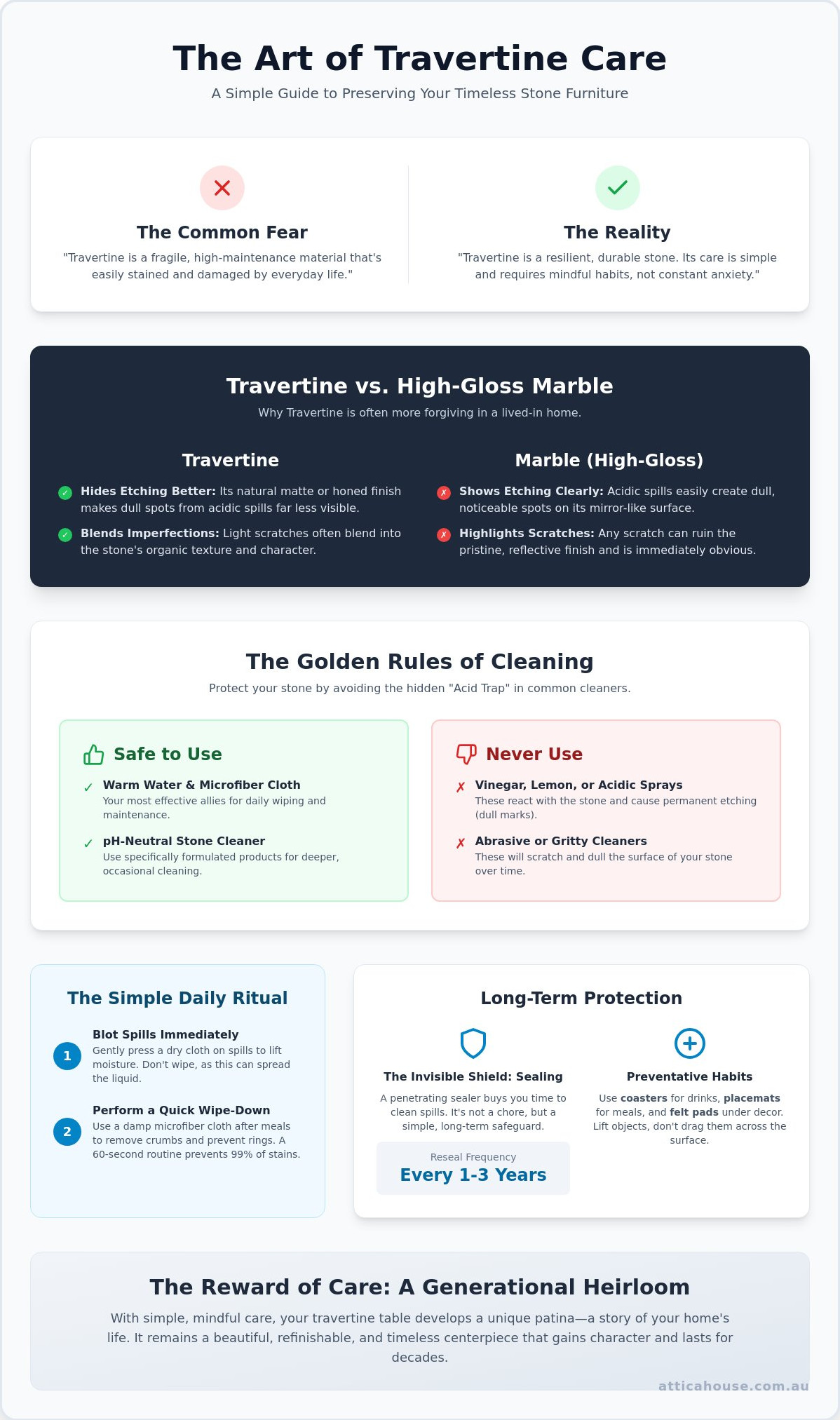
Travertine vs. Marble: A Maintenance Comparison
In the world of luxury furniture Australia, travertine is often compared to marble. However, travertine is frequently more forgiving in a lived-in environment. Because it's naturally matte or honed, it hides "etching" (those dull spots caused by acidic spills) far better than high-gloss marble. A light scratch that might ruin the mirror finish of a marble console often blends into the organic texture of a travertine piece. It's a stone that invites you to actually live, rather than just observe, providing a sanctuary of comfort without the constant fear of imperfections. This durability also makes it a popular choice for outdoor living; you can discover Patio Market to connect with Australian professionals who specialize in quality patio stone and installation.
The Simple Ritual: Daily Cleaning Your Travertine Table
Caring for a masterpiece doesn't require hours of labor; it simply requires a shift in perspective. When we view cleaning as a mindful ritual rather than a chore, we honor the stone’s history and preserve its quiet elegance. The "less is more" philosophy is the golden rule here. For daily maintenance, plain warm water and a high-quality microfiber cloth are your most effective allies. Understanding these effortless steps of daily care quickly answers whether is a travertine table hard to maintain for the modern homeowner. It's about consistency, not complexity.
The most vital technique to master is the "blot, don't wipe" rule for fresh spills. Wiping a liquid across the stone can push it deeper into the pores or spread the potential stain across a larger surface area. Instead, gently press a clean, dry cloth onto the spill to lift the moisture away. By establishing a 60-second post-dinner routine, a quick check for rings and a soft wipe with a damp cloth, you prevent 99% of long-term staining. This brief moment of attention ensures your dining table remains a pristine sanctuary for your family for years to come.
The Best (and Worst) Cleaning Agents for Stone
The "Acid Trap" is the most common pitfall for new stone owners. Many people reach for vinegar or lemon-based cleaners, believing they're natural and safe. However, these acids react instantly with the calcium carbonate in the stone, causing permanent etching. These are dull spots that look like water marks but cannot be wiped away. For those seeking the definitive industry standard, the Natural Stone Institute cleaning guide details why pH-neutral soaps are the only recommended chemical cleaners. You should avoid generic spray-and-wipe products, ammonia, and bleach at all costs to protect the stone's integrity.
Dusting and Debris Management
Micro-debris like crumbs or fine grit can act as an abrasive if they're dragged across the surface during a wet wipe. Always clear the table of loose particles before applying any moisture. If you've chosen an unfilled finish, crumbs can occasionally settle into the stone’s natural cavities. A soft-bristled brush or a handheld vacuum with a brush attachment is the most graceful way to manage these areas without scratching the surface. It's a small gesture that maintains the tactile, sculptural soul of your piece without any unnecessary stress.
The Invisible Shield: A Guide to Sealing Travertine
Think of sealing as a quiet insurance policy for your investment. It is the definitive answer to the question: is a travertine table hard to maintain? By applying a high-quality penetrating sealer, you create an invisible shield that buys you precious time. Spills that would otherwise vanish into the stone's cellular structure now sit safely on the surface, waiting to be blotted away. These modern impregnating sealers are designed to work beneath the surface; they protect the stone's integrity without altering the matte, ethereal glow or the unique tactile quality you've carefully selected for your home.
To determine if your table requires attention, perform the water drop test. Place several droplets of filtered water on various parts of the tabletop. If the water beads like morning dew and rolls across the surface, your protection is holding firm. If the stone absorbs the liquid and darkens within a few minutes, the barrier has thinned and needs a refresh. It's a simple, rhythmic check that ensures your sanctuary remains pristine.
How to Seal Your Travertine Table in 5 Steps
The application process is a straightforward afternoon project that yields years of peace of mind. Follow these steps to ensure a flawless finish:
- Step 1: Preparation. Deep clean the table with a pH-neutral stone soap and allow it to dry completely. You must wait at least 24 hours to ensure no moisture is trapped within the pores.
- Step 2: Application. Apply a generous, even coat of a high-quality penetrating sealer using a soft, lint-free cloth or a clean sponge.
- Step 3: Absorption. Allow the stone to absorb the liquid for the manufacturer’s recommended time, usually ten to fifteen minutes. Do not let the sealer dry completely on the surface during this stage.
- Step 4: Buffing. Gently buff away any excess residue with a fresh, dry cloth. This prevents a cloudy film from forming on the stone's surface.
- Step 5: Curing. Allow the stone to cure for 24 hours. Avoid placing any objects or liquids on the table during this time to ensure the bond is permanent.
Frequency: When Does Your Stone Need a Refresh?
While industry standards suggest sealing every one to three years, your specific lifestyle dictates the schedule. A high-use dining table that hosts nightly family meals and frequent dinner parties will naturally require more frequent attention than a decorative console. Environmental factors also play a role; in many regions, intense sunlight and humidity can influence how quickly a protective barrier dissipates. For a professional perspective on preserving these pieces, this travertine furniture care guide offers excellent insights into long-term preservation. When you notice water no longer beads or the stone feels slightly more "thirsty" during cleaning, it's time for a refresh. By maintaining this invisible shield, you'll find that is a travertine table hard to maintain is a myth easily dispelled by a little mindful care.
Practical Protection: Living with Natural Stone
Prevention is the highest form of maintenance for luxury furniture. It's not about restriction; it's about creating a harmonious environment where beauty and function coexist in a state of effortless grace. When we ask if is a travertine table hard to maintain, we're often really asking how much we must alter our lifestyle to accommodate the stone. In truth, the adjustments are minor and quickly become second nature. By adopting a few mindful habits, you ensure your investment remains a source of calm rather than a point of concern.
One of the simplest yet most effective habits is the use of felt pads. Applying these to the base of decorative objects, such as heavy vases or sculptural pieces, prevents micro-scratches that can occur when items are shifted across the stone. While travertine is naturally durable, these small barriers ensure the surface remains as smooth as the day it arrived. Heat is another common consideration. While travertine handles warmth better than many synthetic materials, it's wise to avoid extreme thermal shock. Placing a boiling pot directly from the stove onto a cold stone surface can cause internal stress. Using a stylish board or trivet is a simple way to protect the stone’s structure while adding an extra element of design to your tabletop.
The Holy Trinity of Table Protection
Styling your table with protective layers is an opportunity to enhance its aesthetic appeal while serving a functional purpose. Coasters are essential for catching condensation and protecting against acidic beverages like red wine or morning coffee. For those using a travertine dining table, placemats define the "impact zone" where cutlery and plates are most active. Finally, a table runner adds a layer of sophisticated texture, shielding the central "spine" of the table while drawing the eye along its natural, rhythmic veining.
Handling Accidents: Stains and Etching
Even with the best intentions, life happens. For deep oil or organic stains, the poultice method is a gentle yet powerful solution. By creating a paste of baking soda and a small amount of water, you can draw impurities out of the stone's pores over 24 to 48 hours. Distinguishing between a stain and etching is also vital for proper care. Etching is a dull spot caused by a chemical reaction with acid. While light etching can often be buffed out with specialized stone polishing powder, significant damage may require a professional stone restorer. These experts can refinish the surface, returning your heirloom to its original, luminous state.
The Reward of Care: Why Travertine is a Timeless Investment
The choice to bring natural stone into your home is an act of careful selection. It is a promise of quality and a commitment to an aesthetic vision that transcends fleeting trends. While the initial question of whether is a travertine table hard to maintain might stem from a place of caution, the answer reveals a material that is remarkably forgiving. Travertine is a living material. Over decades of use, it develops a unique patina that tells the story of your life, capturing the light and the memories of every gathering. Unlike mass-produced furniture that loses its soul with every scratch, stone furniture can be refinished and restored indefinitely, ensuring its beauty remains undiminished for generations.
This stone possesses a quiet, neutral versatility that allows it to survive shifting design landscapes. Whether it serves as the grounding element in a living area or helps anchor a luxury bedroom sanctuary, its presence brings a sense of internal balance. The current shift toward warmer, earthy tones like honeyed caramel and sandstone beige only reinforces travertine's status as a modern classic. It is a tactile luxury that feels both grounded and ethereal.
Sustainability and Longevity
Investing in a single piece of natural stone is a deeply eco-conscious decision. In a world of "fast furniture" that often ends up in landfills, travertine stands as a testament to longevity. It is incredibly durable, standing up well to the unique demands of the Australian climate. When you understand that is a travertine table hard to maintain is simply a matter of mindful, periodic care, the stone becomes more than an object. It becomes a cherished family heirloom that gains value and character as the years pass.
Styling Your Travertine for a Refined Home
To truly highlight the stone’s natural veining and sculptural pits, consider the interplay of light and texture. Positioning your table near soft, diffused lighting can emphasize the rhythmic symmetry of its surface. For a cohesive narrative, pair the cool, solid weight of the stone with the organic warmth of handcrafted rugs. This contrast between the tactile quality of the stone and the soft fibers of a rug creates a space that feels like a true refuge.
Ready to bring the transformative power of natural stone into your home? Explore our curated collection of travertine and marble tables and discover a world where beauty and comfort coexist seamlessly.
Inviting Timeless Artistry into Your Home
The transition from viewing a material with caution to understanding its inherent resilience is a vital step in creating a true home sanctuary. We've explored how the question of whether is a travertine table hard to maintain is answered not with a list of taxing chores, but with a simple, rhythmic ritual of care. By adopting a pH-neutral cleaning routine and maintaining an invisible protective shield, you're not just preserving furniture; you're honoring a living legacy that only grows more evocative with time. Travertine doesn't demand perfection; it celebrates the beauty of a life well-lived.
We invite you to find the piece that speaks to your personal story. Each item in our collection is curated by Australian design experts who value the transformative power of heritage and craftsmanship. With a partner showroom experience available in Sydney and specialized Australia-wide delivery for these fragile stone treasures, your journey toward a more refined environment is fully supported. Discover the Timeless Elegance of the Attica House Travertine Collection and embrace a world where beauty and lived-in comfort exist in perfect harmony. Let your space become a grounded refuge that celebrates the art of living well.
Frequently Asked Questions
Can I use Windex or bleach on my travertine table?
No, you should never use Windex, bleach, or any acidic household cleaners on your stone surface. These harsh chemicals strip the protective sealer and react with the stone's calcium carbonate, causing permanent etching and dull spots. Instead, stick to warm water and a pH-neutral stone soap to maintain the ethereal glow of your piece without risking chemical damage.
How often should I seal my travertine coffee table?
Indoor travertine surfaces typically require a fresh application of sealer every one to three years. The exact frequency depends on how often the piece is used and its exposure to environmental factors like direct sunlight or humidity. You can easily check if your protective barrier is holding by performing a water drop test; if the water beads on the surface, your table is well-protected.
Is travertine more durable than marble for a dining table?
Travertine is often more forgiving than marble in a high-use dining environment because its naturally matte or honed finish hides etching far better than high-gloss stones. While both are porous limestones, travertine’s organic texture and unique pits allow it to age gracefully, developing a patina that masks minor imperfections. This makes it a preferred choice for those who worry about whether is a travertine table hard to maintain in a lived-in home.
What happens if I spill red wine on my unsealed travertine?
If wine is spilled on unsealed stone, it can quickly penetrate the pores and leave a deep organic stain. You must blot the liquid immediately with a clean cloth, avoiding any wiping motions that might spread the pigment. For stubborn stains that have already set, a poultice made of baking soda and water can often draw the impurities out over a period of 24 to 48 hours.
Can travertine tables be used outdoors in Australia?
Yes, travertine is a beautiful choice for luxury outdoor furniture, though it requires more frequent maintenance to withstand the intense Australian climate. Outdoor pieces should be sealed every 12 to 24 months to protect against UV exposure and moisture. Choosing a filled finish for outdoor use can also prevent rainwater from pooling in the stone's natural cavities, ensuring the material remains structurally sound and easy to clean. For those looking to elevate their alfresco dining experience even further, you can discover Charcoal Kings and their selection of premium BBQ fuels.
Do I need to fill the holes in my travertine table?
Filling the natural holes is a matter of aesthetic preference and lifestyle needs rather than a structural requirement. A filled table offers a smooth, wipe-clean surface that is ideal for dining areas and high-activity spaces. Unfilled travertine retains its raw, sculptural soul but requires a softer touch during cleaning to ensure dust doesn't settle into the deeper pits over time.
How do I remove a ring mark from my stone table?
Removing a ring mark depends on whether the mark is a surface stain or an etch. If it is a surface stain, a gentle pH-neutral cleaner or a mild poultice will usually lift it. If the mark is an etch caused by an acidic glass of juice or wine, you may need a specialized stone polishing powder to gently buff the surface and restore the original finish to its former glory.
Is travertine furniture heavy to move?
Travertine furniture is significantly heavier than timber or glass, reflecting its status as a solid, natural stone material. This weight provides a sense of permanence and incredible stability for dining and console tables alike. Because of this, we recommend choosing your table’s placement carefully and utilizing professional delivery services to ensure the piece is handled with the respect its craftsmanship deserves.