


Gold Furniture: A Thoughtful Buying Guide for Your Home
What if gold furniture could bring a room a sense of calm rather than compete for attention? The right piece can add warmth and a gentle glow, but it’s understandable to wonder whether its finish will suit your existing colours and materials or overwhelm a smaller, busier space. The key is thoughtful selection: gold feels most at home when its tone, scale and purpose suit the room.
This guide will help you choose gold furniture that complements your palette, works alongside materials such as timber, stone and fabric, and meets the needs of everyday living. Learn how to balance a statement piece with practical storage or seating, and introduce metallic finishes with restraint. From a softly textured finish to a carefully placed accent, a well-chosen piece can bring warmth and balance to your home.
Key Takeaways
- Gold furniture can add warmth and reflect light without being solid gold. Consider how its finish will sit with the room’s existing materials.
- Identify the piece’s purpose first, then measure your space and check walking routes before choosing its scale and form.
- Ground the palette with existing neutrals or selected deeper colours, and balance metallic detail with softer textures.
- Compare furniture types by room and everyday need to find a piece that adds visual interest while serving a practical purpose.
Why Gold Furniture Can Bring Warmth and Character to a Room
Gold furniture describes pieces with a gold-toned finish, detail or frame, rather than furniture made from solid gold. It can bring warmth, reflected light and a considered focal point into a room. A gold-finish drinks trolley, for example, draws the eye while serving a practical purpose.
The effect depends on more than colour. A broad, highly reflective surface will feel more prominent than a fine metal frame, and the surrounding materials and amount of gold in the room matter too. Although gold is a chemical element with the symbol Au, furniture finishes are valued for their appearance, not because a piece is necessarily made from the metal itself.
Which gold finish suits the feeling you want?
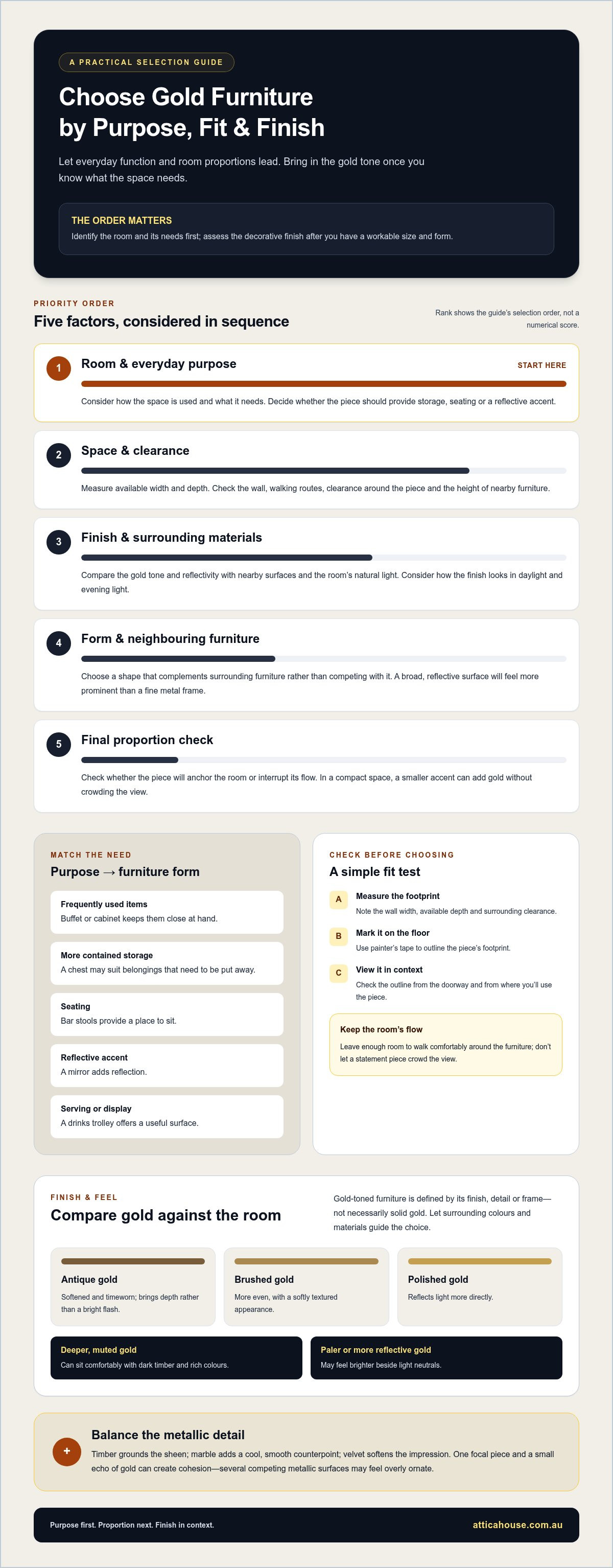
Antique gold tends to have a softened, timeworn character, bringing depth rather than a bright flash. Brushed gold has a more even, softly textured appearance, while polished gold reflects light more directly. A deeper, muted gold can sit comfortably with dark timber and rich colours, while a paler or more reflective finish may feel brighter beside light neutrals. Compare the finish with your room’s materials in both daylight and evening light before deciding.
How to keep a gold statement piece feeling balanced
Begin with one focal piece, such as a drinks trolley or a gold-detailed cabinet, then let the rest of the room support it. Timber grounds the metallic sheen; marble adds a cool, smooth counterpoint, while velvet softens the overall impression. Repeating a gold tone in a small detail can create cohesion, but several competing metallic surfaces may make the room feel overly ornate.
This measured approach reflects the lasting appeal of luxury furniture in Australia, where material, proportion and atmosphere work together to create a home that feels expressive and restful.
How to Choose Gold Furniture by Finish, Scale and Function
Assess scale and function before choosing a decorative finish. A piece should suit the room’s everyday needs first, then bring in a gold tone and form that feel at home. Use this sequence to narrow your options:
- Identify the room. Consider how the space is used and what it needs.
- Define the function. Decide whether you need storage, seating or a reflective accent.
- Measure the space. Note the available width and depth, and leave enough room to walk comfortably around the piece.
- Assess the finish. Compare its tone and reflectivity with nearby surfaces and the room’s natural light.
- Compare forms. Choose a shape that complements neighbouring furniture rather than competing with it.
Match the piece to its everyday role
A buffet or cabinet can keep frequently used items close at hand, while a chest may suit belongings that need more contained storage. For a closer look at functional storage, explore this guide to luxury buffets and cabinets. Bar stools provide seating, mirrors add a reflective accent, and a drinks trolley offers a surface for serving or display. Let the role lead your shortlist, then compare the dimensions and shape of pieces that meet that need.
Check proportion before committing to a statement
Measure the wall where the piece will sit, the clearance around it and the height of nearby furniture. These details help you judge whether a larger gold piece will anchor the room or interrupt its flow. In a compact space, a smaller accent can introduce a metallic note without crowding the view. Mark the footprint on the floor with painter’s tape, then check it from the doorway and from the spot where you’ll use the piece.
With your measurements and priorities in mind, the gold furniture collection can be explored by intended role and scale.
How to Style Gold Furniture Without Overwhelming Your Space
Start with the room’s existing palette, then let gold complement rather than compete with it. Against warm neutrals, a gold detail can add a gentle lift; alongside deeper colours such as navy, charcoal or forest green, it can create a richer contrast. You don’t need to rebuild the room around a new piece. Note the colours and materials already present, then choose a gold tone that feels connected to them.
Pair gold with colour and texture thoughtfully
Texture helps metallic surfaces feel at ease. Timber brings natural warmth, marble offers a cool, polished counterpoint, and velvet adds softness. The Aston Gold Bar Stool, for example, shows how gold details can sit with black or indigo velvet, creating distinct moods without requiring a single prescribed palette. Consider how a new finish will relate to nearby upholstery, flooring and surfaces, not just the main wall colour.
Contrast gives gold its presence; restraint makes that presence feel intentional. Repeat a similar gold tone in a small detail, such as a lamp or frame, if the room needs a visual link. The accents don’t have to match exactly. A subtle echo can make the space feel cohesive while allowing other finishes to retain their character.
Avoid common gold-furniture styling mistakes
In a smaller room, several metallic statement pieces can crowd the eye and make the space feel busy. Let one piece take the lead, then balance it with quieter surfaces and open space around it. Don’t judge a finish from an isolated product image alone: consider how it may look beside your room’s lighting, colours and materials. In a restful bedroom, check how a gold bedside piece will sit with the bed and soft furnishings, as explored in these luxury bedroom ideas.
Gold accents work best when they connect with the room’s existing palette and leave space for other materials to stand out.
Gold Furniture to Consider for Different Rooms and Needs
The right piece depends on what the room needs from it. A generous cabinet can make a considered focal point while keeping belongings organised; a smaller accent can introduce gold more lightly. Use this comparison to connect the room, purpose and form before choosing.
| Room or need | Suitable piece | Selection consideration |
|---|---|---|
| Living or dining room storage | Buffet cabinet | Consider its visual weight and how its detailing relates to nearby furniture. |
| Bedroom storage | Bedside tables or a chest | Think about useful surface and storage space alongside the bed. |
| Kitchen bench or entertaining area | Bar stools | Choose a form that suits the surrounding seating and room palette. |
| Entertaining or display | Drinks trolley or mirror | Decide whether you want a practical serving surface or a decorative accent. |
Statement storage and bedroom pieces
The Astoria Buffet Cabinet in Antique Gold pairs a brushed finish with geometric detailing, giving storage a defined presence. For a different character, the Monte Carlo Buffet Cabinet features ribbed detailing, while the Amara Art Deco Buffet brings curved detailing to the room. In the bedroom, Amara bedside tables can introduce gold beside the bed, and the Monte Carlo chest offers another storage form. Compare silhouettes and detailing as well as the finish, and consider how each piece will sit alongside nearby furniture.
Accents that add a lighter touch
For entertaining, the Brooklyn Mirrored Bar Cart combines a gold frame with mirrored shelves, adding a distinct accent and a serving surface to the room. Allegro Gold Leaf mirrors offer another way to introduce gold through a wall detail. Consider how each piece will relate to the wall, furniture and finishes around it, rather than treating it as an isolated feature.
The gold-furniture collection includes options to consider for statement storage and smaller decorative accents.
Choose a Piece That Feels at Home
The most lasting interiors aren’t assembled all at once. They take shape through choices that reflect how you live and the atmosphere you want to return to each day. Start with one clear intention for your next gold furniture piece: more storage, a considered accent, or a warmer note beside familiar materials. From named designs such as the Astoria Buffet Cabinet and Amara bedside tables to mirrors and bar stools, there are forms to consider across the home.
Attica House offers Australia-wide delivery, so you can explore pieces for your home wherever you are in Australia. Picture your chosen piece in its setting and consider how it will work alongside the furniture and materials already in the room.
Explore the gold-furniture collection and choose a piece that suits your space and its everyday needs.
Frequently Asked Questions
Does gold furniture go with every colour scheme?
Gold can complement many colour schemes, but no finish suits every room in the same way. A softer gold may sit comfortably with warm neutrals, while a brighter tone can create a distinct contrast against deeper colours. Compare the piece with nearby fabrics, flooring and timber, then decide whether you want gold furniture to draw the eye or provide a quieter accent.
How do you style gold furniture without making a room look too ornate?
Use a clear visual hierarchy: give one piece the leading role and leave some breathing space around it. If a gold cabinet is already richly detailed, choose simpler shapes for nearby accessories. Velvet, marble or timber can temper its sheen, while limiting other decorative metallic details helps the room feel composed rather than built around a single theme.
Is gold furniture suitable for a small room?
It can be, provided the piece’s dimensions and visual weight suit the available space. Before buying, mark its footprint on the floor with painter’s tape and check that doors, drawers and nearby seating can still be used comfortably. A compact accent may be easier to place than a broad statement piece, especially in a room with limited clear floor area.
What materials pair well with gold furniture?
Timber, marble and velvet can all complement gold-toned finishes, each bringing a different character: visible wood grain feels natural, marble introduces a smooth contrast, and velvet adds softness. Let the room guide the pairing. If its existing materials already provide strong texture or pattern, choose a quieter gold detail; if the palette is simple, a more distinctive material contrast may feel balanced.
How do I choose between gold furniture finishes?
Compare the finish’s tone, reflectiveness and detailing with nearby metals, dominant colours and the light in the room. Antique-looking gold can read as more subdued, while a brighter brushed finish may catch the eye differently. Review product imagery alongside your room’s palette, and consider how the finish appears in daylight and evening light before making your choice.