


What is a Credenza vs. a Buffet? The Connoisseur’s Guide to Dining Storage
What if the difference between a cluttered dining room and a serene sanctuary was simply four inches of leg height? Understanding what is a credenza vs a buffet is often a source of quiet confusion for those seeking to curate a home that feels both intentional and elevated. It's natural to feel a sense of hesitation when these terms are used interchangeably, especially when you're looking for a high-end piece that must serve as both a functional anchor and a tactile work of art. You deserve clarity before making an investment in your home's long-term heritage.
We'll uncover the subtle distinctions in form and history that separate these two iconic storage pieces. We will explore how to select a silhouette that honors your room's proportions while meeting modern safety requirements like the STURDY Act. You'll leave with a clear framework for choosing a piece that reflects your personal narrative, ensuring your next selection is a perfect marriage of safety, craftsmanship, and timeless luxury. From sculptural mid-century profiles to grand traditional cabinets, we'll help you find the piece that makes your space feel like a true refuge.
Key Takeaways
- Trace the lineage of these storied silhouettes to understand how their historical roles in ceremony and hospitality shape their presence in your home today.
- Master the physical nuances of what is a credenza vs a buffet by examining the subtle interplay between surface height, leg design, and room placement.
- Recognize why the taller, grander buffet is the quintessential choice for formal dining rituals while the low-profile credenza offers a serene, modern alternative.
- Apply a practical comparison framework to ensure your chosen piece honors the proportions of your space and the rhythmic flow of your daily life.
- Discover how to select a piece that serves as an essential component of a meaningful life, balancing evocative design with the enduring quality of expert craftsmanship.
Defining the Silhouette: The History and Evolution of Dining Storage
The language of interior design is often as layered and evocative as the homes we seek to create. While many use these terms interchangeably, the historical debate of Sideboard vs. Buffet reveals distinct functional lineages that still influence our modern living spaces. Understanding what is a credenza vs a buffet requires more than a glance at a catalog. It involves looking back at centuries of tradition where furniture served as a silent participant in the rituals of the home. These pieces are more than mere storage; they are the anchors of our most cherished gatherings.
Modern design has certainly blurred the lines between these categories. Today, a piece might borrow the slender legs of a sideboard while retaining the low, sleek profile of a classic credenza. However, the core structural differences remain vital for those who value the rhythmic balance of a well composed room. Choosing the right silhouette is about more than utility. It is about selecting a piece that reflects your personal story and transforms a house into a sanctuary of calm and refuge.
The Credenza: From Royal Courts to Modern Offices
The word credenza carries a weight of history, originating from the Italian word for belief or trust. In the 14th century, these low surfaces were used in aristocratic homes for the ritual of tasting food and wine to ensure they were free of poison. This act of "credence" gave the piece its name and its enduring association with ceremony. Traditionally, a credenza is characterized by a low, horizontal profile that often sits on a solid base or very short, recessed legs. This grounded nature creates a sense of stability and permanence. In recent decades, this silhouette has migrated from the dining room into the workspace. The evolution of the credenza desk has brought a touch of sophisticated, lived-in luxury to the modern home office, providing a tactile surface for both productivity and display.
The Buffet: The Anchor of the Dining Suite
If the credenza represents trust and quiet elegance, the buffet is a vibrant symbol of hospitality and refined entertaining. Specifically designed for the service of food, the buffet is typically taller than its counterparts. This extra height is a deliberate choice, intended to make the act of serving guests easier for a standing host. A buffet often features longer, more prominent legs, which lifts the body of the cabinet and creates a lighter, more sculptural presence in a formal dining environment. It acts as a dedicated stage for the culinary arts, offering ample surface area for silver platters and seasonal decor. When you select a buffet, you aren't just buying a cabinet; you're investing in a piece that honors the heritage of the shared meal and the warmth of the gathered family.
The Buffet: A Statement of Hospitality and Grandeur
The dining room is often the heart of a home’s social narrative, a space where the rhythm of conversation meets the tactile pleasure of a shared meal. While you may be navigating the technicalities of what is a credenza vs a buffet, the choice often comes down to the atmosphere you wish to cultivate. The buffet is the undisputed protagonist of formal hospitality. It possesses a certain architectural gravity that grounds a room, acting as both a functional servant and a sculptural centerpiece. It’s a piece that doesn't just store your belongings; it honors the heritage of your home.
One of the most defining characteristics of the buffet is its height. Typically standing taller than its counterparts, the buffet provides a surface that is ergonomically designed for a standing host. This allows for the seamless service of food and drink without the need to stoop, making it an essential component of refined entertaining. When curating luxury furniture australia, many connoisseurs look for buffets that offer sensory richness. Whether it’s the cool, veined surface of a marble top or the deep, resonant grain of handcrafted oak, these materials elevate the act of hosting into a truly evocative experience.
Anatomy of a Luxury Buffet
Unlike the solid, floor-bound profile of many credenzas, a luxury buffet often features longer, more elegant legs. This elevation creates a sense of lightness, allowing the piece to feel substantial without overwhelming the spatial flow. This design lineage can be seen in the historical Aesthetic Movement Sideboard Design, where furniture was treated as a canvas for craftsmanship. Internally, the buffet is a master of organization. Deep drawers are perfectly proportioned for pressed linens and silver service, while expansive cabinets offer a protected sanctuary for fine china and heirloom crystal.
Styling the Buffet for Refined Entertaining
The top surface of a buffet is a versatile stage that transitions beautifully between roles. During a gathering, it’s a functional serving station; however, in the quiet moments between events, it becomes a permanent gallery for your most cherished objects. Achieving balance is key. Use a pair of tall, sculptural lamps to create symmetry, or lean a large fashion wall art print against the wall for a more modern, lived-in feel. If you're looking to refine your dining environment, exploring our collection of buffets & cabinets can provide the inspiration needed to find that perfect visual anchor.
The Credenza: Low-Profile Elegance for Modern Living
In the quiet pursuit of a minimalist sanctuary, the credenza emerges as a master of restraint. While the buffet commands attention through its height and ceremonial presence, understanding what is a credenza vs a buffet reveals that the latter’s true strength lies in its low-profile silhouette. It typically sits closer to the floor, supported by short, tapered legs or a solid, architectural base. This grounded nature makes it an ideal choice for the 'less is more' approach to modern luxury, where each piece must contribute to a sense of calm and spaciousness rather than competing for dominance.
The lower stature of the credenza serves a specific aesthetic purpose beyond mere storage. Because it occupies less vertical space, it becomes the perfect companion for large-scale wall art prints. By leaving the wall above relatively untouched, it allows a curated gallery or a single, evocative statement piece to breathe. Beyond the dining room, the credenza’s streamlined form makes it exceptionally versatile. It brings a sense of order to narrow hallways, provides a tactile welcome in entryways, and offers a sophisticated surface for lamps and books in a lounge. It is a piece that adapts to the rhythmic flow of your daily life.
The Mid-Century Influence and Beyond
The enduring appeal of the credenza was cemented during the Mid-Century Modern movement, which redefined the piece for 21st-century living. Designers focused on clean lines and functional beauty, often replacing swinging doors with sliding panels to maintain a sleek, uninterrupted facade. This streamlined aesthetic is further enhanced by the careful selection of materials. The warmth of a walnut finish can soften a room, while the coolness of a stone or marble top adds a layer of tactile exclusivity. These material choices are essential for creating a home that feels like a curated refuge rather than a mere collection of furniture.
Transitioning to the Home Office
As our homes increasingly become places of both rest and productivity, the credenza has found a new purpose in the professional sphere. It offers a sophisticated solution for organizing essentials while maintaining a clutter-free environment. Unlike traditional filing cabinets, a well-chosen credenza keeps necessary items within reach but hidden behind beautiful timber or lacquer finishes. Integrating such a piece can significantly elevate a luxury home office, transforming a workspace into a refined sanctuary that promotes both internal balance and creative flow.
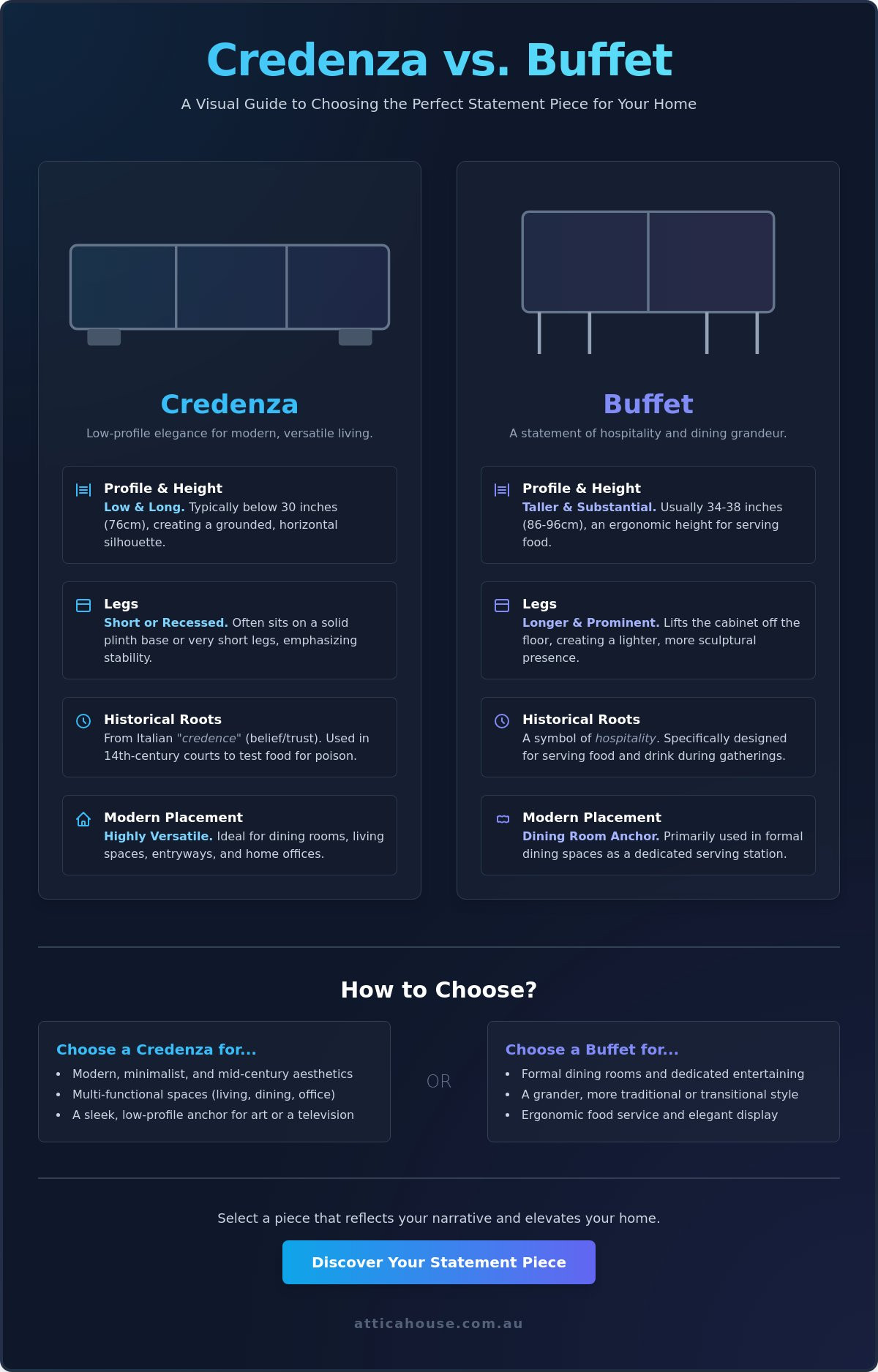
Sideboard vs. Buffet vs. Credenza: A Comparison Framework
Choosing between these pieces is often less about the label and more about the architectural rhythm of your home. In the modern Australian home, where the kitchen often flows seamlessly into the lounge, the distinction becomes a matter of spatial choreography. When you ask what is a credenza vs a buffet, you're essentially asking how a piece of furniture will interact with your floor plan. While the buffet and credenza have clear historical roles, the sideboard acts as a versatile middle ground. It bridges the gap between the formal dining room and the relaxed living area, offering a silhouette that feels at home in almost any setting.
| Feature | Buffet | Credenza | Sideboard |
|---|---|---|---|
| Height | Tall (Serving height) | Low (Media/Art height) | Medium (Versatile) |
| Base | Long, elegant legs | Solid base or short legs | Varied legs or plinth |
| Primary Room | Formal Dining | Office, Entry, Dining | Living or Dining |
Proportion and Scale: The Designer’s Secret
Proportion is the designer's silent language. To create a sense of effortless balance, many professionals follow the two-thirds rule. This suggests that your cabinet should ideally measure roughly two-thirds the length of your dining table or the wall art hanging above it. This ratio ensures the piece feels anchored rather than floating aimlessly in the room. Visual weight also plays a critical role. A piece with long, slender legs creates a sense of airiness in smaller spaces. Conversely, a credenza with a solid plinth base offers a grounded, permanent feel that suits grander, open-plan environments. For a seamless flow of movement, ensure at least 90cm of clearance between your furniture and the nearest wall or walkway.
Function Over Form: What Are You Storing?
Your storage needs should dictate the internal landscape of your chosen piece. If you're housing tall vases or heavy serving platters, look for cabinetry with adjustable shelving to accommodate varying heights. Shallow drawers are the perfect sanctuary for silver cutlery and pressed linens, keeping them organized and accessible. The depth of the piece is equally important for maintaining a calm environment. A standard Australian dining room walkway requires a depth that doesn't impede the natural path between rooms. If you are ready to find a piece that harmonizes with your home’s unique story, we invite you to explore our curated collections of artisan-crafted storage solutions.
Selecting Your Statement Piece: The Attica House Vision
Ultimately, the journey of understanding what is a credenza vs a buffet leads to a single, essential realization: the perfect piece is the one that brings you a profound sense of calm. Luxury is personal. It’s the quiet sigh of relief you feel when you step into a room where every object has been chosen with intention and care. At Attica House, our vision is rooted in this transformative power of design. We believe that your home should be a refuge, a thoughtfully composed world where heritage and modern life exist in perfect harmony. Our commitment to careful selection ensures that every item in our collection is not just a functional object, but a vital component of a meaningful life.
Our curated collection of storage solutions reflects a deep respect for craftsmanship and a passion for aesthetic excellence. We blend global design sensibilities with a local soul, ensuring each piece resonates with the unique light and landscape of the Australian environment. Whether you are drawn to the grand hospitality of a buffet or the low-profile restraint of a credenza, you are choosing a piece designed to endure. This is the Attica House promise: to offer guidance and inspiration as you write your own personal story through the furniture you invite into your private spaces.
Materials That Tell a Story
The tactile resonance of a piece is often what creates the deepest emotional connection. Our collection celebrates materials that speak to the senses, from the cool, timeless elegance of veined marble to the rhythmic texture of fluted glass. Reclaimed timbers bring a sense of history and longevity, their natural imperfections telling a story of resilience and beauty. Choosing high-quality, artisanal finishes is an investment in your daily well-being. When you touch the smooth surface of a well-crafted cabinet or admire the play of light across a timber grain, you are reminded of the value of slow, intentional living. These sensory details elevate a room from a mere physical space into a true sanctuary.
Completing the Sanctuary
A statement piece rarely stands alone; it is part of a larger, rhythmic composition. To create a cohesive look that feels both sophisticated and lived-in, consider pairing your chosen storage with curated wall art. The height of a credenza provides the perfect baseline for an evocative print, while a taller buffet can be framed by smaller, more intimate works. Don't overlook the grounding power of the floor. The role of handcrafted rugs in anchoring your dining or living suite cannot be overstated, as they provide the tactile foundation that ties the entire room together. We invite you to explore the Attica House collection of Buffets & Cabinets to find the anchor for your own timeless sanctuary.
Crafting Your Timeless Sanctuary
Choosing the right storage piece is an act of careful selection that transforms a house into a home. By moving beyond the technical question of what is a credenza vs a buffet, you've gained the clarity to choose a piece based on the architectural rhythm and emotional resonance of your space. Whether you're drawn to the tall, ceremonial stature of a buffet for formal hosting or the sleek, low-profile elegance of a credenza for a modern lounge, your choice should honor both your practical needs and your desire for a serene, tactile environment. Proportion and material are the silent languages that will guide your selection toward a piece of lasting heritage.
At Attica House, we prioritize a curated selection of statement pieces that embody refined craftsmanship and timeless design. Our offerings are more than objects; they are essential components of a meaningful life. With the convenience of Australia-wide delivery, you can easily introduce these sculptural silhouettes into your home. Discover our curated collection of luxury Buffets & Cabinets and begin curating your own refuge of calm. Your home is the most intimate reflection of your story; let every piece you choose be worthy of that narrative.
Frequently Asked Questions
Is a credenza taller than a buffet?
No, a credenza is almost always shorter than a buffet. The buffet is intentionally designed at a height that facilitates standing service, usually ranging between 85cm and 95cm. In contrast, the credenza sits lower to the ground, often featuring a sleek profile that aligns with the height of a lounge or a low-set window. This distinction is a key part of understanding what is a credenza vs a buffet for your specific spatial needs.
Can I use a buffet in a living room as a TV stand?
A buffet can serve as a living room anchor, though its height requires careful consideration. Because buffets are taller, placing a television on top may result in a viewing angle that is uncomfortably high for seated guests. However, if the piece is used solely for storage and displaying sculptural objects, its grand presence can add a sophisticated layer of luxury to your lounge. It offers a substantial surface for curated decor and media essentials.
What is the difference between a sideboard and a credenza?
The primary difference lies in the base and the intended room. Sideboards traditionally feature longer legs and are designed for the dining room, while credenzas often have a solid base or very short legs. Credenzas are also more versatile, frequently appearing in entryways or home offices. Both pieces offer ample storage, but the credenza’s grounded silhouette provides a more minimalist, mid-century aesthetic that feels modern and lived-in.
Do all buffets have legs?
Most traditional and modern buffets feature legs to elevate the cabinet body from the floor. This design choice distinguishes them from the heavier, floor-bound profile of a classic credenza. The inclusion of legs creates a sense of visual lightness and allows for easier cleaning underneath. This is a practical benefit in high-traffic dining environments where hospitality is the primary focus and the flow of movement is essential.
Which is better for a small dining room, a buffet or a credenza?
A credenza is often the better choice for a small dining room due to its low-profile silhouette. Its shorter height prevents the room from feeling cramped and allows for more visual breathing room on the wall above. Alternatively, a buffet with very slender, high legs can also work well by exposing more of the floor. This creates the illusion of a larger and more open spatial environment while providing essential storage.
Can a credenza be used in a home office?
Yes, the credenza is a sophisticated choice for a refined home office. Its low height makes it perfect for storing printers, files, and stationery while keeping the workspace feeling calm and uncluttered. Many professionals use the top surface for a curated selection of books or a statement lamp. This ensures the office feels like a personal sanctuary and a reflection of the self rather than just a place of work.
What should I look for when buying a luxury buffet?
When selecting a luxury buffet, prioritize high-end materials like solid timber, marble, or fluted glass. Craftsmanship is evident in the details, such as soft-close hinges and perfectly aligned joinery. It is also vital to check for compliance with the STURDY Act, which has been in effect since September 1, 2023. This safety standard ensures that taller storage units are designed to protect against furniture tip-over events in your home.