


Caring for Designer Wood Furniture: The Curator’s Guide to Timeless Lustre
Imagine the soft glow of a quiet evening at home, your guests are laughing around a centerpiece dining table, and then you spot it: a pale, cloudy ring left by a forgotten glass. It's a sharp moment of anxiety for any collector. You've invested in pieces that serve as the soul of your space, yet the fear of causing permanent damage often leads to hesitation. Caring for designer wood furniture requires a balance of patience and precision, especially when a single mistake can mar a hand-finished surface. With professional refinishing services in Australia now averaging around A$631 per piece, the stakes for maintaining your luxury collection at home have never been higher.
You likely believe that your home should be a sanctuary where beauty and utility coexist without constant worry. We agree that a lived-in luxury aesthetic shouldn't feel fragile or untouchable. This guide will help you master the delicate art of preserving your timber treasures, giving you the confidence to treat minor blemishes without resorting to abrasive DIY hacks. We will preview the essential steps for a long-term care routine, explore the shift toward sustainable matte finishes, and look at how 2026 trends like Special Walnut can be maintained to ensure your furniture remains a legacy for generations.
Key Takeaways
- Learn to distinguish between surface-level white marks and deep dark stains to choose the most effective, non-abrasive restoration path for your timber.
- Master the oil displacement method for caring for designer wood furniture, a gentle technique that lifts trapped moisture without compromising delicate protective finishes.
- Discover how to safely address stubborn tannin-based oxidation using specialised solutions like oxalic acid for advanced timber maintenance.
- Establish a seasonal waxing ritual that serves as both a meditative act of stewardship and a robust moisture barrier to preserve the wood's natural patina.
- Identify the threshold for professional intervention, ensuring rare timber species and intricate marquetry receive the expert care required to maintain their investment value.
Identifying Your Water Mark: The Difference Between White and Dark Stains
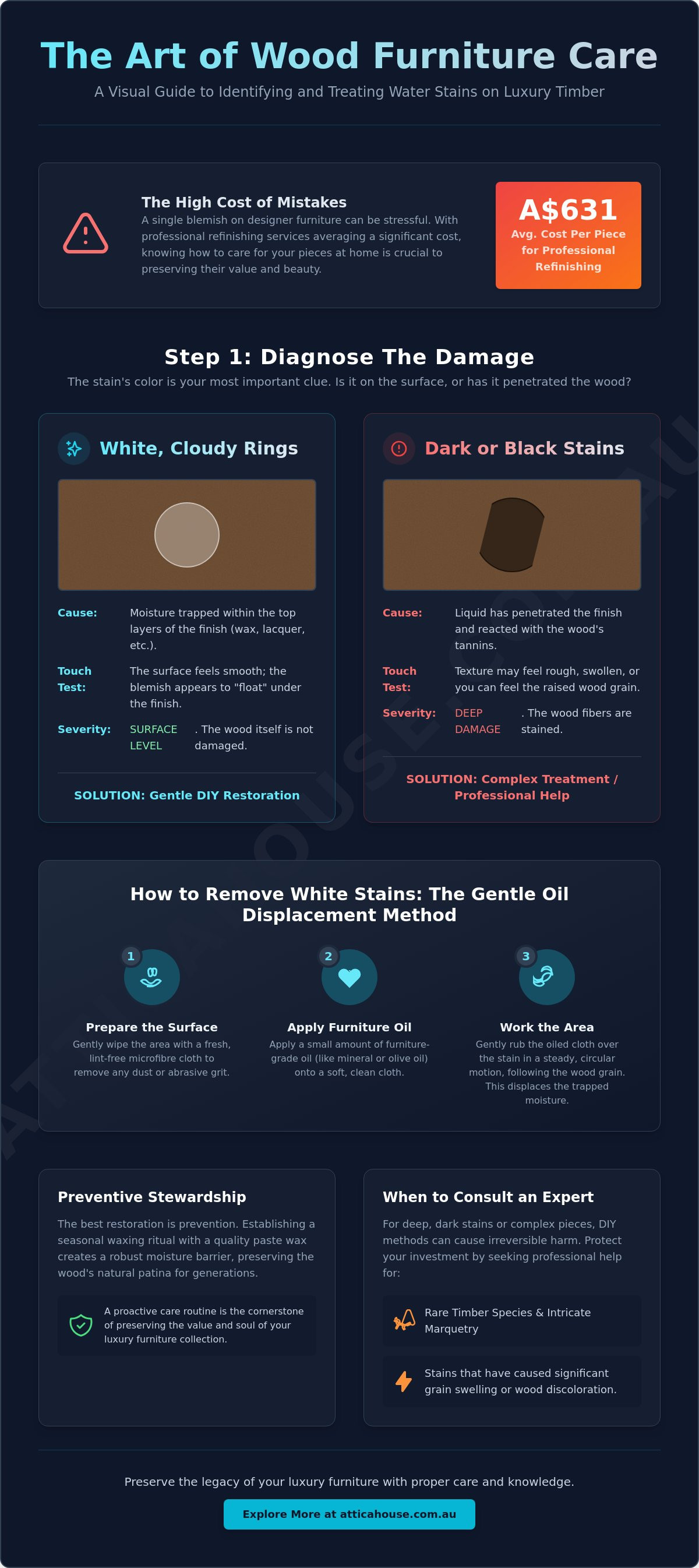
The first step in caring for designer wood furniture is a visual diagnosis. Not all blemishes are created equal. When you notice a mark on your coffee table or dining surface, the colour is your most vital clue. A white, cloudy ring is essentially a bloom of moisture trapped within the upper layers of the finish, such as wax, lacquer, or polyurethane. It hasn't reached the timber itself. In contrast, a dark stain indicates that liquid has breached the protective seal and reacted with the natural tannins in the wood fibres. This distinction dictates whether you're performing a gentle surface polish or a more intensive restoration to return the piece to its original lustre.
The Touch Test offers additional clarity. Run your fingertip lightly over the mark. If the surface feels smooth and the blemish appears to float beneath a clear layer, the finish is likely intact. If you feel a change in texture, grain swelling, or a slight roughness, the moisture has likely penetrated the timber. Understanding these nuances is a core tenet of professional furniture conservation, where the goal is always to preserve the original integrity and tactile quality of the piece.
The Anatomy of a White Ring
White rings or heat rings often occur when steam or hot vessels disrupt the bond of the finish. In Australian homes, fluctuating humidity levels can exacerbate this blush effect, particularly on high-gloss buffets & cabinets. The moisture becomes suspended in the finish, creating a foggy appearance that obscures the rich grain beneath. While these marks look alarming, they are generally surface-level issues that respond well to gentle oil displacement. Mastering the art of caring for designer wood furniture begins with this diagnostic clarity, saving you from unnecessary abrasive repairs.
When Damage Goes Deeper: Dark Stains
Dark stains represent a more complex challenge. When water sits long enough to bypass the sealant, it triggers a chemical reaction with the tannins found in premium timbers like oak or walnut. This oxidation turns the wood fibres grey or black, creating a permanent-looking shadow that disrupts the aesthetic harmony of the room. It's a signal that your piece’s protective barrier has failed. Unlike white rings, these blemishes require treatments that neutralise the reaction within the wood itself. If you notice the grain has raised significantly or the wood feels soft to the touch, it indicates structural timber distress rather than a simple surface blemish.
How to Remove White Water Stains: Gentle Restoration for Luxury Finishes
Restoring the pristine surface of a beloved piece is a meditative act of stewardship. When you discover a white ring, remember that it is merely moisture suspended within the protective coating, not a permanent scar on the timber itself. The process of caring for designer wood furniture requires a gentle hand and a patient approach. Before attempting any restorative technique, preparation is paramount. Begin by cleaning the surface with a fresh, lint-free microfibre cloth to remove any microscopic dust or grit. This simple step prevents abrasive scratching during the restoration process, adhering to the high standards often cited in professional guides on Cleaning Wood Furniture.
Once the surface is clear, you can proceed with confidence. If the blemish persists after a light dusting, it is time to move through a sequence of non-invasive methods designed to lift the "bloom" without compromising the integrity of the artisanal finish. Always assess the surface after each step. Knowing when the finish has reached its limit is vital to avoid thinning the protective layer unnecessarily.
The Oil Displacement Technique
Mild, oil-based substances act as effective moisture displacers because they penetrate the finish to reach the trapped water without disrupting the wood fibres. Apply a small amount of furniture-grade oil using a soft cloth in a steady, circular motion that follows the natural grain. This method is particularly effective for maintaining the deep, tactile quality of luxury furniture australia, where hand-rubbed finishes are common. You must remove any excess residue immediately to prevent the oil from softening the finish over time. If the mark begins to fade, you've successfully displaced the moisture.
Gentle Heat: The Evaporation Method
If oil alone does not suffice, controlled heat can often coax the moisture out. Set a hair dryer to its lowest possible heat setting to avoid melting delicate lacquers or causing the timber to expand too rapidly. Heat works by opening the pores of the finish to release trapped moisture. Keep the dryer in constant, rhythmic motion at least ten centimetres away from the surface. This movement is the secret to avoiding localised overheating and potential timber warping. Once the cloudiness vanishes, allow the area to cool completely before applying a high-quality beeswax. This final touch restores the depth and lustre of the finish, ensuring your piece continues to anchor your home with its quiet elegance. For those looking to expand their collection, exploring our range of designer coffee tables can offer fresh inspiration for a refined living space.
Treating Deep Dark Stains and Stubborn Timber Blemishes
While white rings are a surface-level concern, dark stains represent a deeper chemical dialogue between moisture and the soul of the wood. When liquid penetrates the protective barrier and meets the natural tannins within the timber, it triggers an oxidation process that turns the fibres a haunting shade of grey or black. Caring for designer wood furniture at this level requires more than a simple polish; it demands a patient, restorative approach that respects the original craftsmanship. You're no longer just cleaning a surface, you're performing a delicate intervention to neutralise oxidation and restore the wood's inherent warmth.
For the advanced enthusiast, oxalic acid serves as a powerful ally in neutralising these tannin-based reactions. It acts as a targeted bleach that lifts the darkness without stripping the wood of its character. However, this method requires a steady hand and a deep understanding of the piece's history. Before you begin, it's helpful to consult a Purdue University Extension guide on furniture care to understand the broader principles of preservation. If the stain covers more than a small fraction of the surface, or if the piece features intricate marquetry, the risk of an uneven finish increases significantly.
Spot Sanding and Feathering
Addressing a blemish often requires removing a small portion of the compromised finish. To avoid creating a visible "divot" or hollow in your furniture, utilise high-grit sandpaper, specifically 400-grit or higher. The secret lies in the art of feathering. Rather than focusing solely on the stain, gently sand in the direction of the wood grain, extending your strokes slightly beyond the blemish. This creates a seamless transition that allows the repair to vanish into the surrounding timber. Always maintain a light touch; your goal is to whisper across the surface, not to alter the structural silhouette of the piece.
Re-sealing and Colour Matching
Once the blemish is neutralised and the surface is smooth, the final act is restoring the protective seal. Choosing the correct medium is essential. Whether your piece originally featured a hand-rubbed oil, a traditional wax, or a modern polyurethane, you must match that factory sheen to maintain aesthetic harmony. Apply thin, successive layers rather than one heavy coat. This prevents a "built-up" or plastic appearance that can detract from the tactile luxury of the wood. Allow ample curing time, often up to 72 hours in the Australian climate, before returning the piece to daily use. This ensures the new barrier is robust enough to protect your sanctuary for years to come.
Preserving the Patina: Preventive Care and Environmental Stewardship
True stewardship is a quiet, daily practice. While the restoration techniques explored in previous sections offer a path back from damage, the highest expression of care lies in prevention. Wiping a spill within seconds is often the only intervention a piece truly needs. It stops moisture from ever beginning that journey into the finish or the grain. Caring for designer wood furniture is about creating an environment where beauty can endure without constant crisis. Small, intentional habits serve as the most effective shield for your investment.
The Ritual of Waxing and Polishing
Generic aerosol polishes often contain silicones that create a temporary, artificial shine; however, they eventually trap dust and build up a cloudy film. Instead, choose professional-grade beeswax or carnauba. These natural mediums nourish the timber and reinforce the moisture barrier. This ritual is especially vital for the pieces that anchor your most private spaces. Regular waxing protects the luxury bedroom ideas that transform a room into a sanctuary, ensuring your bedside tables and dressers retain their soft, tactile glow. A well-maintained surface invites the touch. It turns a physical object into a sensory experience of comfort and quality.
Environmental Stewardship
In Australia, the environment is a powerful force. Position your statement pieces away from direct sunlight to prevent UV rays from making finishes brittle or causing uneven fading. The cycles of air conditioning and heating are equally impactful. Timber is a living material that breathes, expanding and contracting as indoor humidity shifts. Rapid changes can lead to minute cracks in the finish, which later act as gateways for moisture. Using coasters, trivets, and elegant runners provides a necessary layer of protection for your surfaces during daily life. These aren't just accessories; they are essential tools for a blemish-free home.
Managing the internal climate of your home is a core part of caring for designer wood furniture. Maintain a steady humidity level where possible to ensure the timber remains stable. This prevents the structural stress that leads to warping or finish failure. To find pieces designed for both lasting elegance and robust longevity, explore our curated selection of designer furniture and begin curating your own timeless refuge.
The Art of Stewardship: When to Consult a Professional Restorer
True stewardship involves a deep understanding of your own hands and their limitations. While the rituals of daily maintenance and minor surface repairs are rewarding, certain moments require the steady, experienced hand of a professional. Caring for designer wood furniture is a lifelong commitment to preservation, and knowing when to step back is as vital as knowing when to intervene. If a blemish covers more than 20% of the visible surface, or if the liquid has caused the timber to swell and warp, the structural integrity of the piece is at risk. In these instances, a professional restorer can provide the precision needed to return the item to its original state without compromising its heritage.
Expert intervention is an investment in the future value of your collection. A master restorer does not merely hide a stain; they use traditional techniques to ensure the repair is chemically and aesthetically harmonious with the original finish. This level of care is essential for rare timber species or pieces featuring intricate marquetry, where a single misstep with a DIY solution could lead to permanent loss of detail. By choosing professional care for significant damage, you ensure that your designer investment remains a pristine anchor within your home for generations.
Identifying High-Value Finishes
Artisanal finishes like French polish or hand-rubbed oils are living layers that require specialised knowledge to restore. High-gloss piano finishes are particularly temperamental. Attempting a localised DIY repair on these surfaces often results in "ghosting," a faint, cloudy halo that appears around the repair site when viewed from certain angles. This effect is almost impossible to remove without a full, professional strip and refinish. Before you reach for the sandpaper, check your warranty. Performing self-repairs on new designer acquisitions can often void protection, making professional consultation the safer path for maintaining both the beauty and the security of your piece.
Investing in Longevity
The journey of curation begins with the act of careful selection. When you choose pieces crafted with superior finishes and robust materials, the long-term burden of care is significantly reduced. This commitment to quality often extends across the entire home environment. Just as the intricate weaves found in handcrafted rugs online australia offer a foundation of durability and grace, high-end furniture provides a sense of permanence. There is a profound peace of mind that comes from surrounding yourself with objects designed to age beautifully. These pieces do not just occupy space; they tell the story of a life well-lived, where every minor mark becomes part of a rich, personal patina. Embrace the lived-in luxury of your sanctuary, knowing that with the right balance of daily care and professional guidance, your home will remain a refined refuge for years to come.
Cultivating a Legacy of Design
We believe that high-end design should be both aspirational and attainable. Our expertly curated collections are chosen for their exceptional craftsmanship and longevity. We partner with Café Lighting & Living to ensure industry-leading quality in every detail. With Australia-wide delivery for even our most fragile statement pieces, your next heirloom is within reach. Explore our curated collection of luxury furniture designed for timeless elegance.
Embrace the journey of curation, and let your furniture age with the same grace and character as the life lived around it.
Frequently Asked Questions
Will mayonnaise really remove water rings from my wood table?
Mayonnaise can effectively remove white water rings because its oil content displaces moisture trapped in the finish. Apply a small amount to a soft cloth and dab it onto the mark. Let it sit for several hours or overnight before wiping it away with a clean, lint-free cloth. This domestic remedy mimics the professional oil displacement method, offering a gentle way of caring for designer wood furniture without using harsh chemicals.
How long should I leave toothpaste on a water stain?
You should leave non-gel toothpaste on a water stain for no more than one to two minutes. The mild abrasives in the paste help lift the bloom from the finish, but leaving it longer risks dulling the surface. Gently dab the paste onto the mark and wipe it away immediately with a damp cloth. Always follow up with a high-quality furniture wax to restore the protective seal and original lustre of your piece.
Can I use a hair dryer to get rid of a white heat mark?
A hair dryer is an excellent tool for evaporating the moisture trapped in white heat marks or blush effects. Set the device to its lowest heat setting and move it in a steady, rhythmic motion over the blemish. Keep the dryer at least ten centimetres from the surface to prevent the finish from melting or the timber from warping. This technique is particularly effective for high-gloss buffets where heat has disrupted the surface bond.
What is the best way to remove old, dried water stains from wood?
The best way to address old, dried water stains is through a gradual rehydration process using furniture-grade oils. If the mark has turned dark, it indicates the moisture has reached the timber and reacted with the tannins. In these cases, you may need to use a neutralising agent like oxalic acid or perform a light spot-sanding with high-grit paper. Always assess whether the damage requires professional intervention to ensure the long-term value of your designer investment.
Does vinegar damage wood furniture when used for cleaning?
Undiluted vinegar can damage wood furniture because its acidic nature can eat through delicate waxes and lacquers over time. If you must use it for cleaning, always dilute it with water and a small amount of oil to buffer the acidity. A safer alternative is using a dedicated wood cleaner or a simple damp microfibre cloth. Maintaining a pH-neutral environment is essential for preserving the tactile quality and longevity of luxury timber pieces.
Is it possible to fix a dark water stain without sanding the wood?
It is rarely possible to fix a dark water stain without some form of sanding or chemical neutralisation. Because the darkness is a result of oxidation within the wood fibres, surface-level polishing will not reach the source of the blemish. While oxalic acid can lift the colour, the finish must still be removed to allow the treatment to penetrate. Caring for designer wood furniture often means accepting when a professional restorer's tools are necessary.
How often should I wax my wood furniture to prevent water marks?
You should wax your wood furniture every three to six months to maintain a robust moisture barrier and a healthy patina. The frequency depends on the local Australian climate and the amount of daily use the piece receives. Regular application of carnauba or beeswax nourishes the timber and prevents minor spills from becoming permanent stains. This seasonal ritual serves as a meditative act of stewardship that keeps your sanctuary feeling refined and well-composed.
What is the difference between a water mark and a heat ring?
A water mark is caused by liquid moisture trapped in the finish, while a heat ring is created when heat or steam disrupts the bond of the protective coating. Both typically appear as white, cloudy blemishes on the surface. While their causes differ, both respond well to the gentle heat and oil displacement methods mentioned in this guide. Identifying the source helps you prevent future occurrences by using the correct coasters or trivets for hot vessels.