


Best Furniture for Open Plan Living: Curating a Refined Australian Sanctuary
Your expansive floor plan offers a sense of liberation, yet without a deliberate hand, that very openness can feel like a cold, echoing warehouse. It's unsettling to watch your favorite pieces look like they're floating aimlessly, or to feel a jarring disconnect between the lounge and the kitchen. Finding the best furniture for open plan living requires a shift in perspective. You aren't just decorating a room; you're composing a sanctuary where every element serves as the architecture of your daily life.
We understand that a true home should feel like a curated retreat, where luxury is both personal and lived-in. In this guide, you'll learn how to transform vast spaces into a series of sophisticated, cohesive zones using intentional design and high-quality craftsmanship. We'll explore how to use everything from grounding designer rugs to sculptural armchairs to create a seamless flow between your social and private areas. This journey into aesthetic selection will help you turn your open space into a refined Australian haven that reflects your unique story and provides a deep sense of internal balance.
Key Takeaways
- Master the art of spatial breathability by selecting the best furniture for open plan living that defines zones through silhouette and intention rather than physical walls.
- Use handcrafted designer rugs to anchor floating furniture arrangements, providing a tactile foundation that lends a sense of permanence to vast spaces.
- Maintain clear sightlines and a rhythmic flow across your sanctuary by prioritizing low-profile sofas and sculptural coffee tables.
- Discover how to use sophisticated console tables and buffets as transitional buffers to create a seamless, elegant bridge between your dining and lounge areas.
The Art of the Open Plan: Designing with Intention
An open floor plan is much more than a structural choice. It's a vast, light-filled canvas that invites you to express your personal narrative through the careful selection of objects. In modern Australian architecture, open-plan living has become the standard for luxury homes; however, the true mastery lies in achieving "spatial breathability." This isn't just about empty space. It's about the air that moves between a low-slung sofa and a sculptural armchair, ensuring the room feels expansive yet grounded. The best furniture for open plan living doesn't just fill a gap; it acts as functional art that defines the "Invisible Border" of a home without the need for restrictive walls.
The Challenge of the Great Room
Vast interiors often suffer from a "showroom" effect where pieces feel disconnected and temporary. This creates a sense of unease. A home should be a refuge, a place where you feel held and protected. To avoid a cold, warehouse atmosphere, you must identify natural focal points like a fireplace, a large window, or a statement chandelier. Once these anchors are established, you can begin to layer textures and forms that draw the eye inward. This creates pockets of intimacy within the larger volume, ensuring your home feels intentionally curated rather than accidentally filled.
Zoning: The Golden Rule of Open Living
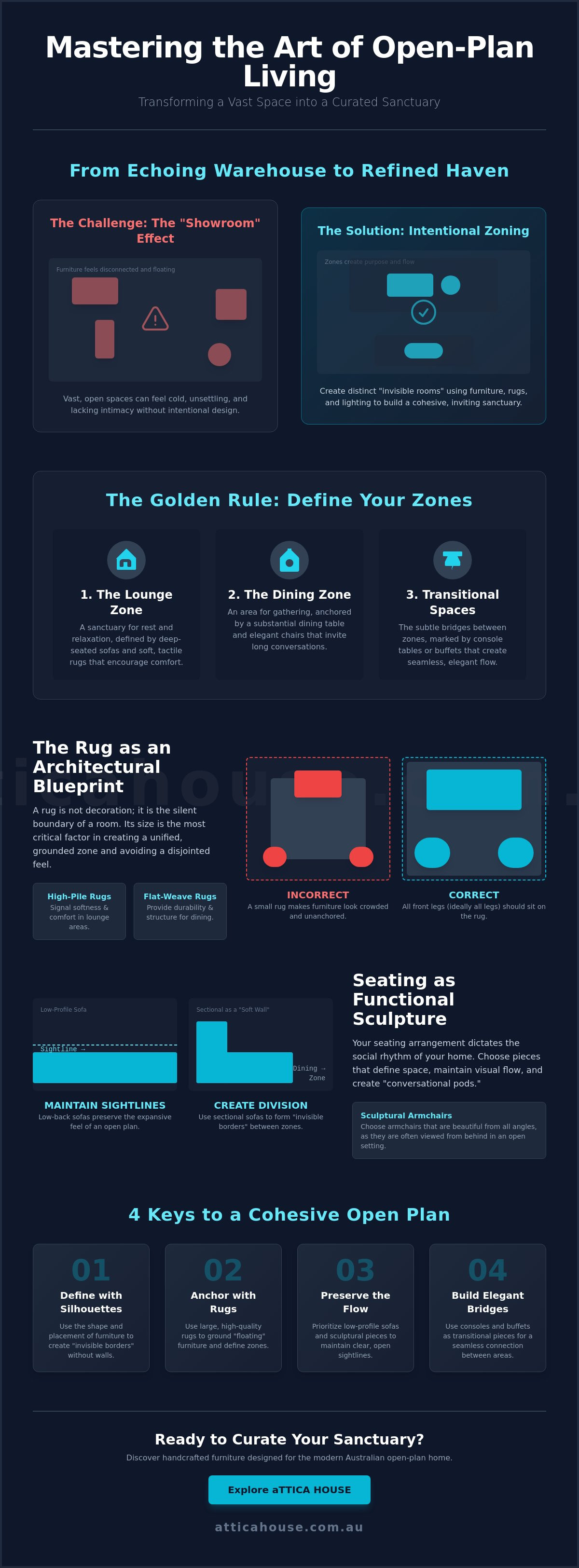
Successful design relies on creating distinct zones that communicate their purpose through silhouette and placement. The most effective sanctuaries are divided into three core areas that work in harmony:
- The Lounge Zone: A space for rest, defined by deep-seated sofas and soft, tactile rugs that encourage relaxation.
- The Dining Zone: An area of gathering, anchored by a substantial dining table and elegant chairs that invite long conversations.
- Transitional Spaces: The subtle bridges between zones, often marked by a sophisticated console table or a carefully placed buffet.
Lighting plays a vital role in reinforcing these visual boundaries. A grand chandelier hung over a dining table or a series of lamps in the lounge helps establish the mood for each specific area. By choosing the best furniture for open plan living with intentional silhouettes, you create a home that feels both grand and deeply personal. It's about finding that delicate balance where every piece has a purpose and a place to breathe.
Defining Zones with Sculptural Foundations
In a vast architectural space, the floor is your most significant landscape. Without a grounding element, even the most exquisite pieces risk looking like they're drifting in an ocean of hardwood or stone. Creating a sense of permanence requires a foundation that defines where one experience ends and another begins. The best furniture for open plan living relies on this interplay between weight and air, using tactile materials to signal a shift in mood from the social energy of the kitchen to the quiet refuge of the lounge area.
The Rug as an Architectural Blueprint
A rug is not merely a decorative layer; it is the silent boundary of a room. For a space to feel cohesive, size is the most critical factor. A common mistake is selecting a rug that is too small, which makes the furniture feel crowded and the room feel disjointed. Ensure at least the front legs of all seating, and ideally all four, sit firmly on the weave. This creates a unified island of comfort. When choosing handcrafted rugs online australia, consider how the pile height can differentiate zones. A plush, high-pile wool rug signals the softness of a relaxation area, while a flat-woven piece provides the structured durability needed for a dining foundation.
Sofas and Armchairs: Creating Conversational Pods
The layout of your seating dictates the social rhythm of your home. Selecting the best furniture for open plan living means looking for pieces that serve as functional sculpture. Large-scale sectional sofas are particularly effective as room dividers, acting as a soft wall that separates the lounge from a corridor or dining area. To maintain the spatial breathability mentioned earlier, prioritize sofas with low-back profiles. This allows the eye to travel across the room, preserving the architectural intent of the open plan. Following advice from interior designers, you can close a conversational pod by positioning a pair of armchairs opposite the sofa. Choose armchairs with sculptural silhouettes that look beautiful from every angle, as they're often viewed from behind in an open setting.
Texture is the final layer of this zoning strategy. Mixing a bouclé sofa with a velvet armchair creates a sensory depth that makes a large room feel intimate. These tactile choices invite you to linger and rest. If you're looking to anchor your own space, exploring a collection of sophisticated designer rugs and seating can provide the necessary weight to transform a house into a sanctuary. It's about more than just filling a room; it's about selecting pieces that resonate with your personal story and sense of calm.
The Visual Anchor: Statement Dining and Coffee Tables
If the designer rug acts as the architectural blueprint for your home, then your tables are the monuments that provide a sense of permanence. In an expansive floor plan, lightweight or flimsy pieces can easily disappear, leaving the room feeling transient and unsettled. Choosing the best furniture for open plan living requires a focus on materiality and weight. Solid stone, honed marble, and thick timber offer the visual gravity needed to stop the eye and define a space as a permanent destination for gathering or rest.
Materiality also serves as the cohesive thread that stitches different zones together. By repeating a specific finish, such as a particular marble vein or a warm oak tone, across both your dining and lounge areas, you create a rhythmic harmony. This intentional repetition ensures that even though the zones are physically separate, they belong to the same curated story. It's this subtle dialogue between pieces that transforms a house into a sophisticated sanctuary.
The Grand Dining Table
The dining area is often the heart of the Australian open-plan home, bridging the gap between the culinary energy of the kitchen and the relaxation of the lounge. To prevent this zone from feeling like an afterthought, you need a piece that commands attention. Statement Dining Tables crafted from enduring materials provide a sculptural focal point that anchors the entire room. Scale is vital here; the table must be large enough to hold its own against the surrounding negative space without obstructing the natural flow of traffic.
To maintain walkable paths, consider the following when selecting your dining suite:
- Tuck-in Profiles: Choose dining chairs with slim silhouettes that can be tucked fully under the table when not in use.
- Pedestal Bases: Tables with a central pedestal base rather than four corner legs offer more visual "air" and make it easier to navigate around the piece.
- Organic Shapes: Oval or round tables encourage a softer flow of movement, which is particularly effective in homes with many sharp architectural lines.
Coffee Tables: The Centrepiece of the Lounge
In the lounge zone, the coffee table serves as the ultimate luxury anchor. It's the piece that ties the seating arrangement together, turning a collection of sofas and armchairs into a singular conversational pod. When selecting the best furniture for open plan living, consider how the shape of your coffee table dictates the room's movement. A large, singular block of marble provides a bold, structured look, while nesting tables with varying heights offer a more layered and flexible aesthetic.
The beauty of a designer marble coffee table lies in the contrast it provides. Placing a heavy, cool stone surface atop the soft, tactile warmth of a handcrafted rug creates a sensory balance that is deeply satisfying. This interplay of hard and soft surfaces is a hallmark of refined design, ensuring your sanctuary feels both grounded and inviting. Whether you choose a singular statement piece or a curated cluster, the goal is to create a centrepiece that feels as much like a work of art as it does a functional surface.
Transitional Pieces: Buffets, Consoles, and Flow
The fluid nature of a grand room requires more than just large anchors; it demands connective tissue that guides the eye and the body through the home. Transitional pieces act as the sophisticated buffers that prevent zones from crashing into one another. While previous sections focused on the grounding weight of tables and rugs, the best furniture for open plan living often includes the more slender, graceful forms of consoles and buffets. These pieces provide a rhythmic flow, using consistent hardware and finishes to create a cohesive visual language that travels seamlessly from the kitchen to the lounge.
Maintaining this rhythm is about more than just matching colors. It's about the tactile repetition of materials. If your dining chairs feature brushed brass caps, selecting a console with similar metallic accents creates a subtle thread of luxury that binds the space together. This intentionality ensures that your home doesn't feel like a collection of disparate rooms, but rather a singular, thoughtfully composed sanctuary where every element belongs to the same story.
Consoles and Buffets as Room Dividers
A console table placed directly behind a floating sofa is a masterstroke of spatial design. It adds essential height to a low-profile seating arrangement and offers a surface for curated styling, such as tall lamps or organic ceramic vessels, which further define the lounge's boundary. Similarly, a buffet serves a dual purpose. It bridges the aesthetic gap between the utility of a kitchen and the formality of a dining area while providing elegant storage for heirloom pieces. Exploring a collection of Luxury Buffets & Cabinets allows you to select pieces that mirror the materiality of your dining table, reinforcing a sense of permanence. You should style these transitional pieces to reflect the zones they connect; perhaps a buffet holds crystal glassware on the dining side and a stack of textured art books on the side facing the lounge.
Wall Art and Verticals
When floor space is vast, the vertical plane often remains neglected, contributing to the echoing atmosphere of an uncurated room. Oversized wall art is the ultimate solution to grounding a high-ceilinged space. By creating a vertical focal point, you draw the eye upward, celebrating the volume of the architecture while making the living area feel more intimate and "held." Our guide to Statement Wall Art details how to choose pieces that resonate with your personal sense of calm. These visual anchors distract from floor-level clutter and expand the perceived boundaries of a zone, turning a simple wall into a gallery of curated expression.
To complete your vision of a cohesive, zoned sanctuary, shop our curated collection of transitional furniture and decor today and discover how intentional design creates a life well-lived.
Curating Your Sanctuary with Attica House
At Attica House, we believe that a home is an evolving reflection of the self. Finding the best furniture for open plan living is more than an exercise in spatial layout; it's an act of careful selection that prioritizes your personal story and long-term comfort. As a family-owned Australian brand, we bridge the gap between global aesthetic sensibilities and the unique, light-filled characteristics of the local environment. Our philosophy is rooted in the transformative power of design, aiming to help you compose a world where high-end craftsmanship and lived-in luxury coexist in perfect harmony.
We understand that the vastness of a great room can feel overwhelming. Our curated collections are designed to simplify the zoning process, offering a rhythmic symmetry that allows you to move through your home with a sense of calm. By choosing pieces that share a common DNA of quality and silhouette, you ensure that every zone, from the social heart of the dining room to the quiet refuge of the lounge, feels intentionally connected. This holistic approach to aesthetic selection is what transforms a house into a refined sanctuary.
A Curated Selection for Every Zone
Creating a cohesive furniture plan starts with identifying the pieces that will act as your functional art. Our collections feature an array of marble dining tables and sculptural buffets that provide the visual weight necessary to ground an open space. These aren't just objects; they're essential components of a meaningful life, chosen for their longevity and tactile quality. When you select a statement piece from our modern transitional or Hollywood Regency offerings, you're investing in a legacy of style that transcends fleeting trends. We encourage you to start with your largest anchors, such as a deep-seated sofa or a grand dining table, and layer outward with transitional consoles and wall art that speak to your internal balance.
The Luxury of Convenience
Bringing high-end design into your home should be a graceful experience from selection to installation. We offer Australia-wide delivery, ensuring that even the most fragile, bulky statement pieces are handled with the specialized care they deserve. This commitment to excellence provides peace of mind, allowing you to focus on the creative joy of curating your space. While we operate primarily as an online boutique to bring you a wider selection of the best furniture for open plan living, we invite you to visit our partner showroom in Sydney. There, you can experience the tactile quality and exquisite finishes of our collections firsthand, gaining the inspiration needed to complete your vision. Expert curation meets effortless accessibility, ensuring your journey toward a refined home is as seamless as the design itself.
Your sanctuary is waiting to be discovered. Discover the Attica House Collection and begin curating a home that resonates with beauty, comfort, and purpose.
Compose Your Australian Sanctuary
Transforming a vast, open floor plan into a cohesive sanctuary is a journey of intentional selection. You've discovered how the architecture of your interior relies on more than just walls. It's built through the grounding presence of handcrafted designer rugs and the sculptural silhouettes of low-profile sofas. By choosing the best furniture for open plan living, you create a home that flows with a natural rhythm, where every piece serves as both a functional object and a work of art. From statement marble dining tables to sophisticated transitional consoles, your space can finally feel like the refined refuge you deserve.
At Attica House, we provide the expertly curated designer pieces needed to bring this vision to life. Our redefined luxury aesthetics are crafted to help you tell your personal story with clarity and grace. With Australia-wide delivery, we ensure your selections arrive with the specialized care required for high-end statement furniture. We invite you to explore our curated collection of luxury furniture for open plan living and begin the rewarding process of shaping your private world. Your home is a reflection of your internal balance; let it be beautiful, intentional, and uniquely yours.
Frequently Asked Questions
What is the best rug size for an open plan living room?
The rug should be large enough to accommodate at least the front legs of all seating pieces within the zone. In a grand open-plan space, a generous rug acts as a tactile boundary that anchors your furniture island and provides a sense of permanence. If the rug is too small, your lounge will feel fragmented and lost within the larger room volume, disrupting the internal balance of the home.
How do I separate my living and dining room without walls?
Use furniture silhouettes and varied textures to create visual borders that define the purpose of each zone. A low-profile sofa or a substantial buffet can act as a soft divider that preserves sightlines while establishing a clear transition between spaces. This approach ensures the room remains airy and breathable but feels intentionally organized into distinct, functional sanctuaries for relaxing and entertaining.
Should all furniture in an open plan space match?
No, your furniture should harmonize rather than strictly match to avoid a sterile, showroom atmosphere. The best furniture for open plan living relies on a shared material palette or a consistent design language, such as repeating a specific wood tone or metallic accent. This creates a rhythmic thread that connects different zones while allowing each sculptural piece to tell its own unique story within the sanctuary.
How do I choose a sofa that doesn’t block the room flow?
Select a sofa with a low-back profile and slender legs to maintain visual transparency across the expansive floor plan. Positioning a sectional so its back faces the kitchen can create a natural border that redirects traffic without closing off the space entirely. This ensures the lounge remains a private retreat for rest while keeping the overall architecture of the best furniture for open plan living connected and fluid.
Can I mix different wood or stone finishes in one open space?
You can certainly mix wood or stone finishes as long as there is a dominant material to provide a sense of grounding. Pairing a honed marble coffee table with a warm oak dining table creates a sophisticated contrast that adds visual depth to the room. The key is to balance hard and soft surfaces, ensuring the different textures complement each other rather than competing for attention in the light-filled space.
What is the best way to light an open plan living area?
Use layered lighting to reinforce the different zones and create a sense of intimacy within the larger volume. A grand chandelier over the dining table establishes a clear focal point for gathering, while floor lamps and wall sconces in the lounge create a softer, more evocative mood. This variety allows you to adjust the atmosphere of each area independently, reflecting the natural shift from social energy to quiet rest.
How do I make a large open plan room feel cozy?
Introduce rich, tactile textures like bouclé, velvet, and high-pile wool to absorb sound and add physical warmth to the environment. Large-scale wall art and designer rugs also help to ground the room, making expansive areas feel more intimate and held. These sensory layers transform a potentially cold environment into a welcoming sanctuary that feels both grand in scale and deeply personal in comfort.
Are console tables necessary in an open plan layout?
Console tables are highly beneficial transitional pieces that add both function and a sophisticated buffer between your social zones. Placed behind a floating sofa, a console provides a surface for lamps and curated decor, which helps to ground the seating arrangement and add essential height. It's an elegant way to bridge the gap between areas, ensuring the transition between your lounge and dining space feels intentional and polished.