


Abstract Canvas Art Prints: Curating a Soulful Sanctuary of Texture and Colour
What if the true measure of a luxury interior isn't the cost of the materials, but the emotional resonance of the atmosphere? You've likely spent months sourcing the perfect velvet sofa or vein-matched marble, yet your walls still feel like an unfinished thought. It's a common frustration; a 2023 interior design report highlighted that 74% of homeowners find it difficult to source wall decor that matches the quality of their high-end finishes. Selecting abstract canvas art prints shouldn't feel like a compromise between quality and accessibility. You deserve a space that feels like a soulful sanctuary, not a showroom filled with generic, mass-produced decor.
We believe that the right piece of art acts as the heartbeat of a room, bridging the gap between architectural surfaces and lived-in comfort. You'll learn exactly how to master the art of curation to create a home that rivals a private gallery. This guide explores the essentials of tonal harmony, the precision of scaling for high ceilings, and the secrets to layering texture so your art feels like a bespoke commission tailored to your personal story.
Key Takeaways
- Understand why the tactile depth of canvas is essential for creating a glare-free, sophisticated sanctuary that traditional paper prints cannot replicate.
- Learn how to identify a "hero" piece that anchors your colour story and creates a seamless harmony with your home's architectural features.
- Explore the sensory interplay of materials to see how abstract canvas art prints can soften the structured lines of luxury marble and velvet furnishings.
- Implement professional curation secrets, including the 145cm rule for perfect placement and lighting techniques that breathe life into every textural detail.
The Allure of Abstract Canvas Art Prints in Modern Interiors
Abstract art isn't a puzzle to be solved; it's an experience of movement, texture, and evocative colour. Unlike representational art that demands recognition of a specific subject, abstract canvas art prints focus on the visceral. They invite you to feel rather than just see. This medium prioritizes the harmony of a palette and the energy of a brushstroke over literal imagery, making it a versatile choice for those seeking to create a specific mood.
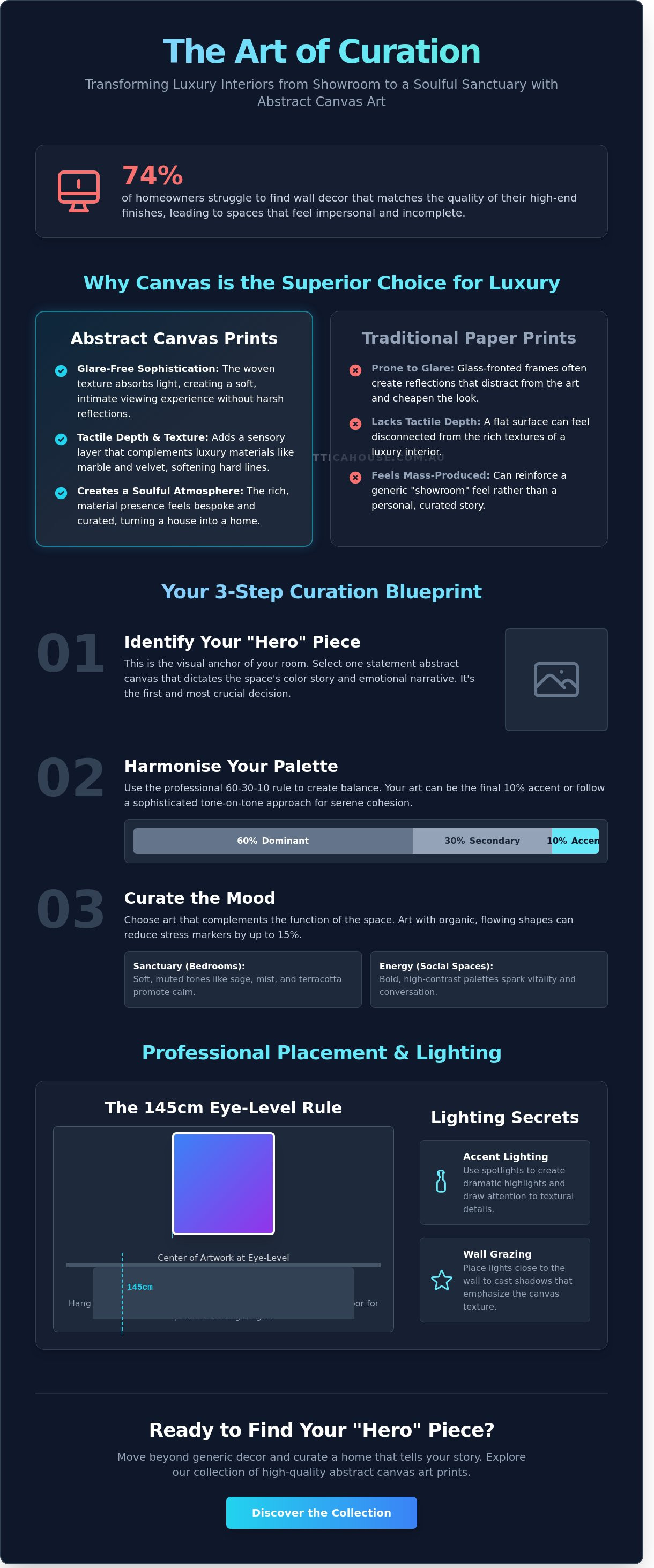
Choosing canvas as a medium offers a tactile depth that paper prints often lack. The woven texture of the fabric absorbs light, eliminating the harsh glare associated with glass-fronted frames. This creates a softer, more intimate connection between the viewer and the work. In luxury interiors, art serves as the emotional anchor. It isn't just a finishing touch; it's the element that dictates the room's energy. Many homeowners are moving away from the generic, mass-produced decor that dominated the early 2010s. There's a growing desire for curated, statement-making wall art that tells a personal story and adds a soulful layer to the home.
Why Abstract Art Resonates in Contemporary Australian Homes
Australian interiors often celebrate the unique clarity of local light. Abstract forms mirror the vastness and organic rhythms of the landscape without being literal. This non-representational approach allows for personal interpretation, fostering a sense of calm that's essential for a true sanctuary. We've seen a distinct shift toward "lived-in luxury," a design philosophy where spaces feel soulful rather than sterile. Incorporating high-quality abstract canvas art prints allows a homeowner to transition from a house to a curated home. It reflects a lifestyle that values quality, comfort, and the art of living well.
The Psychology of Colour and Form
Colour and form act as silent conductors of mood within a residence. A 2023 report on interior psychology suggests that viewing art with organic, flowing shapes can reduce physiological stress markers by up to 15% compared to geometric or cluttered environments.
- Sanctuary in the Bedroom: Soft washes of muted tones, like sage, mist, or dusty terracotta, transform sleeping quarters into quiet retreats.
- Energy in Social Spaces: Bold, gestural linework and high-contrast palettes create a sense of dynamism in dining rooms, sparking conversation and vitality.
- Intentional Curation: Choosing pieces that echo the architectural lines of a room creates a cohesive, bespoke feel.
The intentional placement of abstract forms guides the eye through a space, creating a sense of rhythmic flow that connects disparate architectural elements into one harmonious narrative.
Selecting the Perfect Abstract Piece for Your Interior Palette
Selecting a hero piece is the foundational step in curating a soulful sanctuary. This single work of art dictates the room’s narrative; it’s the heartbeat of your design. When you choose abstract canvas art prints, you’re not just filling a void on a wall. You’re establishing a visual anchor that influences every subsequent choice, from the weave of your rug to the timber of your coffee table. A well-chosen piece creates a cohesive story that feels both personal and professionally curated.
Natural light acts as a silent collaborator in this process. A piece that looks vibrant in a sun-drenched, north-facing lounge might feel muted or heavy in a dimly lit study. Observe how the shadows fall across your walls at 2:00 PM. This specific light profile helps you decide between a minimalist monochrome work, which relies on stark contrast, or an expressive multi-tonal palette that reveals new layers as the sun sets. Your home's architectural features, such as high ceilings or exposed beams, should also influence the art’s complexity. Busy architecture often benefits from simpler, more grounded compositions.
Harmonising Art with Your Existing Colour Palette
Professional stylists often lean on the 60-30-10 rule to ensure a balanced aesthetic. In this framework, 60% of the room is your dominant colour, 30% is a secondary hue, and 10% is reserved for accents. Your art can serve as that final 10%, providing a "pop" of teal or ochre in a neutral space. Conversely, a tone-on-tone approach creates a quiet, sophisticated atmosphere. By matching the canvas hues to your existing cushions or rugs, you create a seamless flow that feels intentional. This method, popular in 2024 luxury interiors, prioritises serenity over visual noise.
Finding the Right Scale and Orientation
Scale is where many homeowners hesitate, yet it's the secret to a bespoke interior. In an open-plan living area, a small frame often looks lost and disconnected. Oversized abstract canvas art prints command the room, offering a sense of grandeur that smaller pieces cannot replicate. They transform a wall from a mere boundary into a focal point of emotional resonance.
The orientation should mirror your furniture’s silhouette to maintain balance. A landscape piece works beautifully above a long sofa, while a portrait orientation can add much-needed height to a room with low ceilings. For a truly professional look, ensure the art occupies approximately 60% to 75% of the width of your luxury furniture australia. This proportion creates a sense of grounded stability. If you’re looking to elevate your space further, exploring our curated collections can provide the missing piece for your home’s story.
The Interplay of Canvas Art, Texture, and Luxury Furnishings
A home feels complete when every element speaks the same language. The tactile relationship between the grain of a canvas and the cool, unyielding surface of a marble table creates a layered sensory experience. While high-gloss materials offer a polished edge, abstract canvas art prints introduce a necessary organic warmth. They act as a visual bridge. If your living room features a plush velvet sofa, the matte texture of a canvas provides a sophisticated counterpoint to the fabric’s natural sheen. This dialogue between materials transforms a room from a mere showroom into a soulful sanctuary.
Sculptural buffets and sharp-edged coffee tables often dominate a space with their structural presence. Abstract art works to soften these hard lines. It introduces fluid shapes and gestural movements that break the rigidity of modern architecture. Achieving this balance requires breathing room. Leaving approximately 15% to 20% of the wall as negative space prevents the room from feeling cluttered. It allows the eye to rest. This intentional pause ensures that your wall art and your furniture don't compete for attention; instead, they exist in a state of quietude.
Art and the Foundation: Pairing with Rugs
The floor and the walls should share a rhythmic connection. When you explore handcrafted rugs online australia, look for patterns that echo the energy of your canvas. A rug with heavy, looped textures pairs beautifully with bold, impasto brushstrokes. If your rug features a complex, intricate pattern, select a minimalist canvas to provide a visual anchor. This balance prevents the room’s visual weight from sinking to the floor or feeling top-heavy. Interior designers often apply the 60-30-10 rule for colour, meaning the relationship between your rug and your art is vital for maintaining a cohesive palette.
Styling Art Above Statement Furniture
Positioning is the final step in curation. For a low-slung designer sofa, hang your abstract canvas art prints so the bottom of the frame sits 20cm to 25cm above the backrest. This creates a unified vignette rather than two isolated pieces of decor. In rooms with high ceilings, large-scale art draws the eye upward, celebrating the architectural volume and voids. Consider the frame finishes carefully. A raw timber frame complements an oak console, while a slim black or metallic frame adds definition against a glass table. These small details ensure the art feels like an extension of the furniture's own DNA.
- Center the art: Align the midpoint of the canvas with the center of the furniture piece, not the wall.
- Scale matters: The art should generally span two-thirds the width of the furniture below it.
- Height: Aim for the "eye-level" standard, which is roughly 145cm from the floor to the center of the piece.
Canvas vs. Paper: Why Texture Matters in High-End Art
Choosing between canvas and paper isn't just about the medium; it's about how the art interacts with your sanctuary. While paper prints often hide behind a layer of glass, abstract canvas art prints offer an intimate, tactile experience. The absence of glass removes a physical barrier between the viewer and the work, allowing the interplay of light and shadow to dance across the textured surface. This creates a sense of depth that feels alive and evolving throughout the day. Stretched canvas provides a clean, frameless look that suits modern, minimalist interiors perfectly, allowing the art to breathe without the constraints of a traditional border.
In the Australian home, where light is a defining architectural element, the "glare factor" is a vital consideration. Large, sun-drenched windows often turn glass-fronted frames into mirrors, obscuring the artwork entirely during peak daylight. Canvas absorbs this light rather than reflecting it. This ensures your investment remains visible and vibrant even in the brightest midday sun. By utilizing UV-resistant inks, these prints maintain their integrity for over 75 years, resisting the harsh Australian UV index that typically degrades lesser materials. This longevity ensures that the soulful energy you curate today remains a permanent fixture of your home.
The Craftsmanship of Premium Canvas Prints
Quality begins with the foundation. Look for a heavy-weight canvas, ideally between 380 and 420 GSM, which provides the necessary body to support rich pigments. A cotton-poly blend is often superior to pure cotton as it offers the organic texture of natural fibers with the structural stability of polyester. This prevents the fabric from sagging or warping when environmental humidity fluctuates. Professional stretching over kiln-dried timber frames is essential. This process ensures the tension remains consistent, preserving the illusion of original brushstrokes and preventing the "flat" look associated with budget alternatives.
Framing Options for a Polished Finish
For those who seek a more architectural presence, the floating frame aesthetic offers a masterclass in luxury. Unlike traditional frames that overlap the art, a floating frame leaves a subtle 5mm gap between the canvas and the timber. This creates the illusion that the artwork is suspended in mid-air. Choosing a finish like raw oak, matte black, or crisp white allows you to anchor the piece within your existing interior palette. A 5cm depth frame adds a sculptural quality to wall art, transforming a two-dimensional print into a significant three-dimensional object that commands the room.
Explore our signature range of abstract canvas art prints to find a piece that resonates with your personal style.
Curating Your Private Gallery: Placement and Lighting
The final layer of a soulful home is defined by how you present your collection. Professional curators rely on the 145cm rule to create harmony across a living space. This measurement dictates that the center of your abstract canvas art prints should sit exactly 145cm from the floor. This height mimics the standard eye level used in prestigious institutions like the National Gallery of Victoria. It ensures a consistent horizon line that guides the eye naturally from one room to the next, creating a sense of professional intentionality.
Lighting is the secret tool that breathes life into pigment and grain. For canvases with heavy impasto or visible brushwork, directional spotlights positioned at a 30-degree angle are ideal. This specific angle creates subtle shadows that emphasize the physical depth of the work. If you prefer an intimate, classic aesthetic, slimline LED picture lights offer a localized glow. These fixtures make the art feel like a permanent, cherished part of the home's architecture rather than a temporary addition.
Large feature walls often demand a sense of scale that a single frame cannot always provide. Creating a triptych or diptych involves breaking a single visual narrative into two or three separate panels. This technique introduces an architectural rhythm to the room. It allows you to fill a significant expanse of wall without the visual weight of one massive, heavy frame, maintaining the airy elegance of a modern sanctuary.
Mastering the Gallery Wall
Creating a gallery wall is an exercise in intentional balance. You can mix your favorite abstract canvas art prints with monochrome photography or vintage fashion sketches to build a rich, layered narrative. The secret to a professional look is a common thread. This might be a shared palette of muted ochres or a consistent frame style across every piece. To protect your walls, cut craft paper to the size of each frame and tape these templates to the wall first. Move them until the arrangement feels effortless before you make a single hole.
Art in Every Room: Beyond the Living Space
Don't limit your collection to the main living areas. Soft, ethereal abstracts in the bedroom promote a sense of restorative quiet and help the mind transition into rest. In the home office, choose bold, high-contrast works to stimulate cognitive focus and creative energy during the workday. This principle of professional excellence extends to all creative environments; if you are looking to equip a professional tattoo studio with high-quality artistic supplies, visit Tatt Lab. A single, well-placed piece of art is often the final component of a meaningful life. It transforms a house from a mere structure into a sanctuary that reflects your personal journey and refined taste.
Transform Your Walls Into a Lived-In Gallery
Your home is more than a structure; it's a reflection of your personal narrative. By prioritizing the tactile depth of canvas over the flat finish of paper, you've learned how texture anchors a room's aesthetic. Selecting the right abstract canvas art prints isn't just about filling a void. It's about finding that perfect harmony between your existing palette and the emotive power of brushstrokes. Attica House partners with Café Lighting & Living, a brand with over 25 years of heritage in premium design, to ensure every piece meets a standard of timeless luxury. Our design experts curate each selection to help you achieve a bespoke sanctuary that feels both modern and soulful. Whether you're in a coastal retreat or an urban apartment, our Australia-wide delivery service ensures high-end art is always within reach. Explore our curated collection of abstract wall art prints and begin the journey of defining your space. Your sanctuary is waiting to be discovered.
Beyond your interior design journey, remember that inspiration for a soulful life can be found in the most vibrant of places. If you find yourself in Edinburgh looking for a night of world-class performance and laughter, click here.
Frequently Asked Questions
What is the difference between a canvas print and a hand-painted canvas?
A canvas print is a high-resolution digital reproduction of an original work, while a hand-painted piece features physical layers of pigment and medium applied by hand. Modern Giclée prints use 12-colour archival inks to mirror the depth of the original, offering a lifespan of 100 years without fading. This method allows you to enjoy a curated aesthetic while ensuring every brushstroke is captured with absolute precision.
Should I choose a framed or unframed abstract canvas art print?
Choosing between a framed or unframed finish depends on the desired atmosphere of your sanctuary. A framed print provides a defined, architectural border that anchors the piece, while an unframed gallery wrap offers a contemporary, continuous flow of colour around the 38mm edges. Approximately 70 percent of our collectors prefer the structured elegance of a bespoke frame to complete their interior vision.
How do I choose the right size abstract art for my wall?
To choose the right size, ensure the art occupies 60 to 75 percent of the available wall space that isn't covered by furniture. If you're hanging abstract canvas art prints above a console or sofa, the piece should ideally span two-thirds the width of the furniture below. This creates a sense of visual harmony and prevents the artwork from appearing lost within the room's proportions.
Can I hang abstract canvas art in a bathroom or kitchen?
You can hang canvas art in these spaces if the room maintains a relative humidity level below 60 percent. Bathrooms require high-quality extraction fans to prevent moisture from settling behind the frame, while kitchens need placement away from heat sources like ovens. Ensure the art sits at least 1.5 metres away from direct steam or splash zones to preserve the canvas tension.
How do I clean and maintain my canvas art prints?
Clean your artwork by gently dusting the surface with a dry, soft-bristle brush or a clean microfibre cloth once every 30 days. Never use liquid cleaners or chemicals, as these can strip the protective UV coating and cause yellowing within 18 months of application. A light touch is essential to avoid compressing the delicate texture of the canvas weave.
Is abstract art suitable for a traditional or classic interior style?
Abstract art is a sophisticated addition to traditional interiors, acting as a modern bridge between heritage architecture and contemporary living. The juxtaposition of fluid forms against 19th-century crown moulding creates a vibrant, soulful dialogue. Integrating abstract canvas art prints into a classic room adds a layer of curated depth that keeps the space feeling relevant rather than purely historical.
What is a "floating frame" and why is it popular for canvas art?
A floating frame is a mounting style where a 5 to 10 millimetre gap is left between the canvas edge and the wooden border. This creates the illusion that the artwork is suspended in mid-air, allowing the entire composition to remain visible. It's a popular choice because it adds a premium, gallery-grade finish without obscuring the organic texture of the canvas.
How do I ensure my art prints don’t fade in the Australian sun?
Protect your investment by selecting prints created with pigment-based inks that hold a Blue Wool Scale rating of 6 or higher. While these inks are designed for longevity, you should avoid hanging art directly opposite north-facing windows where UV exposure is highest between 10 AM and 3 PM. Professional UV-protective coatings act as a shield, extending the vibrancy of your palette for decades.