


The Art of Selection: How to Choose a Rug That Anchors Your Sanctuary
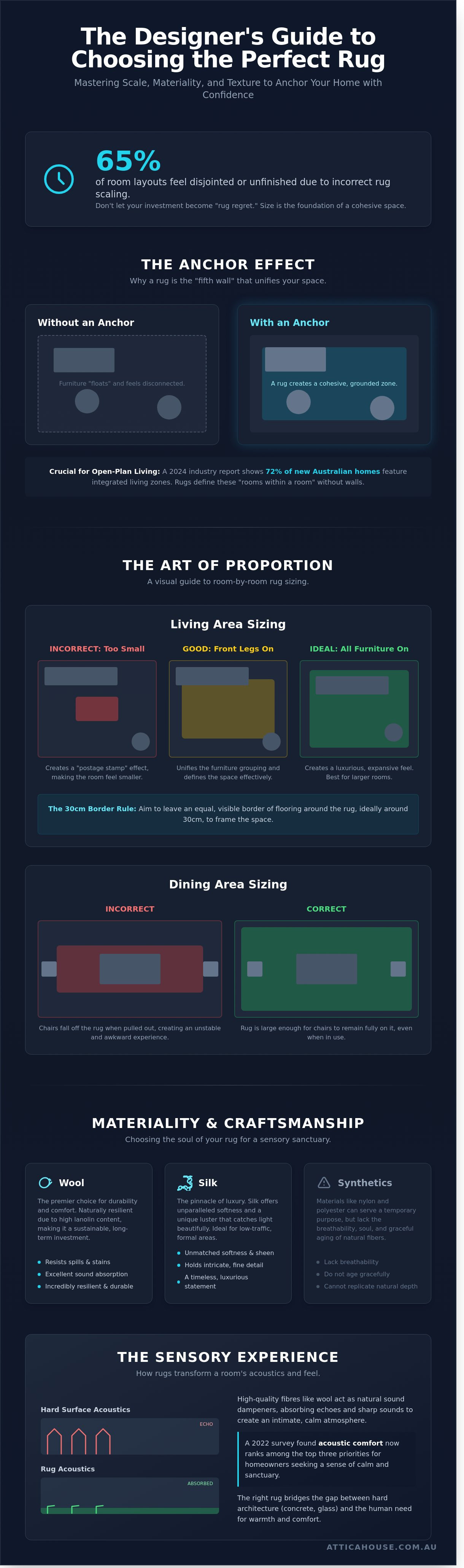
What if the most significant design decision you make this year isn't the sofa or the bespoke marble dining table, but the foundation lying quietly beneath them? It's a common frustration for Australian homeowners; you invest in beautiful pieces only to find the room feels disjointed or cold. Recent design surveys suggest that 65% of room layouts feel unfinished due to incorrect rug scaling. You've likely felt the sting of rug regret after realizing a 2x3 metre piece looks like a postage stamp in an expansive living area. Understanding how to choose a rug is less about following rigid rules and more about mastering the subtle interplay of texture and scale.
We believe your home should be a curated sanctuary that reflects your personal story. In this guide, we'll share the designer principles of materiality, proportion, and texture to help you select a handcrafted piece that feels both luxurious and lived-in. You'll gain a clear framework for sizing that eliminates the typical guesswork associated with large-scale floor coverings. We'll also explore high-performance materials that withstand daily life without sacrificing elegance. From ensuring your rug complements a statement marble table to mastering the 30cm border rule, you're about to discover how to anchor your space with confidence.
Key Takeaways
- Discover why the rug is considered the "fifth wall" of an interior and how it provides the essential grounding required to anchor furniture in open-plan Australian homes.
- Explore the sensory hierarchy of premium materials, from the luster of silk to the resilience of wool, and why hand-knotted craftsmanship is a timeless investment for your sanctuary.
- Master the art of proportion by learning how to choose a rug that follows the "Golden Rule" of sizing to ensure your space feels expansive rather than fragmented.
- Uncover designer principles for balancing palette and texture, whether you are curating a room around a statement piece or seeking a final element to unify a disparate aesthetic.
- Understand how a bespoke curation of global design influences can be tailored to the unique quality of Australian light to create a deeply personal and harmonious interior.
The Philosophy of the Rug: Why Every Sanctuary Needs an Anchor
The floor is the most expansive, yet frequently neglected, surface in any interior. At Attica House, we view this space as the fifth wall. It's a canvas that demands as much curation as the art hanging at eye level. When you begin the process of learning how to choose a rug, you aren't just shopping for a floor covering. You're selecting the foundation for your home's emotional climate. A room without a rug often feels unfinished, echoing with a hollow coldness that even the finest furniture cannot fully mask.
In luxury interior design, the Anchor Effect is the deliberate use of a textile foundation to unify disparate furniture elements into a singular, cohesive island of intentionality. This concept is vital in the modern Australian home. Open-plan living has become the standard, with a 2024 industry report indicating that 72 percent of new residential builds in Sydney and Melbourne prioritise integrated living, dining, and kitchen zones. Without a rug to provide gravity, a sofa and a pair of armchairs simply float. They look adrift in a sea of timber or polished concrete. A well-proportioned rug pulls these pieces together, creating a defined "room within a room" that feels secure and grounded.
The psychological impact of this grounding cannot be overstated. There's a profound sense of relief that occurs when we step onto a soft surface. It signals to the nervous system that we've transitioned from the high-traffic transit zones of the house into a space of rest. Mastering how to choose a rug involves balancing this psychological need for comfort with the architectural requirements of your floor plan. It's the difference between a house that's merely furnished and a home that's soulfully composed.
The Emotional Resonance of Texture
Design is a sensory experience that extends far beyond the visual. The tactile nature of a rug is what truly transforms a house into a sanctuary. A 2022 survey by the Australian Design Review found that acoustic comfort now ranks among the top three priorities for homeowners seeking a sense of calm. High-quality fibres are essential for this. Developing a deeper understanding of rug materials allows you to select pieces that do more than look beautiful; they absorb the sharp edges of sound. A thick wool pile or a dense silk blend dampens echoes, creating an intimate atmosphere where conversation flows naturally. This tactile softness provides a necessary counterpoint to the digital, high-speed world outside your front door.
Bridging the Gap Between Architecture and Comfort
Modern Australian architecture often celebrates hard lines and raw materials like glass, steel, and stone. While these elements are striking, they can feel clinical if left unsoftened. Rugs act as the essential bridge between these rigid architectural features and the human need for warmth. They allow you to define specific functional zones, such as a reading nook or a formal dining area, without the need for physical walls that block the flow of light. Your choice of rug also serves as a reflection of your personal narrative. Whether it's a bespoke hand-knotted piece or a contemporary minimalist design, the rug is a curated expression of your style that brings harmony to the structural elements of the building. It turns a vast, cold space into a series of meaningful, lived-in moments.
Materiality and Craftsmanship: Choosing the Soul of Your Rug
A rug is the silent anchor of a room. Selecting the right material is just as vital as knowing how to choose a rug that fits your floor plan. Natural fibers like wool, silk, and jute occupy the peak of the sensory hierarchy. They offer a depth of character that synthetic alternatives simply can't replicate. While nylon or polyester might serve a temporary purpose, they lack the breathability and soul found in organic materials. Choosing with intent means looking for pieces that age with grace rather than those destined for a landfill after a few seasons of wear.
In Australian living areas, New Zealand wool is a premier choice for its high lanolin content. This natural coating makes the fibers resilient against spills and heavy foot traffic. It's a sustainable investment that manages moisture and resists staining naturally. For a home to feel like a sanctuary, the textures must be authentic. Handcrafted production carries an emotional weight. The artistry behind each thread connects your modern space to ancient traditions. When you invest in a quality piece, you're not just buying decor; you're preserving a legacy of textile art.
Hand-Knotted vs. Hand-Tufted: Understanding the Build
Hand-knotted rugs represent the pinnacle of textile art. Each individual knot is tied by hand on a loom, a process that can take 4 to 12 months for a single piece. This labor-intensive method ensures the rug lasts for generations. In contrast, hand-tufted rugs use a tool to push yarn through a canvas backing. They're beautiful but have a shorter lifespan, often around 7 to 10 years. For those interested in understanding rug craftsmanship and its historical depth, the distinction lies in the structural integrity of the weave. You can explore our detailed Hand-Knotted vs Hand-Tufted Rugs comparison to see which build suits your lifestyle. The subtle "imperfections" in a hand-knotted piece aren't flaws. They're the hallmark of a bespoke creation that adds unique character to your home. While a tufted rug might cost A$800, a hand-knotted heirloom at A$4,000 offers a lifetime of value.
Natural Fibers for the Australian Climate
Our coastal regions and sun-drenched suburbs demand breathability. Cotton and wool regulate temperature naturally, keeping spaces cool in summer and warm in winter. This thermal regulation is essential for maintaining comfort in open-plan Australian homes. How to choose a rug for high-traffic zones often leads designers back to Jute or Sisal. These fibers provide an earthy, organic texture that feels "lived-in" and unpretentious. They're incredibly durable, though they feel coarser underfoot than plush wool.
- Wool: Durable, stain-resistant, and perfect for lounge rooms.
- Jute/Sisal: Ideal for entries or under dining tables where texture is key.
- Silk/Viscose: These materials add an ethereal sheen to master suites.
- Cotton: A lightweight, casual option for laundries or playrooms.
In formal dining rooms or master suites, silk and viscose add a sophisticated glow. These materials catch the light beautifully, creating a sense of quiet opulence. They're softer and more delicate, making them perfect for "shoes-off" zones. To find the perfect balance of tactile luxury and daily durability, browse our curated collection of natural fiber rugs. Each material tells a different story. Your choice defines the atmosphere of your sanctuary.
The Art of Proportion: A Room-by-Room Sizing Guide
Choosing a rug is an exercise in spatial harmony. A common mistake is selecting a piece that's too small, creating a "floating island" effect where the rug feels disconnected from the walls and furniture. In high-end design, the golden rule is that larger is almost always better. A generous rug grounds the room, making the space feel expansive and intentional. Before you commit to a purchase, use blue painters tape to mark out the dimensions on your floor. This simple 10 minute exercise allows you to visualize the scale and flow of the room before investing A$3,000 or more in a bespoke piece.
Living Room Layouts: Anchoring the Social Core
The living room serves as the heart of the home, requiring a foundation that feels both plush and proportional. When deciding how to choose a rug for this space, consider the "Front Legs Only" versus the "All Legs On" framework. For a contemporary look, placing the front legs of your luxury sofas and armchairs on the rug creates a sense of connection. However, for truly grand living spaces, the "All Legs On" rule is the definitive standard for luxury; every piece of furniture sits entirely within the rug's perimeter to define a clear, sophisticated zone. Ensure your coffee table has at least a 30cm to 45cm border of rug visible on all sides to maintain balance. This room-by-room sizing guide offers additional perspectives on creating these cohesive layouts.
The Dining Room: Framing the Feast
Function meets elegance in the dining area. The most critical metric here is the 60cm to 90cm rule. You need this much extra rug extending beyond the edges of statement dining tables so that chairs remain firmly on the rug even when pulled out for guests. If the rug is too small, chair legs catch on the edge, disrupting the flow of the evening. Texture is equally vital. Flat-woven or low-pile rugs are the only choice for dining zones. These styles allow chairs to glide easily and are significantly simpler to clean after a dinner party.
Bedroom Sanctuaries: Stepping into Softness
Your bedroom should feel like a private sanctuary. To achieve this, the "T-shape" placement is a timeless choice. Position a large rug about halfway under the bed, stopping just before your bedside tables. This ensures your feet land on soft wool or silk every morning. In Australian master suites, a King bed typically requires a rug at least 2.7m by 3.6m to look proportional. For a Queen bed, a 2.4m by 3m rug provides the ideal balance. Alternatively, use flanking runners on either side of the frame for a more minimalist, bespoke aesthetic that highlights the beauty of your floorboards. Understanding how to choose a rug that respects these dimensions ensures your bedroom remains a place of curated calm.
Visual Harmony: Balancing Palette, Pattern, and Texture
Designing a room is an act of storytelling; the rug serves as either the prologue or the final, satisfying conclusion. The choice between a "Rug First" or "Rug Last" approach often dictates the room's emotional resonance. A 2023 industry report found that 68% of successful high-end renovations in Melbourne began with the floor covering. This "Rug First" method allows the textile to dictate the palette, pulling tones from the weave to inform wall paint and upholstery. If you're adding a rug to an existing space, it becomes the great unifier. A well-chosen piece bridges the gap between a vintage armchair and modern lighting, creating a cohesive narrative through shared undertones.
When you're learning how to choose a rug, consider the interplay of patterns. A bold, geometric rug demands breathing room. Pair it with sculptural buffets or minimalist art to prevent visual fatigue. If your walls are vibrant, a monochrome rug offers a sanctuary for the eyes. These single-color pieces shouldn't feel flat. High-low pile heights create subtle shadows and movement, offering visual interest through texture rather than chaotic color. This tactile depth ensures the space feels curated rather than cluttered.
Pairing Rugs with Statement Furniture
The relationship between your rug and your furniture is a tactile conversation. When styling designer marble coffee tables, opt for low-sheen materials like wool or matte silk. This prevents the rug from competing with the natural luster of the stone. Leg style is equally vital. Tapered mid-century legs feel grounded on a dense, short-pile rug; conversely, heavy plinths or chunky sofas benefit from the softness of a plush, shaggy texture. For a sophisticated finish, layer a smaller, intricate silk rug over a larger sisal base to add a dimension of luxury.
Pattern Scale and Room Volume
Scale is the secret to professional-grade curation. Large-scale patterns thrive in grand, open-plan Australian homes where they have space to breathe. In intimate dens or studies, micro-patterns or fine textures feel more appropriate and less overwhelming. Directional patterns are particularly effective for spatial manipulation. A striped or linear weave can visually extend a narrow hallway by approximately 15% in perceived length. Deciding how to choose a rug involves knowing when the floor should be the hero and when it should act as the supporting cast for your art collection.
The Attica House Curation: A Final Step Toward Your Dream Interior
At Attica House, we view a rug as the foundational soul of a space. It’s the element that anchors your aesthetic and harmonizes every architectural detail. Our selection process is rigorous, focusing on pieces that translate global design movements into the specific, brilliant clarity of Australian light. We understand that a palette which works in a dim European apartment might feel washed out under our Southern sun. Because of this, our curators hand-select each piece to ensure the saturation and tonality remain vibrant and soulful in local contexts.
Texture is a sensory language that requires a physical connection. While digital galleries offer a glimpse, our Sydney partner showroom provides the opportunity to experience the weight and weave of our collection firsthand. You can feel the difference between a 12mm pile height and a flat-weave kilim, or observe how 100% New Zealand wool creates a soft, matte finish compared to the lustrous sheen of silk-blend accents. Seeing these nuances in person often clarifies how to choose a rug that feels as good as it looks.
We believe luxury should be accessible regardless of your postcode. Attica House manages a sophisticated logistics network that ensures Australia-wide delivery for our entire range, including substantial 3x4 metre statement pieces. Our team coordinates every detail, typically reaching major capital cities like Melbourne, Brisbane, or Perth within 7 to 12 business days. We treat the transit of a hand-knotted heirloom with the same reverence you'll show it once it’s laid in your sanctuary.
Our commitment to craftsmanship bridges the gap between ancient artistry and modern, lived-in luxury. Every rug in our curation is chosen for its ability to age gracefully. We prioritize natural fibers and traditional construction methods because they offer a longevity that synthetic alternatives cannot match. A rug from Attica House isn’t a temporary fixture; it’s a quiet, enduring witness to your family’s daily life.
Personalized Curation Services
Your home is a deeply personal narrative, and we’re here to help you write it. If you’re uncertain about how to choose a rug for a complex floor plan, our stylists provide bespoke advice and high-resolution imagery to help you visualize the end result. We respond to most styling inquiries within 24 hours, offering a level of service that matches the quality of our textiles. Our rugs are designed to integrate seamlessly with our broader luxury furniture collection, creating a cohesive environment where every silhouette and shadow feels intentional.
The Attica House promise is rooted in the belief that beauty and comfort are inseparable. We don’t just sell floor coverings; we offer the final, essential layer of a meaningful home. Our 2023 client survey revealed that 94% of our customers felt their rug significantly improved the acoustic warmth and emotional "settledness" of their room. This is the power of thoughtful curation. It’s about creating a sanctuary that feels both timeless and distinctly yours, ensuring that every step you take in your home is one of absolute harmony.
Begin Your Journey Toward a Harmonious Home
Creating a sanctuary requires a thoughtful blend of proportion and materiality. You've learned that the right size anchors a space while the choice of texture breathes life into your floor plan. Mastering how to choose a rug is the final bridge between a house and a home that resonates with your personal narrative. As a dedicated member of the Café Lighting & Living family, Attica House provides the expertise needed to curate these intimate details. Our partner showroom in Matraville, NSW, offers a tactile look at our designs; meanwhile, our Australia-wide shipping ensures your selection arrives safely at your door. We've simplified the path to luxury, making it both personal and accessible. Take the next step in your design journey today. Explore the Curated Rug Collection at Attica House and find the piece that speaks to your soul.
Frequently Asked Questions
How do I know if a rug is too small for my living room?
A rug is too small if it floats in the centre of the room without touching any of your furniture. In a well-curated living space, at least the front two legs of your sofa and armchairs should rest comfortably on the pile. If your rug sits 30cm or more away from your seating, it creates a disjointed feeling rather than a cohesive sanctuary. A common mistake is choosing a 1.6m x 2.3m rug for a standard 3.5m lounge, which often results in the room looking smaller and less intentional.
Which rug material is best for high-traffic areas with pets and children?
Wool is the superior choice for high-traffic Australian homes due to its natural resilience and lanolin coating. Wool fibres can be stretched up to 30% without breaking, making them perfect for busy households. This material naturally repels spills and resists crushing underfoot. While synthetic options exist, a high-quality wool piece offers a timeless aesthetic that lasts 20 years or more with proper care. It provides a soft, safe foundation for children to play while maintaining its structural integrity against pet claws.
Can I put a rug over carpet, or is that a design faux pas?
Layering a rug over carpet is a sophisticated design technique that adds texture and defines specific zones within a room. This approach is particularly effective in Australian rentals where you might want to hide 1990s beige carpeting or protect the floor. To ensure stability, use a 2mm thick non-slip rug pad specifically designed for carpet-to-carpet applications. This prevents the rug from creeping or bunching. It's a clever way to introduce a bespoke feel to a room without permanent changes, creating a plush, multi-dimensional sanctuary.
How do I choose a rug color if my sofa is already a bold shade?
When your sofa features a bold hue, select a neutral rug with subtle undertones that complement the primary color. If you have a deep emerald velvet sofa, a cream or soft grey rug with hints of forest green in the pattern creates harmony. Understanding how to choose a rug involves balancing the visual weight of your largest pieces. Aim for a palette where 60% of the room is a dominant color, 30% is a secondary tone, and 10% is an accent. This ratio ensures your bold furniture remains the focal point.
What is the difference between a hand-knotted and a machine-made rug?
Hand-knotted rugs are individual works of art crafted by artisans, whereas machine-made rugs are mass-produced using power looms. A single 2.4m x 3m hand-knotted rug can contain over 1 million individual knots and take four months to complete. These pieces feature slight irregularities that signify a soulful, bespoke origin. Machine-made rugs offer uniform patterns and are typically finished in under 2 hours. While machine-made options are accessible, hand-knotted rugs represent a timeless investment that appreciates in value and beauty over decades of use.
How often should I professionally clean a handcrafted wool rug?
You should have your handcrafted wool rug professionally cleaned every 12 to 18 months to maintain its luster and hygiene. Regular vacuuming removes surface dust, but deep-seated grit can act like sandpaper on wool fibres. In Australia, professional cleaning costs approximately A$30 to A$60 per square metre depending on the complexity of the weave. This investment ensures your rug remains a healthy part of your home sanctuary. If the rug is in a bedroom with low foot traffic, you can extend this period to 24 months.
Should a rug be lighter or darker than the floor it sits on?
A rug should provide contrast to the flooring, typically sitting two or three shades lighter or darker than the surface beneath it. Placing a dark charcoal rug on a dark jarrah timber floor can make the space feel heavy and enclosed. Instead, a light oatmeal or silver rug creates a luminous lift that defines the seating area. This contrast is essential when learning how to choose a rug that enhances the architectural features of your home. If you have light oak floors, a deeper navy or terracotta rug adds grounding weight.
What rug shape works best for a round dining table?
A round rug is the most harmonious choice for a round dining table as it mirrors the furniture's silhouette. Ensure the rug is at least 75cm wider than the table on all sides. For a 120cm round table, a 270cm round rug allows guests to pull out their chairs without the legs catching on the edge. This symmetry creates a sense of balance and flow in the dining room. If a round rug isn't available, a large square rug can also work, provided it offers enough clearance for the 4 or 6 chairs.